 EN
EN


Warm Luxury Stone Sourcing for Australian Homes and Projects
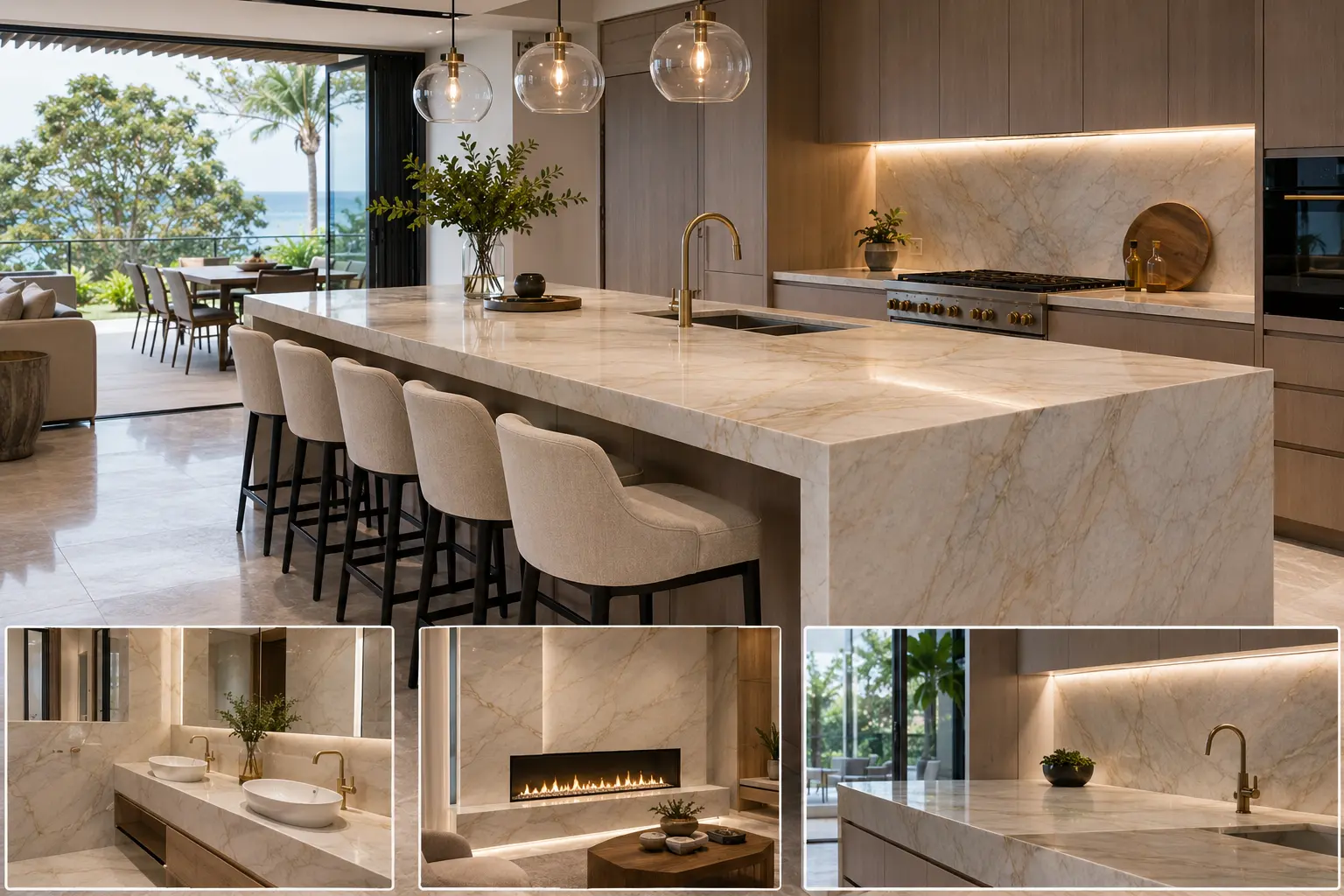
Taj Mahal Quartzite has become one of the most requested natural stones for Australian luxury homes, especially where buyers want a calm, warm, and premium surface without the cold appearance of pure white stone or the heavy contrast of dramatic dark slabs. Its creamy ivory base, soft beige movement, subtle taupe tones, and occasional gold veining make it suitable for coastal villas, modern kitchens, high-end apartments, luxury bathroom vanities, fireplace surrounds, and feature walls.
For Australian buyers, choosing Taj Mahal Quartzite is not only a design decision. It is also a supplier decision, a fabrication decision, and an import risk-control decision. A beautiful slab can still create project problems if the supplier cannot provide current stock photos, slab videos, accurate thickness, proper packing, seam planning, cutout guidance, crate documentation, and export-ready communication. This is why buyers should evaluate both the stone and the supplier before confirming an order.
Buyers comparing factory capability, export experience, and project communication can start by reviewing a Taj Mahal Quartzite supplier China with experience supporting Australian builders, architects, designers, importers, and residential project buyers through slab selection, fabrication planning, packing, and shipment coordination.
What Is Taj Mahal Quartzite?
A Warm, Elegant Quartzite With Natural Depth
Taj Mahal Quartzite is a natural quartzite known for its soft warm background and refined veining. Its base color usually ranges from creamy white and ivory to warm beige or light taupe. The veining may appear as soft gold, grey, brown, or caramel movement, depending on the slab. Compared with high-contrast quartzite varieties, Taj Mahal Quartzite feels quieter and more timeless, which makes it suitable for large kitchen islands and full-height splashbacks where an overly busy pattern may dominate the room.
The material works well with oak cabinetry, walnut joinery, brushed brass fixtures, champagne hardware, warm white lighting, cream upholstery, stone floors, and Australian indoor-outdoor living spaces. For buyers still researching the material itself, the guide on what is Taj Mahal Quartzite and why it is popular for countertops gives useful context for understanding its design appeal and countertop applications.
Why It Is Different From Marble
Taj Mahal Quartzite is often compared with marble because both materials can create elegant luxury interiors. However, they are not the same. Many marble types are calcite-based, which makes them softer and more sensitive to acids. Quartzite is quartz-rich and is generally harder, which is one reason it is often preferred for high-use kitchens and benchtops.
This does not mean Taj Mahal Quartzite is maintenance-free. It is still a natural stone. Buyers should confirm slab quality, sealing requirements, finish, edge details, and cleaning guidance. However, for homeowners who love marble-like warmth but need better daily-use confidence in an active kitchen, Taj Mahal Quartzite is often a stronger choice.
| Feature | Taj Mahal Quartzite | Marble | Buyer Decision |
|---|---|---|---|
| Visual Style | Warm ivory, beige, taupe, and soft gold movement | Classic veining with softer stone character | Choose Taj Mahal Quartzite for warm quiet luxury and kitchen use |
| Hardness Direction | Generally higher when true quartzite quality is confirmed | Usually softer, commonly around Mohs 3–4 depending on type | Quartzite is usually better for high-use horizontal surfaces |
| Acid Sensitivity | Usually lower than marble | Higher sensitivity to acidic substances | Quartzite is often safer for active kitchens |
| Best Applications | Kitchens, islands, benchtops, vanities, feature walls | Bathrooms, fireplaces, wall panels, staircases, decorative floors | Match stone to room function and user habits |
| Maintenance | Needs sealing and proper care but is often more forgiving | Requires more careful cleaning and realistic user expectations | Both materials need a maintenance plan |
Why Australian Buyers Like Taj Mahal Quartzite
It Fits Australian Indoor-Outdoor Living
Many Australian luxury homes are designed around open-plan kitchens, outdoor terraces, large sliding doors, coastal light, pool views, garden connections, and natural timber details. Taj Mahal Quartzite fits this lifestyle because it feels warm, calm, and natural. It can connect a kitchen island with a relaxed living area and still look refined enough for entertaining spaces.
In a Queensland coastal villa, Taj Mahal Quartzite can soften a bright kitchen and complement timber ceilings, brass tapware, and neutral furniture. In a Sydney apartment, it can create a premium benchtop without making the room feel visually heavy. In a Melbourne townhouse, it can support a warm modern kitchen that feels elegant but not overly formal.
It Offers Luxury Without Visual Overload
Some quartzite slabs have very bold color movement. That can be beautiful, but it is not always suitable for every home. Taj Mahal Quartzite is popular because it delivers luxury with restraint. The stone has enough movement to feel natural, but it is usually calm enough for large surfaces such as waterfall islands, long benchtops, full-height splashbacks, and open-plan kitchens.
Designers often specify this material when they want natural stone depth with a soft, architectural mood. Buyers who want to understand why architects use this stone in premium spaces can review Taj Mahal Quartzite for high-end projects as part of their design and sourcing research.
Best Applications for Taj Mahal Quartzite
Taj Mahal Quartzite Kitchen Islands
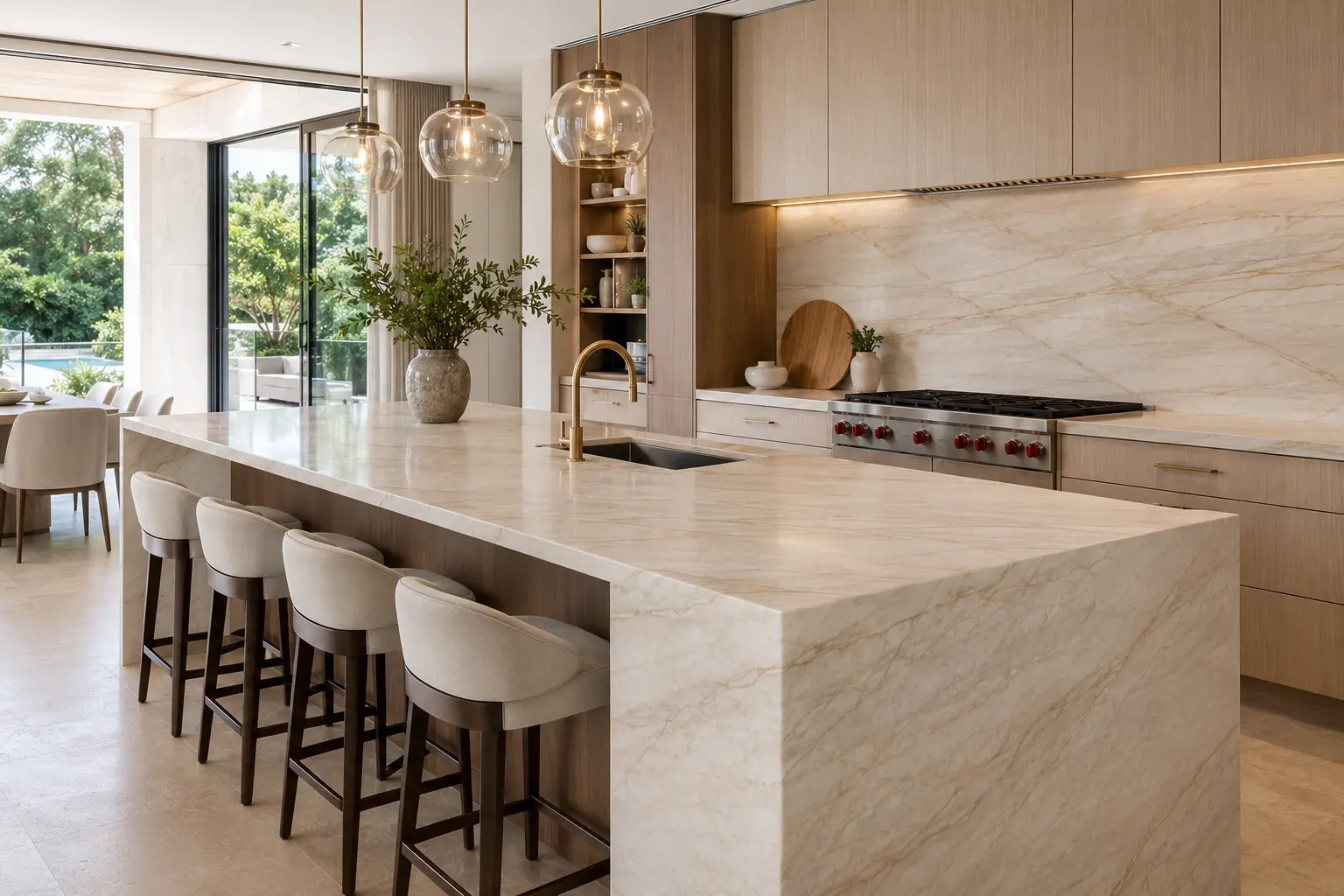
The kitchen island is the most important application for Taj Mahal Quartzite in many Australian homes. A large island is used for food preparation, dining, entertaining, homework, drinks, and casual conversations. It must look beautiful, but it also needs to handle daily touch, cleaning, water, oil, and general wear.
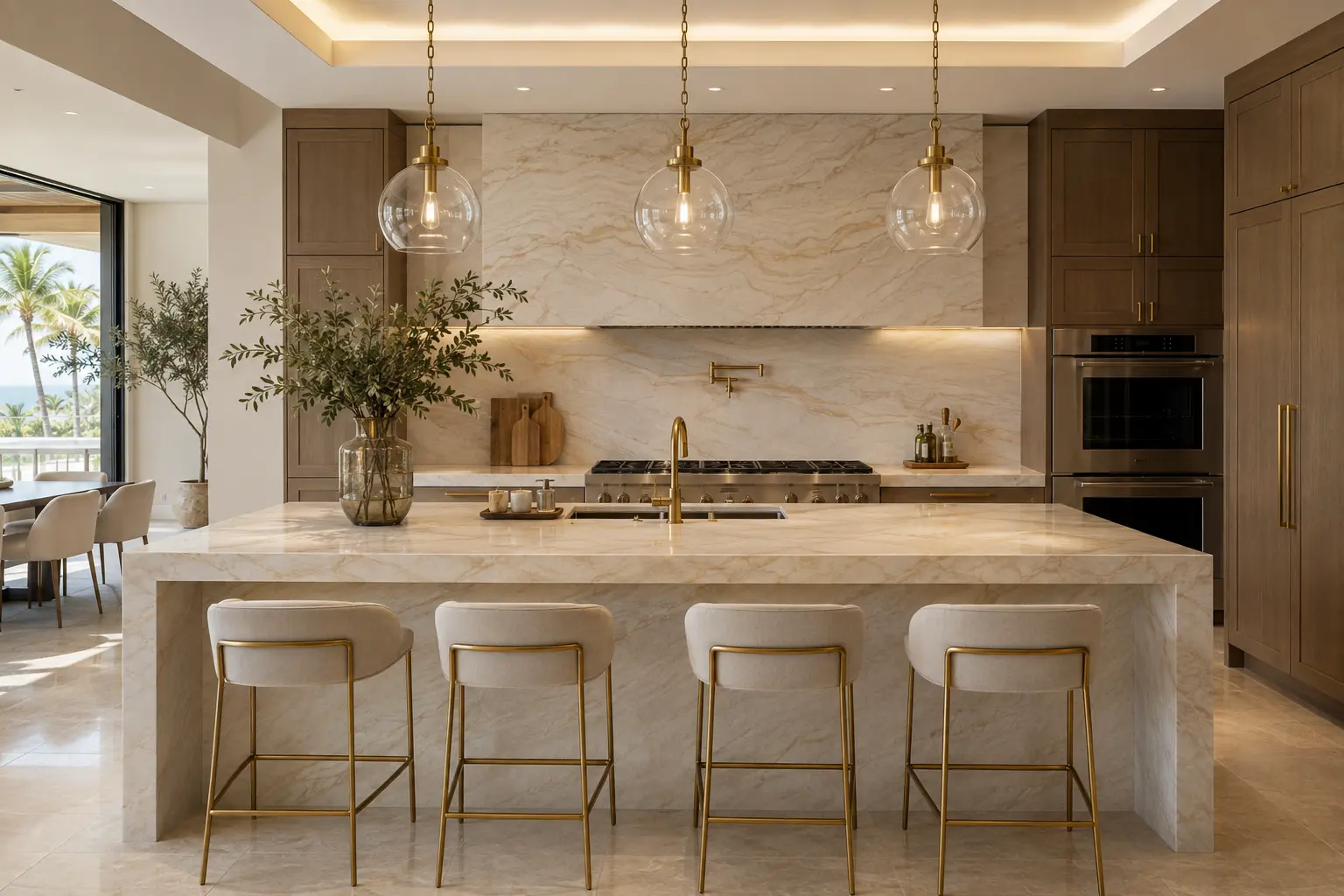
Taj Mahal Quartzite is especially suitable for waterfall islands because its warm movement can continue down the sides, creating a solid architectural block effect. Buyers should approve actual slabs before cutting, check vein direction, confirm slab size, plan mitered edges, review sink cutout positions, and discuss sealing before installation.
Taj Mahal Quartzite Countertops and Benchtops
Taj Mahal Quartzite countertops and benchtops are popular because they combine natural stone beauty with better daily-use confidence than many softer stones. For Australian kitchens, this is important because benchtops are used intensively. Food preparation, entertaining, coffee making, cooking, and cleaning all place pressure on the surface.
Buyers comparing Taj Mahal Quartzite vs marble durability and maintenance should focus on hardness, acid sensitivity, sealing, stain resistance expectations, cleaning habits, and whether the homeowner prefers a natural patina or a more durable daily-use surface.
Taj Mahal Quartzite Bathroom Vanities
Taj Mahal Quartzite can create a warm spa-like bathroom atmosphere when used for vanity tops, double vanities, powder room counters, wall shelves, and niche trim. It pairs well with marble wall panels, limestone floors, timber cabinetry, brass taps, and warm mirror lighting.
For bathrooms, buyers should confirm sink cutouts, faucet holes, edge thickness, sealing, moisture exposure, cleaning guidance, and packing protection. Vanity pieces often have cutouts, which can create fragile areas during transport. The supplier should protect these details carefully before shipping.
Taj Mahal Quartzite Feature Walls and Fireplaces
Although Taj Mahal Quartzite is most famous for kitchens, it can also work well for fireplace surrounds, TV walls, bar backs, powder room features, and entry walls. Its subtle warmth makes it suitable for homeowners who want a luxury feature without extreme contrast.
Feature wall buyers should request dry lay photos, slab layout approval, vein direction confirmation, and panel numbering. A feature wall is judged visually from a distance, so layout control can be more important than individual slab beauty.
How to Choose a Taj Mahal Quartzite Supplier
Actual Slab Stock Matters More Than Catalog Images
One of the biggest mistakes in buying Taj Mahal Quartzite is choosing from a small sample or catalog photo only. This stone varies from slab to slab. Some slabs are creamier. Some are more beige. Some have stronger gold movement. Some have softer grey undertones. A sample can show surface color and finish, but it cannot show the full slab movement, seam planning, or waterfall edge suitability.
Buyers should request current slab photos, videos, and close-up images under natural light where possible. For kitchens and benchtops, the slab layout should be reviewed before cutting. For large islands, seam position should be planned according to slab size, kitchen drawings, and visual flow.
Supplier Evaluation Checklist
| Supplier Evaluation Point | What to Ask | Why It Matters |
|---|---|---|
| Actual slab photos | Can you show current Taj Mahal Quartzite stock? | Prevents catalog-image mismatch and confirms real slab tone |
| Slab video | Can you show surface movement, polish, and close details? | Helps review veining, defects, resin lines, and finish quality |
| Thickness | What slab thickness is available? | Affects benchtop design, edge profile, weight, and support |
| Material identity | Is this true quartzite, and how is the stone categorized? | Prevents wrong performance expectations |
| Fabrication support | Can you support cut-to-size, mitered edges, and cutout planning? | Reduces installation and fabrication risk |
| Packing method | How are slabs and cut pieces protected for Australia shipping? | Reduces breakage during sea freight and unloading |
| Documentation | Can you provide packing list, crate marks, and material details? | Supports import, customs, and project management |
| After-sales response | What happens if slabs or cut pieces are damaged? | Reduces replacement uncertainty |
Factory Supplier vs Slab Supplier vs Project Exporter
Different supplier types offer different advantages. A quartzite factory supplier may provide fabrication control and better pricing for clear orders. A slab warehouse supplier may offer more slab choices but may not support full project coordination. A project exporter may cost more than a simple factory, but can help manage drawings, inspection, packing, documents, and mixed-item shipments.
| Supplier Type | Best For | Main Advantage | Main Risk | Buyer Recommendation |
|---|---|---|---|---|
| Quartzite factory supplier | Bulk fabrication and clear cut-to-size orders | Cost and processing control | May have limited slab variety | Best when drawings and specifications are clear |
| Slab warehouse supplier | Premium slab selection and design review | More current stock options | May not support detailed fabrication | Best for designers selecting unique slabs |
| Project exporter | Australian builders, importers, villas, apartments | QC, packing, labels, documents, and shipment coordination | Higher service cost | Best for B2B project buyers managing risk |
| Trading company | Flexible sourcing and quick material search | Can locate materials from multiple sources | Less direct production control | Good only when trust, QC, and communication are strong |
Technical Parameters Buyers Should Check
Taj Mahal Quartzite should be evaluated by both appearance and technical suitability. Exact values vary by slab and source, so buyers should confirm details from current stock. For project planning, the following parameters are especially important.
| Parameter | Typical Buyer Concern | Why It Matters |
|---|---|---|
| Thickness | 20mm and 30mm are common for benchtops, with custom options depending on project | Affects edge detail, weight, support, fabrication, and shipping cost |
| Hardness | True quartzite is generally hard and often associated with a high Mohs rating | Helps evaluate scratch resistance and kitchen suitability |
| Water absorption | Varies by slab, finish, and mineral structure | Important for kitchens, vanities, and sealing decisions |
| Surface finish | Polished, honed, and leathered finishes are common options | Affects appearance, cleaning, tactile feel, and slip behavior if used horizontally |
| Slab size | Depends on supplier stock and quarry availability | Controls seam position, island layout, and splashback planning |
| Vein direction | Natural movement varies between slabs | Important for waterfall edges, splashbacks, and long benchtops |
| Sealing | Usually recommended depending on slab and finish | Supports stain resistance and long-term maintenance |
| Packing weight | Quartzite slabs are heavy and require strong export crates | Reduces breakage during sea freight and site handling |
Australia-Specific Sourcing Considerations
Import Packing and Biosecurity Preparation
Taj Mahal Quartzite slabs are usually shipped in strong wooden crates, often with internal supports and protective materials. For Australia-bound shipments, buyers should confirm packing photos, crate marks, timber treatment status, loading photos, packing list, and container weight before shipment. Poor packing can damage slabs, edges, or cutout areas during sea freight.
Australian importers should also confirm current biosecurity requirements for timber packaging and dunnage before shipment. The supplier can prepare export packing and documents, but the buyer should still work with a freight forwarder or customs broker to confirm current import conditions.
Surface Safety If Used Beyond Benchtops
Taj Mahal Quartzite is most commonly used for benchtops, islands, vanities, and walls. If the material is used for floors, steps, or wet areas, surface finish becomes a safety consideration. Polished stone may not suit every walking surface. Builders should review local project requirements and consult qualified professionals when stone is used on pedestrian surfaces.
Real Australian Project Scenarios
Queensland Coastal Villa Kitchen
A coastal villa kitchen may need a large waterfall island that feels warm, natural, and practical for entertaining. Taj Mahal Quartzite works well because it pairs with timber, brass, cream upholstery, greenery, and indoor-outdoor views. Buyers should select slabs with soft movement, approve the island layout, plan the mitered edge, and confirm sink cutout support.
Sydney Luxury Apartment Benchtop
A Sydney apartment may need a premium benchtop that looks elegant but does not visually overpower the room. Taj Mahal Quartzite can provide a soft luxury background while still offering stronger daily-use confidence than many marbles. Buyers should consider lift access, slab size, seam location, crate delivery, and installer handling before confirming the order.
Melbourne Designer Bathroom Vanity
A designer bathroom may use Taj Mahal Quartzite for a warm vanity top, double sink counter, or powder room surface. The stone pairs well with marble walls, limestone floors, timber cabinetry, and brushed metal fixtures. For vanity fabrication, buyers should confirm cutouts, edge thickness, sealing, and packing protection around fragile areas.
Villa Fireplace and Feature Wall
Taj Mahal Quartzite can create a quiet statement around a fireplace or feature wall. It is less visually aggressive than highly dramatic quartzite, making it suitable for elegant interiors where softness is preferred. Buyers should request dry lay photos, vein direction review, and panel numbering before shipment.
Common Buyer Mistakes When Ordering Taj Mahal Quartzite
Selecting by Small Sample Only
A small sample cannot show the full movement of Taj Mahal Quartzite. The final slab may be warmer, cooler, creamier, greyer, quieter, or more golden than expected. Buyers should always approve actual slabs before cutting.
Assuming All Taj Mahal Quartzite Looks the Same
The name may be the same, but slab appearance varies. Some slabs have soft beige flow, while others have stronger golden veins or grey undertones. Buyers should compare current stock photos and videos instead of assuming every shipment will match a reference image.
Ignoring Fabrication Complexity
Quartzite can be harder to fabricate than many softer stones. Poor fabrication can lead to chipped edges, weak miter joints, rough cutouts, wrong seam placement, or breakage. Buyers should work with experienced fabricators and confirm design details before cutting.
Not Planning Packing for Sea Freight
Taj Mahal Quartzite slabs and cut pieces are heavy and valuable. Weak packing can lead to breakage, edge damage, and replacement delays. Buyers should request crate photos, slab supports, corner protection, and loading photos before shipment.
No Spare Material
Matching Taj Mahal Quartzite later can be difficult because each block and batch varies. For important projects, buyers should reserve extra material, keep leftover pieces, or order spare pieces for future repair.
| Buyer Mistake | Possible Consequence | Better Decision |
|---|---|---|
| Choosing from small sample only | Color and vein mismatch | Approve actual slabs before cutting |
| No slab video | Hidden defects or finish concerns may be missed | Request photo and video review of current stock |
| No seam planning | Poor island appearance or awkward joint placement | Plan layout before fabrication |
| Wrong fabricator | Edge chipping, cutout cracks, or weak miter details | Use experienced quartzite fabrication support |
| Weak packing | Sea freight breakage and replacement delay | Request export crate photos and loading photos |
| No spare pieces | Future matching difficulty | Reserve extra material for critical areas |
If This Is Your Project Goal, Choose This Taj Mahal Quartzite Strategy
| If Your Project Needs | Recommended Choice | Reason |
|---|---|---|
| Large kitchen island | 30mm Taj Mahal Quartzite or mitered 20mm design | Creates visual weight and premium edge detail |
| Lighter warm kitchen | Creamy Taj Mahal Quartzite slabs | Provides soft luxury without visual overload |
| Stronger stone movement | Slabs with more gold or taupe veining | Adds statement value while staying elegant |
| Minimalist home | Quieter slabs with subtle movement | Maintains calm interior balance |
| Bathroom vanity | Polished or honed Taj Mahal Quartzite | Creates warm elegance with practical horizontal use |
| Feature wall | Bookmatched or vein-matched slabs | Improves design continuity and visual value |
| Export order to Australia | Supplier with slab approval, QC, packing, and documentation support | Reduces sourcing, shipping, and project risk |
Australian buyers preparing a kitchen, benchtop, vanity, villa, apartment, or commercial project can organize slab preferences, drawings, sizes, thickness, finish, edge details, delivery timing, and packing expectations before requesting Taj Mahal Quartzite project consultation. A clear brief helps the supplier recommend the right slab, fabrication route, packing method, and sourcing plan.
Frequently Asked Questions
1. Is Taj Mahal Quartzite good for kitchen countertops?
Yes, Taj Mahal Quartzite is a strong choice for luxury kitchen countertops because it offers warm natural beauty, a calm ivory-beige appearance, and better daily-use confidence than many marbles. It is especially suitable for waterfall islands, benchtops, splashbacks, and open-plan kitchens where the surface must look premium while supporting regular cooking, entertaining, and cleaning. Buyers should still confirm sealing, slab quality, edge fabrication, and maintenance guidance before installation.
2. Is Taj Mahal Quartzite more durable than marble?
True Taj Mahal Quartzite is generally harder and less acid-sensitive than marble, making it more suitable for high-use kitchen benchtops and islands. Marble is beautiful for bathrooms, walls, fireplaces, and classic interiors, but it can be more sensitive to acidic substances and etching. The final performance of Taj Mahal Quartzite still depends on whether the slab is true quartzite, how it is sealed, how it is fabricated, and how the homeowner maintains the surface.
3. What color is Taj Mahal Quartzite?
Taj Mahal Quartzite usually has a creamy white, ivory, warm beige, or light taupe background with soft gold, brown, grey, or caramel veining. Some slabs are quieter and more minimalist, while others have stronger movement and warmer golden tones. Because natural slabs vary, buyers should not rely only on samples or catalog photos. Current slab photos and videos are important before approving a kitchen island, benchtop, vanity, or feature wall.
4. Does Taj Mahal Quartzite need sealing?
Sealing is usually recommended for Taj Mahal Quartzite, especially when it is used for kitchens, benchtops, vanities, and other high-use surfaces. The sealing requirement can vary by slab, finish, and supplier treatment. Buyers should ask the supplier and fabricator for sealing guidance before installation and should use suitable cleaning products after installation. Sealing helps support stain resistance, but it does not make natural stone completely maintenance-free.
5. What should Australian buyers check before ordering Taj Mahal Quartzite?
Australian buyers should check current slab photos, slab video, color tone, vein direction, thickness, finish, material authenticity, seam layout, edge details, sink cutouts, sealing guidance, packing method, crate strength, timber packaging documentation, spare pieces, and delivery schedule. Buyers should also confirm whether the supplier can support export packing, project labels, inspection photos, and after-sales communication before placing a bulk order.
References
- “Dimension Stone Design Manual” — Natural Stone Institute Technical Committee — Natural Stone Institute
- “Quartzite: Technical and Design Considerations” — Natural Stone Institute Education Department — Natural Stone Institute
- “ASTM C97 Standard Test Methods for Absorption and Bulk Specific Gravity of Dimension Stone” — ASTM International Technical Committee C18 — ASTM International
- “ASTM C880 Standard Test Method for Flexural Strength of Dimension Stone” — ASTM International Technical Committee C18 — ASTM International
- “AS 4586 Slip Resistance Classification of New Pedestrian Surface Materials” — Standards Australia Committee BD-094 — Australian Standard
- “Timber and Bamboo Packaging Import Requirements” — Department of Agriculture, Fisheries and Forestry — Australian Government Biosecurity Resource
- “Natural Stone Countertop Care and Maintenance” — Natural Stone Institute Education Department — Natural Stone Institute
- “Guide to the Specification and Use of Natural Stone” — Stone Federation Technical Committee — Stone Federation Great Britain
How Australian Buyers Should Source Taj Mahal Quartzite
How should buyers choose? Start with the application: kitchen island, benchtop, vanity, feature wall, fireplace, or commercial surface. Then review current slab stock, approve actual slabs, confirm thickness, plan seams, choose finish, review fabrication details, and check export packing before ordering.
Why is Taj Mahal Quartzite valuable? It offers warm luxury, natural stone depth, and better daily-use confidence than many marbles. It suits Australian coastal homes, open-plan kitchens, high-end apartments, and premium interiors where buyers want softness, elegance, and practical performance.
What must buyers evaluate? Buyers should evaluate slab color, vein direction, material authenticity, thickness, finish, water exposure, sealing, edge fabrication, sink cutouts, supplier communication, crate strength, documentation, and spare material planning.
Option logic: If the project needs a large island, choose bigger slabs or a mitered design. If the home is minimalist, choose quieter slabs. If the kitchen needs stronger visual impact, choose slabs with more gold movement. If the order is for export, choose a supplier with Australia packing experience, QC photos, and documentation support.
Consideration for long-term value: The best Taj Mahal Quartzite decision is not only about the lowest slab price. Buyers should compare slab quality, fabrication risk, seam planning, maintenance expectations, shipping protection, replacement difficulty, and supplier reliability.
Before confirming an order, prepare drawings, preferred slab tones, thickness, finish, quantity, edge details, delivery schedule, and packing expectations so the supplier can build a practical Taj Mahal Quartzite sourcing plan instead of a general quotation.