 EN
EN


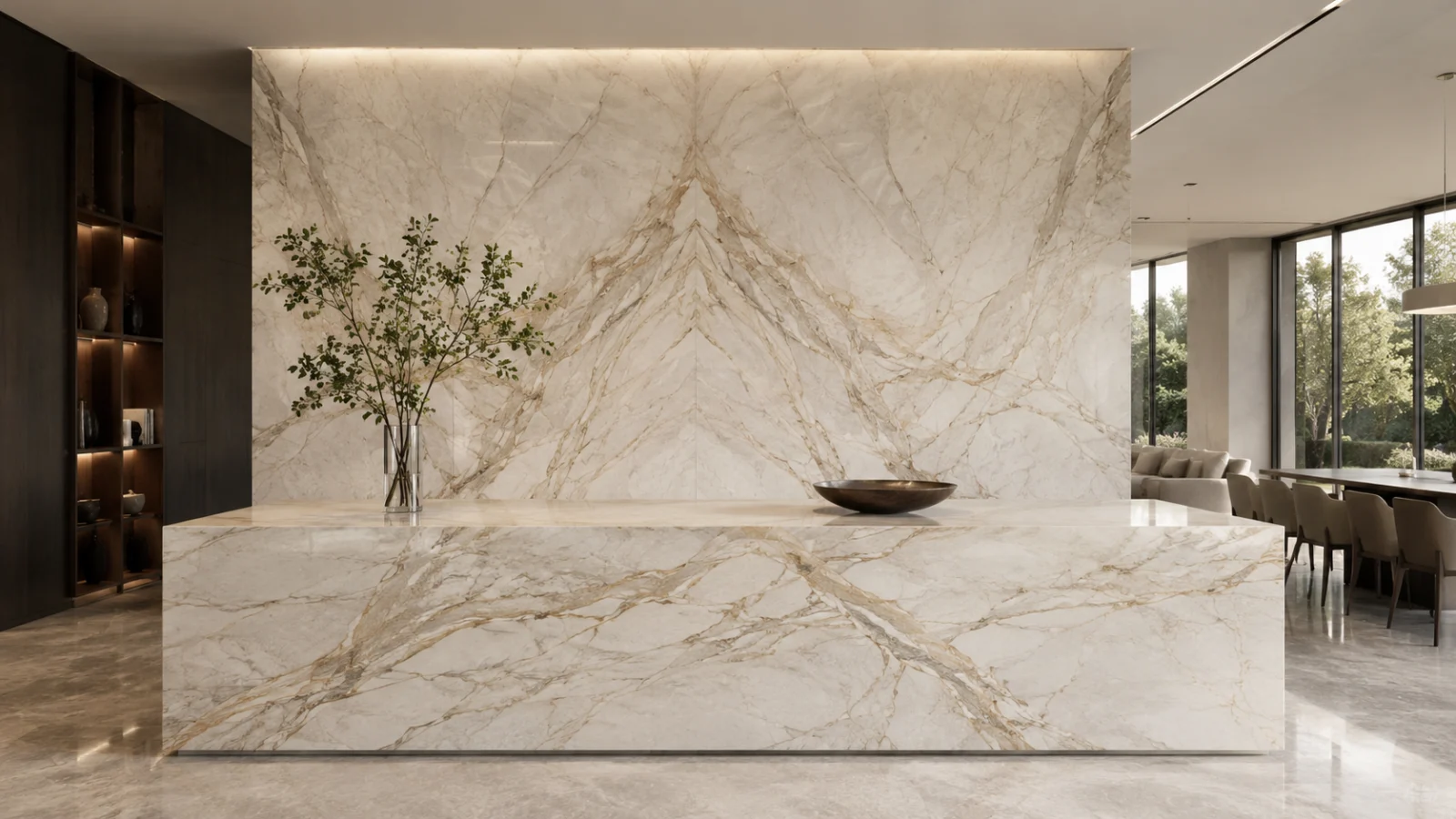
Quick Summary
Taj Mahal Quartzite is a premium Cream Quartzite known for its warm ivory, beige, soft gold, and subtle grey movement, making it one of the most architect-friendly choices for luxury kitchens, bathrooms, hotel suites, wall panels, and high-end residential projects. Architects specify it because it offers a marble-like appearance with stronger practical performance than many softer stones. For buyers, successful Sourcing depends on checking slab authenticity, cream tone consistency, thickness, finish, fabrication suitability, packing control, and supplier documentation before ordering.
High-end projects rarely fail because the material is not beautiful enough. They fail when the material does not match the way the space will be used, maintained, installed, and experienced over time. This is why architects and interior designers approach natural stone differently from ordinary buyers. They are not only asking whether a slab looks attractive. They are asking whether it can support the project concept, satisfy the client, survive fabrication, maintain visual consistency, and reduce long-term risk.
Taj Mahal Quartzite has become one of the most specified natural stones for luxury projects because it answers several of these needs at once. It has the warm cream look that many clients love, the natural depth designers want, and the practical strength expected from a high-end quartzite. It is less visually aggressive than many exotic stones, but more distinctive than plain beige surfaces. It feels refined, calm, and expensive without forcing the room to become dramatic.
For architects, this balance matters. A project may require a stone that looks elegant in a private villa kitchen, works across a hotel suite bathroom, supports a waterfall island, and remains acceptable to different stakeholders. Taj Mahal Quartzite often fits that role because it delivers warmth without visual noise. It can support modern luxury, organic modern design, transitional interiors, hospitality spaces, and quiet luxury residences.
For buyers, however, the material still requires careful evaluation. Not every slab has the same cream tone, vein movement, thickness, finish quality, or fabrication suitability. A good slab can elevate the entire project. The wrong slab, wrong supplier, or wrong finish can create color mismatch, installation delays, countertop complaints, or expensive replacement problems. This guide explains how to evaluate Taj Mahal Quartzite from both a design and procurement perspective.
What Is Taj Mahal Quartzite?
Taj Mahal Quartzite is a natural quartzite widely valued for its warm cream background and soft veining. Its color range often includes ivory, beige, cream, warm grey, soft taupe, and gold-toned movement. Compared with many dramatic exotic stones, Taj Mahal Quartzite is more restrained. Its luxury comes from quiet depth rather than loud contrast.
This makes it especially useful for architects. Some clients want natural stone but do not want a surface that dominates the space. Some want the elegance of marble but worry about maintenance. Some want a warm kitchen countertop that works with wood, bronze, white cabinetry, soft lighting, and natural flooring. Taj Mahal Quartzite fits these requirements better than many stronger-colored stones.
In many markets, Taj Mahal Quartzite is associated with Brazilian quartzite. It is commonly used for countertops, kitchen islands, bathroom vanities, wall panels, fireplace surrounds, stair applications, hotel interiors, and commercial luxury spaces. Its popularity comes from the way it bridges two buyer expectations: refined appearance and stronger real-world performance.
A Brazilian Cream Quartzite with Warm Architectural Appeal
As a Cream Quartzite, Taj Mahal Quartzite offers a warmer alternative to pure white marble and a softer alternative to strongly veined exotic stone. Its background is usually not cold white. Instead, it leans toward cream, ivory, beige, and soft gold. This warmth makes it easier to integrate into residential and hospitality projects where comfort, elegance, and long-term visual acceptance are important.
Architects often prefer materials that can work across more than one room. Taj Mahal Quartzite can be used in kitchens, bathrooms, feature walls, and commercial interiors without creating a visual conflict. It pairs well with oak, walnut, bronze, champagne metal, cream cabinetry, white walls, travertine flooring, and warm lighting. This material flexibility is one reason it remains popular in high-end specifications.
For buyers comparing Brazilian quartzite slabs, Taj Mahal Quartzite is often one of the more accessible luxury choices because its color is easier for clients to accept than blue, green, red, or heavily patterned stones. It is premium, but not intimidating. That is a powerful combination in architectural decision-making.
Why It Looks Like Marble but Performs Differently
Many buyers first notice Taj Mahal Quartzite because it looks similar to soft beige marble. It has a gentle movement and a luxurious natural tone. However, true quartzite generally performs differently from marble. Quartzite is typically harder and more resistant to scratching than many marble varieties, which makes it attractive for kitchen countertops and islands.
This does not mean Taj Mahal Quartzite should be treated as indestructible. Natural stone still needs proper sealing, careful fabrication, suitable cleaning habits, and professional installation. Oil, acidic liquids, harsh chemicals, poor edge work, or improper support can still create problems. A serious buyer should understand that durability comes from both the material and the process.
For projects where clients want a marble-like appearance but need a more practical surface, Taj Mahal Quartzite countertops can be a smart solution. The material offers visual softness while reducing some of the concerns associated with softer stones. This is why architects often specify it for kitchens, bathrooms, and hospitality interiors where both beauty and daily-use performance matter.
Why Architects Specify Taj Mahal Quartzite for High-End Projects
Architects specify materials for many reasons. Appearance is only one of them. A stone must fit the design language, satisfy the client, suit the function, support the construction method, and remain available in the quantity needed. Taj Mahal Quartzite is frequently selected because it solves several problems at the same time.
It is elegant without being fragile in appearance. It is warm without being yellow-heavy when properly selected. It is natural without being visually chaotic. It is premium without being difficult for clients to understand. These qualities make it one of the safest luxury quartzite choices for architects who need a refined surface with broad acceptance.
It Offers Warm Luxury Without Visual Noise
Some luxury stones are spectacular but difficult to use. They may have strong colors, heavy veining, or dramatic contrast that works in one project but feels too intense in another. Taj Mahal Quartzite is different. It creates a sense of luxury through warmth, texture, and subtle movement.
This is valuable for high-end projects because many clients want a space that feels elegant for years, not only impressive for one season. A warm cream stone can support long-term design value. It can work with changing furniture, lighting, and decoration. It does not force the entire room to follow one dramatic color direction.
For this reason, luxury cream quartzite is often selected for projects where the material must feel premium but not overpowering. In a kitchen, it can make the room feel soft and welcoming. In a bathroom, it can create a spa-like atmosphere. In a hotel suite, it can communicate calm sophistication.
It Works Across Multiple Design Styles
Taj Mahal Quartzite is versatile. It can work in modern luxury homes with flat-panel cabinetry, transitional kitchens with detailed millwork, organic modern bathrooms with wood and stone, and hospitality interiors that require a neutral but premium material. This flexibility is one of its strongest advantages.
In modern interiors, the stone can soften sharp lines. In traditional interiors, it can feel refined without appearing outdated. In Italian-inspired spaces, it can pair with bronze, walnut, travertine, and warm lighting. In minimalist interiors, it can provide natural movement without breaking the calm mood.
Architects often need this kind of flexibility because projects change. Cabinet colors may be revised. Lighting may change. Clients may adjust furniture choices. A stone that works across multiple design directions creates less risk during the design process.
It Helps Balance Beauty, Performance, and Client Approval
Client approval is a real part of architectural material selection. Some stones are admired by designers but rejected by clients because they feel too bold, too cold, too busy, or too risky. Taj Mahal Quartzite often performs well in approval meetings because it is easy to understand. It looks luxurious, warm, natural, and practical.
For architects, this reduces friction. They can specify a material that feels high-end but still familiar enough for clients to accept. For contractors and fabricators, the material is popular enough that many professionals have experience working with it. For importers and distributors, it is easier to present than extremely unusual exotic slabs.
This combination makes Taj Mahal Quartzite a strong high-end project stone. It is not only selected because it is beautiful. It is selected because it helps the project move forward with fewer objections.
Best Applications for Taj Mahal Quartzite
Taj Mahal Quartzite works best in spaces where warm luxury, natural texture, and daily-use performance are all important. It is not limited to one application. Its broad appeal makes it suitable for private residences, hospitality interiors, luxury apartments, commercial spaces, and premium stone furniture.
Luxury Kitchen Countertops
Kitchens are one of the most common applications for Taj Mahal Quartzite. The stone offers warmth without becoming dark, and movement without becoming visually busy. It can brighten a kitchen while still feeling more natural and layered than plain white surfaces.
Cream quartzite countertops work especially well with white cabinets, warm oak, walnut, champagne bronze fixtures, soft grey cabinetry, and natural wood flooring. In open-plan homes, Taj Mahal Quartzite can help the kitchen feel connected to the living area rather than purely functional.
Buyers should still confirm the slab’s suitability for countertop use. Sink cutouts, cooktop cutouts, edge profiles, overhangs, and seams must be planned carefully. The fabricator should review the slab condition before cutting, especially if the project includes large islands or complex mitered edges.
Waterfall Kitchen Islands
A waterfall island is a powerful way to use Taj Mahal Quartzite. The stone’s soft movement can continue from the horizontal countertop down the vertical side panels, creating a clean and architectural effect. Unlike more dramatic stones, Taj Mahal Quartzite can make a large island feel luxurious without overwhelming the room.
For a quartzite kitchen island, slab layout is critical. The buyer should review the full slab before cutting and confirm how the veining will flow across the top and sides. If the island is large, the project may require multiple slabs from the same bundle or compatible bundles.
Waterfall islands are especially suitable for villas, luxury apartments, show homes, and premium residential developments. They allow the stone to become a visible design element while maintaining a calm and sophisticated atmosphere.
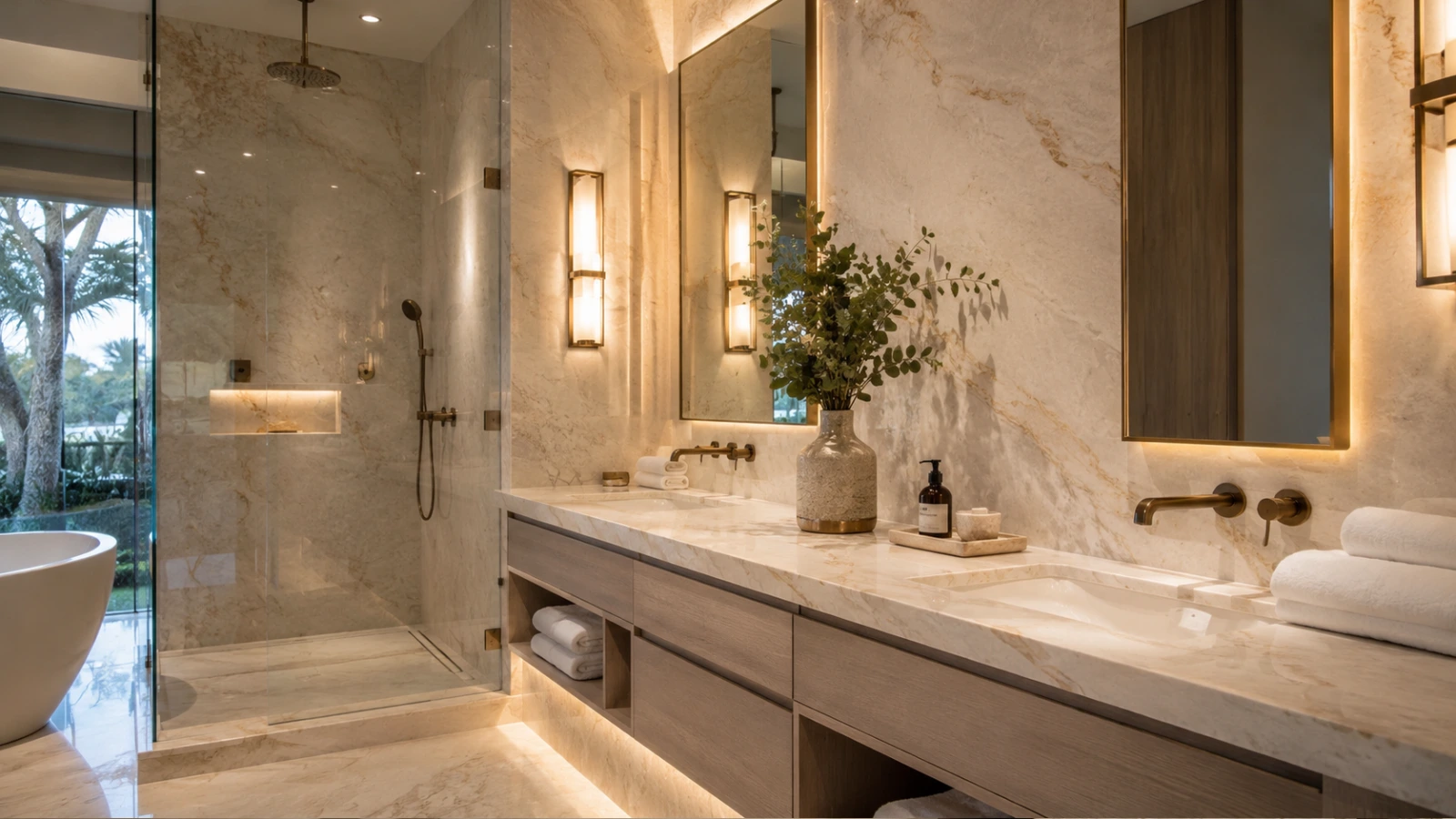
Taj Mahal Quartzite is highly suitable for luxury bathrooms. Its warm cream tone creates a softer feeling than cold white materials, while its natural movement gives the space more depth than standard porcelain or engineered surfaces.
It can be used for vanity tops, vanity backsplashes, wall panels, bathtub surrounds, shower accents, and powder room features. In spa-like interiors, it pairs well with warm lighting, large mirrors, brushed metal, light wood, and neutral flooring.
For a luxury bathroom vanity stone, buyers should confirm sealing, edge detail, water exposure, and cleaning expectations. A bathroom stone must look beautiful, but it must also handle moisture and regular use.
Hotel Suites and Hospitality Interiors
Hotels often need materials that feel luxurious but not controversial. Taj Mahal Quartzite fits this requirement because its tone is warm, elegant, and widely accepted. It can work in hotel bathrooms, suite countertops, reception areas, bar tops, wall panels, and lounge surfaces.
For hospitality interiors, consistency and availability matter. A hotel project may require multiple slabs across many rooms or public areas. Buyers should confirm batch matching, bundle availability, reserve material, and supplier documentation before placing large orders.
Compared with highly dramatic exotic stones, Taj Mahal Quartzite is often easier to use across larger projects because its visual language is calmer. It delivers luxury without making every surface compete for attention.
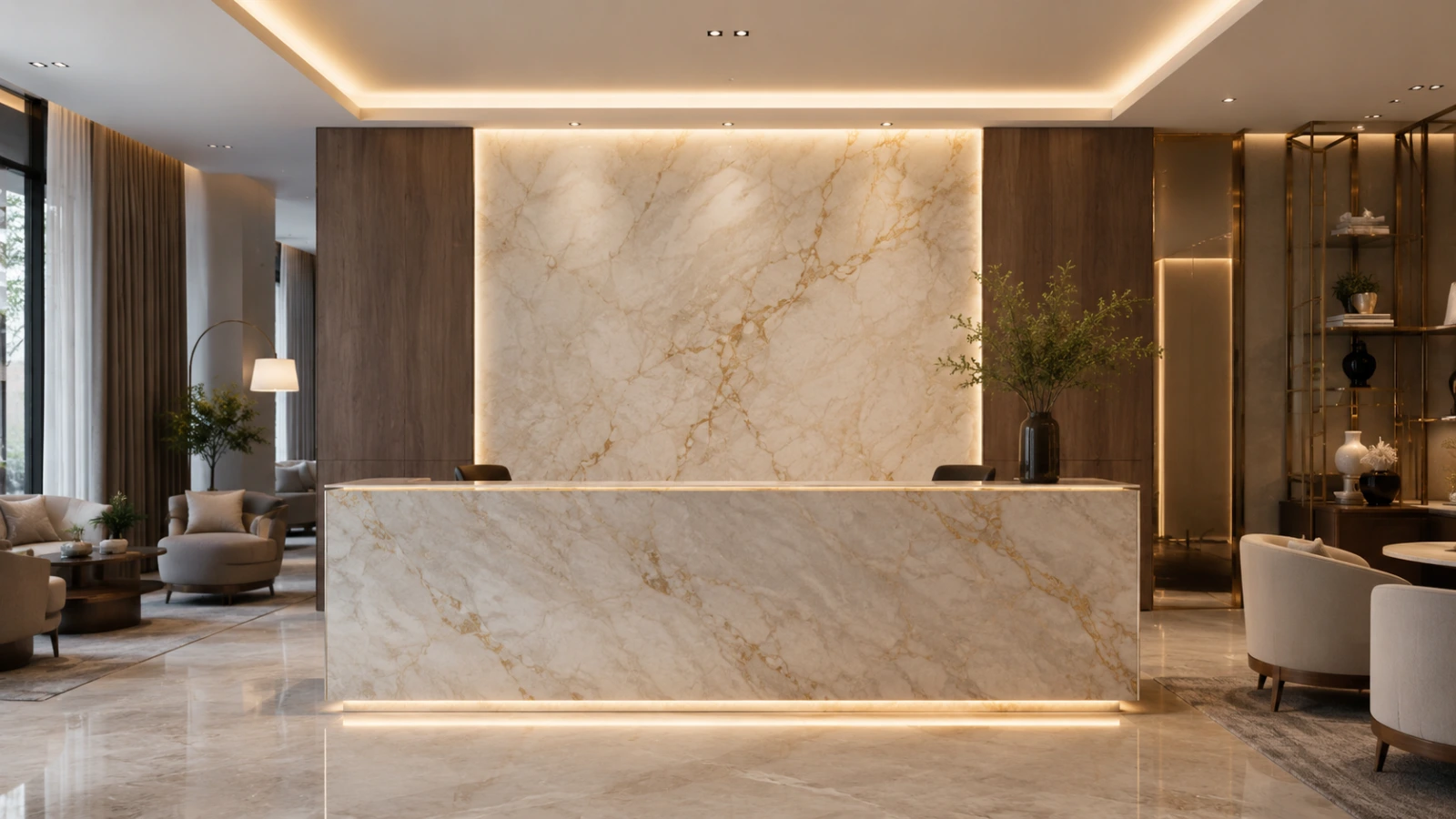
Feature Walls, Fireplace Surrounds, and Wall Panels
Taj Mahal Quartzite can also work well for feature walls, fireplace surrounds, and wall panels. It is not as dramatic as Patagonia Quartzite or Blue Roma Quartzite, but that can be an advantage. In many projects, the design goal is not to shock the viewer. It is to create warmth, depth, and calm luxury.
For fireplaces, the stone can create a soft natural frame. For living room walls, it can add texture without overwhelming the furniture. For commercial interiors, it can provide a premium background that feels refined and durable.
Buyers should confirm slab size, thickness, fixing method, and surface finish before using Taj Mahal Quartzite for vertical applications. Large panels require proper support and installation planning.
Taj Mahal Quartzite vs Marble, Granite, and Engineered Quartz
Buyers often compare Taj Mahal Quartzite with marble, granite, and engineered quartz because these materials are common in luxury kitchens and interior projects. The best choice depends on the design goal, performance expectations, maintenance tolerance, quantity requirement, and budget logic.
Taj Mahal Quartzite vs Marble
Marble is classic, elegant, and deeply associated with luxury interiors. It works beautifully in bathrooms, walls, fireplaces, and lower-wear spaces. However, marble is more vulnerable to acid etching and scratching than true quartzite. This can become a concern in kitchens and high-use areas.
Taj Mahal Quartzite offers a marble-like warmth with stronger practical performance. For clients who want the look of soft natural stone but need a more durable surface for kitchens or islands, Taj Mahal Quartzite can be a more practical choice.
Taj Mahal Quartzite vs Granite
Granite is durable, practical, and widely used in commercial and residential projects. It is often selected when performance and availability are the main priorities. However, granite may not always deliver the same warm luxury look that architects want for high-end kitchens, bathrooms, or hotel suites.
Taj Mahal Quartzite offers a softer and more refined visual effect. If the project is durability-first and design impact is secondary, granite may be suitable. If the project needs natural warmth and premium design value, Taj Mahal Quartzite may be the stronger choice.
Taj Mahal Quartzite vs Engineered Quartz
Engineered quartz offers consistency, predictable color, and easier matching for multi-unit projects. It can be useful for apartment developments, standardized kitchens, and buyers who need tight control over visual repetition.
Taj Mahal Quartzite offers natural variation and a more authentic stone experience. Every slab is different. For luxury homes, villas, and hospitality projects where natural uniqueness matters, this can be a major advantage.
| Material | Visual Style | Best Use | Buyer Risk |
|---|---|---|---|
| Taj Mahal Quartzite | Warm cream, soft gold, marble-like movement | Kitchens, islands, bathrooms, hotels, walls | Slab variation, wrong finish, poor batch matching |
| Marble | Classic, soft, elegant | Bathrooms, walls, fireplaces, decorative areas | Etching, staining, scratching, higher care needs |
| Granite | Durable, practical, often more granular | Commercial counters, flooring, utility surfaces | May lack refined luxury warmth |
| Engineered Quartz | Uniform, clean, controlled | Multi-unit kitchens and repeatable projects | Less natural uniqueness and stone depth |
Why Taj Mahal Quartzite Is a Durable Luxury Stone
The phrase Durable Luxury Stone fits Taj Mahal Quartzite because it combines natural elegance with practical performance. It is selected not only for how it looks in photos, but also for how it can function in kitchens, bathrooms, hospitality projects, and commercial interiors.
Hardness and Daily-Use Performance
True quartzite is generally harder than marble, which makes it attractive for surfaces that receive regular use. Taj Mahal Quartzite is often chosen for countertops and islands because buyers want a surface that can handle more daily activity while still looking refined.
However, durability should not be exaggerated. A natural quartzite slab still needs professional fabrication, suitable sealing, careful cleaning, and correct installation. The stone may be strong, but poor processing can still create weak points.
Heat, Scratch, and Etching Considerations
Taj Mahal Quartzite is often selected for kitchen use because it offers better practical confidence than many softer stones. Still, buyers should avoid treating it as maintenance-free. Hot cookware, acidic liquids, oil, harsh cleaners, and dragging heavy objects across the surface can still create problems over time.
The safest approach is to use cutting boards, wipe spills quickly, avoid harsh chemicals, and follow sealing recommendations. A luxury surface deserves proper care. Good maintenance protects both appearance and project value.
Why Durability Still Depends on Fabrication and Installation
Even a strong stone can fail if it is poorly fabricated or installed. Sink cutouts, cooktop cutouts, long overhangs, mitered waterfall edges, and large wall panels all require proper planning. Slab fissures, thickness variation, edge chipping, and weak support can create problems if ignored.
This is why architects and buyers should work with experienced fabricators and reliable suppliers. The stone itself is only one part of the final performance. The process around the stone matters just as much.
How Architects Evaluate Taj Mahal Quartzite Before Specification
Architects evaluate Taj Mahal Quartzite differently from casual buyers. They consider visual tone, client approval, material availability, finish, thickness, installation details, and future maintenance. Their goal is to reduce uncertainty before the project moves into procurement and fabrication.
Color Consistency and Batch Matching
Taj Mahal Quartzite can vary from slab to slab. Some slabs are creamier. Some are warmer and more golden. Some have stronger grey movement. Some are quieter and more uniform. This variation is natural, but it must be managed.
For large kitchens, hotel projects, multi-room villas, and commercial interiors, buyers should confirm whether the slabs come from the same bundle or compatible bundles. Color consistency is especially important when the stone is used across multiple visible areas.
Finish Selection: Polished, Honed, or Leathered
Finish changes the final mood of Taj Mahal Quartzite. A polished finish creates more reflection and can make the surface feel more luxurious. It is often used for kitchens, islands, hotel counters, and premium interior surfaces.
A honed finish creates a softer and more architectural look. It can be suitable for modern luxury, organic interiors, and spaces where low reflection is preferred. A leathered finish gives the surface more texture and a natural feeling, although buyers should confirm cleaning and maintenance expectations before choosing it.
There is no single best finish. The right choice depends on the application, lighting, design style, and user expectations.
Slab Size, Thickness, and Layout Planning
Architects also consider slab size and thickness before specification. Large islands, full-height backsplashes, vanity walls, fireplace panels, and commercial counters may require careful layout planning. A slab that looks beautiful in isolation may not be large enough or suitable for the intended layout.
Buyers should confirm whether the slab thickness fits the fabrication method. They should also review vein direction, seam placement, edge profiles, and cutout locations before cutting begins.
Documentation and Supplier Reliability
A professional quartzite slab supplier should provide full-slab photos, video inspection, bundle numbers, thickness confirmation, finish details, packing photos, loading photos, and export documentation when needed. These details are not paperwork for paperwork’s sake. They help reduce misunderstandings and protect the project.
For remote buyers, documentation becomes even more important. A supplier who communicates clearly before the order is more likely to handle the order carefully after payment.
Sourcing Taj Mahal Quartzite: What Buyers Should Check Before Ordering
Successful Sourcing is not about finding the lowest price. It is about reducing risk while securing the right material for the project. Taj Mahal Quartzite is popular, but buyers should still check authenticity, slab appearance, batch consistency, fabrication suitability, and export support.
Step 1: Confirm It Is Real Quartzite, Not a Softer Lookalike
Natural stone names can be confusing. Some materials are marketed with names that sound similar, and not every stone described as quartzite performs the same way. Buyers should ask the supplier to explain the material type, application suitability, and practical performance.
For important kitchen or commercial projects, buyers should not rely only on the name “Taj Mahal.” They should evaluate the actual slab and ask the supplier for clear guidance.
Step 2: Review Full-Slab Photos and Videos
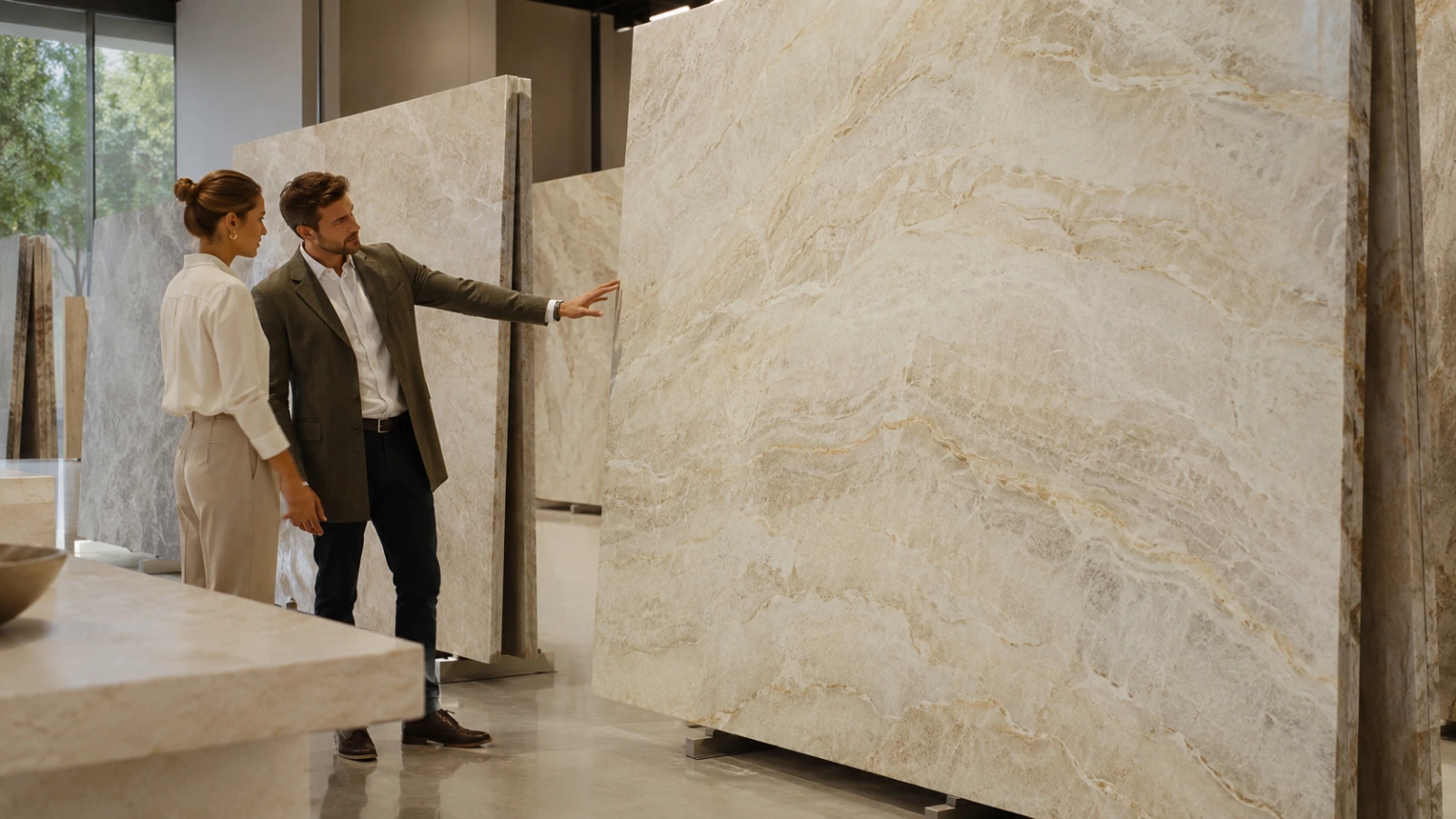
Small samples cannot show the full story. They may show color, but not movement, slab balance, large-area tone, or possible layout issues. Buyers should request full-slab photos under neutral lighting and, when possible, videos of the actual slabs.
This is especially important for islands, backsplashes, large vanities, wall panels, and hospitality projects. The full slab determines the final look, not the sample alone.
Step 3: Compare Cream Tone and Vein Movement
Taj Mahal Quartzite can lean warm cream, beige, soft gold, light grey, or slightly taupe. Some clients prefer a warmer tone. Others prefer a cleaner and lighter background. The buyer should compare slabs against the project’s cabinetry, flooring, metal finishes, and lighting conditions.
Vein movement should also be reviewed. Stronger veining may work well for an island, while a quieter slab may be better for a calm hotel bathroom or wall panel.
Step 4: Check Quantity, Reserve Slabs, and Project Timing
Natural stone cannot always be reordered with perfect matching. If a project requires multiple slabs, the buyer should confirm availability early. For large kitchens, hotel interiors, or multi-room projects, reserve material may be necessary.
Waiting too long can create problems. The same commercial stone name may remain available, but the next batch may have a different tone or vein movement. For high-end projects, matching matters.
Step 5: Confirm Packing and Export Support
Slabs must be packed carefully for long-distance shipment. Buyers should ask about wooden crates, slab separation, edge protection, loading method, and shipping documents. Packing photos and loading photos are useful proof that the supplier understands export risk.
A reliable natural stone factory or export supplier should treat packing as part of quality control. Damage during transport can delay the project and make replacement difficult.
2026 Market and Compliance Direction for Taj Mahal Quartzite Buyers
The market for natural quartzite remains strong because buyers want authentic surfaces with long-term value. At the same time, international procurement is becoming more documentation-driven. Buyers are asking more questions about origin, packing, processing, transportation, and supplier responsibility.
Natural Quartzite Remains Strong in 2026 Design Trends
Natural quartzite continues to appear in kitchen, bathroom, and interior design trends because it offers natural movement, durability, and luxury appeal. Taj Mahal Quartzite fits the quieter side of this trend. It is not a loud statement stone. It is a warm architectural material that can support high-end interiors over time.
This makes it attractive for architects who want a stone that feels current but not temporary. Warm cream surfaces, natural veining, and large-format slab applications continue to perform well in premium residential and hospitality design.
CBAM Does Not Directly Cover Quartzite, But It Changes Buyer Questions
The Carbon Border Adjustment Mechanism currently focuses on carbon-intensive goods such as iron and steel, cement, aluminium, fertilisers, hydrogen, and electricity. Taj Mahal Quartzite slabs are not directly covered in the current main scope. However, CBAM has changed how many buyers think about building material procurement.
Large buyers increasingly pay attention to production transparency, transport, documentation, and supplier responsibility. Even when a regulation does not directly apply to a stone slab, professional buyers may still expect clearer records and more organized communication.
EUDR Is Not a Quartzite Regulation, But It Raises Traceability Expectations
The European Union Deforestation Regulation focuses on specific commodities such as cattle, cocoa, coffee, palm oil, rubber, soy, wood, and selected derived products. Taj Mahal Quartzite is not the direct target of this regulation. Still, the regulation reflects a broader procurement direction: better traceability, clearer documentation, and stronger supplier accountability.
For stone buyers, this is especially relevant to packaging materials, origin communication, and responsible sourcing statements. Suppliers who can provide organized records will appear more professional than suppliers who only send prices and photos.
Common Buyer Mistakes When Buying Taj Mahal Quartzite
Taj Mahal Quartzite is a reliable luxury choice when selected properly. However, buyers can still make costly mistakes if they treat it as a simple beige stone rather than a natural material with variation, fabrication requirements, and project-specific risks.
Mistake 1: Assuming Every Taj Mahal Slab Looks the Same
Some slabs are creamy and warm. Some are lighter and cleaner. Some have more gold movement. Others include stronger grey or taupe tones. Buyers who assume all slabs are identical may receive material that does not match the design expectation.
Mistake 2: Choosing by Small Sample Only
A sample cannot show full-slab movement, large-area color tone, vein distribution, or project layout. Samples are useful, but final approval should be based on actual slab photos or videos.
Mistake 3: Confusing Quartzite with Marble or Granite Names
Some markets use confusing stone names. Buyers should keep the project language clear. If the target material is Taj Mahal Quartzite, the specification, order, and communication should use that name consistently. Marble and granite comparisons are useful, but they should not replace accurate material identification.
Mistake 4: Ignoring Fabrication and Installation Risk
Sink cutouts, cooktop cutouts, waterfall edges, large panels, slab fissures, edge profiles, and support structures all affect the final result. Buyers should involve fabricators and installers early, especially for high-value projects.
Mistake 5: Comparing Only Price
A lower price may hide weaker slab quality, inconsistent tone, smaller size, poor packing, missing documentation, or limited supplier support. Buyers should compare total value, not just the quoted price.
Buyer Decision Guide: Is Taj Mahal Quartzite Right for Your Project?
| Project Need | Choose Taj Mahal Quartzite If | Consider Another Stone If |
|---|---|---|
| Luxury kitchen | You want warm cream luxury with stronger practical performance | You want bold blue, green, or red statement stone |
| Waterfall island | You need a calm but premium focal point | You need very dramatic high-contrast veining |
| Bathroom vanity | You want spa-like warmth and natural stone value | You need a low-budget tile replacement |
| Hotel suite | You need a widely accepted luxury material | You need a rare and dramatic visual centerpiece |
| Commercial project | You need durability and elegant neutrality | You need fully uniform engineered material |
| Wholesale inventory | Your customers prefer cream luxury quartzite | Your market only buys low-cost stone |
Recommended Sourcing Checklist Before Ordering
| Checklist | Why It Matters |
|---|---|
| Full-slab photos | Shows real color, movement, and usable surface areas |
| Video inspection | Reduces remote sourcing risk |
| Bundle number | Helps batch matching and project consistency |
| Cream tone check | Avoids color expectation mismatch |
| Vein movement | Affects island, backsplash, and wall layout |
| Thickness confirmation | Important for fabrication and installation |
| Finish confirmation | Controls final appearance and maintenance expectations |
| Cutout suitability | Reduces processing risk for sinks, cooktops, and islands |
| Packing photos | Helps prevent transport damage |
| Loading photos | Reduces shipment disputes |
| Reserve slabs | Protects future replacement and matching needs |
Final Recommendation: How to Buy Taj Mahal Quartzite Without Regret
Taj Mahal Quartzite is best suited for buyers who want warm natural luxury, strong design compatibility, and better practical confidence than many softer stones. It is especially valuable for kitchens, waterfall islands, bathroom vanities, hotel suites, wall panels, and refined commercial interiors.
The safest buying process is simple. Start with the application, confirm the stone type, review the full slab, compare cream tone and movement, confirm thickness and finish, discuss fabrication details, and evaluate supplier documentation before comparing price. A beautiful slab without proper support can become a project risk. A well-selected slab from a reliable supplier can become the quiet luxury foundation of the entire space.
Perfect Stone supports buyers who need Taj Mahal Quartzite slab selection, layout review, finish advice, export packing control, and luxury stone sourcing support for high-end residential and commercial projects. For serious buyers, the goal is not only to buy stone. The goal is to choose a material that performs visually, technically, and commercially.
FAQ
1. What is Taj Mahal Quartzite?
Taj Mahal Quartzite is a premium natural quartzite known for its warm cream, ivory, beige, soft gold, and subtle grey movement. It is commonly used for luxury kitchen countertops, waterfall islands, bathroom vanities, wall panels, fireplace surrounds, hotel suites, and high-end commercial interiors. Its appeal comes from the way it combines a marble-like appearance with stronger practical performance than many softer stones.
2. Is Taj Mahal Quartzite good for countertops?
Taj Mahal Quartzite can be an excellent choice for countertops when the slab condition, finish, thickness, sealing, edge profile, and fabrication requirements are properly confirmed. It is often selected for kitchen countertops and islands because it offers warm natural beauty with better daily-use confidence than many marble surfaces. Buyers should still use proper sealing, avoid harsh cleaners, and work with an experienced fabricator.
3. Why do architects specify Taj Mahal Quartzite?
Architects specify Taj Mahal Quartzite because it offers warm luxury, broad design compatibility, natural stone depth, and practical performance for high-end projects. It works across modern kitchens, spa-like bathrooms, hotel suites, wall panels, and commercial interiors without looking too cold or too visually busy. It is also easier for many clients to approve than highly dramatic exotic stones.
4. Is Taj Mahal Quartzite better than marble?
Taj Mahal Quartzite is not automatically better than marble, but it is often more practical for kitchens, islands, and high-use surfaces because true quartzite is generally harder and more resistant to scratching than many marble varieties. Marble remains excellent for classic, soft, and decorative interiors. Taj Mahal Quartzite is a strong option when buyers want a marble-like look with better performance confidence.
5. Does Taj Mahal Quartzite need sealing?
Taj Mahal Quartzite should be sealed for most countertop, vanity, and kitchen applications. Even though quartzite is valued for durability, it is still a natural stone and can be affected by oils, acidic liquids, stains, or improper cleaning if not protected. Buyers should follow the fabricator or supplier’s sealing guidance and maintain the surface with suitable stone-safe cleaners.
6. What should buyers check before sourcing Taj Mahal Quartzite slabs?
Buyers should check full-slab photos, video inspection, bundle number, cream tone, vein movement, slab size, thickness, finish type, fissures, cutout suitability, packing method, loading photos, and reserve slab options. For large projects, buyers should also confirm batch consistency and whether enough matching material is available before placing an order.
7. Where is Taj Mahal Quartzite best used?
Taj Mahal Quartzite is best used in luxury kitchens, waterfall islands, bathroom vanities, hotel suites, fireplace surrounds, wall panels, reception counters, and refined commercial interiors. It performs especially well in projects that need warm cream luxury, natural stone movement, and a calm premium appearance rather than bold color or heavy contrast.
Reference
- European Commission, “Carbon Border Adjustment Mechanism,” Taxation and Customs Union.
- European Commission, “Regulation on Deforestation-free Products,” European Commission.
- Natural Stone Institute, “ANSI/NSI 373 Sustainable Production of Natural Dimension Stone,” Natural Stone Institute.
- Southern Living, “Designers Say This Countertop Material Will Be Everywhere Next Year,” Southern Living.
- Homes & Gardens, “Interior Designers Predict These Kitchen Countertop Trends Will Be Everywhere in 2026,” Homes & Gardens.
- MSI Surfaces, “Taj Mahal Quartzite Countertops and Slabs,” MSI Surfaces.
- Architectural Digest, “Natural Stone Kitchen and Bathroom Design Trend Reports,” Architectural Digest.
- Perfect Stone, “2024 Most Popular Taj Mahal Quartzite Stone for Australia Marble Project and Wholesale,” Perfect Stone.
- Perfect Stone, “Taj Mahal Stone Countertops: Luxury Quartzite Surfaces,” Perfect Stone.