 EN
EN


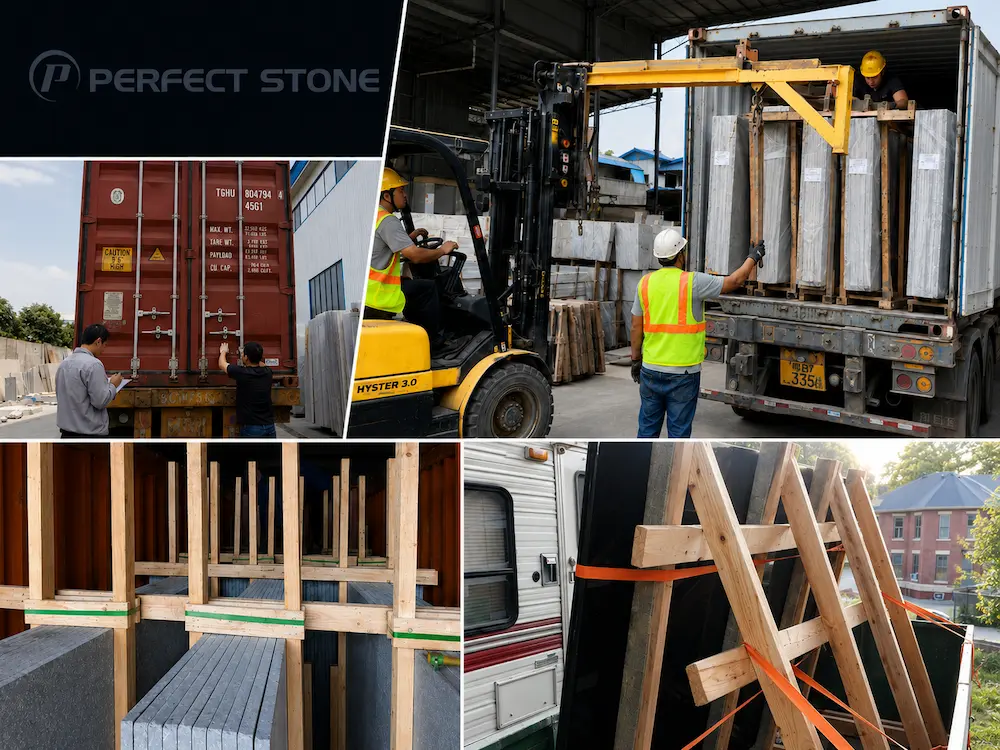
איך לפרוק חלונות מרמר וריצופים מכולות ללא שיבירויות
סיכום מהיר
פריקת לוחות וריצופים ממרם מכולת משלוח היא אחת המراות הסיכון הגבוה ביותר לאחר המשלוח הבינלאומי. לוחות ממרם בגודל מלא חייבים להישאל באופן אנכי באמצעות מנוף טרקטור, מדף תלייה או תמיכה יציבה בצורת A, בעוד שריצופי ממרם באריזות יסגרו, יועברו בזהירות ויסודרו לפני ההתקנה.
לקונים מחו״ל, התהליך הבטוח ביותר הוא לבדוק את הפקק והאריזה לפני הפריקה, להשתמש בציוד הרמה המתאים, לאחסן את הלוחות באופן אנכי מחוץ לאזורי תנועה, ולאמת את הצבע, כיוון הורידים, הכמות ומצב הפנים לפני שההתקנה מתחילה.
כאשר מכולה של לוחות שיש, אבן מגודלת לגודל הרצוי או אריחי שיש באקסיות מגיעה למחסן, לנמל, לאתר הפרויקט או למרכז העיבוד, החלק המסוכן ביותר במסע אינו תמיד המשלוח הימי. לעיתים קרובות, הנזק האמיתי מתרחש במהלך פריקת המכולה. רכב שטח נע מהר מדי, אקסיה נמשכת בזווית לא נכונה, לוח מפוליש נגרר על פני משטח גס או אריחים נפתחים ומורכבים ללא מיון צללים תקין. טעות קטנה אחת יכולה להפוך משלוח טוב לצלעות שבורות, לוחות קרועים, משטחים מוסרטים, עיכוב בהתקנה ודיון לא נעים בנושא תביעה.
ליבואנים, קבלנים, מפיצים וקונים של פרויקטים, ידיעת הדרך הנכונה לפרוק לוחות וריצופי מרמר אינה רק נושא בטיחות. זהו נושא של בקרת סיכונים ברכישות. ככל שצוותכם מבין טוב יותר את הפריקה מהמכולות, את בדיקת האריזה, את אחסון האבן ואת המיון המוקדם להתקנה, כך קל יותר להגן על החומר ששילמתם עליו ולשמור על לוח הזמנים של הפרויקט שלכם.
מדריך זה מסביר כיצד לפרוק לוחות וריצופי מרמר מהמכולות בבטחה, אילו ציוד יש להכין לפני הגעת המשלוח, אילו פרטים באריזה יש לבדוק, באילו טעויות נגרם נזק רב ביותר, וכיצד יכולים הקונים לצמצם את השבירה לפני ההתקנה. הוא שימושי במיוחד לקונים שמקבלים אבן טבעית מספקים מחו"ל כגון Xiamen Perfect Stone , כאשר אריזת הייצוא, טעינת המכולות והטיפול בצד הקונה משפיעים על התוצאה הסופית של הפרויקט.
מדוע הפריקה מהמכולות מהווה נקודת סיכון קריטית לקונים של מרמר ואבן
מרבצי אבן, גרניט, קוורציט, סלע גיר ואבני טבע אחרות הן חומרים חזקים לאחר התקנה תקינה, אך הן פגיעות במהלך הובלה ופריקת המטען בשל משקלן, שטח הפנים הגדול שלהן, הסיום המפולש וההבדלים הטבעיים בגרייניות. לוח אבן עלול להראות שלם, אך טיפול לא תקין יכול ליצור סדקים נסתרים שמתגלים רק בשלב החיתוך או ההתקנה. אריחים עלולים להגיע בארגזים טובים, אך אם הארגזים מופallen, מאוחסנים שטוחים תחת לחץ או מעורבים ללא תכנון, ההתקנה הסופית עלולה להראות פינות שבורות, גוונים לא אחידים או אי-תאום גוון נראה לעין.
בהרבה הזמנות בינלאומיות של אבן, הספק שולט בייצור, בגימור, באבזור ובטעינת הקונטיינרים. ברגע שהקונטיינר מגיע לצד הקונה, ה descargar והטיפול המקומי הופכים אחריותו של הקונה. מסיבה זו, קונים מקצועיים צריכים להתייחס לפרקון כחלק מתהליך בקרת האיכות, ולא רק כמשימה מאגרית. לפני פתיחת הקונטיינר, הצוות צריך להכין את הציוד, להקצות עובדים, לאשר את מרחב הבטיחות ולרשום את המצב החיצוני של המשלוח באמצעות תמונות וסרטונים.
הכלל המרכזי פשוט: לוחות רצפת מארבל אינם צריכים להיעשות כמו פאנלים בנייה רגילים, ומרצפות מארבל אינן צריכות להיעשות כמו קופסאות סטנדרטיות. אבן היא חומר כבד, קשיח ורגיש לפגיעות בצלעות ובפינות. אם תהליך הפרקון מתבצע בזריזות, גם חומר באיכות גבוהה יכול להיפגע עוד לפני שמגיע לשולחן החיתוך או לאזור ההתקנה.
לוחות מארבל לעומת מרצפות מארבל: חומרים שונים דורשים טיפול שונה
לוחות ממרל מלאים, אבני חצץ בגודל מדויק, חלקים לשולחנות ואריחי מרל בארגזים נפוצים בדרך כלל באורח אריזה שונה. מאחר שחלוקת המשקל וסיכונים של שבר הם שונים, שיטת ההורדה חייבת להיות שונה גם כן. לוחות מלאים דורשים תמיכה אנכית יציבה והרמה מכנית. האריחים קלילים יותר להובלה, אך עדיין דורשים מיקום אנכי, טיפול זהיר בארגזים ומיון לפי סדרות לפני ההתקנה.
| סוג חומר | אריזה טיפוסית | שיטת הורדה מומלצת | הסיכון העיקרי במקרה של טיפול לא תקין |
|---|---|---|---|
| לוחות ממרל מלאים | צרורות עץ, מתלים מסוג A-frame, תומכים מחוזקים | מגשף עם זרוע, מנוף תקרתי או ציוד מקצועי להובלת לוחות | התפצלות, התהפכות, שריטות על פני השטח, שבירת קצוות |
| לוחות בגודל מדויק | ארונות עץ עם פוליאוריתן או הגנה פנימית | מגשף, גלגלת משא או מנוף, בהתאם לגודל ולמשקל | פגיעות בפינות, ערימה לא נכונה, פגמים בשוליים |
| אריחים מרמר | קרטונים ארוזים בתוך ארגזים עץ או פלטות | מוניות, משאבת פלטות, רכב דו-גלגלי או טיפול ידני זהיר | קריסת קרטונים, פגמים בפינות, בעיות של ערבוב גוונים |
| חלקי שולחנות עבודה | ארגזים עץ מותאמים עם הגנה על חתכים | מונית בתוספת מיקום ידני זהיר על ידי עובדים מומחים | שבירה סביב חתכים לכיור, פתחי מדורה וחלקים צרים |
1. אם המשלוח שלכם כולל פיסות סilestone מוגמרות ולא לוחות גולמיים או אריזות של אריחים, תהליך הטיפול בהם דורש תשומת לב מיוחדת לחורים חתוכים, קצוות מוגמרים, תווית פרויקט וסדר ההתקנה. ניתן גם לקרוא את המדריך שלנו על איך מארזים, שולחים ומעלים באבטחה שטחי אבן פרטי האריזה והבקרה הספציפיים ל-silestone.
2. אם אתם מקבלים לוחות אבן גדולים, אל תניחו כלל שהמונחף הכללי של המחסן יהיה מספיק. לוחות מלאים דורשים נקודות הרמה יציבות, מספיק מקום עבודה ותמיכה מתאימה מיד לאחר הוצאתם מהמיכל. אם אתם מקבלים אריחים, משקל כל קופסה עשוי להיות נמוך יותר, אך הסיכון עובר לדחיסה של הקופסאות, בלבול בין משלוחים, הבדלים בגוון והטלת אריחים בלא זהירות במהלך התנועה.
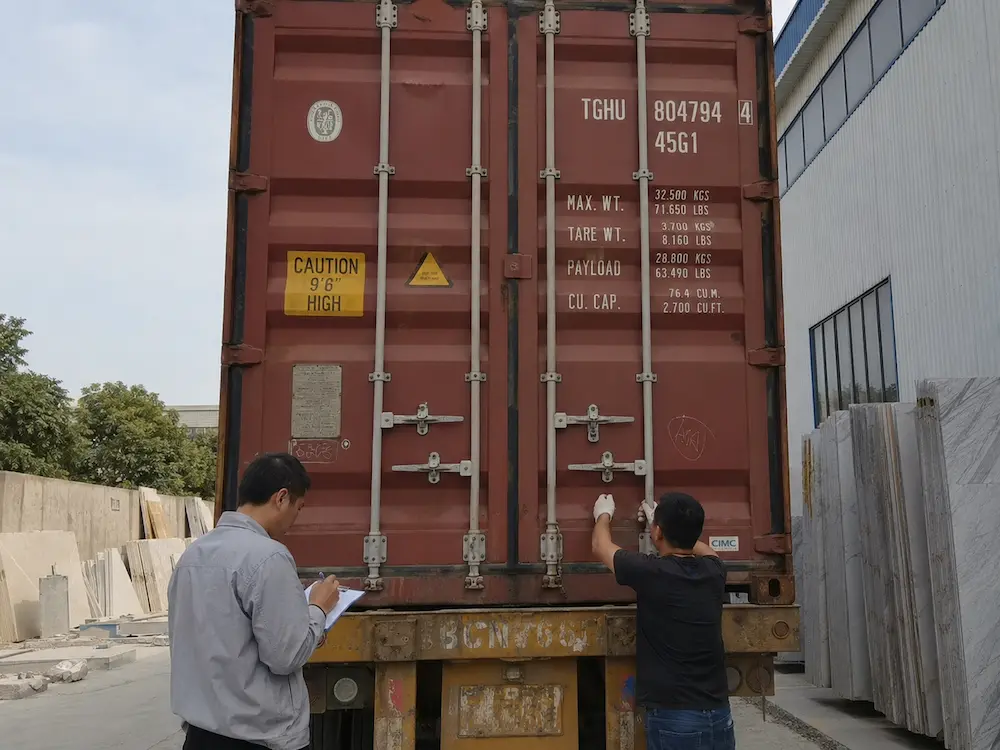
רשימת בדיקה לפני פריקת המכולה
תהליך פריקה מקצועי מתחיל לפני הזזת הארגז הראשון. יש לבדוק ולתעד את החלק החיצוני של המכולה, את האטימה, את מצב הדלת ואת מיקום המטען הפנימי הנראה לעין. זה לא רק מטעמי בטיחות. זה גם עוזר ליצור ראיות אם יש מאוחר יותר מחלוקת לגבי נזקי הובלה, חשיפה ללחות, שבר בארגז או חומר חסר.
תקנים לביטחון ועקרונות טיפול שרכשנים חייבים לפעול לפיהם
לפני הפריקה של לוחות שיש או אריזות של אריחי שיש, על הרכשנים להתייחס לתהליך כאל פעולת טיפול מבוקר בחומרים, ולא פשוט כמשימה סטנדרטית במלאי. הנחיות הביטחון הבינלאומיות לשטח העבודה מדגישות בדרך כלל שלושה סיכונים בתפעול חומרים: נפילת עצמים, אחסון לא יציב ותאונות הקשורות לציוד. עבור משלוחי אבן, הסיכונים הללו הופכים חמורים יותר, מכיוון שלוחות השיש הם כבדים, רחבים, דקים וקשים לשליטה לאחר שהן מתחילים לזוז.
לפי הנחיות ארגון הבטיחות והבריאות בתעסוקה (OSHA) לעיבוד חומרים, חומרים המאוחסנים חייבים להיות מאובטחים כדי למנוע החלקה, נפילה או קריסה, ופעולות המניפת מטענים על ידי מניפת-משאית (Forklift) חייבות להישאר בתוך קיבולת המטען המרובה של המשאית. עובדה זו חשובה במיוחד בעת פריקת רצפות שיש, מכיוון שחבילת רצפות עשויה להיראות יציבה בתוך התחנה אך יכולה להזדוז כאשר רצועות, תומכים או תמיכות עץ מסולקות. אם עובדים מסירים תמיכות בסדר שגוי, רצפת אחת עלולה לדחוף את השנייה וליצור אזור נפילה מסוכן.
לכן צוות הפריקה חייב לאשר את קיבולת המניפת-משאית, את מצב התוספת לשינוע, את יציבות הקרקע, את מרחב העבודה הזמין ואת אזורי העמידה הבטוחים לפני פתיחת כל אריזה או הזזתה. אסור לעובדים לעמוד בכיוון הפוטנציאלי של נפילה של רצפת יש. מטענים ארוכים, גבוהים או לא ממורכזים יתנהלו באיטיות רבה יותר, מכיוון שהם עלולים לפגוע ביציבות המניפת-משאית גם כאשר משקלם הכולל נראה מתאים. אם מרכז המטען משתנה, קיבולת ההפעלה הבטוחה של המניפת-משאית עלולה גם היא להשתנות.
לקונים, הכלל המעשי פשוט: אם המשלוח כולל לוחות שלמים, חבילות כבדות או חלקים גדולים בגודל מדויק, יש להשתמש במפעילים מוסמכים ובציוד הרמה מתאים. אם באתר אין את הציוד הנדרש, אסור להסתמך על עבודה ידנית. דחיית ה descargar היא בדרך כלל זולה יותר מאשר החלפת אבן שסבלה משבירה, תיקון משטחים פגומים או טיפול בתאונה בטיחותית.
| נקודת בדיקה | מה לבדוק | מדוע זה חשוב |
|---|---|---|
| ח seals של המכולה | לאשר שהמספר של הח seal תואם את מסמכי המשלוח | עוזר לאשר את שלמות המשלוח לפני ה descargar |
| דלתות המכולה | לפתוח לאט ולבדוק האם המטען זז | מונע נפילה פתאומית או פגיעה בעובדים |
| מצב הארגז | לחפש עץ שבור, מסמרות רופפות, מסגרות שסבלו משבירה או פינות מרוסקות | מזהה אפשרות של פגיעה במהלך ההובלה |
| סימני רטיבות | בדקו אריזות רטובות, סימני עופרת, עץ רטוב או כתמים של מים | רטיבות עלולה להשפיע על האריזות, התוויות וחלק מהמגפות הסלעיות |
| רשימת אריזות | השוו את סימני הארגזים, קודי המוצרים, הכמויות וההפניות להזמנה | מונע בלבול בעת הורדת המטען ותביעות על חוסר חומרים |
| מוכנות הציוד | הכינו מנהלת, מנוף-זרוע, מנוף, רצועות, מסגרת-A, גלגלת פלטפורמה ומתחם בטיחות | מפחית טיפול מהיר מדי ושבירת אקראי |
לפני תחילת הורדת המטען, צלמו תמונות ברורות של המכולה הסגורה, מספר החותם, המכולה הפתוחה, מצב הארגזים ומצב המטען. בפרויקטים מסחריים, שלב זה יכול לחסוך שעות של ויכוחים בהמשך. אם נראים נזקים לפני הורדת המטען, יש לרשום אותם מיד ולמנוע כל הזזה של המטען עד לתיעוד מלא של המצב.
איך להוריד לוחות שיש ממכולה בבטחה
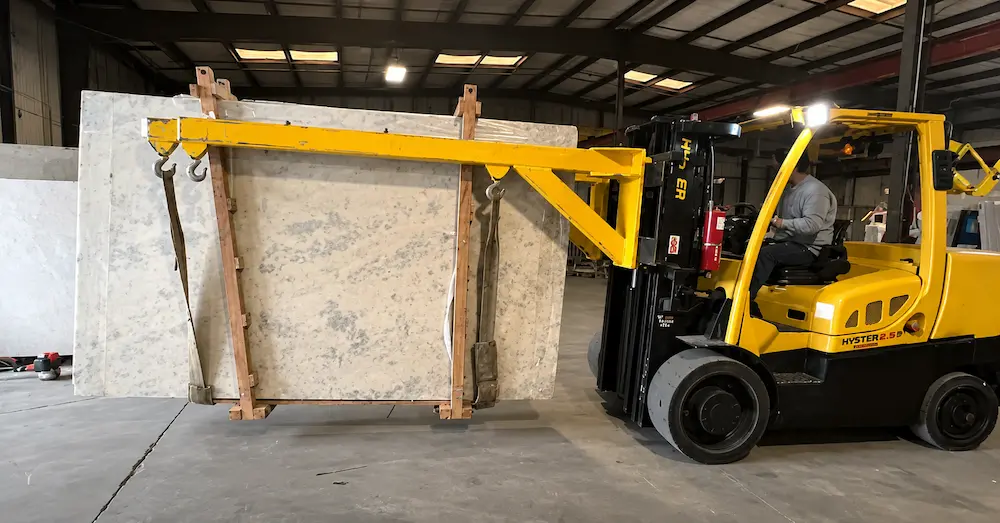
לוחות שיש יש להניע במצב אנכי או כמעט אנכי. הסיבה לכך היא שלוחות גדולים כבדים מאוד ויכולים לתקוע כאשר אינם נתמכים לאורך שטח רחב. כאשר מזיזים את הלוח באופן שטוח, האזור המרכזי עלול להתעקל או לספוג לחץ לא אחיד. גם אם הלוח אינו נשבר מיד, מתח נסתר עלול להופיע מאוחר יותר בשלב היצירה, הגיזום או ההתקנה.
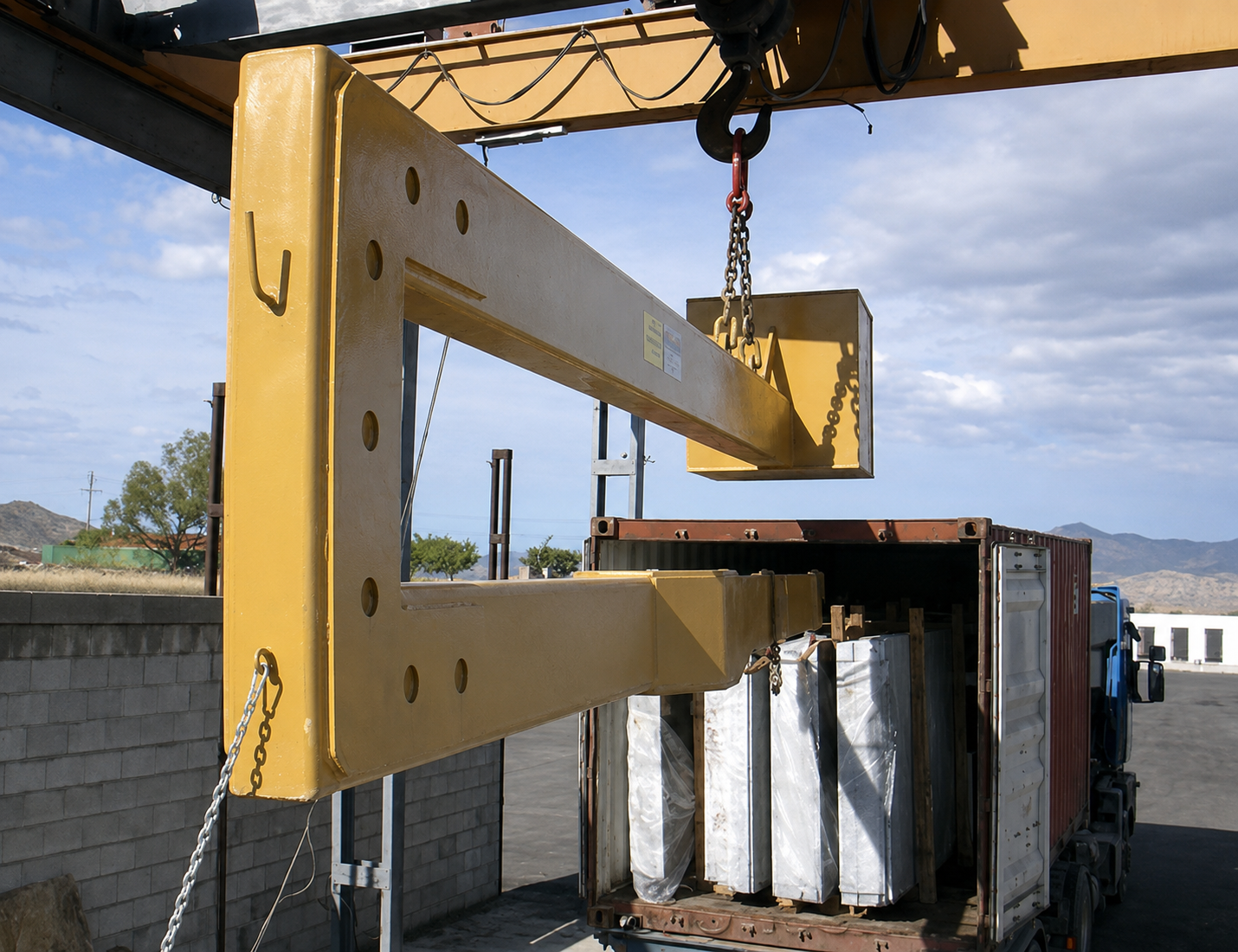
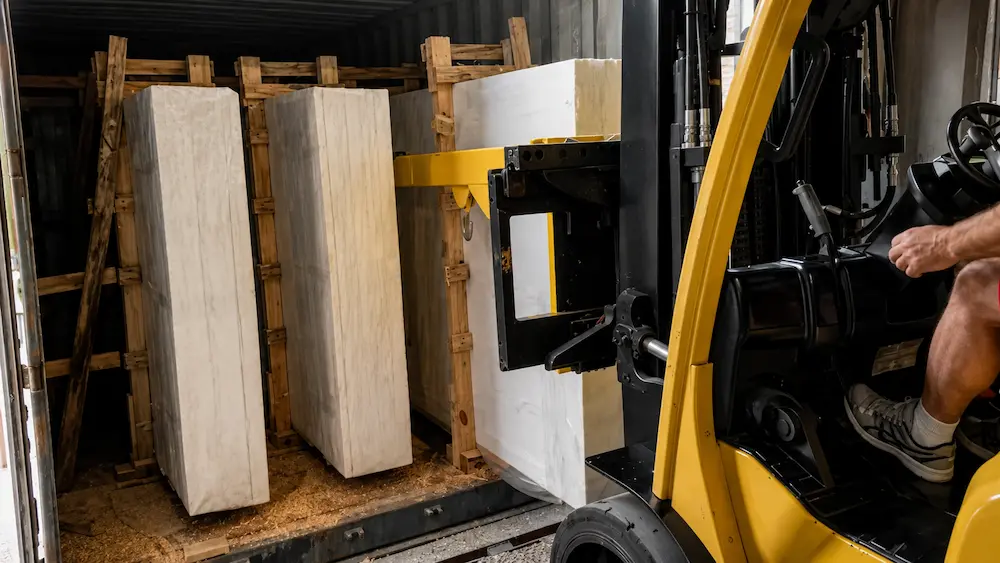
השיטה הבטוחה ביותר היא להשתמש במכונה להרמת משאות עם חיבור זרוע, במעלית תקרה, או בציוד מקצועי להנעת אבן. לעובדים אסור לעמוד בכיוון הנפילה האפשרי של הלוח, ואסור להשאיר לוחות נוטים ללא מסגרת תמיכה יציבה. לאחר שהלוח הוצא מהקונטיינר, יש להזיזו לאט אל מסגרת מסוג A, מדף ללוחות או למערכת אחסון אנכית בטוחה אחרת.
אם למרבל יש פנים מפולishes, יש להניח את הפנים המפולishes זו מול זו עם הגנה מתאימה. זה מפחית את הסיכוי לכתמים הנגרמים על ידי גבבות קשות, אבק, חול או מגע לא אחיד. אם נדרשים מפרידים, יש להשתמש במקלות עץ, כריתות גומי, ספוג או חומרים מגנים אחרים שלא יגנו או יגרמו לפגמים על המשטח.
למתקנים שמקwargs מוצרים מארגז טבעי מפואר ממדינות זרות, יש לדון בהכנות לפריקת המטען לפני שהמשלוח מגיע. הספק יכול לספק מידע על גודל הארגז הצפוי, משקל הלוחות, שיטת ההעמסה והציוד המומלץ. זה חשוב במיוחד כאשר היעד הוא מחסן קטן, פרויקט מגורים, אתר בנייה מרוחק או מיקום ללא גישה למדף תלייה.
למה יש לבדוק את קיבולת המנוף לפני הרמת לוחות אבן
טעות נפוצה אחת בעת פריקת לוחות מארבל היא ההנחה שמכונה להעלאה (פורקליפט) יכולה להרים בבטחה כל עומס, כל עוד המשקל הכולל נמוך מהקיבולת המוצהרת של הפורקליפט. בתנאי פריקה ממשיים, זה לא תמיד נכון. יציבות הפורקליפט מושפעת ממוקד העומס, גובה ההרמה, סוג התוספת, צורת העומס והאם המשקל מתפלג באופן אחיד.
לוחות אבן הם במיוחד מאתגרים מכיוון שהם גבוהים, רחבים ולעיתים קרובות ארוזים באגודות. כאשר משתמשים בזרוע, במקלעת, בהארכה או בכל תוספת אחרת של פורקליפט, מיקום העומס האפקטיבי משתנה. זה עלול להפחית את הקיבולת האמיתית להרמת עולים בבטחה לעומת המספר שמופיע על לוחית הנתונים של הפורקליפט. אגודה של לוחות שנדמה שהיא בטוחה מבחינת משקלה עלולה עדיין להיות מסוכנת אם מוקד העומס נמצא רחוק מדי קדימה או אם משטח הקרקע אינו שטוח.
לפני הורדת המטען, הצוות חייב לבדוק שלושה דברים: את המשקל הכולל המשוער של הארגז או של חבילת הלוחות, את הקיבולת המדורגת של המנוף עם התוספת הנדרשת, ואת המרחק בין מרכז המטען לעמוד המנוף. אם אחד מהפרטים הללו אינו ברור, הבחירה הבטוחה יותר היא להשתמש במנוף תקרתי, במתקני הרמה מקצועיים ללוחות או במנוף מתאים יותר במקום לאלץ את תהליך ההורדה.
לקונים בינלאומיים של אבן, זה הסיבה לכך שמועיל לבקש מהספק את מידות הארגז, את המשקל הכולל, את תמונות ההעמסה וההמלצות להורדה לפני המשלוח. פרטים אלו עוזרים לצוות היעד להתכונן עם הציוד המתאים ולמנוע קבלת החלטות רק לאחר שהדלת של הבקבוק כבר נפתחה.
איך להוריד אריחי שיש ולבנים מוגזרות בגודל
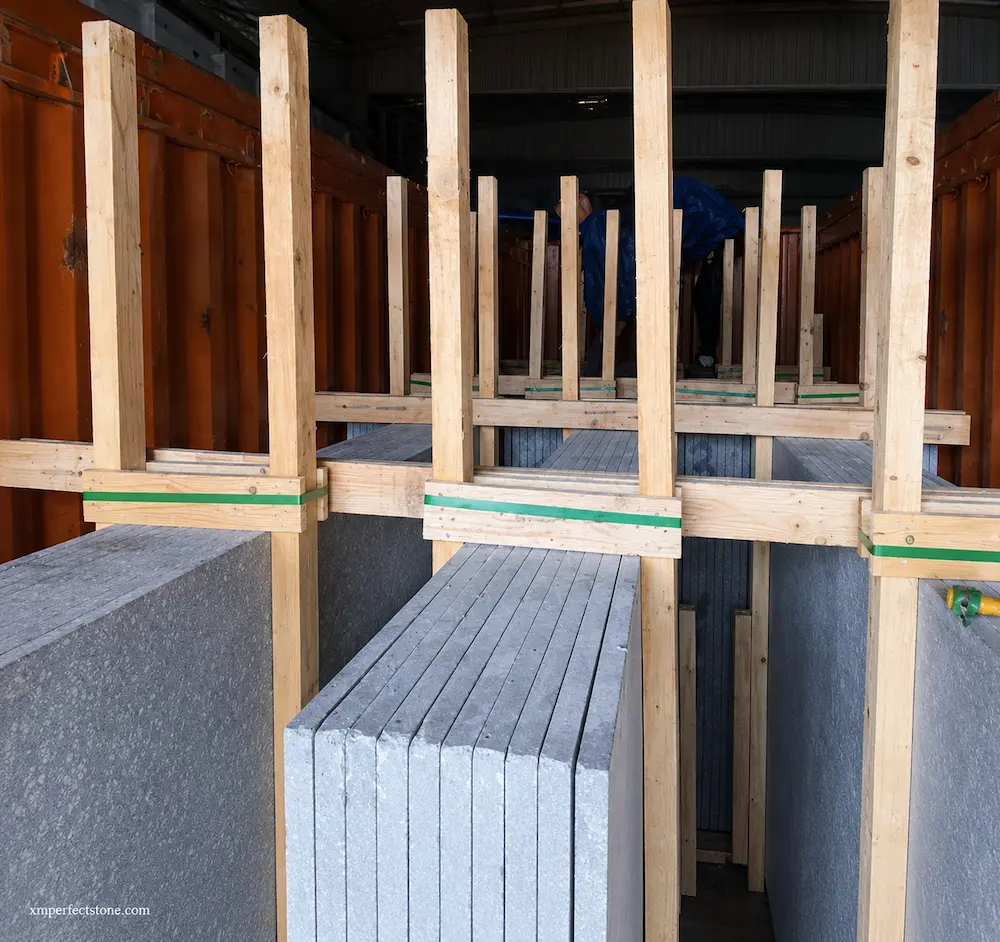
אריחי מרבץ בדרך כלל מופצים בתיבות נייר, ולאחר מכן מונחים בתוך ארגזים עציים או על פלטפורמות. בהשוואה ללוחות מלאים, קל יותר לטפל באריחים מכיוון שכל תיבה קטנה וקלה יותר. עם זאת, קל יותר לא אומר חף מסיכונים. תיבות אריחים עלולות להתפרק אם הן מוצבות במערך לא נכון. פינות עלולות להישבר אם התיבות ייפולו. התאמת צבע עלולה להפוך לקשה אם תערבבו תיבות מ партиות שונות ללא תכנון מראש.
בזמן פריקת אריחי מרבץ המוחזקים בתיבות, יש לשמור על התיבות בעמדת זקוף ככל האפשר ולמנוע זריקתן או החלקתן על הרצפה. אם תנאי הרצפה מאפשרים, ניתן להשתמש במכונה דו-גלוית, במכונית פלטפורמה או במכונה מרוממת כדי להעביר את הסלע בבטחה. העובדים צריכים להימנע מהצבת ארגזים כבדים על משטח לא שטוח, מאחר שהלחץ עלול לעבור לתיבות התחתונות ולפגוע באריחים שבתוכן.
אבני אבן בגודל מדויק דורשות תשומת לב רבה יותר מאבנים רגילות, מכיוון שחלקים יכולים לכלול קצוות מוגמרים, מידות ספציפיות לפרויקט, חורים, חריצים, חיתוכים בזווית או פינות שבריריות. יש לבדוק כל ארгоֹן מול רשימת החבילה ותוכנית האיזור. אם החומר מיועד לחדרי אמבטיה, כיסוי קירות, מדרגות, ריצוף או שולחנות עבודה, הקונה חייב לאשר שהתיוגים תואמים את אזורי ההתקנה לפני הזזת האריגונים רחוק מדי מאזור ה descargar.
סוגי אריזה שעל הקונים להבין לפני ה descargar
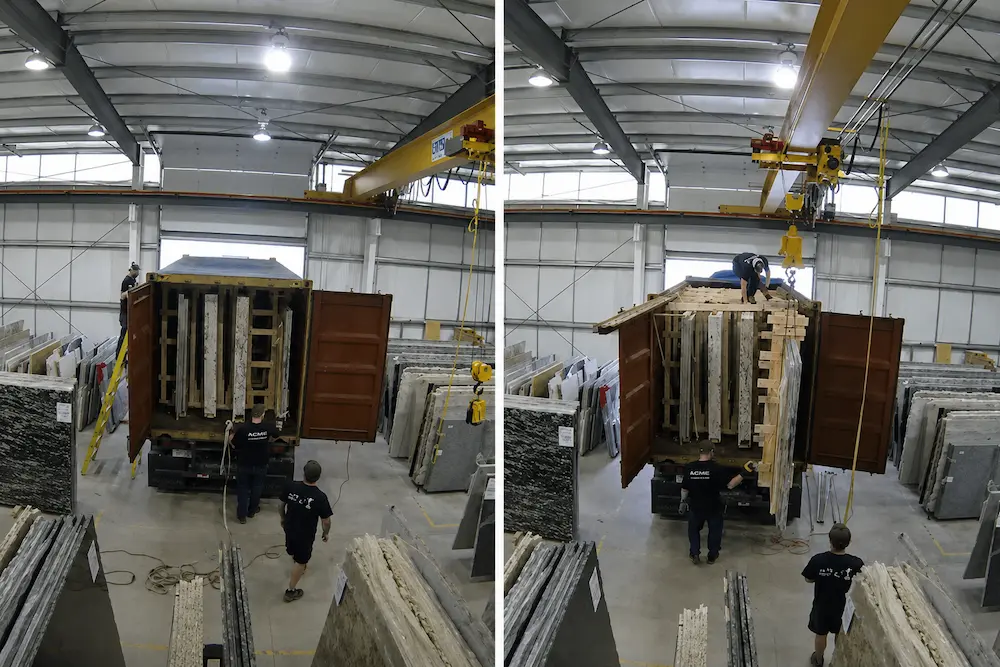
אריזה טובה אינה מבטלת את הצורך ב descargar זהיר. היא רק מפחיתה את הסיכון כאשר צוות ה descargar משתמש בשיטה הנכונה. אריזת ייצוא של אבני אבן כוללת לעתים קרובות חבלי עץ, אריגונים מעץ, דפי פוליאוריתן, סרט פלסטי, מגני פינות, רצועות פלדה, תמיכה בצורת A, או פלטפורמות. על הקונים להבין את המטרה של כל סוג אריזה כדי לדעת מה לבדוק כאשר המשלוח מגיע.
| סוג אריזה | משמש בדרך כלל עבור | הקונה חייב לבדוק |
|---|---|---|
| חבלי עץ | לוחות מלאים ופאנלים גדולים של אבן | יציבות מסגרת, תמיכה תחתונה, מתח ремזות, סימני התרחשות חזותיים |
| ארונות עץ | אריחים, אבן מגודלת לפי גודל, חתיכות לשולחנות | לוחות שבורים, לחות, מסמרות רופפות, פינות דחוקות, מצב הקרטון |
| צמיג וסרט פלסטי | משטחים מפולishes וחלקים מוגמרים | כיסוי משטח, זיהום אבק, שכבות הגנה קרועות |
| תמיכה מסוג A-frame | לוחות גדולים או לוחות כבדים | איזון, נקודות קיבוע, מצב הבסיס, זווית פריקה |
| עטיפת פלטת | אריחים בארגזים וחבילות אבן קטנות | גישה למלגזה, עיוות פלטפורמה, דחיסה של קופסאות קרטון, הפצת המטען |
כלל מעשי אחד הוא לבדוק את האריזה לפני הסרת ההגנה. אם הארגז פגום, יש לצלם אותו תחילה. אם האריזה נראית רטובה, מכווצת או זזה ממקומה, יש לתעד את מצבה לפני חיתוך ремיות או פתיחת קופסאות קרטון. פעולה זו מספקת לקונה רשומה ברורה יותר האם נגרם נזק במהלך התחבורה, ה descargar או הטיפול באתר מאוחר יותר.
טעויות נפוצות שגורמות לשבירת לוחות וריצופי שיש
רוב הנזקים לישר במהלך ה descargar נובעים מטעויות פשוטות שחוזרות על עצמן. החומר עשוי להיות באיכות טובה, האריזה עשויה להיות סבירה והקונטיינר עשוי להגיע בזמן, אך טיפול לקוי עדיין עלול לגרום לאבדנים שניתן להימנע מהם. הקונים צריכים לאמן את צוות ה descargar עוד לפני שהקונטיינר מגיע, ולא להסביר את כל הפרטים כאשר המשאית מחכה בחוץ.
| טעות | השלכות אפשריות | שיטה טובה יותר |
|---|---|---|
| ה descargar של הלוחות בשטח | סדקים חבויים, שבירה מלאה, מתח בעת עיבוד | להחזיק לוחות במאונך או כמעט במאונך במהלך התנועה |
| לא הוכן מסגרת מסוג A | לוחות עלולים להנטות, להחליק או להתהפך לאחר פריקה | להכין אחסון אנכי יציב לפני הגעת המכולה |
| משיכת הארגזים במהירות מדי | פגיעות בשפה, נזק למסגרת, העברת עומס פתאומית | לניעול לאט עם תמיכה של משלב או מנוף |
| התעלמות מהתמונות לפני הפריקה | דיון קשה בנושא תביעות אם יתגלו נזקים מאוחרת יותר | לרשום את מצב ה-container, הארגזים והמטען לפני התנועה |
| ערבוב קופסאות אריחים ללא בקרת שטח | הבדלים נראים בצל לאחר ההתקנה | סדר לפי חבילת, חדר, שטח וכיוון הוורידים |
| אחסון שלטים באזורים תנועה | פגיעה משנית, פציעות בעובדים, שריפות על פני השטח | שמור את הלוחות הרחק מהשינויים באתר העבודה ומסלולי הציוד |
הטעות היקרה ביותר היא לעתים קרובות לא תאונה דרמטית. זו טעות ניהול קטנה שיוצרת לחץ בלתי נראה. לוב יכול לשרוד את ההורדה אבל לקרע במהלך החיתוך. אריזה עשויה להיראות מקובלת בקופסה, אבל להראות פינות סדוקות במהלך ההתקנה. זו הסיבה שהפירוק זהיר זול יותר מאשר החלפה, עיכוב ויכוח.
אם זה קורה, בחר את השיטה הזו
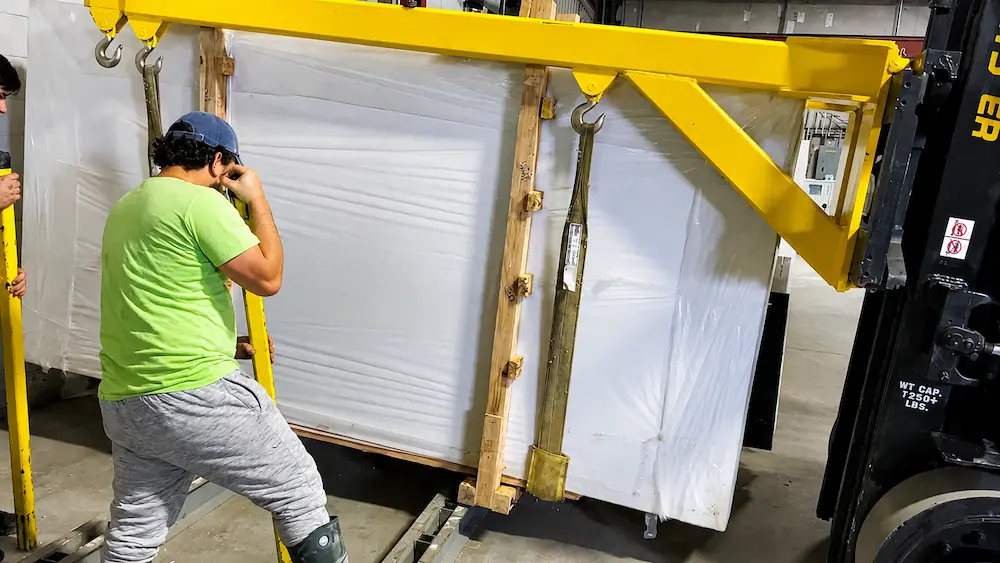
אם אתה מפשיט לוחות מרמר בגודל מלא, להכין מעלה עם רצועה או מעלה מעל לפני המשאית מגיעה. אל תסתמכו על עבודה ידנית או על ג'ק פלט בסיסי. לוחות גדולים יש צורך בתמיכה אנכית, הרמת נשלחת בשליטה, ומרחב מספיק עבור הצוות לנוע מבלי לעמוד במקומות לא בטוחים.
אם אתם פורקים אריחי שיש בקופסאות, בחרו עגלת משטחים, מלגזה או משאית דו-גלגלית בהתאם למצב הרצפה, משקל הארגז והגישה לאתר. אם המשטח אינו אחיד, צר או משופע, הימנעו מטיפול ידני מהיר. קופסה שנפלה עלולה לגרום לשבירת פינות על פני מספר אריחים, וייתכן שהנזק לא יורגש עד להתקנה.
אם הלוחות מפולשים, שימרו את הפנים המפולשות אחת מול השנייה עם הגנה מתאימה בין המשטחים. אם האבן לא תותקן מיד, אחסנו אותה באופן אנכי על מדף יציב או מסגרת בצורת A. אם הפרויקט דורש עקביות בצבע, פתחו מספר ארגזים ורשמו את החומר ללא הדבקה (dry-lay) לפני ההתקנה, במקום להעריך את כל המשלוח על סמך אריח אחד או ארגז אחד.
אם הארגז העץ פגוע באופן ניכר, לא להסיר את כל האריזה מיד. ראשית, לצלם תמונות של הארגז, התוית, אזור הפגיעה והחומר הסמוך. לאחר מכן לפתוח את החבילה בזהירות ולבדוק את האבן. גישה זו מספקת גם לקונה וגם לספק בסיס ברור יותר להערכת האם הבעיה נובעת מפגיעת האריזה, מהתנגשות במהלך ההובלה, מפגיעת פריקה או מהתייחסות מאוחרת באתר העבודה.
רשימת בדיקת קבלת הקונה לאחר הפריקה
לאחר הפריקה, הקונים אינם צריכים לעבור מייד להתקנה. בדיקת קבלה בסיסית עוזרת לאשר שההזמנה תואמת את רשימת האריזה ושהחומר מתאים לאזור הפרויקט. זה חשוב במיוחד למרמר טבעי, משום שגוון הצבע, הורידים והסימנים הטבעיים משתנים מבלוק לבלוק ומפלטה לפלטה.
| פריט בדיקה | מה לבדוק | מדוע זה חשוב |
|---|---|---|
| כמות | להשוות בין הקרטונים, הארגזים, הפלטות והחלקים ורשימת האריזה | מונע חוסר חומר לפני תחילת ההתקנה |
| תנאי המשטח | לבדוק שריטות, כתמים, סדקים, סימני רזין ואיכות המרוויח | מאשרת את איכות הנראות לפני עיבוד או התקנה |
| קצוות ופינות | בדוקו שברי קצוות, סדקים וחריצים רגילים | מפחית את הפסולת בהתקנה ואת עיכובים בהחלפה |
| עובי | מדדו אקראית פריטים או לוחות נבחרים | מאשר את סבילות הפרויקט והתיישנות לעיבוד |
| צבע וורידים | השוו מספר פריטים באור דומה | עוזר למנוע אי-התאמה נראית לאחר ההתקנה |
| תויות ומספרי מכרך | התאמו תויות הארגז עם החדר, האזור, התרשים או תוכנית ההתקנה | מחלק את פרויקט המבנה ובקרת הצללים באופן מסודר |
לאריחי מרבץ: פתחו את כל הקופסאות הרלוונטיות וקחו אריחים ממספר קופסאות באופן אקראי לפני ההתקנה. זה עוזר ליצור תוצאה אחידה וטבעית יותר. סלע טבעי לא אמור להיערך על פי אריח בודד בלבד. השיטה הנכונה היא להסתכל על מספר אריחים יחד, לערבב אותם, לסדר אותם שטוחים ולבדוק כיצד הצבע, כיוון הורידים והגוון הרקעי מתאימים לאורך כל האזור.
איך לאחסן לוחות ואריחי מרבץ לאחר פריקה
האחסון הזמני לאחר הפריקה הוא מקור נפוץ נוסף לפגמים. לוחות מרבץ חייבים להיות ממוקמים מחוץ לאזור התנועה העיקרי של העבודה. הם חייבים לנוח אנכית על מסגרת תמיכה יציבה ולא להישאר נשענים באופן רופף על קיר, עמוד או משטח לא שטוח. אם יש צורך להפריד בין הלוחות, יש להשתמש בחומרים עציים מתאימים או במרווחים מגנים כדי שהמשטחים הסלעיים לא יתח friction אחד נגד השני.
הצדדים הממויינים צריכים להיות פונים זה אל זה אם אפשר, עם הגנה ביניהם אם יש צורך בכך. זה עוזר להפחית את הגרדימיות על המשטח. לא ينبغي לאחסן לוחות באזורים שבהם מקרוסקופים, עגלות, עובדים או חומרי בנייה עוברים לעיתים קרובות. התנגשות אחת בלבד עם חומר אחר יכולה לגרום לפגיעה בקצה או ליצירת סדק, במיוחד באבני אבן בפורמט גדול.
רצפות וחלקים שנקטעו לגודל מסוים צריכים לאיחסן לפי партиיה, אזור, חדר או סדר התקנה. אם החומר מיועד לפרויקט ריצוף או כיסוי קירות גדול, הפרדת הארגזים לפי חדר או אזור יכולה לחסוך זמן ולמזער את הסיכון להתאמה לקולר לא מדויקת. לא לאפשר לערמות לחשוף לממטר, למים עומדים או לזיהום ישיר באתר הבנייה. גם אם אבן עצמה עמידה, אריזה פגומה ומשטחים מלוכלכים יכולים ליצור עבודה נוספת של ניקיון, מיון והתקנה.
מיון רצפות מארביל לפני ההתקנה
המיון הוא חובה עבור אבן טבעית. זהו חלק מתהליך בדיקת איכות ההתקנה. לפני שהתקנה מתחילה, הקונה או המתקין חייבים לוודא שהחומר הנכון נמסר. לאחר שהאבן הותקנה, החלפתה הופכת קושי רב יותר. הצוות חייב לבדוק את סוג המוצר, הגודל, המגשימיות, הכמות, טווח הצבעים והמצב החזותי לפני הפעלת הדבק.
השיטה הטובה ביותר היא לחלק את שטח ההתקנה לאזורים נפרדים ולהקצות כמות מספקת של חומר לכל אזור, כולל פסולת. אם מותקנים אריחים, יש לפתוח את כל הקופסאות שיאויישו באותו האזור ולבחור אריחים מקופסאות שונות באופן אקראי. זה יוצר התקנה מאוזנת יותר ומונע מצב שבו קיר או ריצפה מסוימים יראו כהים יותר, בהירים יותר או בעלי צלילים עזים יותר מאשר אחרים.
גם כיוון הורידים צריך להילקח בחשבון לפני ההתקנה. חלק מעיצובי המרמאר נראים טוב יותר כאשר הורידים זורמים בכיוון אחד. אחרים נראים טבעיים יותר כאשר הם מעורבבים. אם אין מספיק חומר לסיים שטח שלם, יש להימנע מהתחלה של קטע זה. חומר נוסף שהוזמן מאוחר יותר עלול להגיע מקוביה או מחסן אחר, מה שעלול ליצור הבדלים מראים בגוון.
שאלות שקונים צריכים לשאול לפני שיוצאת המכולה מהמפעל
תהליך ה descargar הבטוח ביותר מתחיל לפני שיוצאת המכולה מהמפעל של הספק. רבים מהפגיעות מתרחשים ביעד, אך הסיכון יכול לעתים קרובות להקטן בשלב אישור ההזמנה, סקירת האריזה והתקשורת לפני המשלוח. ספק מקצועי אמור להיות מסוגל לספק מידע פרקטי שיעזור לקונה להכין את אתר הקבלה בצורה נכונה.
| שאלה לשאול | מדוע זה חשוב | פעולה של הקונה |
|---|---|---|
| מהו המשקל הכולל של כל ארוגה או חבילה של לוחות? | עוזר לאשר את היכולת של המנוף, הרתע או הזרוע לפני ה descargar. | חלקו את המשקל עם צוות המחסן או צוות אתר העבודה לפני שהמשאית מגיעה. |
| מה הממדים של הארגז? | מגדיר האם יש מספיק שטח פנוי במיכל, בפתח הדלת, באזור ה descargar והמדף לאחסון. | בדקו מראש את מסלולי הגישה, את שטח הסיבוב ואת מיקום האחסון. |
| האם קיימות תמונות של טעינה ותמונות של אריזה? | מספקת הפניה לאופן בו אופק החבילה לפני המשלוח. | השוו את התמונות למצב המיכל בפועל עם הגעתו. |
| באילו ציוד פריקה מומלץ להשתמש? | חומרים שונים עשויים לדרוש שימוש במכונה להרמת משאיות, ברית, משאבת פלטות, מסגרת A או תמיכה ידנית. | הכינו את הציוד הנכון לפני פתיחת המיכל. |
| האם לוחות, אריחים או חתיכות בגודל מדויק מסומנים לפי סדרה או אזור התקנה? | תוויות ברורות מפחיתות בלבול בשל הבדלי גוון וטעויות בהתקנה. | מיינו את הארגזים לפי חדר, אזור, סדרה או תרשים פרויקט לאחר ה descargar. |
| מה יש לתעד אם נמצאה פגיעה? | רשומות מתאימות עוזרות להבהיר האם הפגיעות התרחשה במהלך ההובלה, ה descargar או טיפול מאוחר יותר. | צלמו תמונות לפני ה descargar, בעת פתיחת הארגזים ואחרי הבדיקה. |
אם הספק אינו מספק תמונות בסיסיות של טעינה, פרטי ארגזים, משקל גולמי או הנחיות אריזה, הקונה צריך לפעול בזהירות רבה יותר. זה לא תמיד אומר שהספק אינו מהימן, אך כן מגביר את הסיכון בצד המקבל. עבור לוחות שיש בעלי ערך גבוה, אבן מוגנת לפרויקט מסוים, או אריחים מפולשים, תקשורת טובה יותר לפני המשלוח יכולה למנוע פגיעות שניתן להימנע מהן ולמזער סכסוכים בנוגע ליחסיות אחריות לאחר הגעת המוצרים.
כיצד אריזה טובה יותר מצד הספק מפחיתה את הסיכון של הקונה
ספק אבן מהימן עושה יותר מאשר למכור מרמר מושך. לקונים בינלאומיים, הספק חייב להבין את נושא הבחירה בחומר, בדיקת לוחות האבן, אריזת היצוא, סימון הארגזים, טעינת המכולות והסיכונים הקשורים לפריקת המכולה מצד הקונה. איכות ייצור טובה עלולה להידלדל בעקבות אריזה לקויה, ואריזה טובה עלולה להיכשל גם אם הקונה לא מכין את שיטת הפריקה הנכונה.
בבחירת ספק אבן, על הקונים לשאול כיצד לוחות האבן מארזים, כיצד מוגנות האריחים, האם הארגזים מסומנים בבירור, האם ניתן לספק תמונות לפני המשלוח, ומהו ציוד הפריקה המומלץ ליעד. זו אינה הפרטנות מיותרת. זהו ניהול סיכונים פרקטי. ככל שהקונה יקבל מידע רב יותר לפני הגעת המכולה, כך יהיו פחות הפתעות בעת הפריקה.
בתור ספק אבן בעל ניסיון הערך של תקשורת תקינה אינו מוגבל לבחירת המוצר בלבד. הוא כולל גם ייעוץ על אריזה, הכנה למשלוח והנחיות יישום ריאליות. לקונים פרויקטיים, למפיצים, לקבלנים וליבואנים, זה יכול להפחית שבר, עיכובים בהתקנה וסכסוכים מיותרים לאחר הגעת המכולה.
המלצה סופית לייבואני אבן
אם אתם מייבאים לוחות שיש, אריחים, שולחנות עבודה או אבן מגודלת לפי מידה, אל תמתינו להגעה של המכולה כדי לחשוב על הורדת המטען. בקשו פרטים על האריזה לפני המשלוח, הכינו את ציוד ההרמה המתאים, תעדו את מצב המכולה לפני הורדת המטען, שמרו על הלוחות בעמדת אנכיות, הגנו על הפנים המפולishes, בדקו את כל החומרים לאחר הורדת המטען וסווגו את האריחים לפני ההתקנה.
הכלל המעשי ביותר הוא זה: אם החומר גדול, כבד, מפוליש או ייחודי לפרויקט מסוים, יש להתייחס אליו לאט, במאונך ועם תמיכה מתאימה. אם החומר ארוז בארגזים, יש לשמור על סדר לפי אצווה ואזור התקנה. אם האריזה נפגעה, יש לתעד את כל הפרטים לפני שתזדחלו קדימה במהירות רבה מדי. שלבים אלו פשוטים, אך הם יכולים למנוע שברות יקרות ודיונים מורכבים על אחריות.
צריכים עזרה בהכנה למשלוח ארגז מרמר?
אם אתם מתכננים לייבא לוחות מרמר, ריצופים, שולחנות עבודה או אבן חתוכה בגודל מדויק, שלחו לנו את סוג החומר, גודל הלוחות, כמות הארגזים, תנאי ה descargar היעד, ולוח הזמנים של הפרויקט לפני המשלוח. צוותנו יכול לעזור לבדוק את פרטי האריזה, תמונות העמסה, סימוני הארגזים וההכנות ל descargar, כדי שצוות הקבלה שלכם יוכל לדעת מה לצפות בו עוד לפני שהארגז יגיע.
מסקנה מעשית
פריקת מרבצי אבן בטוחה תלויה בשלושה גורמים: ציוד נכון, כיוון ידידותי של הפעולה ורשומות בדיקה נכונות. למרבצים מלאים, יש לבחור בזיז למזלג, בריח או תמיכה בצורת A. לריצופים, יש להגן על הקרטונים, לסווג את המכרות ולבדוק את הצבע לפני ההתקנה. עבור כל משלוח, יש לצלם תמונות לפני הפריקה ולשמור את האבן באופן אנכי באזור בטוח.
אם אתם מתכננים הזמנת אבן לחו"ל וצריכים הנחיה באשר לאספקה, טעינת מכולות, מרבצי אבן, ריצופים או אבן חתוכה לפי מידה, צור קשר עם צוותנו לפני המשלוח כדי שתהליך הפריקה יוכל להתבצע בצורה נכונה כבר מהשלב הראשון.
שאלה נפוצה
1. אילו ציודים נדרשים לפריקת מרבצי אבן ממכולה?
לחלקות מארבל במלוא הגודל יש לרוב לפרוק באמצעות משאבת שפיץ עם חיבור זרוע, מנוף תקרתי, תמיכה בצורת A, או ציוד מקצועי לעיבוד אבן. הציוד הנכון תלוי בגודל החלקות, בעיצוב הארגז, בגישה לאתר ובשטח העבודה הזמין. לא מומלץ לפרוק ידנית חלקות גדולות בשל המשקל הגבוה והסיכון להתהפכות.
2. האם ניתן לפרוק חלקות מארבל ידנית?
לא ينبغي לפרוק ידנית חלקות מארבל גדולות. הן כבדות, קשיחות וקלות לשבירה אם לא תומכים במשקלן בצורה נכונה. טיפול ידני עשוי להיות אפשרי רק עבור חתיכות קטנות שנקטפו לגודל מסוים, ואף אז על העובדים לשמור על האבן במצב אנכי, להימנע מסיבוב ולשפר את השימוש בציוד תמיכה מתאים בכל עת שאפשר.
3. האם יש לאחסן חלקות מארבל באופן אנכי או אופקי?
לוחות שיש צריכים להישמר באופן אנכי או כמעט אנכי על מסגרת בצורת A יציבה או על מדף לוחות. שימור אופקי עלול ליצור לחץ לא אחיד על פני הלוח, במיוחד בחלקים גדולים. שימור אנכי גם מפחית את שטח הרצפה הנדרש, מקל על הבדיקה ועוזר למנוע סדקים תחת מתח בעת הזזת הלוח בהמשך.
4. כיצד יש להגן על לוחות שיש מפולשים בעת פריקת המטען?
לוחות שיש מפולשים חייבים להישא כך שהפאות המפולשות יפנו זו אל זו, אם אפשר, עם הגנה מתאימה בין המשטחים במקרה הצורך. זה עוזר להפחית שריטות שנגרמות על ידי גבבים קשיחים, אבק, חול או חיכוך ישיר. כמו כן, יש להזיז את הלוחות באיטיות ולשים אותם מיד על תמיכה יציבה לאחר הפריקה.
5. כיצד יש לבדוק אריחי שיש לאחר המסירה?
לאחר המשלוח, הקונים צריכים לבדוק את מצב הקרטון, הכמות, הגודל, איכות המשטח, הפינות, התוויות של הסדרה, טווח הצבעים וכיוון הורידים. לא ניתן להעריך אריחים על סמך פריט אחד או קופסה אחת בלבד. לשם תוצאה טובה יותר בהתקנה, יש לפתוח מספר קופסאות, לערבב את האריחים באופן אקראי, לסדר אותם שטוחים ולבדוק את הצבע והדפוס הכלליים לפני שההתקנה מתחילה.
6. מה על הקונים לעשות אם הארגז העץ ניזוק בעת ההגעה?
אם הארגז העץ ניזוק בעת ההגעה, על הקונים לצלם תמונות וסרטונים לפני הורדת המטען או הסרת האריזה. יש לתעד את מצב המכולה, סימני הארגז, עץ שבור, סימנים של לחות, רצועות רפויות וכל נזק גלוי לאבן. תיעוד זה עוזר לקבוע האם הנזק אירע במהלך ההובלה, ההורדה או טיפול מאוחר יותר באתר העבודה.
7. מדוע יש לערבב אריחי שיש לפני ההתקנה?
רצועות ממרבל צריכות להימשך יחד לפני ההתקנה, מכיוון שסלע טבעי כולל הבדלים בצבע, בעורקים ובגוון הרקע. לקיחת רצועות מארגזים שונים והצבתם יחד יוצרת משטח מאוזן וטבעי יותר למראה. אם הרצועות תהיינה מותקנות אריזה אחר אריזה, אזור אחד עלול להיראות כהה יותר, בהיר יותר או עם עורקים בולטים יותר מאזור אחר.
8. כיצד קונים מחו"ל יכולים למזער את השברונות בסלע במהלך המשלוח והפריקה?
קונים מחו"ל יכולים למזער שברונות על ידי אישור פרטי האריזה לפני המשלוח, הכנת ציוד של מוניות או מניפליות לפני הגעת הקונטיינר, צילום המטען לפני הפריקה, שמירת הלוחות במצב אנכי, הגנה על הפנים המפולishes, אחסון הלוחות מחוץ לאזורי תנועה, וביצוע בדיקה של כל החומרים לפני ההתקנה. תקשורת ברורה עם הספק לפני המשלוח עוזרת גם לקונה להתכונן לתכנון הפריקה הנכון.