 EN
EN


Quick Summary
This Luxury Quartzite Guide helps importers, designers, developers, fabricators, and project buyers understand how to source rare quartzite slabs in 2026 with better control over authenticity, application suitability, supplier capability, documentation, packing, and long-term project risk. For buyers comparing Exotic Stone Slabs, Brazilian Quartzite, and premium slab collections, the safest sourcing strategy is to evaluate the real slab, the supplier process, and the intended application before making a purchase decision.
Why Luxury Quartzite Is Becoming the Signature Stone of 2026
Luxury interior design has entered a new phase. Buyers still appreciate white marble, beige limestone, and classic granite, but high-end projects are increasingly asking for stones with stronger personality. A luxury villa kitchen, hotel lobby, private club wall, or designer bathroom no longer needs to look “safe” only. It needs to feel memorable.
That is where luxury quartzite slabs have become highly competitive. Quartzite offers a rare combination of natural depth, dramatic color movement, high-end texture, and strong performance potential. While marble is admired for elegance, quartzite often delivers a bolder visual statement. While granite is respected for durability, quartzite can feel more refined and design-forward. While engineered quartz offers consistency, natural quartzite offers individuality.
In 2026, rare quartzite is not simply a countertop material. It is becoming a design identity.
From White Marble Fatigue to Dramatic Natural Movement
For many years, white marble dominated luxury interiors. Calacatta, Carrara, Statuario, and other white marble varieties became symbols of elegance across kitchens, bathrooms, hotels, and residential spaces. They still matter, and they will not disappear. But the market has changed.
High-end buyers are now more willing to choose dramatic natural stone because they want spaces that feel custom, not copied. In luxury residential design, this shift is visible in waterfall kitchen islands, fireplace surrounds, bookmatched feature walls, powder room vanities, and full-height stone panels. In commercial luxury projects, it appears in hotel reception counters, restaurant bars, elevator lobbies, VIP lounges, and branded retail interiors.
This is one reason Exotic Stone Slabs are gaining more attention. A rare quartzite slab can become the visual anchor of the entire project. The stone does not merely support the design; it defines the mood of the space.
Blue quartzite creates a cool, artistic atmosphere. Green quartzite brings depth and botanical luxury. Cream and gold quartzite support quiet luxury interiors. Multicolor quartzite turns a surface into a natural artwork. For designers, this range provides a broader creative vocabulary than many traditional stone categories.
Why Buyers Are Treating Quartzite as an Investment Material
Professional buyers do not source rare quartzite only because it looks impressive. They choose it because the right material can increase the perceived value of a project.
A luxury stone decision affects more than the surface itself. It influences how a homeowner feels about the kitchen, how hotel guests remember the lobby, how a developer presents a premium unit, and how a distributor differentiates its showroom inventory. A rare quartzite slab with strong color, clean structure, and proper finish can become a project asset.
However, the reverse is also true. The wrong slab can create serious consequences. A mislabeled soft stone used as a kitchen countertop may stain, etch, or scratch. A dramatic slab chosen without bookmatch planning may look chaotic after installation. A supplier who cannot reserve extra slabs may leave a project unfinished when additional pieces are needed. A poor packing method can turn an expensive container into a damage claim.
That is why a true Luxury Quartzite Guide must go beyond color names. It must help buyers understand suitability, risk, and sourcing discipline.
What Makes Quartzite Different from Marble, Granite, and Engineered Quartz?
Before buying premium quartzite, buyers must understand one thing clearly: not every stone sold as quartzite performs the same way.
The word “quartzite” is sometimes used loosely in the stone market. Some materials are true geological quartzite. Some are dolomitic marble, calcite-rich stone, or softer metamorphic materials marketed under quartzite-like names. This matters because performance, fabrication behavior, maintenance needs, and application suitability can vary greatly.
For this reason, buyers should avoid making decisions based only on trade names. A beautiful slab name may help marketing, but it does not replace material evaluation.
Natural Quartzite vs Marble
Marble and quartzite can both be used in luxury interiors, but they serve different priorities.
Marble is famous for its soft elegance, smooth visual movement, and timeless appeal. It works beautifully in bathrooms, wall cladding, fireplace surrounds, decorative flooring, and low-wear interior spaces. For buyers who want a classical European atmosphere, marble remains difficult to replace.
Quartzite, especially true quartzite, is usually harder and more resistant to scratching than marble. This makes it attractive for kitchens, islands, bars, dining surfaces, and high-use residential applications. Its dense mineral structure can offer stronger performance, although sealing and proper care are still important.
The mistake many buyers make is assuming quartzite is automatically maintenance-free. It is not. Natural stone always needs correct fabrication, sealing, installation, and care. But when selected properly, true quartzite can offer an excellent balance between beauty and practical performance.
If a buyer wants a soft, classic, sculptural look for a bathroom wall, marble may be suitable. If the buyer wants a dramatic natural stone for a kitchen island with stronger wear resistance, natural quartzite slabs may be the better choice.
Natural Quartzite vs Granite
Granite has long been trusted for durability. It is widely available, stable, and familiar to fabricators around the world. For high-traffic commercial spaces, exterior projects, and cost-controlled developments, granite remains a practical material.
Quartzite, however, often wins when the project requires stronger visual luxury. Many rare quartzite slabs have veining, translucency, color transitions, and natural movement that granite usually cannot match. This makes quartzite especially suitable for premium residential and hospitality interiors where the stone must create emotional impact.
The decision is not about which material is universally better. It is about which material fits the project. If the buyer needs a durable, predictable, and widely available stone, granite can be a strong option. If the buyer needs a high-end surface with rarity, movement, and design value, quartzite may be more appropriate.
Natural Quartzite vs Engineered Quartz
Engineered quartz is popular because it offers consistency. It is easier to match across multiple units, easier to specify for large developments, and often more predictable in color and pattern. For apartment projects, standardized kitchen programs, or repeatable commercial interiors, engineered quartz has clear advantages.
Natural quartzite is different. It is chosen for uniqueness.
Every slab has its own movement, color transitions, mineral structure, and natural pattern. This uniqueness is exactly why luxury buyers want it. A natural quartzite island cannot be perfectly duplicated. A bookmatched quartzite wall cannot be reduced to a printed pattern. The value comes from the stone’s individuality.
For this reason, high-end natural stone projects often use quartzite when the design goal is not standardization, but distinction.
The 2026 Luxury Quartzite Color Forecast
Color is one of the biggest reasons quartzite has become a luxury design material. In 2026, buyers are not only asking whether quartzite is strong enough. They are asking which quartzite style will make the project feel current, refined, and memorable.
The strongest demand is coming from four major directions: blue and green statement quartzite, cream and white quiet luxury quartzite, gold and warm-toned quartzite, and multicolor exotic quartzite with high movement.
Blue and Green Quartzite for Statement Interiors
Blue and green quartzite are among the most attention-grabbing stone categories in luxury design. They are often used when a project needs a strong focal point rather than a neutral background.
Blue quartzite can create a cool, artistic, gallery-like atmosphere. It works well in kitchen islands, bar counters, bathroom feature walls, fireplace surrounds, and hotel reception areas. In many projects, blue quartzite becomes the piece that guests remember first.
Green quartzite has a different emotional effect. It feels organic, deep, and sophisticated. In luxury residential projects, green quartzite can connect interiors with landscape, garden views, wood textures, brass accents, and warm lighting. In hospitality design, it can create a calm but memorable visual identity.
For buyers sourcing blue or green Exotic Stone Slabs, the key risk is inconsistency. These stones often have strong movement, and no two slabs look exactly the same. If the project requires symmetry, the buyer should ask for bookmatch availability. If the project requires multiple rooms, the buyer should confirm whether the same bundle can cover the full quantity.
The professional rule is simple: dramatic color requires stronger planning.
White and Cream Quartzite for Quiet Luxury Spaces
While dramatic stones are growing, quiet luxury remains a powerful design direction. Cream, white, beige, and soft gold quartzite are especially suitable for buyers who want elegance without visual noise.
Stones such as Taj Mahal-style quartzite, Cristallo-style quartzite, White Macaubas-style quartzite, and Mont Blanc-style quartzite are often selected for kitchens, bathrooms, wall panels, and luxury apartments. These materials work well with warm wood, brushed metal, soft lighting, and minimalist cabinetry.
The appeal of cream and white quartzite is that it feels luxurious without being aggressive. It can support the entire interior rather than dominate it.
However, buyers should still check several details before ordering. Light-colored quartzite may show resin lines, natural fissures, or tone variation more clearly than darker stone. For countertop use, buyers should confirm surface finish, sealing advice, thickness, and fabrication suitability. For wall applications, they should check whether the slab has enough pattern continuity for the desired layout.
When properly selected, cream quartzite can be one of the safest luxury stone choices for buyers who want long-term design value.
Gold, Red, and Multicolor Quartzite for Ultra-Luxury Projects
Gold, red, orange, purple, and multicolor quartzite are not for every project. They are for spaces that want drama.
These materials are often used in luxury bars, hotel lobbies, private clubs, reception counters, fireplace walls, art-like dining tables, and statement islands. They can look spectacular when combined with dark wood, bronze metal, leather furniture, warm lighting, and large-format installation.
The opportunity is obvious: these stones create a strong visual signature. The risk is equally obvious: if used without restraint, they can overwhelm the space.
For buyers, the safest approach is to define the role of the stone before choosing the slab. Is the quartzite meant to be the main visual feature? Is it supporting other materials? Will it cover a small surface or a full wall? Does the project need bookmatching? Will lighting make the color warmer, cooler, or more reflective?
A rare slab can be stunning, but it must be used with design discipline. The best luxury interiors do not use dramatic quartzite everywhere. They use it where it matters most.
Why Brazilian Quartzite Leads the Rare Stone Market
Brazil is one of the most important origins for rare natural stone, especially quartzite. For global stone buyers, the phrase Brazilian Quartzite often signals color variety, dramatic movement, and premium design potential.
This reputation is not accidental. Brazil has a remarkable geological range, producing stones in blue, green, white, beige, gold, red, grey, and multicolor combinations. Many of the world’s most recognizable exotic quartzite varieties are associated with Brazilian quarries, blocks, and export networks.
For importers, distributors, and project buyers, Brazil matters because it provides access to materials that cannot be easily replaced by standard stone categories.
Brazil’s Geological Advantage
The luxury stone market depends on natural variation. The more unusual the mineral composition, movement, and color structure, the more distinctive the slab can become. Brazil’s geology gives it a strong advantage in this area.
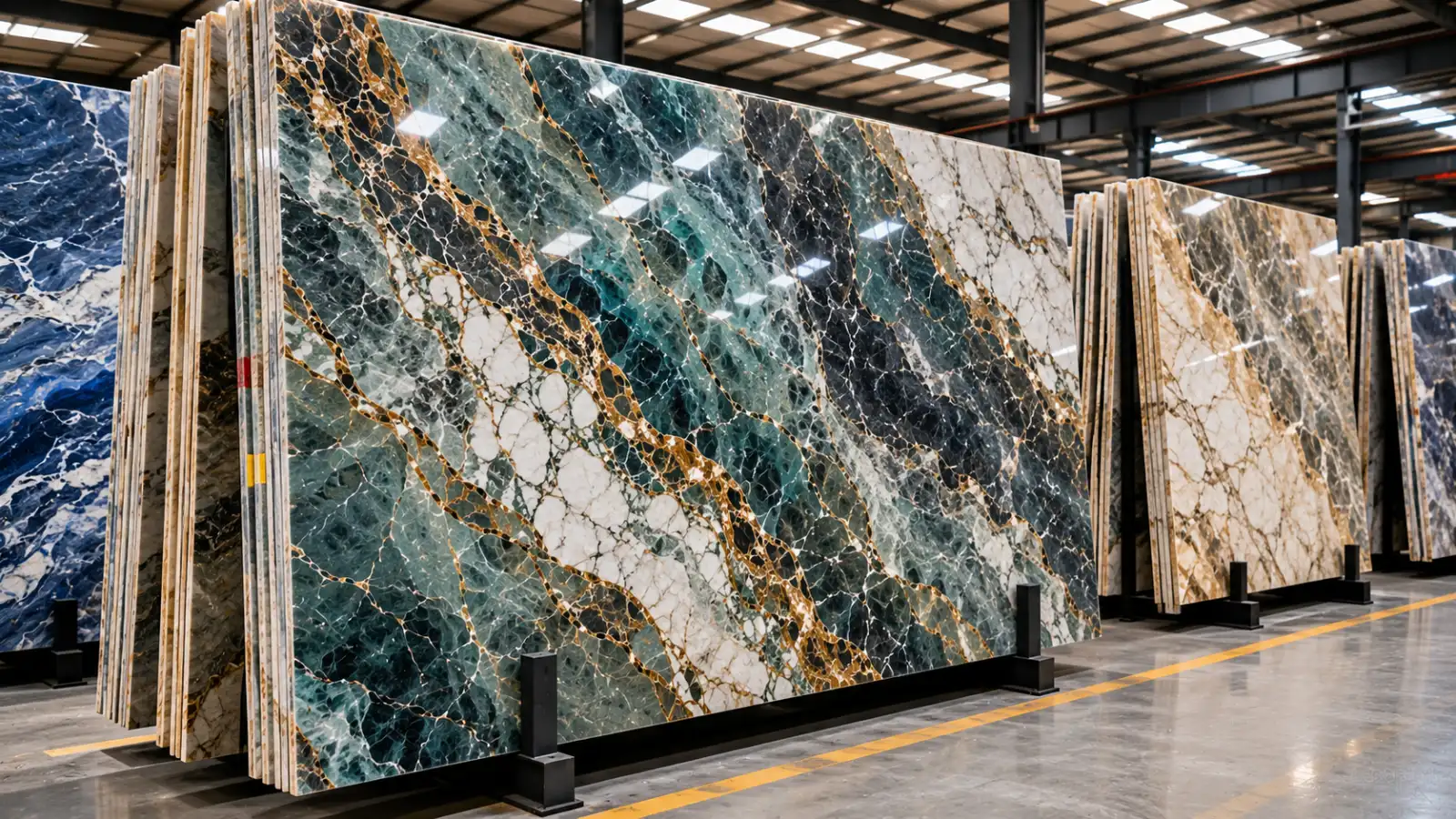
Many Brazilian quartzites have layered movement, intense veining, translucent sections, and rare color transitions. Some slabs feel soft and elegant. Others look almost like abstract paintings. This gives designers and buyers a wide selection of visual styles within one stone category.
For a stone distributor, this means Brazilian quartzite can help build a premium showroom collection. For a project buyer, it means access to materials that can create a unique interior identity. For a fabricator, it means opportunities to serve higher-value residential and commercial clients.
However, this same uniqueness creates sourcing challenges. Rare Brazilian slabs may not be available in large quantities. Color can change between bundles. Some materials may require more careful handling during fabrication. Export availability can shift based on quarry production, block quality, and market demand.
A buyer who treats Brazilian Quartzite like a standard commodity is likely to make mistakes. A buyer who treats it like a limited natural material will make better decisions.
Export Growth and Global Demand
Brazil’s natural stone export performance shows that global demand remains strong. In 2025, Brazil’s natural stone exports reached approximately US$1.48 billion, with year-on-year growth of about 17.5%. The United States remained a key destination, while China, Italy, and other markets continued to play important roles in the global stone supply chain.
For quartzite buyers, this growth has two meanings.
First, competition for premium slabs is increasing. When rare blocks enter the market, strong distributors and project buyers may reserve material quickly. Waiting too long can mean losing the exact bundle needed for a project.
Second, supplier capability becomes more important. As international demand grows, buyers need partners who can manage selection, inspection, packing, documentation, and shipping with professional consistency. A beautiful slab is only valuable if it can arrive safely and be fabricated successfully.
This is why Slab Sourcing in 2026 should not be reduced to asking for a price per square meter. The better question is: can this supplier help protect the project from selection to delivery?
What Buyers Should Verify When Sourcing Brazilian Quartzite
Before buying Brazilian Quartzite, buyers should verify the material at slab level. This means reviewing the actual slabs being offered, not just catalogue images or old project photos.
A serious buyer should ask for clear slab photos under natural or neutral lighting. Strong filters, wet surfaces, and showroom lighting can exaggerate color. Video inspection is even better because it helps reveal surface reflection, fissures, tone variation, and overall slab condition.
Bundle numbers are also important. If the buyer needs multiple slabs for one project, they should confirm whether the slabs come from the same bundle or compatible bundles. For bookmatched walls, island panels, or large continuous surfaces, this step is essential.
Thickness tolerance should be checked before fabrication. A slab listed as 2 cm or 3 cm should be reasonably consistent, especially for countertop and panel applications. Finish quality also matters. Polished, honed, leathered, brushed, and other finishes can change the stone’s appearance and maintenance behavior.
For long-distance orders, packing should not be treated as a small detail. Weak crates, poor slab separation, insufficient reinforcement, or careless loading can damage premium stone before it reaches the buyer. A professional quartzite slab supplier should be able to provide packing photos and loading confirmation.
In high-value sourcing, trust is not built by words alone. It is built by visible control.
The Hidden Risks of Buying Exotic Stone Slabs Online
Online sourcing has made rare stone easier to discover. Buyers can now view slabs from different countries, compare suppliers, request photos, and discuss projects without traveling immediately. This is useful, but it also increases risk.
The problem is simple: natural stone is physical, heavy, variable, and expensive to ship. A buyer cannot evaluate it the same way they evaluate a small consumer product. A slab may look excellent in one photo, but reveal problems when seen from another angle. A stone may be marketed as quartzite, but perform like a softer material. A supplier may show beautiful inventory, but lack export packing experience.
For buyers sourcing Exotic Stone Slabs, the biggest mistakes usually happen before payment, not after.
Mistake 1: Choosing by Photo Only
The most common mistake is choosing a slab based only on one attractive image.
Stone photos can be misleading. Lighting affects color. Wet surfaces can make slabs look deeper and glossier. Camera angles can hide cracks or resin lines. Cropped images can remove damaged corners. A close-up texture photo may not show the full slab movement.
For rare quartzite, this mistake is especially dangerous because the value often depends on full-slab composition. A small close-up may look beautiful, while the full slab may have uneven movement, awkward color transitions, or areas that do not fit the design.
The consequence is not only disappointment. It can lead to layout problems, client rejection, fabrication delays, or additional sourcing costs.
Professional buyers should request full-slab photos, close-up photos, dry surface photos, video inspection, and photos of all slabs in the bundle. If the slab will be used for a large visible area, layout planning should happen before cutting begins.
Mistake 2: Confusing Quartzite with Softer Stone
Another serious mistake is assuming every stone sold as quartzite has the same performance.
Some materials in the market are called quartzite for commercial reasons, even when their behavior is closer to marble or dolomitic stone. This can create major problems if the buyer uses the material for a kitchen countertop, bar counter, or other high-use surface.
If a softer stone is installed where true quartzite is expected, the surface may be more vulnerable to scratching, staining, acid etching, or wear. The result can be customer complaints, repair costs, or damage to the buyer’s reputation.
This does not mean softer stones are bad. Many are beautiful and suitable for walls, decorative panels, bathrooms, and low-wear surfaces. The problem is wrong application matching.
A responsible natural stone sourcing guide should always connect material type with use case. The question is not only “Is it beautiful?” The better question is “Where can this stone perform safely?”
Mistake 3: Ignoring Thickness, Finish, and Application
Thickness and finish are not minor technical details. They directly affect installation, durability, maintenance, and design results.
For countertops, buyers usually need slabs that can handle fabrication, edge profiling, cutouts, transport, and daily use. For feature walls, bookmatch potential and visual continuity may matter more than surface wear. For flooring, slip resistance, thickness consistency, and surface treatment become more important. For hotel projects, batch consistency and replacement planning may be critical.
A polished quartzite may look luxurious and reflective, but a leathered finish may provide a softer, more tactile surface. A honed finish may suit modern interiors, but it may show marks differently from polished stone. Each choice has consequences.
The mistake is choosing finish only by appearance. The better approach is to match finish to application, maintenance expectation, lighting condition, and user behavior.
Mistake 4: Buying Rare Stone Without Reserve Slabs
Rare quartzite is not like a standard tile line that can be reordered easily months later. Once a block is cut and sold, the same pattern may never appear again. Even if the quarry produces the same commercial stone name later, the next batch may have different color, vein movement, or background tone.
For small residential projects, this may not be a major issue if the buyer orders enough material at the beginning. For larger luxury projects, it can become a serious problem.
If a kitchen island, backsplash, bathroom wall, and fireplace all require matching quartzite, the buyer should consider reserving extra slabs. If the project may require repairs, replacement, or future expansion, extra material becomes even more important.
The risk is simple: if the project runs short, no supplier can guarantee that nature will produce the same slab again.
This is one of the most overlooked rules in Slab Sourcing: for rare stone, availability is part of quality.
Professional Slab Sourcing starts before the buyer asks for a quotation. It starts with understanding the project, the application, the risk tolerance, and the final visual expectation. This is especially important for rare quartzite because beauty alone does not guarantee project success.
A luxury stone buyer should never begin with the question, “How much is this slab?” The better first question is, “Is this the right slab for this project?”
A stone that works beautifully as a feature wall may not be the best choice for a busy kitchen countertop. A dramatic blue quartzite may look impressive in a single slab photo, but if the project requires six matching slabs, availability becomes a serious concern. A translucent or heavily veined material may be ideal for a backlit wall, but difficult to use across multiple cut pieces without careful layout planning.
This is why buyers should treat quartzite sourcing as a sequence of decisions rather than a simple product search.
Step 1: Define the Application Before Choosing the Color
The first step is to define where the stone will be used. Application determines what matters most.
For kitchen countertops, buyers should prioritize hardness, density, stain resistance, finish quality, edge durability, and sealing guidance. True quartzite is often a strong option for luxury kitchens, but buyers must still confirm the specific material’s performance and fabrication suitability.
For feature walls, visual continuity is often more important than wear resistance. The buyer should check whether the slabs can be bookmatched, whether the veins align naturally, and whether the full wall layout can be planned before cutting. In this case, bookmatched quartzite slabs may create far more design value than random slab placement.
For flooring, buyers should consider surface finish, slip resistance, thickness consistency, and traffic level. A highly polished surface may look elegant, but it may not be suitable for every flooring environment. A honed or textured finish may be more practical depending on the project.
For hotel lobbies, clubs, restaurants, and commercial luxury interiors, buyers should prioritize batch consistency, replacement planning, packing reliability, and supplier documentation. The stone is not only decorative; it must also survive logistics, fabrication, installation, and long-term use.
The decision logic is straightforward. If the project needs daily-use durability, choose dense and well-tested quartzite. If the project needs visual impact, prioritize full-slab composition and bookmatch planning. If the project requires multiple matching areas, prioritize supply continuity. If the project has a fixed installation deadline, prioritize supplier reliability over rare color alone.
Step 2: Request Slab-Level Evidence, Not Just Catalogue Photos
Catalogue photos are useful for inspiration, but they are not enough for purchasing. Rare quartzite should be reviewed at slab level.
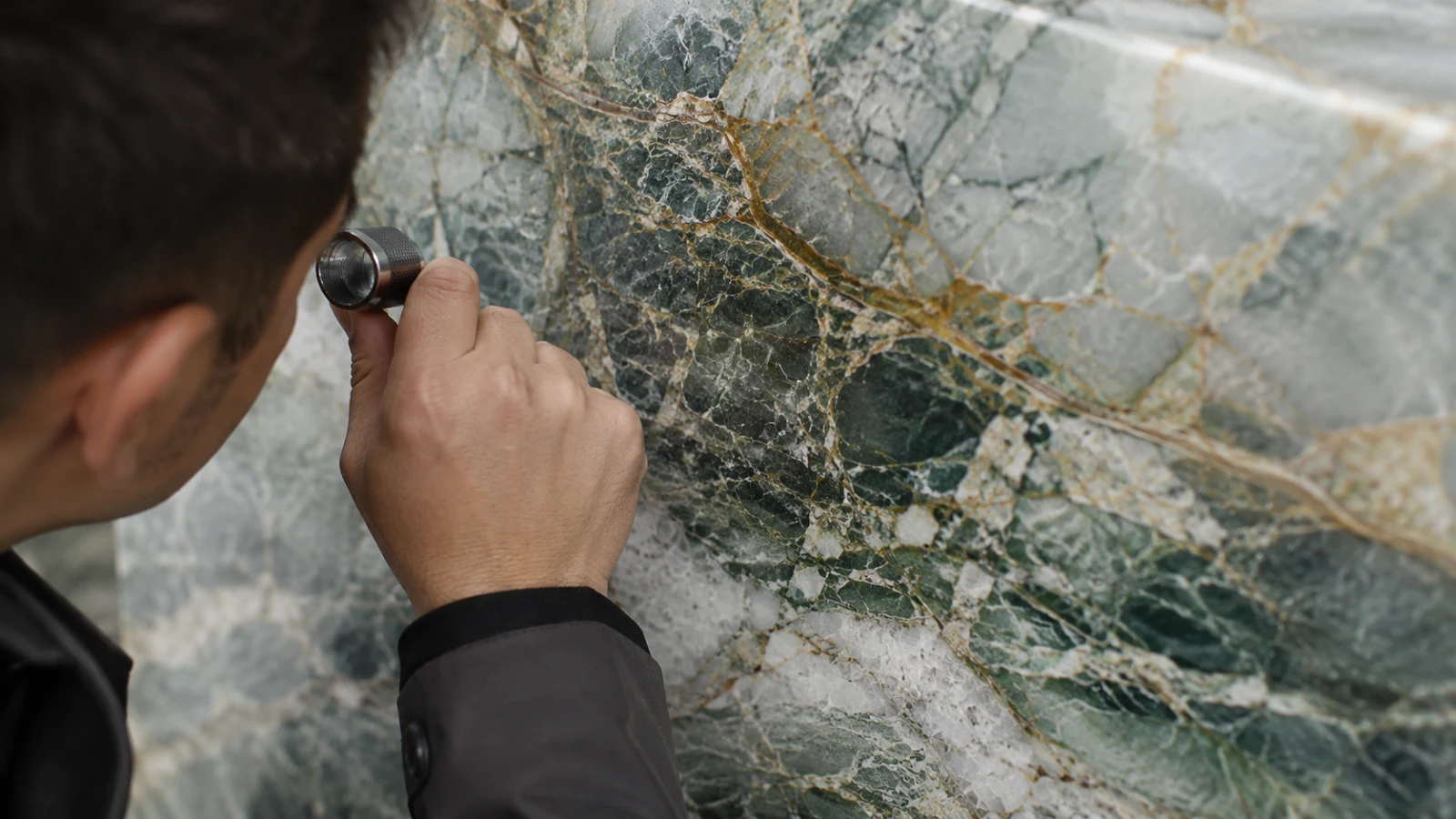
Buyers should ask for full-slab images showing the entire surface from top to bottom. Close-up photos are useful, but they cannot reveal the full movement of the slab. A close-up may show beautiful color, while the complete slab may have uneven areas, weak corners, large fissures, or awkward pattern transitions.
Video inspection is highly recommended for premium orders. Video helps buyers see reflection, finish, movement, surface consistency, and color under more realistic conditions. It also reduces the chance of misunderstanding caused by edited or over-enhanced images.
| What to Check | Why It Matters |
|---|---|
| Full-slab photos | Shows the complete pattern, color distribution, and visible defects |
| Close-up photos | Helps check texture, fissures, resin lines, and surface details |
| Bundle number | Confirms whether slabs belong to the same batch |
| Thickness information | Reduces fabrication and installation risk |
| Finish type | Affects appearance, maintenance, and application suitability |
| Slab video | Provides a more realistic view than static images |
| Packing photos | Confirms whether the supplier understands long-distance shipment |
| Loading evidence | Helps reduce disputes after shipment |
A reliable quartzite slab manufacturer or export supplier should not hesitate to provide clear documentation. If a supplier only sends one attractive photo and avoids detailed slab confirmation, the buyer should slow down.
High-value stone sourcing rewards patience. Fast decisions based on weak evidence usually create expensive problems later.
Step 3: Evaluate Supplier Capability, Not Only Stone Beauty
Rare quartzite is only as reliable as the supplier behind it. A beautiful slab from an unorganized supplier can become a risky purchase. A professional supplier, on the other hand, can help the buyer reduce uncertainty from selection to delivery.
When evaluating a luxury quartzite supplier, buyers should check whether the company can support the full sourcing process. This includes material explanation, slab selection, application advice, finish recommendation, inspection support, packing control, export documentation, and after-sales communication.
A good supplier should understand the difference between selling stone and supporting a project. The buyer may ask for a slab, but the real need is usually broader: matching design intent, avoiding wrong material use, reducing transport damage, and making sure the final installed stone looks as expected.
For importers and distributors, supplier consistency is even more important. A single successful order is useful, but repeatable supply capability is what builds a long-term business. If a supplier cannot maintain communication, documentation, or quality control, the buyer may lose time, clients, and market reputation.
This is why Brazilian quartzite wholesale buyers should look beyond price. A lower unit cost may not be a saving if the order arrives with cracks, color mismatch, poor packing, or missing documentation.
Step 4: Confirm Finish and Fabrication Suitability
Finish changes how quartzite looks and performs. Buyers should not choose finish only by showroom appearance.
Polished quartzite creates a reflective, luxurious surface that highlights color depth and mineral movement. It is popular for countertops, islands, vanities, walls, and hotel interiors. However, polished surfaces may show fingerprints, water marks, or surface reflections more clearly depending on lighting.
Honed quartzite offers a softer and more modern appearance. It reduces strong reflection and can feel more architectural. However, honed surfaces may show oil marks or daily-use traces differently, so maintenance expectations should be discussed before selection.
Leathered quartzite adds texture and a more tactile finish. It can be attractive for buyers who want a natural, less glossy surface. It may also help reduce the visual impact of minor marks in some applications, although care requirements still depend on the specific stone.
For rare stones with heavy movement, finish selection can change the entire mood. A polished finish may intensify drama, while a honed finish may calm the surface. A professional supplier should be able to explain these differences instead of treating finish as a simple checkbox.
Step 5: Plan Extra Material for Rare Stone Projects
One of the most practical rules in rare quartzite sourcing is also one of the most ignored: reserve extra material.
Natural stone cannot be reproduced like ceramic tile or engineered products. Even stones with the same commercial name may vary dramatically from batch to batch. A later shipment may not match the original order in background tone, vein direction, or mineral intensity.
For countertops, extra material can help if a slab breaks during fabrication or if the project needs additional backsplash pieces. For bookmatched walls, extra slabs provide layout flexibility. For commercial projects, reserve slabs can help with future replacement or repair.
If the stone is extremely rare, buyers should make the reserve decision early. Waiting until the project is already in progress may be too late.
2026 Compliance and Sustainability: What Stone Buyers Should Watch
Luxury stone sourcing is becoming more transparent. Buyers, architects, developers, and importers increasingly want to understand where materials come from, how they are processed, how they are packed, and whether the supplier can support responsible sourcing requirements.
Quartzite slabs are not currently the main target of major environmental trade regulations such as EUDR or CBAM. However, these regulations still influence buyer expectations. They show the direction of global trade: more documentation, more traceability, more carbon awareness, and less tolerance for vague supply chains.
For natural stone exporters and buyers, the lesson is clear. Even when a specific regulation does not directly apply to quartzite, the market is moving toward greater proof.
Why Traceability Is Becoming a Buyer Requirement
The European Union Deforestation Regulation is mainly focused on specific commodities such as cattle, cocoa, coffee, palm oil, rubber, soy, wood, and certain derived products. Quartzite slabs are not the core target. However, the regulation is still important because it reflects how European and international buyers are thinking about sourcing responsibility.
Large buyers increasingly want suppliers who can explain origin, legality, documentation, packaging materials, and logistics processes. For stone, this may include quarry origin information where available, factory processing details, packing material control, and shipping documentation.
This matters especially for luxury projects. High-end clients often care about more than appearance. They want materials that support a responsible design story. Architects and developers may need to answer questions from clients, contractors, or compliance teams. A vague supply chain creates friction.
For natural stone factory suppliers, this creates an opportunity. The companies that prepare better documentation can look more professional than competitors who only offer photos and prices.
CBAM and the Carbon Transparency Trend
The Carbon Border Adjustment Mechanism is currently focused on selected high-carbon sectors such as iron and steel, cement, aluminium, fertilisers, hydrogen, and electricity. Natural stone slabs are not directly included in the current core scope. However, CBAM is still relevant to the wider building materials market because it changes buyer expectations around carbon transparency.
Large construction buyers, developers, and European importers are becoming more familiar with carbon-related questions. They may begin asking suppliers about production energy, shipping distance, processing methods, packaging materials, and documentation habits.
For quartzite suppliers, this does not mean every order needs a complex carbon report today. But it does mean that professional communication should improve. Suppliers who can explain processing, packing, inspection, and shipment in an organized way will appear more reliable to global buyers.
The direction is not difficult to understand. In the past, many buyers asked, “What color do you have?” In 2026, better buyers also ask, “Can you prove what you are shipping, where it came from, how it was processed, and how it will be protected?”
What Smart Quartzite Suppliers Should Prepare
A professional quartzite supplier should prepare a sourcing documentation system that supports international buyers. This does not need to be complicated, but it should be consistent.
Useful documents and evidence may include slab photos, slab videos, bundle numbers, thickness details, finish descriptions, packing photos, loading photos, invoice and packing list accuracy, and clear communication records. For more demanding buyers, quarry or origin notes, inspection reports, and project-specific quality checklists may also be useful.
For a stone slab wholesale buyer, this documentation can reduce disputes. For a designer, it helps explain the material to the client. For an importer, it supports internal approval. For a fabricator, it reduces surprises before cutting.
Perfect Stone’s recommendation is simple: buyers should not treat documentation as a burden. Documentation is risk control.
Best Applications for Luxury Quartzite in 2026 Projects
Luxury quartzite can be used in many applications, but the best result comes from matching the material to the right environment. A rare stone should not be forced into every surface. It should be used where it creates the highest design and functional value.
Kitchen Countertops and Waterfall Islands
Kitchen countertops remain one of the most important applications for quartzite. Buyers choose quartzite countertops because they want natural beauty with stronger practical performance than many softer stones.
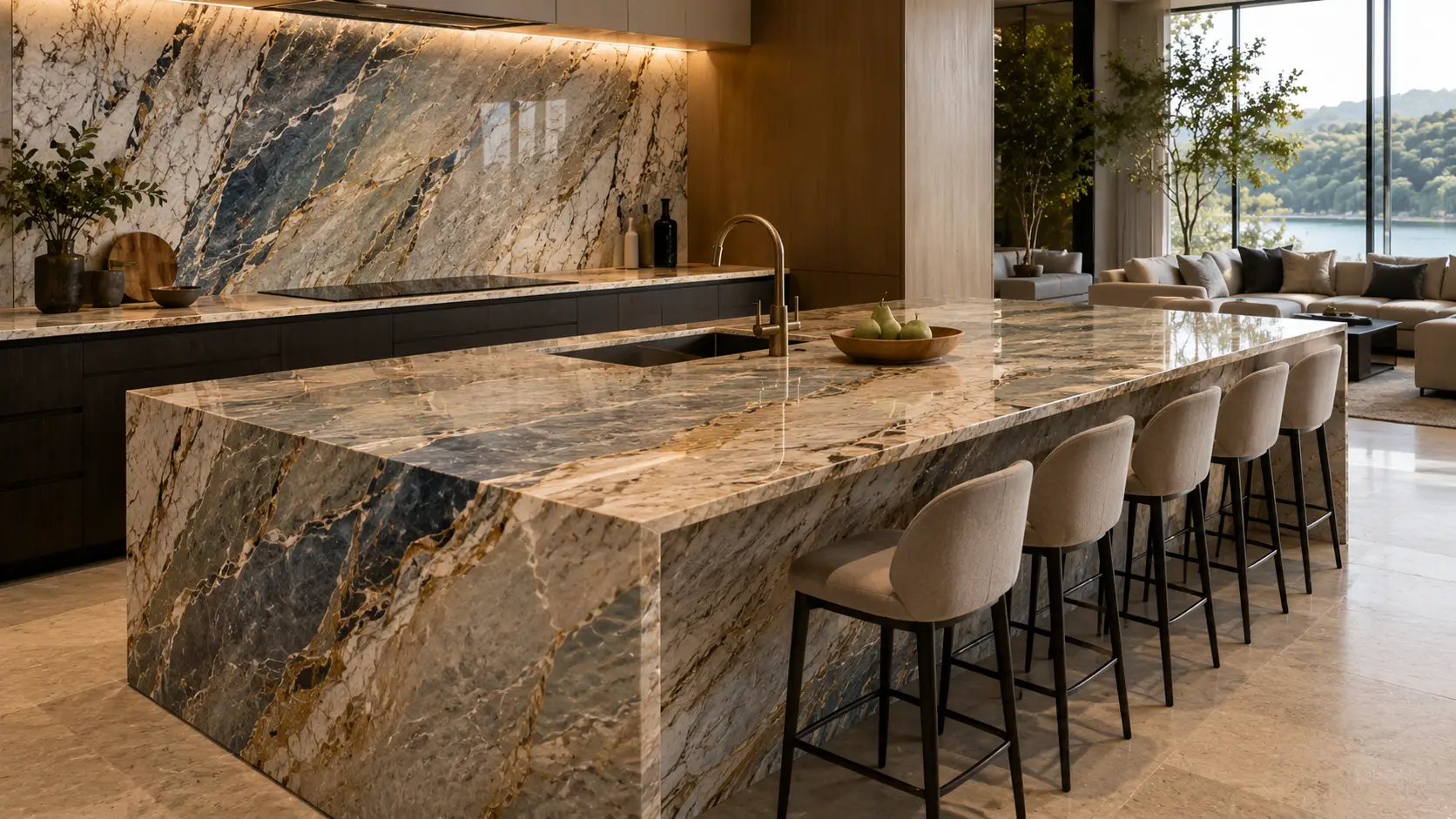
A waterfall island is especially suitable for dramatic quartzite. The vertical side panels allow the stone’s movement to continue from top to floor, creating a sculptural effect. In luxury kitchens, this can become the centerpiece of the entire space.
However, countertop buyers should be careful. They should confirm whether the material is true quartzite, whether it is suitable for food preparation areas, whether the slab has structural fissures, and whether the finish matches the user’s maintenance expectations.
A beautiful slab is not enough. It must survive fabrication, installation, and daily use.
Bathroom Vanities and Spa-Like Interiors
Quartzite works well in luxury bathrooms because it brings natural depth without looking artificial. Cream, white, green, and soft gold quartzite can create a spa-like atmosphere when paired with warm lighting, large mirrors, natural wood, and brushed metal.
For bathroom vanities, buyers should check sealing guidance and edge details. For shower walls or wet areas, the supplier and installer should discuss moisture exposure, stone suitability, and proper installation method.
In many high-end bathrooms, quartzite is used not only for vanity tops but also for wall panels, niche surrounds, bathtub cladding, and decorative ledges. The key is to avoid overloading the space. One strong stone feature often works better than covering every surface.
Feature Walls and Bookmatched Slabs
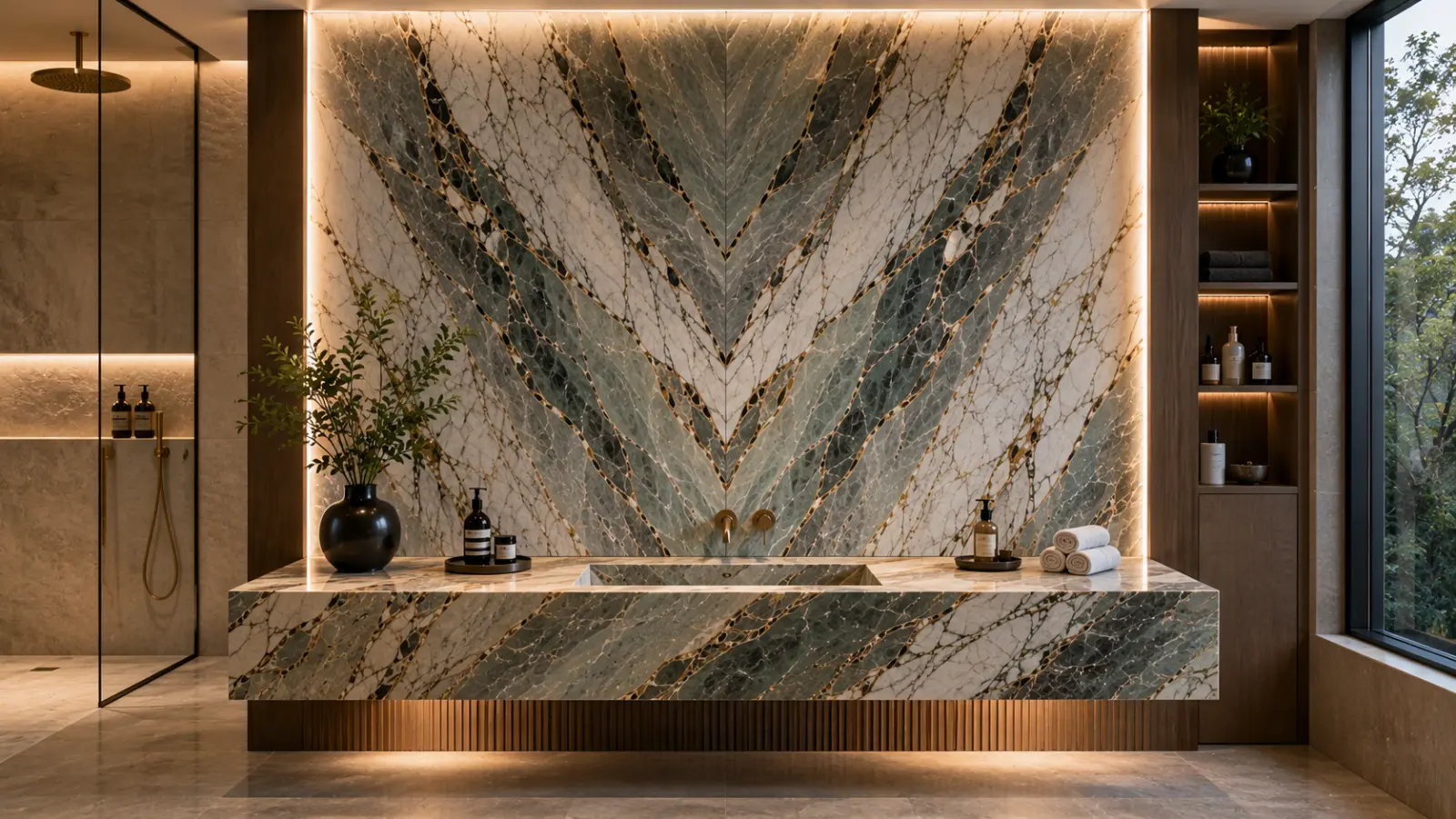
Feature walls are one of the best applications for Exotic Stone Slabs. A bookmatched quartzite wall can look like a natural painting, especially when the stone has strong veining or dramatic color movement.
This application is popular in living rooms, hotel lobbies, reception areas, elevator halls, restaurants, and luxury retail spaces. The stone becomes part of the architecture, not just a finish material.
For bookmatched walls, layout planning is critical. Buyers should approve slab sequence before cutting. They should also confirm whether the slabs have enough size and pattern continuity for the intended wall. Poor planning can ruin even the most beautiful material.
Hotel Lobbies, Villas, and Commercial Luxury Spaces
Commercial luxury projects require a different sourcing mindset from private homes. A hotel lobby or villa development may need more slabs, stronger schedule control, better packing, and more reliable communication.
In these projects, rare quartzite can create strong brand value. A memorable stone wall, reception counter, bar, or floor feature can become part of the guest experience. However, commercial projects also carry higher risk. Delays, breakage, mismatch, or reordering problems can affect multiple teams.
For this reason, buyers sourcing luxury stone slabs for hotels should prioritize suppliers who understand project documentation and logistics. A supplier who only sells individual slabs may not be enough. The buyer needs a partner who understands quantity planning, slab matching, inspection, packing, and export coordination.
Buyer Decision Guide: Which Quartzite Should You Choose?
The best quartzite depends on the project. There is no single stone that works for every buyer. The table below provides a practical decision framework.
| Buyer Need | Recommended Quartzite Direction | Best Application | Risk to Avoid |
|---|---|---|---|
| Quiet luxury interior | Cream, beige, white, or soft gold quartzite | Kitchens, bathrooms, villas, apartments | Choosing slabs with uneven tone or visible resin lines |
| Strong visual statement | Blue, green, red, or multicolor exotic quartzite | Feature walls, islands, bars, hotel lobbies | Buying without full-slab layout planning |
| Daily-use countertop | Dense true quartzite with suitable finish | Kitchen countertops, islands, vanities | Confusing softer stone with true quartzite |
| Bookmatched design | Strong-vein quartzite from compatible slabs | TV walls, reception walls, fireplace features | Poor vein matching or wrong slab sequence |
| Distributor inventory | Popular luxury colors with broad appeal | Showroom display and wholesale resale | Overbuying unusual colors without market demand |
| Large commercial project | Stable batch quartzite with documentation | Hotels, clubs, retail interiors | Not reserving enough matching slabs |
| Premium custom fabrication | Structurally sound slabs with clear inspection | Tables, islands, counters, panels | Ignoring cracks, thickness, or handling risk |
This decision table helps buyers avoid one of the biggest sourcing mistakes: choosing stone based only on beauty. Beauty matters, but successful sourcing also depends on function, quantity, finish, risk, and supplier capability.
How to Choose the Right Quartzite Supplier
A good supplier does more than send prices. For rare quartzite, the supplier should help the buyer make a safer decision.
The right supplier should understand material differences, application logic, quality inspection, packing standards, and export communication. This is especially important when buyers source remotely.
Choose a Supplier with Real Slab Inventory
Real inventory matters. A supplier who can show actual slabs gives the buyer more confidence than a supplier who only shares catalogue images.
Buyers should ask whether the slabs are currently available, whether the supplier can reserve them, whether the full bundle can be photographed, and whether video inspection is possible. If a supplier cannot show the real slabs, the buyer should be cautious.
For rare quartzite slabs, timing also matters. Premium materials can move quickly. If the buyer likes a specific slab, they should confirm availability and reservation conditions early.
Choose a Supplier That Understands Packing Risk
Packing is one of the most underestimated parts of natural stone sourcing. A slab may leave the factory in good condition but arrive damaged if the crate, support, separation, or loading is poor.
For long-distance shipping, especially container shipment, slabs need proper wooden crates, strong support, secure separation, and careful loading. Corners and edges must be protected. The supplier should understand how to reduce vibration, pressure, and movement during transit.
A professional quartzite slabs wholesale supplier should provide packing photos before shipment. This is not a small courtesy. It is part of quality assurance.
Choose a Partner That Supports Project Matching
Luxury quartzite projects often require more than one slab. A kitchen may need island panels, countertops, backsplash, and side cladding. A feature wall may need multiple slabs with aligned veins. A hotel lobby may require consistent tone across several areas.
A good supplier should help buyers review slab compatibility. This includes checking background color, vein direction, slab size, and layout potential. If the project needs bookmatching, the supplier should help identify suitable pairs.
This is where an experienced exotic quartzite slabs supplier becomes valuable. The supplier is not only selling inventory; they are helping protect the final design result.
Choose a Supplier That Communicates Clearly
Clear communication reduces risk. Buyers should pay attention to how the supplier responds before placing an order. Does the supplier answer technical questions clearly? Do they explain limitations honestly? Do they provide photos quickly? Do they confirm details in writing? Do they avoid vague promises?
Luxury stone sourcing requires trust, but trust should be supported by evidence. A supplier who communicates clearly before payment is more likely to handle problems responsibly after payment.
Perfect Stone recommends that buyers compare suppliers based on documentation, experience, inspection support, packing control, and project understanding. Price matters, but it should not be the only measure.
Common Buyer Mistakes and Their Consequences
Mistakes in luxury quartzite sourcing are often expensive because the material is rare, heavy, and difficult to replace. The following mistakes are common among first-time buyers and even some experienced importers.
| Mistake | Immediate Problem | Long-Term Consequence |
|---|---|---|
| Choosing by one photo | Color or pattern mismatch | Client rejection or redesign |
| Ignoring material authenticity | Wrong application selection | Scratching, staining, etching, complaints |
| Not checking slab availability | Insufficient material | Unmatched replacement slabs |
| Skipping video inspection | Hidden fissures or surface issues | Fabrication delays |
| Choosing finish by appearance only | Maintenance mismatch | User dissatisfaction |
| Not confirming packing | Transit damage | Claims, delays, financial loss |
| Buying only by low price | Weak supplier support | Higher total project risk |
These mistakes are avoidable. The buyer only needs to slow down at the right stage. Once the slabs are cut, packed, shipped, or installed, every correction becomes more expensive.
Final Recommendation: How to Buy Rare Quartzite Without Regret
The safest way to source rare quartzite in 2026 is to combine design ambition with procurement discipline.
Start with the project application. Decide whether the stone will be used for countertops, walls, flooring, vanities, hospitality interiors, or commercial features. Then define the visual goal. Choose quiet luxury, dramatic color, natural warmth, or artistic movement based on the space, not only on current trends.
Next, verify the material. Do not assume every stone sold as quartzite has the same performance. Ask better questions, request slab-level evidence, and match the stone to the application.
Then evaluate the supplier. A professional supplier should provide real slab photos, video inspection, bundle details, finish information, packing evidence, and clear communication. For high-value projects, supplier capability is part of the product.
Finally, plan for natural variation. Rare quartzite cannot always be reordered. If a project needs matching slabs, reserve enough material early. If the stone will be used in a visible feature, approve the layout before fabrication.
A successful Luxury Quartzite Guide should not push buyers toward the most expensive stone. It should help buyers choose the right stone with fewer risks. For designers, importers, distributors, and project owners, that is the real value of professional Slab Sourcing.
Perfect Stone supports buyers who want to source rare quartzite with clearer selection logic, better project matching, and more reliable communication from slab review to shipment.
FAQ
1. What is the best quartzite for luxury countertops in 2026?
The best quartzite for luxury countertops in 2026 depends on the project style and daily-use requirements. Cream and white quartzite, such as Taj Mahal-style or Cristallo-style materials, are suitable for quiet luxury kitchens and soft modern interiors. Blue, green, and multicolor quartzite are better for statement islands or dramatic design projects. Buyers should choose dense true quartzite, confirm slab condition, review finish options, and ask for sealing guidance before using the material for countertops.
2. Is Brazilian Quartzite better than other quartzite?
Brazilian Quartzite is not automatically better than every other quartzite, but it is highly valued because Brazil offers many rare colors, dramatic vein patterns, and exotic slab varieties. For buyers looking for blue, green, gold, red, or multicolor quartzite, Brazil is one of the most important sourcing origins. The key is not only origin, but also slab quality, material authenticity, supplier documentation, finish suitability, and packing control.
3. How can buyers tell if quartzite is real quartzite?
Buyers can reduce risk by asking the supplier for clear material information, application guidance, slab photos, video inspection, and performance-related details. True quartzite is generally harder and more resistant to scratching than marble, but trade names can be confusing. Buyers should not rely only on commercial names or attractive photos. For important countertop projects, they should discuss hardness, acid sensitivity, sealing, fabrication behavior, and real application suitability with an experienced stone supplier or fabricator.
4. What should importers check before buying exotic stone slabs?
Importers should check full-slab photos, close-up photos, slab videos, bundle numbers, thickness, finish type, visible fissures, resin lines, backing condition, packing method, loading photos, and export documentation. For rare Exotic Stone Slabs, buyers should also confirm whether enough matching material is available for the entire project. Buying by one photo or one small sample can lead to color mismatch, layout problems, fabrication delays, or client rejection.
5. Is quartzite suitable for kitchen countertops?
True quartzite can be suitable for kitchen countertops when the material is properly selected, fabricated, sealed, and maintained. It is often chosen because it offers natural beauty with stronger wear resistance than many softer stones. However, buyers should confirm that the slab is appropriate for countertop use, not just visually attractive. They should also discuss edge details, cutouts, sealing, cleaning habits, and finish selection before fabrication.
6. Why are rare quartzite slabs difficult to reorder?
Rare quartzite slabs are difficult to reorder because natural stone comes from specific blocks and geological formations. Once a block is cut and sold, the same color, vein movement, and background tone may never appear again. Even if a quarry produces the same commercial stone name later, the next batch may look different. For this reason, buyers should reserve extra slabs when working on bookmatched walls, large countertops, luxury villas, hotels, or projects that may require future replacement.
7. What is the safest way to source quartzite slabs wholesale?
The safest way to source quartzite slabs wholesale is to work with a supplier that can show real inventory, provide full-slab documentation, support video inspection, explain material suitability, confirm bundle details, and control packing for export shipment. Buyers should compare suppliers by reliability and project support, not only by price. For wholesale orders, consistent communication, inspection evidence, and packing quality can reduce far more risk than a small price difference.
Reference
- European Commission, “Regulation on Deforestation-free Products,” European Commission.
- European Commission, “Carbon Border Adjustment Mechanism,” Taxation and Customs Union.
- European Commission, “Implementing the EU Deforestation Regulation,” EU Green Forum.
- CentroRochas, “An Unparalleled Record: 2025 Is Recorded in the History of Brazilian Natural Stone Exports,” Brazilian Natural Stone Association.
- Stone Update, “Brazil Natural-Stone Exports Hit New High,” Stone Update.
- Stone World, “Brazil Reports Outstanding Revenue Increase from 2025 Stone Exports,” Stone World.
- Natural Stone Institute, “ANSI/NSI 373 Sustainable Production of Natural Dimension Stone,” Natural Stone Institute.
- Marmomac, “Natural Stone Market and International Trade Reports,” Marmomac / Veronafiere.