 EN
EN


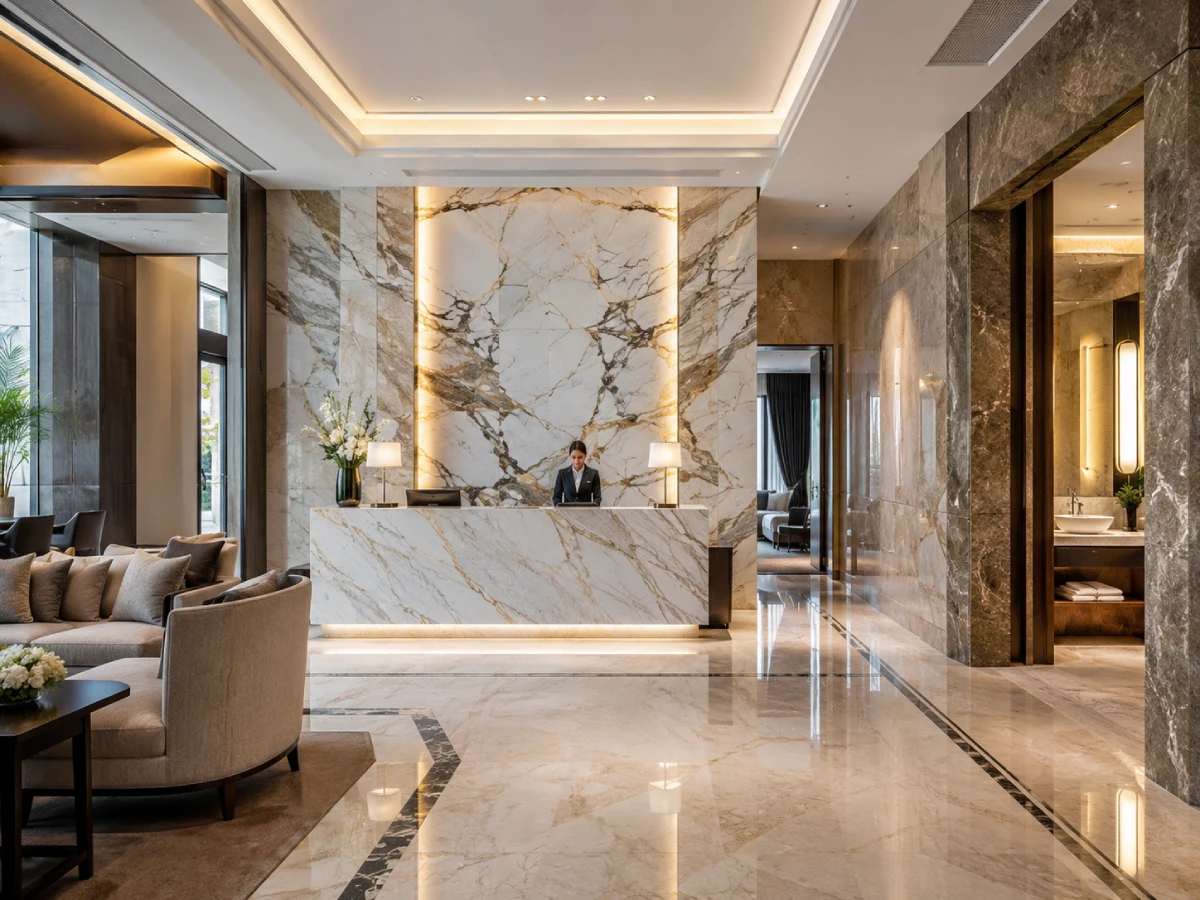
Choosing a hotel marble supplier is not only about finding attractive stone slabs for a lobby or bathroom. Hotel projects involve public traffic, brand image, guest experience, cleaning schedules, installation deadlines, and long-distance procurement risk. A marble that looks impressive in a sample photo may still create problems if the supplier cannot control slab consistency, surface finish, cut-to-size accuracy, packing, labeling, and shipment coordination.
For hotel developers, contractors, architects, designers, and procurement teams, the supplier decision directly affects the final appearance and operational performance of the project. Hotel lobbies need visual impact and durability. Bathrooms need moisture-aware material planning. Wall projects need accurate layout and panel control. A strong supplier should help buyers connect design intent with practical stone sourcing, fabrication, inspection, and delivery.
Micro Summary
Why Hotel Marble Supplier Selection Matters
Hotel stone projects are different from private residential projects. A luxury villa marble supplier may focus heavily on personalized design, room-by-room customization, and owner preference. A hotel marble supplier must also consider public traffic, brand consistency, repeatable room details, cleaning efficiency, installation speed, and long-term maintenance. The design must look premium, but it must also work under real hotel operating conditions.
In a hotel lobby, marble is often part of the first impression. Guests may not know the name of the stone, but they immediately feel whether the space looks refined, expensive, cold, crowded, calm, or poorly finished. Marble flooring, reception walls, elevator surrounds, columns, and decorative panels can all shape the hotel’s brand image.
In hotel bathrooms, the priorities change. Buyers must think about moisture, cleaning frequency, vanity details, wall panel size, slip considerations, and guest use. A stone that works beautifully on a dry lobby wall may not be the right choice for a wet bathroom floor. For wall projects, especially feature walls and large panels, layout control and panel numbering become extremely important.
This is why hotel buyers should evaluate a supplier’s complete support capability, not just the stone catalog. A dependable hotel marble supplier should understand material selection, fabrication, inspection, packing, export documents, and job-site coordination.
Key Factors Buyers Should Check Before Choosing
1. Hotel Application Area
The first step is to separate the project by application area. A hotel lobby floor, bathroom wall, reception desk, corridor wall, guestroom vanity, and elevator background do not have the same requirements. Buyers should avoid using one material decision for the entire hotel simply because it looks elegant in one area.
Lobby floors usually require stronger attention to foot traffic, surface finish, stain resistance, cleaning routines, and replacement planning. Lobby walls and reception backgrounds can use more visually dramatic marble because they face less abrasion. Hotel bathrooms require moisture-aware planning, especially around vanity tops, shower walls, floors, and thresholds. Wall cladding projects need accurate panel dimensions, safe installation planning, and clear layout drawings.
2. Marble Quality and Technical Suitability
Marble is a natural material, and its appearance varies by quarry, block, slab, and batch. For hotel projects, buyers should check not only color and veining but also thickness, surface finish, soundness, resin treatment if applicable, reinforcement, and intended use. ASTM C503/C503M addresses marble dimension stone for general building and structural purposes, including material characteristics, physical requirements, and sampling considerations. While hotel buyers may not need laboratory testing for every order, technical awareness helps prevent purely visual decision-making.
For public-area hotel applications, buyers should ask whether the material is suitable for the expected use. Some marble types are better for walls and decorative spaces, while others may be more suitable for floors. In higher-risk areas, quartzite or granite may sometimes be considered as alternatives or complementary materials.
3. Surface Finish for Lobby and Bathroom Use
Surface finish can change how marble looks and performs. Polished marble provides depth, reflection, and a luxury appearance, making it popular for hotel lobbies, reception areas, feature walls, and premium interiors. However, polished surfaces may not be suitable for every floor, especially in areas exposed to water, heavy cleaning, or frequent guest movement.
Honed, brushed, leathered, sandblasted, or other finishes may be considered depending on application. For hotel bathrooms and wet-adjacent areas, the project team should discuss finish selection with the supplier, designer, and installer. ANSI A326.3 is a recognized test method for measuring dynamic coefficient of friction of hard surface flooring materials. Buyers should not treat any single number as a universal safety guarantee, but they should understand that floor finish and use conditions deserve serious attention.
4. Slab Batch Consistency for Public Spaces
Hotels often use marble across large and repeated areas. A lobby may require a broad floor surface. A corridor may use long wall panels. Guest bathrooms may need repeated vanity tops or wall panels across many rooms. If the supplier cannot control batch consistency, the final hotel space may look uneven or poorly coordinated.
Buyers should request slab photos, batch information, quantity confirmation, and visual grouping before cutting. For large-area hotel projects, it is important to reserve enough material from the same or visually compatible batch. This is especially true for white marble, beige marble, grey marble, and strongly veined marble.
5. Cut-to-Size Fabrication and Drawing Review
Hotel projects often require cut-to-size marble instead of random slabs. The supplier may need to fabricate floor tiles, wall panels, vanity tops, stair elements, skirting, thresholds, column covers, reception counter pieces, and other custom stone components. Incorrect dimensions can delay installation and create expensive site adjustments.
Before production, buyers should provide drawings, room schedules, panel dimensions, edge profiles, thickness requirements, finish requirements, hole positions, and installation notes. A professional supplier should review details before cutting. If information is incomplete, it is better to clarify early rather than rush into fabrication.
6. Wall Panel Layout and Numbering
Hotel wall projects need special attention because wall panels are highly visible. A marble wall behind a reception desk or inside a lobby can become the most photographed part of a hotel. If panel layout is wrong, the visual impact may be weak or even messy.
For large wall panels, bookmatched marble, elevator backgrounds, and bathroom walls, buyers should request layout confirmation, panel numbering, and packing labels. Each piece should be easy to identify on site. This reduces installation confusion and helps contractors follow the intended design sequence.
7. Export Packing and Hotel Project Delivery
Hotel stone materials may include slabs, cut-to-size panels, vanity tops, stairs, wall pieces, and special components. These items should not be packed randomly. Strong export packing, waterproof protection, internal separation, corner protection, crate marking, loading photos, and area-based labeling can reduce breakage and job-site confusion.
For overseas hotel projects, packing is part of project management. If the supplier packs materials by installation area, floor, room type, or schedule sequence, the contractor can unload and organize materials more efficiently. This is especially valuable when a hotel project has a tight opening date.
Practical Selection Suggestions for Different Hotel Project Needs
Hotel marble selection should follow the function of each area. The most expensive stone is not always the most suitable option. A more practical approach is to match material, finish, supplier capability, and packing method with the project’s real operating conditions.
| Project Situation | More Suitable Option | Why It Matters |
|---|---|---|
| Hotel lobby needs a premium first impression | Selected marble or quartzite with strong visual consistency and suitable finish | The lobby is a brand-facing space, so material tone, veining, reflection, and installation quality strongly influence guest perception. |
| Lobby flooring faces frequent foot traffic and cleaning | Durable natural stone with proper finish, inspection, and maintenance planning | Public-area floors must balance appearance, wear resistance, cleaning routines, and long-term usability. |
| Reception wall requires a luxury visual centerpiece | Bookmatched marble or large-format wall panels with layout confirmation | Pre-confirmed layout helps avoid mismatched veins and creates a stronger visual identity for the hotel interior. |
| Hotel bathrooms need repeated vanity tops or wall panels | Cut-to-size marble supply with consistent material and room-based packing | Repeated rooms require stable dimensions, consistent material appearance, and organized labeling for installation teams. |
| Corridor and elevator wall cladding require clean alignment | Panel fabrication with drawing review, numbering, and packing by area | Clear panel organization reduces installation mistakes and improves the final wall appearance. |
| Overseas buyers need hotel project delivery support | A project supplier with inspection, packing, documentation, and export coordination | International hotel projects require risk control before shipment because replacement after delivery can be slow and expensive. |
Recommended Material and Supplier Selection Table
Hotel buyers should compare both material categories and supplier capabilities. A supplier with many stone options is useful, but the real value comes from helping buyers choose what fits the application.
| Project Need | Suitable Material or Supplier Capability | Buyer Should Confirm | Risk If Ignored |
|---|---|---|---|
| Luxury hotel lobby floor | Premium marble, quartzite, or granite with suitable finish | Traffic level, finish, batch consistency, thickness, and cleaning method | Surface wear, color inconsistency, difficult maintenance, or guest safety concerns |
| Reception background wall | Bookmatched marble or large-format marble wall panels | Slab sequence, panel size, layout drawing, vein direction, and dry layout | Weak design impact, vein mismatch, or expensive material waste |
| Hotel bathroom vanity tops | Cut-to-size marble or quartzite with accurate fabrication | Sink cutouts, edge profile, thickness, finish, packing, and room schedule | Wrong hole positions, broken edges, installation delay, or room handover issues |
| Bathroom wall panels | Moisture-aware stone selection with panel labeling | Wall dimensions, finish, sealing plan, layout, and installation method | Panel mismatch, staining concerns, maintenance complaints, or site confusion |
| Corridor wall cladding | Stable batch stone with cut-to-size panel supply | Panel sequence, color grouping, thickness, surface finish, and crate labeling | Uneven wall appearance, slow installation, or replacement difficulty |
| Bulk hotel project order | Factory-direct supplier with inspection and export packing support | Production capacity, QC process, packing method, delivery schedule, and documents | Delayed shipment, unclear responsibility, broken materials, or cost overruns |
Common Mistakes and Consequences
Mistake 1: Using the same marble specification for every hotel area
A hotel lobby, bathroom, corridor, and reception wall should not always use the same stone specification. Each area has different traffic, moisture, cleaning, and visual requirements. The consequence of using one specification everywhere may include poor durability in public areas, unnecessary cost in decorative areas, or maintenance problems in bathrooms. Buyers should match stone type, finish, thickness, and fabrication method to each application area.
Mistake 2: Choosing lobby marble only by visual drama
Hotels often want a memorable lobby, and dramatic marble can help create that effect. However, a strong pattern is not enough. Buyers should also consider floor traffic, reflection, cleaning, lighting, and long-term wear. If the material is selected only for photos, the hotel may face maintenance issues, visible scratches, or inconsistent appearance after opening. Good lobby marble selection balances design impact with practical operation.
Mistake 3: Ignoring bathroom use conditions
Hotel bathrooms are used frequently by different guests and cleaned regularly. If buyers ignore moisture, cleaning chemicals, sealing, surface finish, and fabrication details, the marble may show staining, etching, slipperiness, or edge damage over time. Wall panels, vanity tops, and decorative surfaces may perform differently from floors and shower areas. Buyers should review bathroom stone use with designers and installers before final approval.
Mistake 4: Not confirming wall panel layout before fabrication
Wall cladding can make a hotel look luxurious, but only when the panels are well planned. If panel layout is not confirmed before fabrication, veins may not align, panels may be cut in the wrong direction, or bookmatched effects may be lost. The consequence is a wall that looks cheaper than the material actually is. For hotel lobbies, reception backgrounds, and elevator walls, layout review should happen before cutting.
Mistake 5: Sending incomplete room schedules
Hotel projects often involve repeated rooms, similar bathrooms, multiple floors, and different installation zones. If buyers send incomplete room schedules or unclear quantity lists, the supplier may not pack or label materials correctly. The consequence can be missing pieces, wrong distribution by room, or delayed installation. A clear room schedule helps the supplier organize production and packing in a way that supports the contractor’s workflow.
Mistake 6: Treating packing as a basic export detail
For hotel projects, packing is not just about protecting the stone. It is also about installation efficiency. If cut-to-size marble panels are packed without room labels, floor labels, or area sequence, the site team may spend extra time sorting materials. If protection is weak, polished surfaces and finished edges may be damaged. Poor packing can turn an otherwise good order into a costly site-management problem.
Mistake 7: Comparing suppliers only by unit price
Unit price is important, especially for bulk hotel orders, but it does not show the full project cost. A lower price may exclude careful selection, inspection, layout support, packing quality, or timely communication. The consequence may appear later as broken pieces, mismatched panels, delayed shipment, or replacement cost. Hotel buyers should compare total supplier value, including project support, not only material price.
Industry Direction, Compliance, and Market Considerations
Hotel design is increasingly influenced by sustainability expectations, material transparency, public-area performance, and long-term maintenance planning. Stone buyers are not only asking whether marble looks beautiful. They are asking whether the supplier can provide clearer product information, more responsible sourcing support, better documentation, and more reliable quality control.
For marble used in building applications, ASTM C503/C503M provides a recognized specification framework for marble dimension stone, including material characteristics, physical requirements, and sampling considerations. This does not mean every hotel buyer must become a stone engineer, but it does mean buyers should avoid choosing marble only from decoration photos. Technical suitability, intended use, and quality confirmation should be part of the conversation.
For flooring applications, especially public or wet-adjacent areas, surface finish deserves careful attention. ANSI A326.3 provides a test method for measuring dynamic coefficient of friction of hard surface flooring materials. Hotel buyers should work with designers, installers, and local project professionals to determine appropriate finish and performance requirements for each area. A polished lobby floor and a bathroom floor may require different considerations.
Sustainability is also becoming more visible in hotel and architecture procurement. ANSI/NSI 373, the Natural Stone Sustainability Standard, examines and verifies multiple areas of natural stone production. In practical sourcing, this reflects a wider trend: hotel owners and designers increasingly prefer suppliers that can communicate clearly about stone origin, production, environmental expectations, documentation, and responsible project support.
Import documentation and project coordination are also important for international hotel buyers. Commercial invoices, packing lists, product descriptions, crate labels, inspection photos, and shipment schedules should be prepared clearly. For custom hotel stone, buyers should also confirm whether the supplier can separate materials by floor, area, room type, or installation sequence. This reduces confusion after containers arrive.
How Xiamen Perfect Stone Supports Buyers
Xiamen Perfect Stone supports overseas hotel buyers by helping connect material choice with project execution. For hotel lobby, bathroom, and wall projects, the company can assist with marble, quartzite, granite, travertine, slab selection, custom cutting, drawing review, layout communication, pre-shipment checking, export packing, and delivery coordination.
This support is especially useful when a hotel project requires several stone applications at the same time. A lobby may need premium marble flooring and a dramatic reception wall. Bathrooms may need vanity tops, wall panels, thresholds, and repeated room pieces. Corridors may need consistent wall panels. Public areas may need a balance of appearance, durability, and maintenance planning.
A project-focused supplier helps buyers reduce uncertainty before shipment. Instead of only asking “What is the price per square meter?”, hotel buyers should also ask: Can the supplier confirm layout? Can they label panels by room? Can they check dimensions before packing? Can they provide clear photos before shipment? Can they coordinate materials for different hotel areas in one order?
Project Application Examples
Hotel lobby flooring
Hotel lobby flooring needs a balance of visual luxury and daily usability. Buyers should confirm material suitability, surface finish, slab batch, thickness, cleaning expectations, and replacement allowance. The lobby floor is highly visible and frequently used, so the supplier should help control both appearance and practical performance.
Reception background wall
A marble reception wall can become the visual identity of a hotel interior. Buyers may consider bookmatched marble, large-format panels, or dramatic veining. Before cutting, wall dimensions, panel layout, vein direction, lighting conditions, and installation method should be reviewed. Clear panel numbering is essential.
Hotel bathroom vanity tops
Vanity tops require accurate fabrication. Buyers should confirm sink cutouts, faucet holes, edge profiles, thickness, finish, waterproof detailing, packing, and room schedule. For repeated hotel rooms, consistency is important because small differences become noticeable when many rooms are installed.
Bathroom wall panels
Marble wall panels can create a luxury bathroom atmosphere, but buyers should consider moisture, cleaning, panel size, finish, and sealing. Layout confirmation can improve visual consistency, especially when the design uses large slabs or strong veining. Packing by room or bathroom type can reduce installation confusion.
Elevator surrounds and corridor walls
Elevator areas and corridors are important transition spaces in hotels. Stone panels should align cleanly and resist damage from daily traffic, luggage, cleaning, and maintenance work. Buyers should confirm panel dimensions, installation sequence, corner details, and crate labeling before production.
Buyer Checklist Before Ordering
Before requesting a quotation from a hotel marble supplier, buyers should prepare project information clearly. Hotel projects usually involve many details, and unclear information can lead to inaccurate pricing or production mistakes.
- Hotel project drawings and area plans
- Application areas, such as lobby floor, reception wall, bathroom, corridor, elevator, or vanity top
- Material preference, stone type, color tone, and reference images
- Required quantity by area or room type
- Room schedule or floor schedule if available
- Cut-to-size dimensions and panel layout drawings
- Thickness requirements
- Surface finish requirements
- Edge profiles and special processing details
- Sink cutouts, faucet holes, and vanity details
- Bookmatch or vein direction requirements
- Inspection requirements before shipment
- Packing and labeling requirements by room, area, or floor
- Destination port or delivery location
- Target delivery schedule and hotel opening timeline
- Required export documents and commercial documents
High-Conversion Buyer Insight
For hotel projects, the best supplier is not always the one with the largest catalog or the lowest price. The better supplier is often the one who can reduce practical project risk. A hotel buyer should ask whether the supplier understands repeated rooms, public-area use, lobby visual expectations, bathroom moisture concerns, cut-to-size accuracy, panel labeling, and export packing.
When a project includes lobby flooring, reception walls, bathrooms, corridors, and custom stone elements, supplier organization becomes as important as stone beauty. A small error in labeling or dimension can affect many rooms. A broken panel can delay a public-area installation. A poorly matched lobby wall can weaken the entire design concept. Buyers should treat stone procurement as part of project delivery, not only material purchasing.
For buyers who also handle private residential work, the experience of choosing a luxury villa marble supplier can be useful, but hotel projects require additional attention to public use, room repetition, and operational maintenance. This is where hotel-specific supplier evaluation becomes necessary.
Semantic Closure: Buyer Questions, Market Direction, and Practical Options
What should buyers understand before choosing a hotel marble supplier?
Buyers should understand that hotel marble procurement involves design, durability, fabrication, logistics, and operational risk. A supplier should not only provide marble slabs but also help confirm application suitability, batch consistency, finish, layout, cut-to-size details, inspection, packing, and delivery. Lobby, bathroom, and wall projects each require different decisions, so supplier capability should be evaluated by project area, not only by price.
Why does supplier capability matter for hotel lobby and bathroom projects?
Supplier capability matters because hotel spaces are high-visibility and schedule-sensitive. Lobby floors and walls influence brand perception, while bathrooms require repeated accuracy and moisture-aware planning. A supplier with drawing review, fabrication, inspection, packing, and export coordination can help reduce site errors, material mismatch, breakage, and installation delay. This is especially important for overseas hotel projects where replacement is costly and slow.
How can buyers reduce procurement and installation risk?
Buyers can reduce risk by sending complete drawings, area schedules, finish requirements, room lists, layout expectations, and packing instructions before quotation and production. They should confirm slab photos, batch consistency, surface finish, panel numbering, vanity details, and crate labels. Pre-shipment inspection and organized packing by floor, room, or installation area can help contractors install materials more efficiently after delivery.
What options should hotel buyers compare?
Hotel buyers should compare marble, quartzite, granite, and travertine based on application area, foot traffic, moisture exposure, maintenance expectation, design style, and budget. They should also compare supplier models. A basic slab wholesaler may work for simple material purchase, while a hotel project with lobby walls, repeated bathrooms, vanity tops, and custom panels usually requires a project supplier with cut-to-size fabrication and organized export support.
What market or compliance factors should be considered?
Hotel buyers should consider material documentation, technical specifications, surface finish performance, sustainability expectations, import documents, packing quality, and local installation requirements. For public and wet-adjacent areas, finish selection should be reviewed carefully with project professionals. For international projects, clear packing lists, invoices, labels, inspection photos, and delivery schedules help reduce customs, unloading, and installation problems.
FAQ
1. How do I choose a reliable hotel marble supplier?
A reliable hotel marble supplier should provide material selection support, slab photos, batch consistency control, cut-to-size fabrication, surface finish advice, inspection, export packing, and clear project communication. Hotel buyers should check whether the supplier understands different application areas, such as lobby floors, reception walls, bathrooms, corridors, elevator surrounds, and vanity tops. The supplier should also be able to review drawings, confirm dimensions, label panels, and organize packing by room or area. For overseas hotel projects, strong communication and pre-shipment checking are especially important because replacement after delivery can delay installation and increase cost.
2. What marble is suitable for hotel lobby projects?
Marble for hotel lobby projects should be selected based on visual effect, traffic level, cleaning routine, surface finish, and long-term maintenance expectations. White, beige, grey, and strongly veined marble can create a premium lobby atmosphere, while selected quartzite or granite may be considered when stronger durability is needed. Buyers should not choose lobby marble only from sample photos. They should confirm slab batch, thickness, finish, layout, spare quantity, and installation area. A hotel lobby is a brand-facing space, so the supplier should help balance design impact with practical use.
3. Is marble a good choice for hotel bathrooms?
Marble can be a good choice for hotel bathrooms when the material, finish, sealing plan, fabrication details, and maintenance expectations are properly considered. Bathroom walls, vanity tops, and decorative panels often benefit from the natural luxury of marble. Floors and wet zones require more caution because water exposure, cleaning chemicals, and guest use can affect performance. Buyers should confirm surface finish, slip-related requirements, edge details, sink cutouts, and installation method before ordering. For repeated hotel rooms, consistency in color, size, and fabrication is also important.
4. Why is wall panel layout important for hotel marble projects?
Wall panel layout is important because hotel walls are highly visible and often part of the interior design identity. Reception backgrounds, lobby feature walls, elevator surrounds, and bathroom walls can look premium only when the marble panels are arranged correctly. If layout is not confirmed before fabrication, veins may not align, bookmatched effects may be lost, or panels may appear random after installation. Buyers should request layout drawings, slab sequence confirmation, panel numbering, and packing labels. This helps contractors install the panels in the correct order and reduces site confusion.
5. What should contractors send before requesting a hotel marble quotation?
Contractors should send hotel drawings, area schedules, room lists, material references, quantity requirements, thickness, finish, dimensions, edge details, layout requirements, vanity details, packing instructions, destination port, and expected delivery schedule. If the project includes repeated bathrooms, lobby walls, cut-to-size panels, or bookmatched marble, more detailed drawings should be provided. Clear information helps the supplier recommend suitable materials, calculate cost more accurately, review fabrication risks, and prepare organized packing. Xiamen Perfect Stone can review hotel project files and provide practical stone selection and supply suggestions based on the project scope.
6. How can overseas hotel buyers reduce marble sourcing risk from China?
Overseas hotel buyers can reduce sourcing risk by confirming supplier experience, slab photos, material batch, production details, finish, inspection process, export packing, and delivery schedule before payment and production. Buyers should avoid relying only on low prices or edited images. For cut-to-size hotel projects, drawings and room schedules should be checked carefully. Pre-shipment photos, packing lists, crate labels, and loading photos can help buyers verify the order before shipping. A project-focused China stone supplier should support communication, fabrication review, quality checking, and export coordination.
Final Recommendation
Choosing the right hotel marble supplier means choosing a supplier who understands both luxury design and hotel project execution. Buyers should evaluate stone quality, application suitability, finish, batch consistency, layout control, fabrication accuracy, inspection, packing, labeling, and delivery support. For lobby, bathroom, and wall projects, these details directly influence the final guest experience, installation efficiency, and long-term hotel operation.
For hotel lobby, bathroom, wall cladding, luxury villa, or custom stone projects, buyers can send drawings, material references, quantity lists, room schedules, slab requirements, or delivery plans to Xiamen Perfect Stone for practical stone selection and supply suggestions.
References
1. Standard Specification for Marble Dimension Stone, ASTM C503/C503M, ASTM International, 2022.
2. American National Standard Test Method for Measuring Dynamic Coefficient of Friction of Hard Surface Flooring Materials, ANSI A326.3, Tile Council of North America / ANSI, latest available edition.
3. Natural Stone Sustainability Standard ANSI/NSI 373, Natural Stone Institute, latest available edition.
4. Dimension Stone Design Manual, Natural Stone Institute, latest available edition.
5. Introduction to Structured Data Markup in Google Search, Google Search Central, latest available documentation.
6. General Structured Data Guidelines, Google Search Central, latest available documentation.
7. Natural Stone and Sustainability, Natural Stone Institute / Use Natural Stone, industry resource.
8. Sustainable Hospitality and Hotel Design Guidance, World Green Building Council, industry guidance.