 EN
EN


Direct Stone Sourcing Starts With Clear Specifications, Not Just a Cheap Quote
Sourcing Natural Stone directly from China can help Australian builders access wider material choices, factory-level customization, project-based fabrication, and competitive bulk pricing. However, direct sourcing is not simply about finding a lower unit price. Builders must control specifications, supplier selection, slab approval, production quality, packing, export documentation, biosecurity requirements, shipping, unloading, and installation timing before the order leaves the factory.
In real Australian construction projects, natural stone may be used for apartment bathroom packages, hotel lobby flooring, villa feature walls, retail interiors, kitchen countertops, staircases, pool coping, outdoor paving, and commercial reception areas. Each application has different requirements. Marble used for a luxury bathroom is not selected in the same way as granite used for an outdoor walkway. Cut-to-size wall panels require different supplier skills than bulk floor tiles. This is why builders need a sourcing process, not only a price comparison.
Buyers who want to understand factory background, project service ability, export experience, and stone supply capability can start by reviewing a Natural Stone supplier China with the ability to support builders, developers, architects, importers, and contractors through material selection, fabrication, packing, and project communication.

Why Australian Builders Source Natural Stone from China
China Offers a Mature Stone Processing Supply Chain
China has mature natural stone processing capacity for slabs, tiles, countertops, vanity tops, wall panels, stair treads, skirting, pool coping, paving stones, fireplace surrounds, and custom architectural pieces. For Australian builders, this means one supplier or project exporter may coordinate multiple stone formats in one order. A villa package may include marble bathrooms, quartzite kitchen islands, granite outdoor paving, limestone cladding, and travertine pool areas. A hotel project may need large-format floor tiles, feature walls, reception counters, and replacement pieces.
The real advantage of factory-direct sourcing appears when the buyer has clear drawings, repeated quantities, custom sizes, or a complete project package. Direct sourcing can reduce unnecessary middle layers, improve communication with the production side, and allow builders to request specific thickness, finish, edge detail, tolerance, dry lay photos, and packing sequence.
Factory-Direct Sourcing Is Not Suitable for Every Project
Direct sourcing works best when builders have enough quantity, enough lead time, and enough project detail to control production. For small urgent repairs or one-room renovation jobs, local stock may be faster and safer. For apartment, villa, hotel, commercial, or repeated builder projects, a direct China stone factory or project exporter can often provide more customization and better cost-performance.
Builders comparing marble, travertine, limestone, granite, quartzite, and onyx options should evaluate marble slabs from China to Australia and related stone materials based on application, color variation, finish, water absorption, thickness, maintenance expectations, and packing needs instead of selecting only from catalog images.
What Natural Stone Can Australian Builders Source?
Marble for Luxury Interiors
Marble is widely used for bathrooms, feature walls, staircases, hotel lobbies, fireplace surrounds, kitchen islands, vanity tops, and living room floors. It provides natural veining and a premium visual effect that many artificial materials cannot fully duplicate. However, marble also requires correct sealing, careful cleaning, and realistic maintenance planning because it may be sensitive to acids, staining, and surface scratching depending on the material type.
Builders should request actual slab photos, not only samples. Small samples show color and finish, but full slabs reveal veining, cracks, repairs, resin treatment, and bookmatching potential. For high-end interiors, full slab approval before cutting is one of the most important steps.
Granite for Outdoor and High-Traffic Areas
Granite is often selected for outdoor paving, driveways, entrances, stairs, commercial floors, public walkways, and kitchen countertops. Compared with marble, granite is generally harder and more suitable for high-use or outdoor conditions. The key buyer decisions include thickness, surface texture, slip resistance, edge finish, water exposure, and weather performance.
For outdoor Australian projects, polished stone may not be the safest or most practical finish. Flamed, brushed, sandblasted, or textured finishes may perform better in wet or exposed areas. Builders should confirm local project requirements before approving the final surface.
Travertine and Limestone for Warm Architectural Projects
Travertine and limestone are popular for warm, soft, architectural spaces. Travertine is often used for pool areas, terraces, resort-style villas, bathrooms, and Mediterranean-inspired homes. Limestone works well for wall cladding, fireplace surrounds, soft interior floors, façades, courtyards, and calm luxury interiors.
The main concern is porosity. Builders should confirm whether the material is filled, unfilled, honed, brushed, sealed, or suitable for outdoor use. Water absorption, surface protection, slip resistance, and maintenance should be discussed before ordering.
Quartzite and Onyx for Premium Design Features
Quartzite is useful for premium kitchen islands, countertops, vanities, and high-use luxury surfaces because it offers natural beauty with higher hardness than many marble types. Onyx is mainly used for decorative features, backlit walls, bars, powder rooms, and artistic panels. These materials can create exceptional visual value, but they require careful approval and handling.
Buyers sourcing premium slabs should compare wholesale natural stone slabs and other slab materials according to full slab appearance, thickness, reinforcement, edge fabrication, packing protection, and the ability to support feature-wall or countertop production.
Factory-Direct Sourcing vs Local Buying
Builders often ask whether direct sourcing from China is cheaper than buying locally. The answer depends on project size, urgency, customization level, shipping cost, customs handling, quality control, and risk tolerance. Direct sourcing can reduce unit cost for bulk orders, but total landed cost must include freight, import handling, storage, inspection, replacement risk, and project management.
| Sourcing Method | Main Advantage | Main Risk | Best For |
|---|---|---|---|
| Local distributor | Fast local availability and easier replacement | Higher unit cost and limited customization | Small urgent projects and standard stock orders |
| Australian importer | Easier communication and local support | Less control over original factory production | Standard stone orders and buyers who need local service |
| Direct China factory | Better cost control and customization | Requires clear specifications, QC, and import planning | Builders with bulk quantities and defined project requirements |
| China project exporter | Better coordination for mixed stone packages | May cost more than a simple factory quote | Villas, hotels, apartments, commercial spaces, and cut-to-size orders |
Step-by-Step Process for Sourcing Natural Stone from China
Step 1: Define the Project Scope
Before contacting suppliers, Australian builders should define the project type, room areas, stone application, quantity, size, thickness, surface finish, edge detail, delivery deadline, and installation method. Without a clear scope, quotations from different suppliers are not comparable. One supplier may quote only material, while another includes cutting, packing, dry lay, and project labeling.
A good sourcing brief should include drawings, room schedules, preferred stone colors, expected finish, required tolerance, packaging expectations, spare-piece requirements, and site delivery constraints. This makes the conversation more professional and reduces misunderstanding before production.
Step 2: Choose the Right Supplier Type
Not every supplier is suitable for every project. A direct factory may be strong in bulk production but weak in project coordination. A trading company may offer many materials but may not control the factory directly. A project exporter may charge more but can help coordinate mixed orders, drawings, packing, labels, inspection, and shipping documents.
| Supplier Type | Best For | Buyer Should Check |
|---|---|---|
| Direct natural stone factory | Bulk stone tiles, slabs, and simple cut-to-size production | Factory capacity, equipment, QC process, and communication ability |
| Stone trading company | Mixed sourcing and flexible material options | Supplier network, honesty, inspection process, and factory control |
| Project exporter | Complex villa, hotel, apartment, and commercial stone packages | Project coordination, packing plan, documentation, and after-sales support |
| Cut-to-size fabricator | Bathrooms, stairs, wall panels, countertops, and custom pieces | Drawing reading, tolerance, labels, and installation sequence support |
| Slab warehouse supplier | Feature walls, countertops, bookmatching, and premium slabs | Actual slab photos, video inspection, and stock availability |
| Wholesale partner | Repeated import orders and long-term builder supply | Consistency, packaging, price stability, and product repeatability |
Step 3: Request Samples and Actual Slab Photos
Samples are useful for checking color, surface finish, texture, and general material character. However, samples are not enough for premium natural stone because every slab may have different veining and movement. Builders should request actual slab photos and videos before approving cutting, especially for marble, quartzite, onyx, and feature-wall materials.
For large projects, buyers can also request dry lay photos. Dry lay inspection helps show how floor tiles, wall panels, or bookmatched slabs will appear before packing. This is much cheaper than discovering layout problems after the container arrives in Australia.
Step 4: Confirm Specifications Before Production
Natural stone specifications should be written clearly. Builders should confirm stone type, origin if relevant, slab selection, tile size, thickness, surface finish, edge detail, tolerance, cut-to-size drawing, sealing guidance, spare pieces, packing method, and delivery schedule. If the order includes multiple rooms, each piece should be labeled according to the room or area.
Builders handling bathroom packages, stairs, vanities, wall panels, or exact installation sizes should work with a custom cut-to-size natural stone supplier or custom stone fabrication factory that can read drawings and control tolerance. Custom fabrication reduces onsite cutting, but it increases the importance of accurate measurement and drawing approval.
Step 5: Review Quality Control Before Packing
Quality control before packing is one of the most valuable steps in direct sourcing. Builders should request inspection photos showing surface finish, color selection, thickness measurement, edge detail, cutout quality, dry lay arrangement, labels, and any visible repairs. A pre-shipment inspection is much cheaper than solving problems after the goods arrive on site.
Australian builders who want to compare supplier categories and stone sourcing risks can also review the related guide on Top 10 Marble Suppliers in China for Australian Projects, especially when the project includes marble slabs, marble tiles, commercial flooring, or cut-to-size packages.
Step 6: Confirm Packing and Export Preparation
Stone is heavy, fragile, and expensive to replace after shipping. Export packing should include suitable wooden crates, foam protection, corner guards, inner supports, slab brackets, waterproof wrapping where needed, clear crate marks, and packing labels. Builders should request photos before shipment and container loading images when possible.
Australia-bound shipments also require attention to biosecurity and packaging requirements. Many natural stone shipments use wooden crates or timber dunnage, so builders and importers should confirm current import conditions, treatment documents, and packaging cleanliness before shipment. The supplier should not be expected to replace the role of a customs broker or local compliance adviser, but it should provide clear packing information.
Step 7: Plan Shipping, Customs and Site Delivery
A good factory price can still fail if shipping, unloading, and site access are not planned. Builders should coordinate Incoterms, freight forwarder, destination port, customs broker, container unloading, forklift or crane access, onsite storage, damage inspection, and installation schedule. Natural stone crates are heavy, so the arrival plan must match the site’s lifting capacity and storage space.
Builders sourcing stone for high-end villas can also compare supplier decision logic in best Natural Stone Suppliers in China for luxury villas, especially when the project requires marble interiors, granite outdoor paving, travertine pool areas, quartzite countertops, and cut-to-size stone packages.
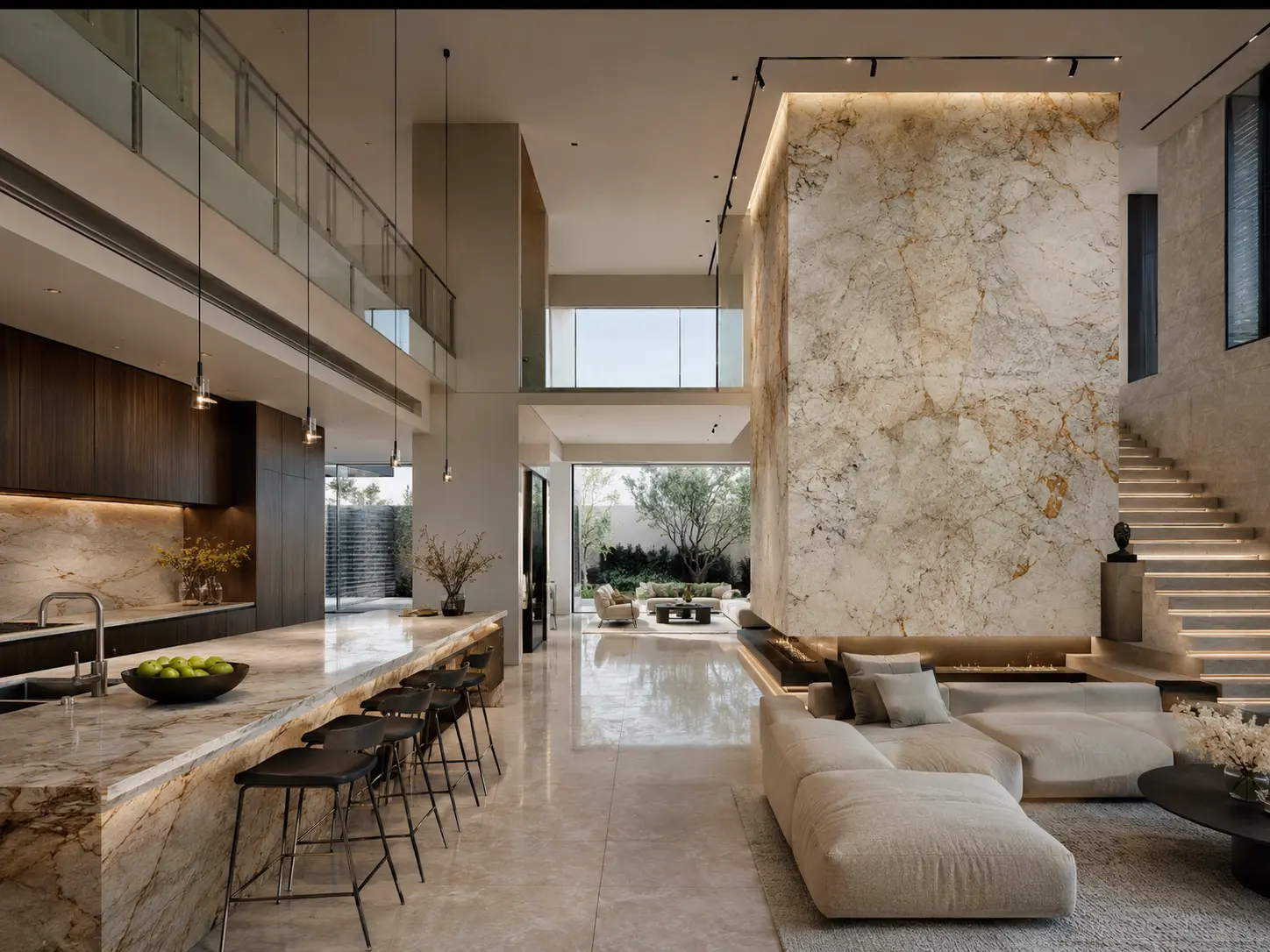
Technical Parameters Builders Should Check
Natural Stone is not a single material with one fixed performance level. Marble, granite, travertine, limestone, onyx, and quartzite differ in density, hardness, porosity, water absorption, flexural strength, surface finish, and maintenance requirements. Builders should check technical details before selecting material for bathrooms, public floors, outdoor spaces, countertops, or feature walls.
| Parameter | Typical Direction | Why Australian Builders Care |
|---|---|---|
| Thickness | Common project ranges include 10mm, 12mm, 15mm, 18mm, 20mm, 30mm, or custom | Affects weight, installation method, edge detail, strength, and freight planning |
| Density | Natural stone often ranges around 2.3–2.9 g/cm³ depending on stone type | Helps estimate freight weight, crate handling, structural load, and lifting needs |
| Water absorption | Varies between marble, granite, travertine, limestone, onyx, and quartzite | Important for bathrooms, kitchens, pool areas, outdoor paving, and sealing plans |
| Mohs hardness | Marble is commonly around 3–4, while granite and quartzite are generally higher | Helps evaluate scratch resistance and application suitability |
| Flexural strength | Depends on stone type, thickness, veining, and reinforcement | Important for stairs, large panels, countertops, and transport safety |
| Surface finish | Polished, honed, brushed, flamed, sandblasted, leathered, tumbled, or custom | Affects appearance, cleaning, slip resistance, and maintenance |
| Tolerance | Must be confirmed by project specification | Affects installation accuracy, joint alignment, and onsite labor |
| Slip resistance | May be required for pedestrian surfaces, stairs, ramps, wet areas, and public floors | Important for safety, project approval, and surface finish selection |
| Packing strength | Export crates, foam, corner protection, inner supports, and loading reinforcement | Reduces breakage during sea freight and onsite handling |
Australia-Specific Compliance and Import Risk Considerations
Biosecurity and Wood Packaging
Many natural stone shipments use wooden crates, timber supports, or dunnage. Australian builders and importers should confirm that packaging meets current biosecurity import conditions before shipping. Non-compliant packaging can create treatment costs, delays, re-export risk, disposal risk, or extra handling after arrival.
Practical preparation includes confirming whether the packaging follows accepted treatment requirements, requesting packaging photos, checking crate cleanliness, working with a freight forwarder, and using a customs broker familiar with stone shipments. The supplier should provide packing details, but the importer should confirm current Australian import conditions before the container departs.
Slip Resistance for Floors, Stairs and Wet Areas
Surface finish affects slip performance. Polished marble or granite may look premium, but it may not be suitable for every wet area, ramp, public floor, pool area, or external step. Honed, brushed, flamed, sandblasted, or textured finishes may be more appropriate depending on the application.
Builders should confirm project-specific requirements with local professionals, designers, certifiers, and installers. The stone supplier can provide finish options and surface details, but local compliance review remains the buyer’s responsibility.
Import Documentation and Site Management
Builders should request commercial invoice, packing list, material details, crate marks, packing photos, loading photos, treatment documents where applicable, and supplier contact details. After arrival, crates should be inspected before moving to site. If damage is found, photos should be taken immediately for supplier, freight, or insurance communication.
Real Sourcing Scenarios for Australian Builders
Apartment Bathroom Package
An apartment bathroom package may include wall tiles, floor tiles, vanity tops, threshold pieces, skirting, shower panels, and spare material. The safest supplier choice is usually a cut-to-size fabricator or project exporter that can label pieces by room, control batch color, and pack the order according to the installation schedule.
Hotel Lobby and Commercial Flooring
A hotel lobby requires large-format tiles, visual layout, finish consistency, slip consideration, dry lay photos, spare pieces, and strong packing. Builders should choose a stone project supplier with commercial flooring experience rather than a supplier that only sells loose slabs.
Luxury Villa Interior Package
A villa may require marble feature walls, quartzite kitchen islands, granite outdoor paving, limestone wall cladding, travertine pool coping, and cut-to-size bathroom pieces. In this case, a project package supplier can reduce sourcing complexity by coordinating multiple stone types, finishes, labels, and crates under one plan.
Outdoor Pool and Landscape Area
Outdoor pool areas need textured finishes, water exposure planning, coping pieces, drainage-compatible layouts, weather resistance, and surface safety. Builders should choose granite, travertine, or suitable outdoor stone suppliers with experience in pool and terrace applications.
Common Mistakes Australian Builders Should Avoid
Choosing Supplier by Price Only
A low price can hide weak material selection, poor polishing, hidden repair, thin packaging, delayed production, or limited after-sales support. Builders should compare total landed cost and total project risk, not only stone unit price.
Not Approving Actual Slabs
Catalog photos and small samples are not enough for premium natural stone. Builders should approve actual slabs for feature walls, countertops, stairs, and large panels. Without slab approval, the final material may show unexpected veining, color variation, or repaired areas.
Ignoring Packing and Import Requirements
Weak packing can cause breakage during sea freight. Unclear wood packaging documents can also create import delays. Builders should treat packing as part of the product, not an afterthought. Crate design, labels, supports, and photos should be checked before shipment.
No Spare Pieces Ordered
Natural stone is difficult to match later because color and veining vary by block and batch. Builders should order extra pieces for important project areas, especially custom sizes, rare materials, apartment bathrooms, hotel floors, and feature walls.
Choosing the Wrong Finish
A finish that looks beautiful in a sample room may not work in a wet bathroom, outdoor step, pool edge, or public floor. Builders should match finish to the real environment, safety requirement, cleaning routine, and maintenance expectations.
| Buyer Mistake | Possible Risk | Better Action |
|---|---|---|
| Price-only supplier choice | Hidden costs, poor quality, weak packing, delayed replacement | Compare QC, packing, project support, and total landed cost |
| No actual slab approval | Visual mismatch, poor veining, client rejection | Approve actual slabs before cutting |
| No written tolerance | Installation gaps and onsite cutting problems | Confirm drawings, tolerance, and measurement before production |
| Weak packing review | Breakage during shipping or unloading | Request crate photos, inner supports, and container loading images |
| Ignoring local requirements | Compliance or installation issue | Confirm slip, import, and project requirements with local professionals |
| No spare pieces | Future matching difficulty and project delay | Order extra stone for important areas |
If This Is Your Project, Choose This Sourcing Route
| If Your Project Needs | Choose This Supplier Type | Reason |
|---|---|---|
| Small urgent local repair | Local distributor | Faster access and easier replacement |
| Bulk floor tiles | Direct natural stone factory | Better cost control and production efficiency |
| Mixed villa package | Project-based stone exporter | Coordinates multiple stones, finishes, labels, and crates |
| Bathroom cut-to-size work | Custom stone fabrication factory | Controls dimensions, room labels, and installation sequence |
| Premium countertops | Quartzite or marble slab supplier | Supports full slab approval and edge planning |
| Outdoor paving | Granite or travertine supplier | Better match for exterior durability and surface texture |
| Repeated builder supply | Wholesale natural stone supplier | Supports stable product lines and regular container planning |
Australian builders preparing a project can collect drawings, quantities, stone preferences, finish requirements, delivery schedules, packing expectations, and site constraints before requesting natural stone project consultation. A clear project brief helps turn direct sourcing from a risky purchase into a controlled procurement process.

Frequently Asked Questions
1. Can Australian builders source Natural Stone directly from China?
Yes, Australian builders can source Natural Stone directly from China when they prepare clear specifications, verify supplier capability, request samples, approve actual slabs, confirm drawings, review quality control, check export packing, and plan import logistics before production starts. Direct sourcing is most suitable for bulk projects, villa packages, apartment bathroom packages, commercial flooring, outdoor paving, and custom cut-to-size work where factory customization and project coordination can create better value.
2. What Natural Stone is best for Australian construction projects?
The best Natural Stone depends on the project application. Marble is often selected for luxury interiors, bathrooms, feature walls, and staircases. Granite is better for outdoor paving, driveways, high-traffic floors, and durable surfaces. Travertine is popular for pool areas and warm architectural spaces. Limestone works well for soft wall cladding and calm interiors. Quartzite is suitable for premium countertops and kitchen islands, while onyx is best for decorative feature walls and backlit panels.
3. What should builders check before ordering Natural Stone from China?
Builders should check samples, actual slab photos, stone thickness, surface finish, water absorption, color variation, edge detail, cut-to-size drawings, tolerance, slip requirements, packing method, crate strength, export documents, delivery lead time, spare pieces, and supplier communication process. For premium projects, builders should also request dry lay photos, room labels, inspection photos, and container loading images before shipment.
4. Is factory-direct sourcing cheaper than buying Natural Stone locally?
Factory-direct sourcing can often reduce unit cost for bulk Natural Stone orders, especially when the project needs slabs, tiles, cut-to-size pieces, and customized packing. However, builders should calculate total landed cost, not only factory price. Freight, customs clearance, import handling, inspection, storage, unloading, breakage risk, spare pieces, and project management all affect the final cost. For small urgent orders, local stock may still be the safer option.
5. What is the biggest risk when importing Natural Stone?
The biggest risks when importing Natural Stone include color mismatch, wrong slab selection, inaccurate dimensions, weak packing, shipping breakage, delayed production, missing documents, biosecurity-related packaging issues, wrong surface finish, and poor communication. Builders can reduce these risks by approving actual slabs, confirming written specifications, requesting pre-shipment inspection photos, checking crate quality, ordering spare pieces, and working with a supplier that understands project-based stone export.
References
- “Biosecurity Import Conditions System User Guidance” — Department of Agriculture, Fisheries and Forestry — Australian Government Import Resource
- “Timber and Bamboo Packaging Import Requirements” — Department of Agriculture, Fisheries and Forestry — Australian Government Biosecurity Resource
- “AS 4586 Slip Resistance Classification of New Pedestrian Surface Materials” — Standards Australia Committee BD-094 — Australian Standard
- “National Construction Code Referenced Documents” — Australian Building Codes Board — Building Compliance Resource
- “Dimension Stone Design Manual” — Natural Stone Institute Technical Committee — Natural Stone Institute
- “ASTM C97 Standard Test Methods for Absorption and Bulk Specific Gravity of Dimension Stone” — ASTM International Technical Committee C18 — ASTM International
- “ASTM C880 Standard Test Method for Flexural Strength of Dimension Stone” — ASTM International Technical Committee C18 — ASTM International
- “Guide to the Specification and Use of Natural Stone” — Stone Federation Technical Committee — Stone Federation Great Britain
How Australian Builders Should Source Natural Stone from China
How should Australian builders source Natural Stone? Start with project scope, not product photos. Define the building type, stone application, quantity, thickness, finish, drawings, delivery deadline, installation method, and site constraints. Then select the supplier type that matches the project: factory, project exporter, cut-to-size fabricator, slab supplier, or wholesale partner.
Why can direct sourcing work? Direct sourcing can give builders wider stone choices, better customization, factory-direct pricing, cut-to-size service, and project package support. It works best when the buyer controls specifications, approves actual slabs, checks production quality, and plans packing and import steps before shipment.
What must buyers control? Builders must control material selection, thickness, finish, slip consideration, water absorption, tolerance, spare pieces, labels, packing, biosecurity-related packaging details, export documentation, sea freight, site delivery, and maintenance expectations. The supplier can support these steps, but the buyer must manage the full project chain.
Option logic: If the order is small and urgent, local stock may be safer. If the project needs bulk tiles, choose a direct natural stone factory. If the project is a whole villa package, choose a project exporter. If the job needs bathrooms, stairs, or wall panels, choose a cut-to-size fabricator. If the project needs premium feature walls, choose a slab supplier with dry lay service.
Consideration for total project value: The best sourcing route is not always the cheapest quotation. Builders should compare total landed cost, quality risk, compliance preparation, crate safety, communication speed, spare pieces, installation sequence, and long-term maintenance. A controlled sourcing process protects the project schedule and the final client experience.
Before requesting a quote, builders should prepare drawings, quantities, preferred stone types, finish requirements, thickness, packing expectations, and delivery timing so the supplier can provide a practical sourcing plan instead of a general stone price list.