 EN
EN


Choosing Marble Suppliers for Australian Projects Requires More Than a Price List
Selecting the right Marble Suppliers for Australian projects is not only about finding beautiful stone at a competitive price. For builders, developers, architects, stone importers, and project contractors, the supplier must control material selection, slab approval, cutting accuracy, surface finish, batch consistency, packaging strength, lead time, and export communication. A marble shipment that looks low-cost at the quotation stage can become expensive if the project receives mismatched colors, weak crates, wrong thickness, chipped edges, delayed production, or incomplete packing information.
Australian projects often use marble for luxury apartment bathrooms, hotel lobby floors, villa feature walls, retail interiors, kitchen islands, vanity tops, lift surrounds, stair treads, and commercial reception areas. These applications require different supplier capabilities. A slab supplier may be strong for feature walls, while a cut-to-size factory may be better for apartment bathroom packages. A project-based supplier may provide more value when drawings, numbering, dry lay photos, and container loading coordination are required.
Buyers who want to understand the background, processing focus, and supply philosophy of a stone partner can begin by reviewing Marble Suppliers in China with real factory capability, export communication, and project service experience. This helps Australian buyers compare more than surface photos and price sheets.
Why Australian Buyers Source Marble from China
Strong Processing Capacity for Slabs, Tiles and Cut-to-Size Projects
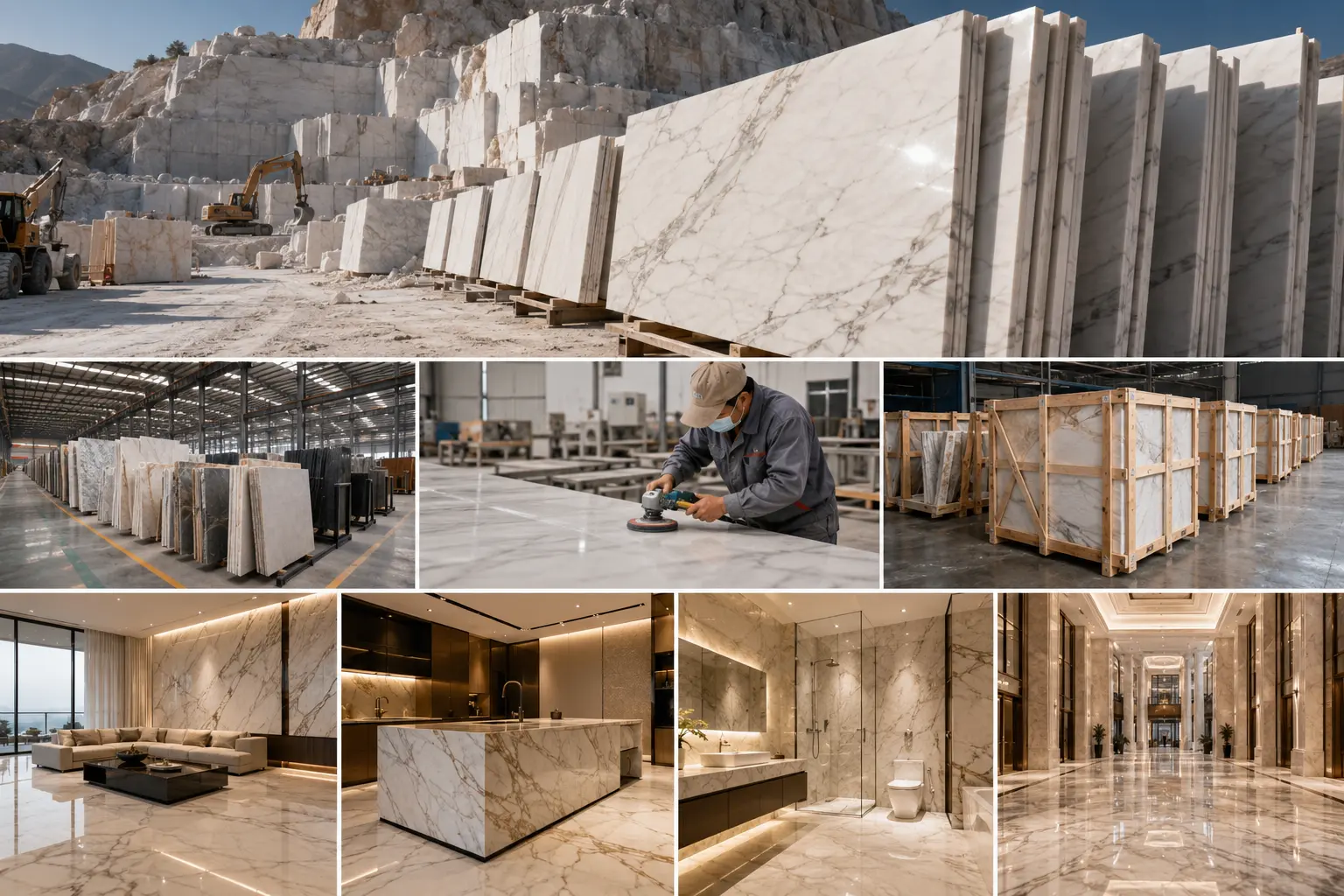
China remains an important marble processing and export base because many stone factories can handle multiple production formats in one supply chain. A project may need slabs for countertops, tiles for bathroom floors, cut-to-size panels for walls, stair pieces for public areas, and vanity tops for apartment units. When these items come from one coordinated supplier, buyers can reduce communication errors and improve project consistency.
For Australian importers, builders, and contractors, this matters because construction schedules are often divided into stages. A hotel may require lobby floor tiles first, then wall cladding, then bathroom packages. An apartment project may require repeated orders for different buildings or floors. A reliable marble partner can help control material batches, replacement pieces, packing sequence, and delivery timing.
Australia-Focused Procurement Needs
Australian projects usually care about more than appearance. Buyers often need clear product photos, finish details, thickness confirmation, quality inspection records, packing images, delivery schedule, slip-resistance awareness for wet or public areas, and support for local installer requirements. Marble is natural stone, so variation is expected, but uncontrolled variation can create installation and approval problems.
Before ordering, buyers should compare the available natural marble selection according to color tone, veining, density, finish, application area, maintenance expectation, and project quantity. This is especially important when the marble will be used across multiple bathrooms, large lobby floors, or bookmatched walls.
Top 10 Marble Supplier Types in China for Australian Projects
The phrase “Top 10 Marble Suppliers” should not only mean ten company names. For B2B buyers, the more useful approach is to understand the ten supplier types that appear in the Chinese marble supply chain. Each type has different strengths, risks, and ideal project scenarios. The best supplier for a hotel lobby may not be the best supplier for small bathroom renovations. The best slab seller may not be the best cut-to-size project factory.
1. Direct Marble Factory Suppliers
Direct marble factory suppliers are suitable for buyers who need bulk production, stable processing, and factory-level cost control. These suppliers usually work with slabs, tiles, cutting lines, polishing machines, and packing areas. They are useful for importers, wholesalers, builders, and commercial flooring buyers that need repeatable supply.
The advantage is production control. The risk is that some factories may not provide strong English communication, project documentation, or design coordination. Australian buyers should confirm who will manage drawings, inspection, packing photos, and post-shipment communication.
2. Marble Slab Suppliers for Luxury Interiors
Marble slab suppliers focus on full slabs for countertops, feature walls, kitchen islands, vanity tops, fireplaces, and high-end interior panels. They are suitable for villa projects, boutique hotels, designer showrooms, and luxury residential interiors. Buyers should ask for full slab photos, video inspection, crack repair disclosure, resin treatment details, polishing quality, and slab numbering.
When the project needs premium stone surfaces, reviewing marble slab suppliers for Australia helps buyers compare material options for luxury interiors, wall panels, countertops, and design-led applications before making a bulk decision.
3. Marble Tile Suppliers for Residential Projects
Marble tile suppliers are suitable for apartment bathrooms, kitchen splashbacks, residential floors, hallways, stair landings, and wall surfaces. Important details include tile size, thickness tolerance, finish, edge treatment, surface inspection, carton packaging, crate strength, and extra replacement pieces.
For residential projects, consistency is a major concern. If tiles from different batches have strong color variation, installers may struggle to create a balanced layout. Buyers should request pre-production samples, batch photos, and packing labels that help identify rooms or project stages.
4. Cut-to-Size Marble Suppliers
Cut-to-size marble suppliers are important when a project needs exact dimensions. Typical applications include lift surrounds, bathroom wall panels, stair treads, vanity tops, shower walls, reception desks, commercial corridors, and hotel wall cladding. These suppliers should understand CAD drawings, room schedules, edge details, installation sequence, panel numbering, and tolerance control.
For Australian projects, cut-to-size supply reduces onsite cutting and can improve installation speed. The risk is that drawing mistakes are expensive. Buyers should confirm final measurements, installer requirements, and material approval before cutting starts.
5. Marble Countertop and Vanity Suppliers
Countertop and vanity suppliers are best for kitchens, bathrooms, laundries, hotel suites, apartment projects, and residential renovations. They need accurate sink cutouts, faucet holes, edge polishing, backsplash pieces, mitered edges, and strong packing around fragile cutout areas.
Marble countertops look premium, but they need realistic maintenance planning. Buyers should understand sealing, stain resistance limits, acid sensitivity, and cleaning methods before recommending marble in heavy-use kitchens.
6. Commercial Flooring Marble Suppliers
Commercial flooring suppliers support hotels, shopping centers, office lobbies, restaurants, clubs, galleries, and public interiors. In these spaces, buyers should consider foot traffic, slip resistance, cleaning routine, surface finish, thickness, replacement pieces, and maintenance costs.
Polished marble can create a luxurious appearance, but it may not be suitable for every wet or high-traffic area. Honed, brushed, or textured finishes may be more practical in selected commercial spaces. Buyers should check local project specifications and installer guidance before finalizing the finish.
7. Marble Wall Cladding Suppliers
Wall cladding suppliers focus on feature walls, reception areas, elevator surrounds, villa entrance walls, retail interiors, and hotel backdrops. Their value is not only cutting stone but also controlling visual layout. Bookmatching, vein matching, dry lay photos, panel numbering, and installation drawings are critical.
Buyers planning luxury walls, hotel spaces, or architect-led interiors can evaluate a marble project supplier for architects that can coordinate visual layout, project sequencing, and cut-to-size supply rather than only selling random slabs.
8. Project-Based Marble Exporters
Project-based exporters are useful when the buyer needs a complete package rather than one product type. They can help combine slabs, tiles, wall panels, stair pieces, vanity tops, packing plans, inspection photos, container loading, and export documents. This type of supplier is especially helpful for developers and builders who need fewer communication points.
The advantage is coordination. The risk is that service cost may be higher than buying from a simple factory. For complex Australian projects, that extra service may reduce mistakes and save time.
9. Boutique Luxury Marble Suppliers
Boutique suppliers focus on rare colors, dramatic veining, bookmatched slabs, premium polishing, and high-end interiors. They are suitable for luxury villas, private residences, designer bathrooms, hotel feature walls, and exclusive showroom spaces.
The risk is limited stock. Buyers should reserve slabs early, approve actual material, and keep extra pieces for future repair or matching. This is especially important when using distinctive stone with strong veining.
10. Long-Term OEM and Wholesale Marble Partners
Long-term OEM and wholesale partners are suitable for stone distributors, construction suppliers, builders, and importers that want repeated supply. These partners may support private labels, customized packaging, fixed product lines, regular container shipments, and long-term pricing stability.
For Australian importers, a long-term supplier can reduce sourcing time and improve stock planning. The main requirement is volume commitment and clear specifications, because stable supply depends on repeatable demand and consistent standards.
Marble Supplier Comparison for Australian Buyers
| Supplier Type | Best For | Main Advantage | Main Risk | Buyer Recommendation |
|---|---|---|---|---|
| Direct marble factory | Bulk slabs, tiles, cut-to-size production | Production control and factory-direct cost | Communication and documentation may vary | Best for experienced buyers with clear specifications |
| Marble slab supplier | Feature walls, countertops, luxury interiors | Strong slab selection and visual impact | Natural variation and limited stock | Approve actual slabs before cutting |
| Marble tile supplier | Residential floors, bathrooms, walls | Efficient tile production and packing | Batch color mismatch | Request samples, batch photos, and spare pieces |
| Cut-to-size supplier | Hotels, apartments, lift surrounds, stairs | Project-ready dimensions and reduced onsite cutting | Drawing errors can cause high loss | Confirm CAD drawings and tolerance before production |
| Project exporter | Mixed-item project packages | Coordination, QC, packing, documents | Higher service cost | Best for developers and contractors managing complex orders |
Material Parameters Australian Buyers Should Check
Marble is a natural stone, so technical performance varies by quarry, mineral composition, density, porosity, veining, and processing method. Buyers should not assume that every marble behaves the same. A polished white marble for a feature wall has different requirements from honed marble floor tiles in a hotel corridor.
| Parameter | Typical Range or Direction | Why It Matters for Australian Projects |
|---|---|---|
| Thickness | Common project ranges include 10mm, 12mm, 15mm, 18mm, 20mm, and custom thickness | Affects weight, installation method, durability, and freight planning |
| Density | Often around 2.5–2.8 g/cm³ depending on stone type | Helps estimate crate weight, structural loading, and handling requirements |
| Water absorption | Varies by marble type and surface treatment | Important for bathrooms, kitchens, wet areas, and sealing plans |
| Mohs hardness | Marble is commonly around 3–4 | Useful for understanding scratch risk and maintenance expectations |
| Surface finish | Polished, honed, brushed, sandblasted, leathered, or custom | Influences appearance, slip risk, cleaning, and application suitability |
| Thickness tolerance | Project-specific tolerance should be confirmed before production | Important for installation accuracy and joint alignment |
| Color variation | Natural variation is normal, but batch control is critical | Important for large floors, walls, and repeated apartment units |
| Packing strength | Wooden crates, foam protection, corner guards, and loading reinforcement | Reduces breakage during sea freight to Australia |
Australian Project Requirements That Affect Supplier Choice
Slip Resistance and Surface Finish
Flooring and wet-area projects may require careful surface selection. A highly polished marble floor can deliver premium visual impact, but it may not be the best option for every public, wet, or high-traffic location. Honed or textured finishes may improve practical usability in selected areas. Buyers should confirm local project requirements, installer advice, and the final use environment before selecting surface finish.
Sealing and Maintenance Planning
Marble generally requires sealing and proper maintenance, especially in kitchens, bathrooms, hospitality spaces, and commercial interiors. Acidic cleaners, wine, citrus, and harsh chemicals may affect marble surfaces. This does not mean marble is unsuitable; it means buyers should match the material to the application and give clear maintenance guidance to the end user.
Sea Freight and Packing Control
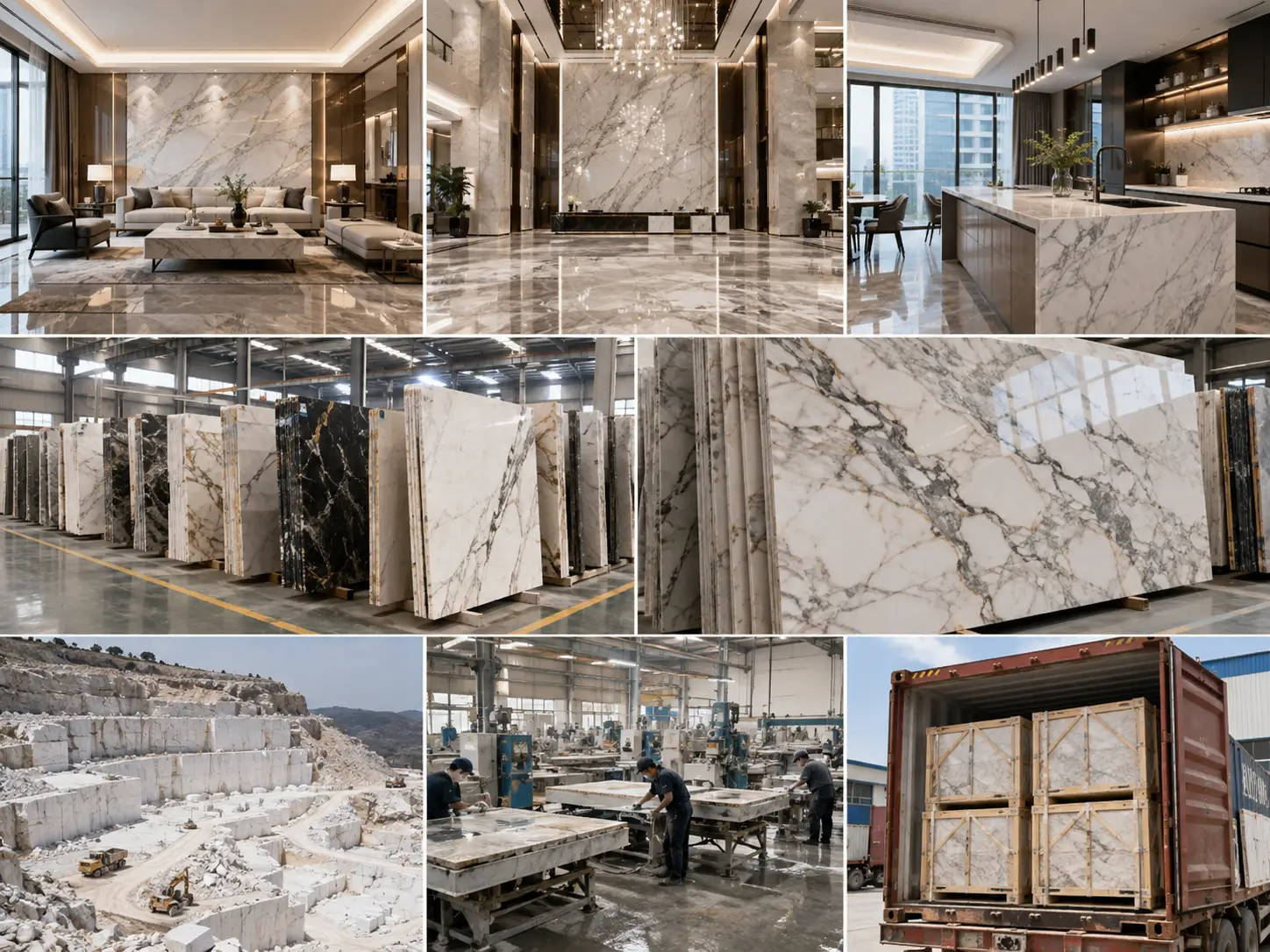
Australia-bound marble shipments need strong export packaging. Buyers should request crate photos, slab support details, tile carton protection, corner guards, bundle labels, and container loading photos. Breakage during shipping is not only a product loss; it can delay installation and create expensive replacement problems.
Real Project Scenarios for Australian Buyers
Luxury Apartment Bathroom Package
An apartment bathroom package may include marble wall tiles, floor tiles, vanity tops, shower panels, skirting pieces, and spare pieces. The buyer needs consistent color, accurate dimensions, and clear room labeling. A cut-to-size supplier with batch matching and panel numbering is usually a stronger choice than a simple tile seller.
Hotel Lobby Marble Flooring
A hotel lobby requires visual impact, durable finish, careful layout, and replacement planning. Buyers should request dry lay photos, spare pieces, surface finish confirmation, and a clear packing sequence. For large lobbies, stone variation should be arranged intentionally rather than mixed randomly.
Villa Kitchen and Feature Wall
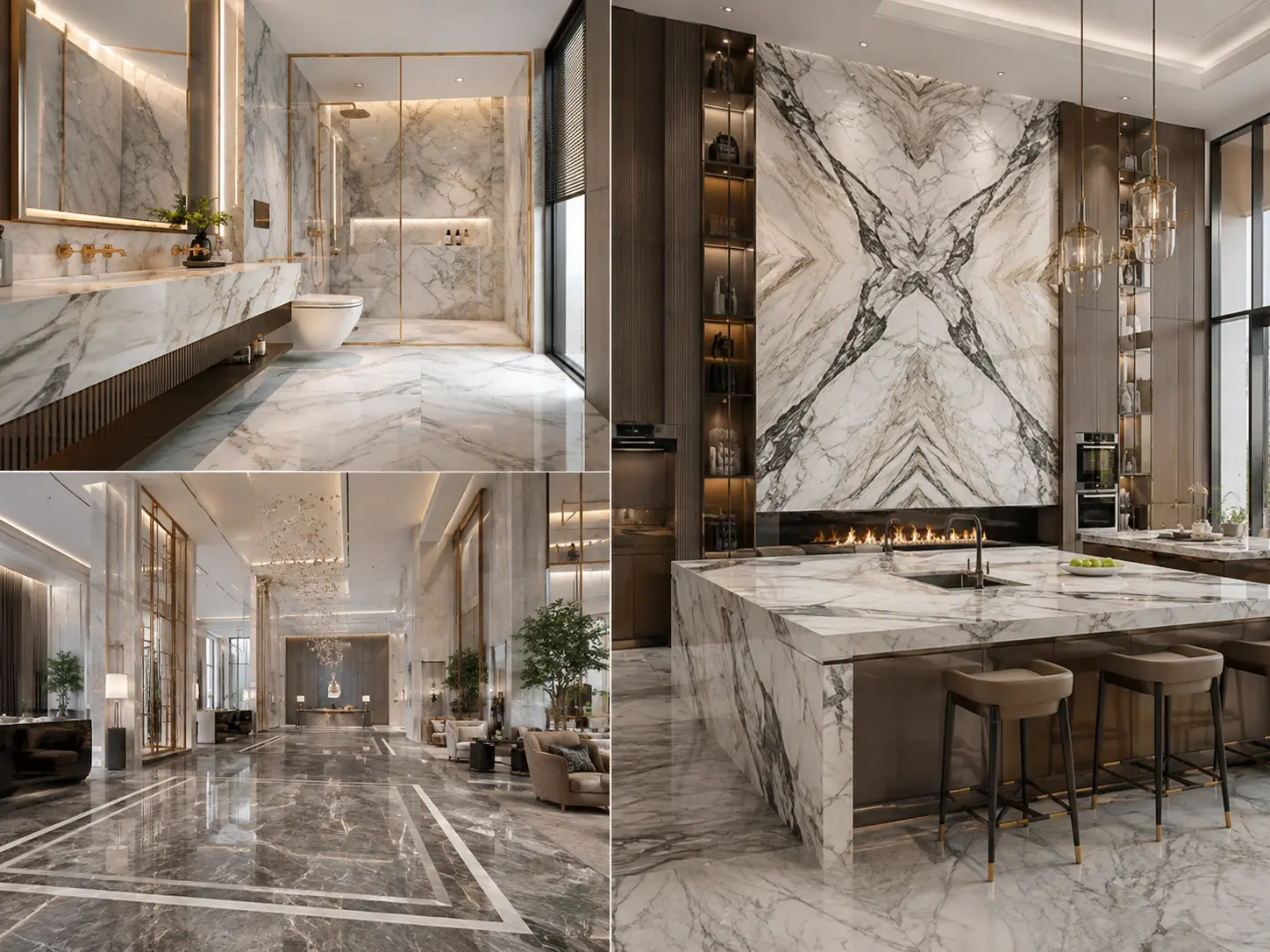
A luxury villa may need bookmatched slabs, island panels, countertops, fireplace surrounds, and feature walls. Buyers should approve full slabs before cutting and confirm vein direction for every visible panel. In this case, slab selection and visual layout are more important than low unit price.
Common Buyer Mistakes When Importing Marble from China
Choosing by Price Only
Low price may hide material repair, weak polishing, inconsistent thickness, poor packing, or limited quality control. The cheapest supplier is not always the lowest-cost supplier after breakage, replacement, delays, and installation problems are considered.
No Actual Slab Approval Before Cutting
Natural marble varies from block to block. If buyers approve only a small sample, the final slab may look different. For slabs, feature walls, countertops, and large panels, actual slab approval is strongly recommended before cutting.
Ignoring Spare Pieces
Australian projects should order extra material when possible. If a piece breaks during installation or a future repair is needed, matching the same marble later may be difficult. Extra pieces are especially important for apartment projects, hotel corridors, and custom cut-to-size orders.
Underestimating Packing Risk
Marble can break during transport if crates are weak or poorly loaded. Buyers should not assume packing is standard. Export crates, foam protection, corner support, and loading photos should be part of the purchasing checklist.
| Buyer Mistake | Possible Risk | Better Action |
|---|---|---|
| Choosing by price only | Poor finish, hidden repair, weak packing, higher hidden cost | Compare samples, QC process, packing, and project communication |
| No actual slab approval | Color mismatch and unexpected veining | Approve actual slabs before cutting |
| Ignoring finish selection | Slip risk, maintenance problems, or wrong visual effect | Match finish to location and use condition |
| No written tolerance | Installation gaps and alignment problems | Confirm thickness and cutting tolerance before production |
| Weak packing control | Breakage during sea freight | Request crate photos and container loading evidence |
| No spare material | Future replacement difficulty | Order extra pieces for project safety |
How to Evaluate Marble Suppliers Before Ordering
A reliable supplier should help buyers reduce risk before production starts. This means asking technical questions, providing clear photos, confirming actual material, explaining packing, and supporting project coordination. For Australian buyers, supplier evaluation should include factory capability, product range, export experience, quality inspection, cut-to-size ability, drawing communication, sample availability, lead time control, and after-sales support.
| Evaluation Point | What to Ask | Why It Matters |
|---|---|---|
| Factory capability | Can you process slabs, tiles, countertops, stairs, and cut-to-size panels? | Confirms whether the supplier can support the full project scope |
| Quality control | Can you provide inspection photos before packing? | Reduces risk of defects, wrong finish, and poor selection |
| Project support | Can you read drawings, room schedules, and panel numbers? | Important for apartments, hotels, and commercial interiors |
| Packing method | What crate system and protection materials do you use? | Reduces breakage during sea freight |
| Export documentation | Can you provide invoice, packing list, material details, and loading information? | Helps import and delivery coordination |
| Communication process | Who follows the order from approval to shipment? | Reduces mistakes and improves response speed |
If This Is Your Project, Choose This Supplier Type
| If Your Project Needs | Recommended Supplier Type | Reason |
|---|---|---|
| Bulk bathroom floor and wall tiles | Marble tile supplier China | Efficient production, carton packing, and batch supply |
| Luxury feature walls | Marble slab supplier China | Full slab selection and visual layout control |
| Apartment bathroom packages | Custom cut-to-size marble supplier | Accurate dimensions, room labeling, and reduced onsite cutting |
| Hotel lobby floors | Commercial marble project supplier | Dry lay photos, finish planning, and spare pieces |
| Australian import distribution | OEM wholesale marble supplier | Stable supply, repeated products, and packaging control |
| Bookmatched villa walls | Boutique luxury marble slab supplier | Premium slabs, vein matching, and visual approval |
Buyers who are comparing suppliers for hotel projects, apartment packages, commercial flooring, or custom marble fabrication can prepare drawings, quantities, preferred marble colors, finish requirements, and delivery schedules, then request Australian marble project consultation before confirming the final supplier and production plan.
Frequently Asked Questions
1. How do I choose the best marble supplier in China?
To choose the best marble supplier in China, buyers should evaluate factory capability, marble selection, actual slab photos, cut-to-size support, thickness control, surface finish quality, quality inspection process, export packing, communication speed, and project experience. For Australian projects, the best supplier is not always the cheapest one. A reliable supplier should help reduce color mismatch, breakage, drawing mistakes, delayed shipment, and installation problems before production starts.
2. Is Chinese marble suitable for Australian projects?
Chinese marble and marble processed in China can be suitable for Australian projects when the supplier controls material selection, finishing, thickness, packing, and quality inspection properly. China has strong stone processing capacity for marble slabs, marble tiles, cut-to-size panels, stair pieces, countertops, and project packages. Suitability depends on the selected marble type, application area, surface finish, slip consideration, sealing plan, and whether the supplier understands export requirements for Australian builders, architects, and importers.
3. What should Australian buyers check before importing marble?
Australian buyers should check samples, actual slab photos, thickness, surface finish, color variation, crack repair, edge quality, slip consideration for flooring, sealing requirements, cut-to-size drawings, packing method, crate strength, spare pieces, shipping schedule, and export documents. Buyers should also confirm whether the supplier can provide inspection photos and container loading photos before shipment, because sea freight damage and batch mismatch can create expensive project delays.
4. Are marble slabs or marble tiles better for projects?
Marble slabs are usually better for countertops, feature walls, kitchen islands, fireplace surrounds, bookmatched panels, and luxury custom fabrication. Marble tiles are usually better for bathroom floors, wall tiles, apartment packages, corridors, and larger flooring areas where repeated sizes are needed. Cut-to-size marble pieces are best when the project requires exact dimensions, room schedules, stair treads, lift surrounds, vanity tops, or installation-ready panels.
5. What is the risk of choosing cheap marble suppliers?
The risk of choosing cheap marble suppliers is that the buyer may receive poor polishing, color mismatch, hidden cracks, repaired slabs, inaccurate thickness, weak packing, delayed shipment, or limited after-sales support. Cheap pricing can also lead to higher total cost if breakage, replacement orders, installation delays, and customer complaints occur. Australian buyers should compare quality control, packing, actual material approval, and supplier communication before focusing only on the lowest price.
References
- “Dimension Stone Design Manual” — Natural Stone Institute Technical Committee — Natural Stone Institute
- “ASTM C97 Standard Test Methods for Absorption and Bulk Specific Gravity of Dimension Stone” — ASTM International Technical Committee C18 — ASTM International
- “ASTM C170 Standard Test Method for Compressive Strength of Dimension Stone” — ASTM International Technical Committee C18 — ASTM International
- “ASTM C880 Standard Test Method for Flexural Strength of Dimension Stone” — ASTM International Technical Committee C18 — ASTM International
- “Slip Resistance Classification of New Pedestrian Surface Materials” — Standards Australia Committee BD-094 — Australian Standard AS 4586
- “Guide to the Specification and Use of Natural Stone” — Stone Federation Technical Committee — Stone Federation Great Britain
- “Natural Stone Flooring Maintenance Guide” — Natural Stone Institute Education Department — Natural Stone Institute
- “International Maritime Cargo Packing Guidelines for Stone Products” — Export Packaging Research Group — Stone Industry Logistics Reference
How to Select Marble Suppliers for Australian Projects
How should Australian buyers select Marble Suppliers? Start by defining the project type, application area, required material format, finish, thickness, and installation method. Then compare suppliers based on factory capability, actual slab approval, cut-to-size support, quality inspection, export packing, communication process, and ability to provide replacement pieces.
Why does supplier quality matter? Marble is a natural stone, so variation is normal, but project success depends on control. Poor supplier selection can lead to color mismatch, inaccurate dimensions, breakage during sea freight, installation delay, slip or maintenance problems, and higher replacement cost.
What should the right supplier provide? A reliable marble supplier should provide samples, actual slab photos, technical data, surface finish confirmation, dry lay photos when required, cut-to-size drawings, inspection images, crate photos, container loading records, export documents, and responsive after-sales communication.
Option logic: If the project is an apartment bathroom package, choose a cut-to-size supplier with room labeling. If the project is a hotel lobby, choose a commercial marble flooring supplier with dry lay inspection. If the project is a villa feature wall, choose a premium marble slab supplier with full slab approval. If the buyer is an importer or distributor, choose a wholesale marble supplier with repeat supply capability.
Consideration for long-term value: The best marble supplier is not always the lowest-price supplier. Buyers should calculate the full cost of material approval, cutting accuracy, packing safety, replacement risk, schedule delay, installer coordination, and long-term maintenance. A slightly higher-quality supplier can reduce hidden costs and protect the final project result.
Before placing a bulk order, prepare your drawings, quantities, preferred stone colors, finish requirements, packaging expectations, and delivery schedule so the supplier can recommend the most practical marble supply plan for your Australian project.