EN
EN



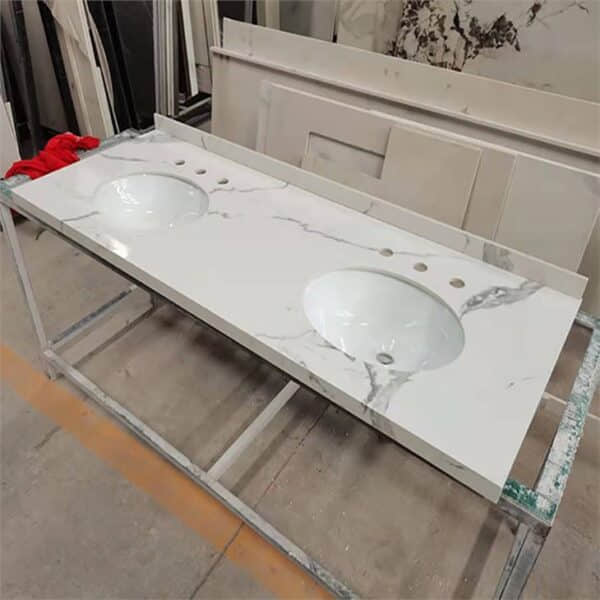
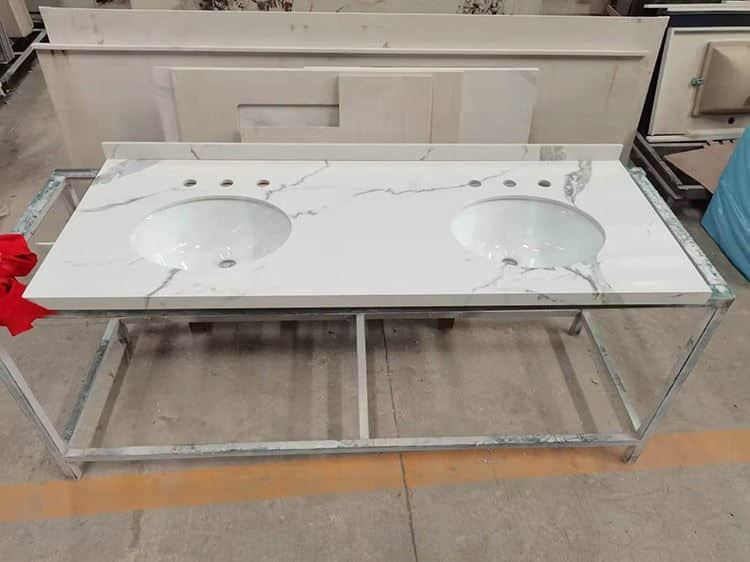
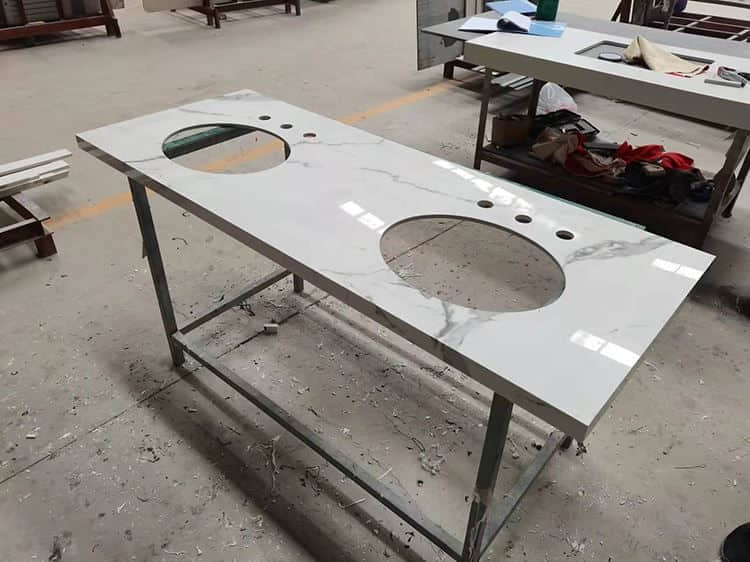
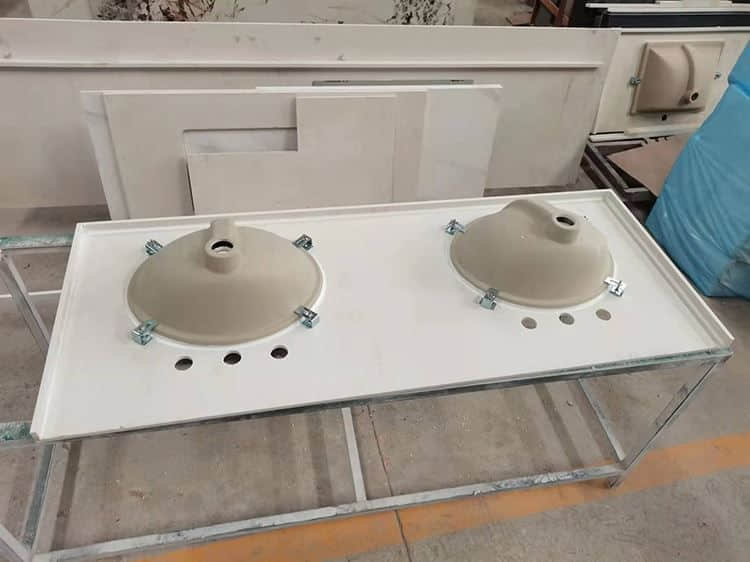
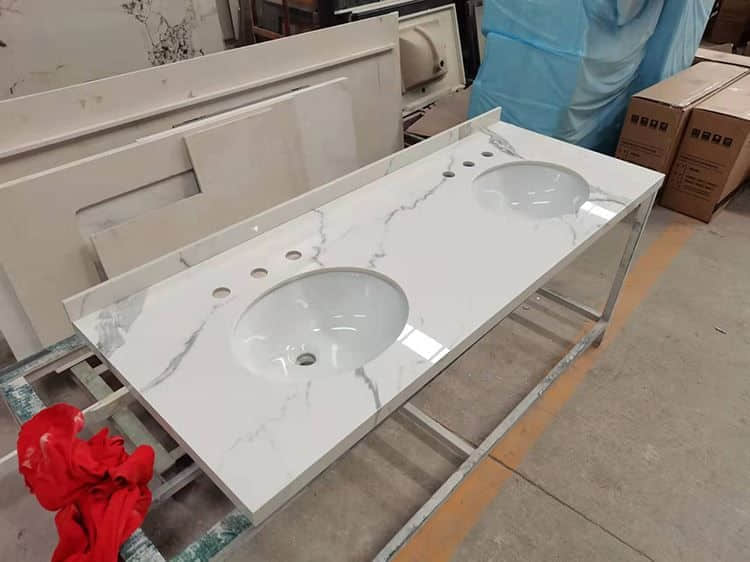
12mm Thickness Sintered Stone Countertop
 Tel:+86-13959219373
 Email:[email protected]
- Overview
- Sintered Stone Slab Ceramic Slate
- Recommended Products
Sintered Stone Slab Ceramic Slate for Countertops, Furniture, Wall Panels, and High-End Interior Applications
Sintered stone, also known as ceramic slate or rock board, is a new-generation substantial porcelain surface material made from natural raw materials through specialized production technology. The material is pressed by a high-tonnage press, combined with NDD technology, and fired at a temperature of more than 1200°C, creating a hard, dense, and high-performance slab material suitable for demanding processing and application requirements.
Compared with traditional ceramic slabs, sintered stone has stronger processing adaptability and broader application value. It can be cut, drilled, polished, and processed into multiple shapes for countertops, furniture panels, wall cladding, cabinet doors, tables, bathroom surfaces, commercial interiors, and custom home projects.
Micro Summary Card
Product
Sintered stone slab / ceramic slate / rock board made from natural raw materials under high-pressure pressing and high-temperature firing.
Main Sizes
2400×1200mm, 760×2550mm, 3200×1600mm, 3600×1600mm and other project sizes.
Performance
Food-contact safe, recyclable, fire resistant, stain resistant, scratch resistant, corrosion resistant, and easy to clean.
Applications
Kitchen countertops, dining tables, cabinet panels, bathroom vanities, furniture, wall panels, commercial spaces, and custom interiors.
Product Overview
Sintered stone is produced by pressing natural raw materials under extremely high pressure and firing them at more than 1200°C. The result is a dense, hard, and substantial porcelain surface material that can withstand high-strength processing. Its English name, sintered stone, reflects the firing and sintering process used to create the slab.
The material is often called ceramic slate or rock board in construction and decorative material markets. Its hardness can exceed granite and other igneous rocks, while its surface performance makes it suitable for high-standard interior, furniture, and architectural applications.
Common slab specifications include 2400×1200mm, 760×2550mm, 3200×1600mm, and 3600×1600mm. These large-format sizes help designers and fabricators reduce seams, create continuous surfaces, and support modern residential and commercial design requirements.
Core Specifications
| Product Name | Sintered Stone Slab / Ceramic Slate / Rock Board |
|---|---|
| Material Type | Substantial porcelain surface material made from natural raw materials through high-pressure pressing, NDD technology, and high-temperature firing. |
| Production Process | Pressed by a high-tonnage press, combined with NDD technology, and burned at a high temperature of more than 1200°C. |
| Regular Sizes | 2400×1200mm, 760×2550mm, 3200×1600mm, 3600×1600mm. |
| Surface Performance | Hard, dense, scratch resistant, stain resistant, fire resistant, high-temperature resistant, corrosion resistant, easy to clean, and suitable for high-strength processing. |
| Processing | Can be drilled, polished, cut, shaped, and processed into different formats for countertops, furniture, panels, and custom applications. |
| Application / Usage | Kitchen countertops, bathroom vanities, dining tables, cabinet panels, furniture surfaces, wall panels, decorative panels, commercial interiors, and custom home projects. |
| Customization | Texture, color, size, processing method, edge design, cutout position, and finished application can be customized according to project needs. |
Sintered Stone Performance Advantages
Compared with traditional ceramic slab products, sintered stone has higher production requirements and stronger functional application value. Ceramic slab does not equal sintered stone. Enterprises that can produce large ceramic slabs may not necessarily be able to produce true sintered stone slabs with stronger processing ability and broader application performance.
| Advantage | Performance Description | Buyer Value |
|---|---|---|
| Safety and Health | Can be in direct contact with food. It uses natural raw materials, is 100% recyclable, non-toxic, and non-radiative. | Suitable for kitchen countertops, dining tables, food preparation areas, residential interiors, and sustainable project specifications. |
| Fire and High Temperature Resistance | A1 grade fire-resistant sintered stone does not shrink, crack, discolor, or emit gas or odor when exposed to high-temperature conditions described in the original material. | Useful for kitchen surfaces, wall panels, fireplace-related surrounds, commercial counters, and heat-exposed decorative surfaces. |
| Stain Resistance | The water penetration rate is described as 1 in 10,000, helping resist liquid penetration and reducing spaces where bacteria can breed. | Supports easier care for kitchens, bathrooms, commercial counters, hospitality spaces, and high-use surfaces. |
| Scratch Resistance | Mohs hardness exceeds 6 degrees, helping resist scratching during daily use. | Suitable for countertops, tables, cabinet surfaces, and frequently touched furniture applications. |
| Corrosion Resistance | Resistant to various chemical substances, including solutions and disinfectants. | Supports use in kitchens, bathrooms, healthcare-style interiors, cleaning-heavy environments, and commercial spaces. |
| Easy to Clean | Only wet towel wiping is usually needed. No special complex maintenance is required. | Reduces long-term cleaning pressure for homeowners, hotels, restaurants, offices, and retail interiors. |
| All-Round Application | Breaks the boundary from decorative material to applied material, allowing more diverse design, processing, and usage. | Can support countertops, tables, cabinets, wall panels, bathroom vanities, reception counters, and custom furniture. |
| Flexible Customization | The surface texture is rich and diverse and can be customized according to user needs. | Helps designers and project buyers match marble-look, stone-look, solid color, modern, luxury, and custom design styles. |
Sintered Stone vs Ceramic Slab vs Natural Stone
| Material | Best For | Advantages | Possible Limitation |
|---|---|---|---|
| Sintered Stone Slab | Countertops, tables, cabinets, furniture, bathroom vanities, wall panels, and custom high-performance interior applications. | High hardness, strong processing adaptability, food-contact safety, stain resistance, scratch resistance, corrosion resistance, easy cleaning, and large-format design. | Requires competent processing equipment, careful cutting, edge treatment, handling, and installation support. |
| Traditional Ceramic Slab | Wall panels, flooring, decorative surfaces, and basic large-format decorative applications. | Decorative surface, large format availability, and wide design options. | Ceramic slab does not equal sintered stone; some ceramic slabs may not support the same drilling, polishing, cutting, and shaping performance. |
| Granite | Natural stone countertops, flooring, exterior stone, and durable decorative surfaces. | Natural texture, strong stone performance, outdoor and indoor use options. | Natural color variation and maintenance needs should be confirmed according to stone type and application. |
| Marble | Luxury interiors, wall cladding, vanities, fireplace surrounds, floors, and decorative furniture. | Elegant natural veining, high-end appearance, strong decorative value. | Requires more careful maintenance in some countertop and high-use environments. |
| Quartz Surface | Kitchen countertops, bathroom tops, commercial counters, and consistent-pattern interior projects. | Consistent color, practical surface, broad design range. | May not provide the same high-temperature sintered ceramic structure or ultra-large-format processing range. |
Application Scenarios
Sintered stone slabs can move from decorative materials to applied materials. Their high-performance surface, large-format size, and processing flexibility make them suitable for custom homes, commercial interiors, furniture manufacturing, kitchen projects, bathroom projects, and high-standard architectural design.
Kitchen Countertops
Food-contact safe, stain resistant, scratch resistant, easy to clean, and suitable for high-use residential or commercial kitchen surfaces.
Dining Tables and Furniture
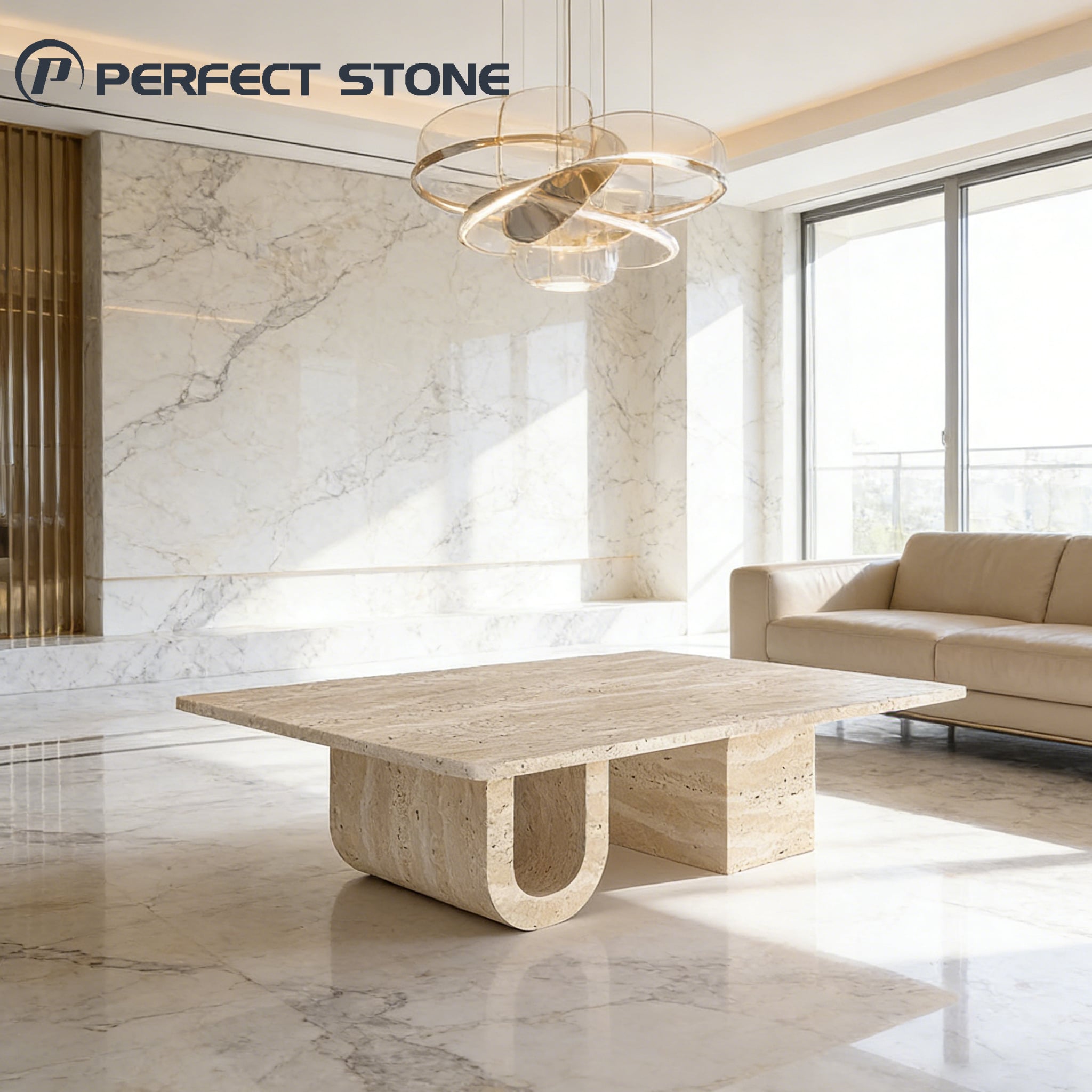
Large-format slabs can be processed into dining tables, coffee tables, side tables, cabinet tops, and custom furniture surfaces.
Bathroom Vanities
Stain resistance, corrosion resistance, and easy cleaning make sintered stone suitable for bathroom counters and vanity tops.
Wall Panels
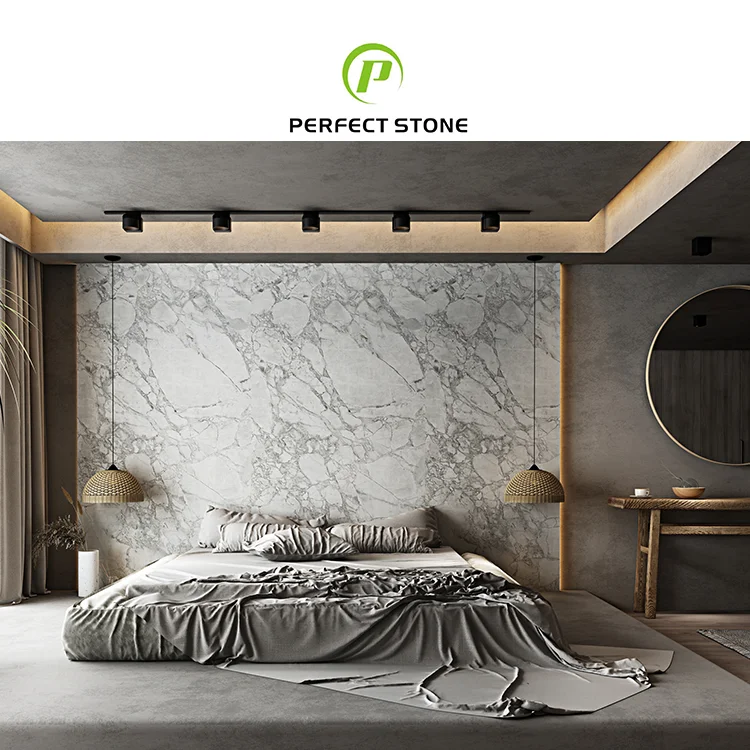
Large slabs reduce seams and create continuous decorative walls for homes, hotels, offices, showrooms, and commercial spaces.
Cabinet and Door Panels
Can be used for applied surface designs where thin, hard, decorative, and durable panel materials are needed.
Commercial Interiors
Suitable for reception counters, restaurants, retail spaces, hotel lobbies, public washrooms, and high-traffic decorative surfaces.
Processing and Application of Sintered Stone
Sintered stone slabs have extensive specifications and higher standards for cutting and processing quality than ordinary ornamental materials. To achieve successful processing and application, competent processing services are important. Cutting, drilling, polishing, edge finishing, shaping, hole opening, and handling must be planned before fabrication.
Because sintered stone is widely used in bespoke homes, furniture, countertops, and applied interior products, buyers should confirm the intended finished product before ordering. Drawings, cutout positions, edge requirements, thickness, support method, packing plan, and installation scenario all influence the final project result.
| Processing Item | What to Confirm | Why It Matters |
|---|---|---|
| Cutting | Final size, tolerance, cut direction, quantity, and slab layout. | Accurate cutting reduces waste and improves installation fit. |
| Drilling | Hole position, diameter, faucet holes, socket holes, sink or appliance openings. | Pre-confirmed drilling avoids on-site modification risk. |
| Polishing | Exposed edges, visible sides, surface finish, and application position. | Edge polish affects both appearance and user touch experience. |
| Furniture Application | Panel size, support structure, edge protection, bonding, and installation method. | Furniture use requires correct support and handling to prevent breakage during assembly. |
| Countertop Application | Sink cutout, cooktop cutout, overhang, seam position, backsplash, and cabinet support. | Countertops require accurate drawings and support planning. |
| Packing | Finished size, surface protection, edge protection, crate structure, and destination. | Large-format sintered stone needs strong packing to protect corners, edges, and surfaces during shipment. |
Product Images and Surface Applications
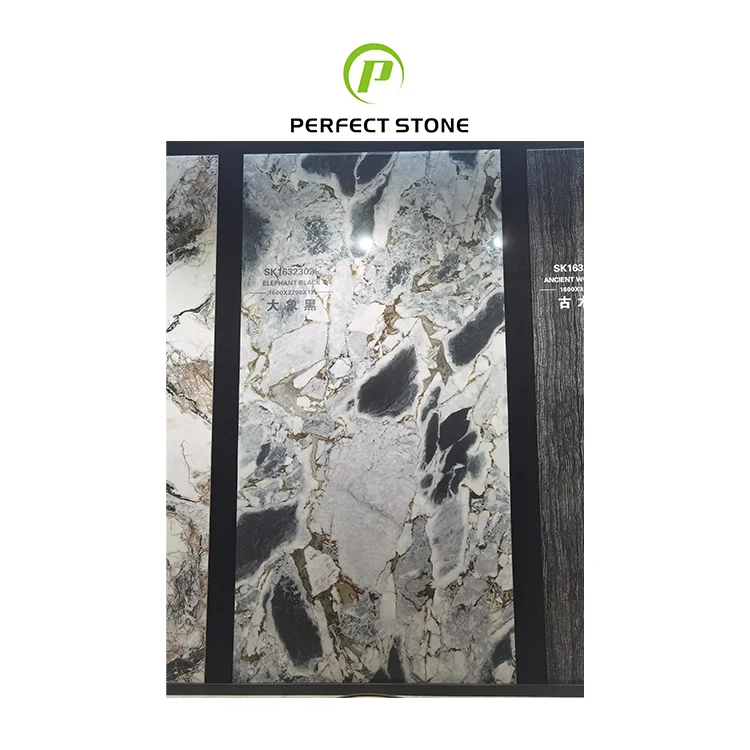
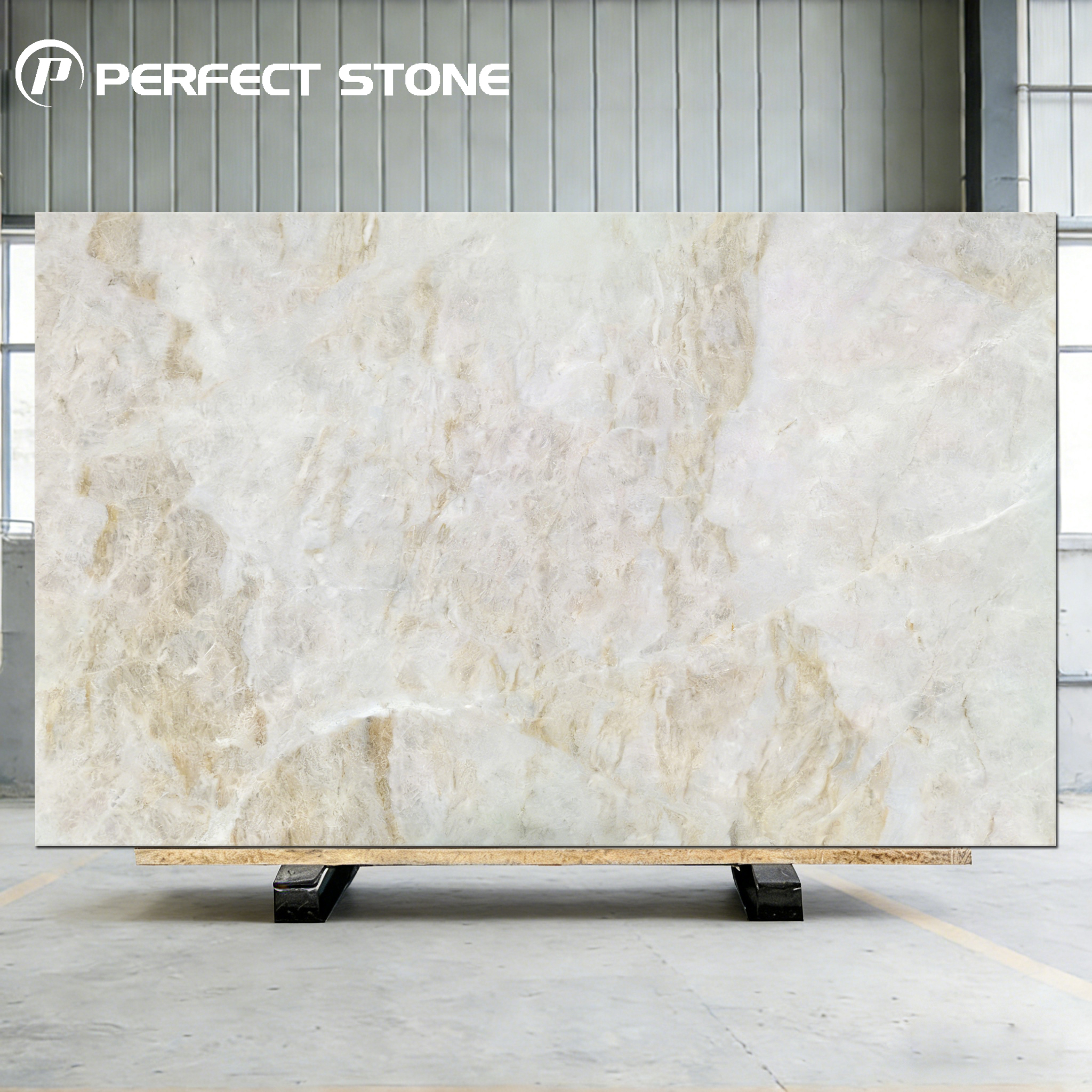
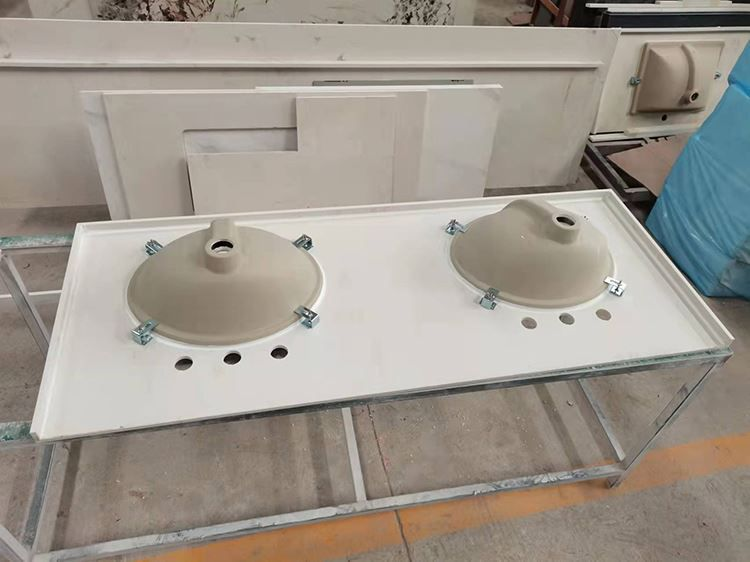
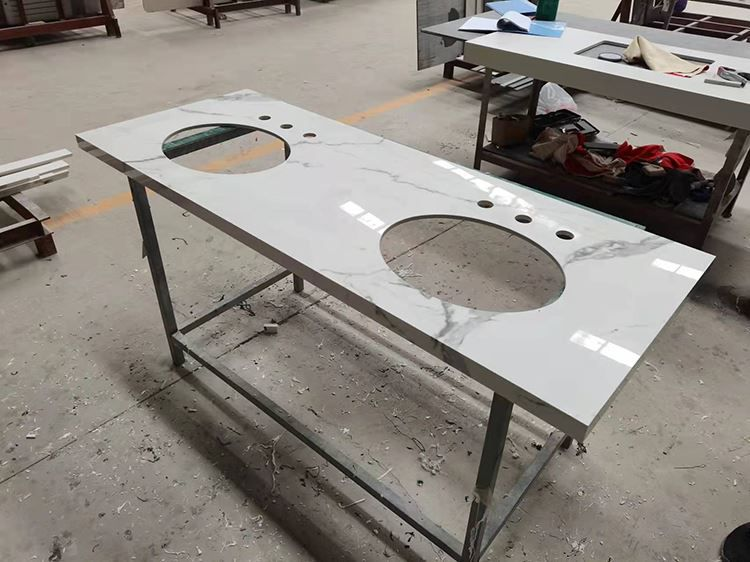
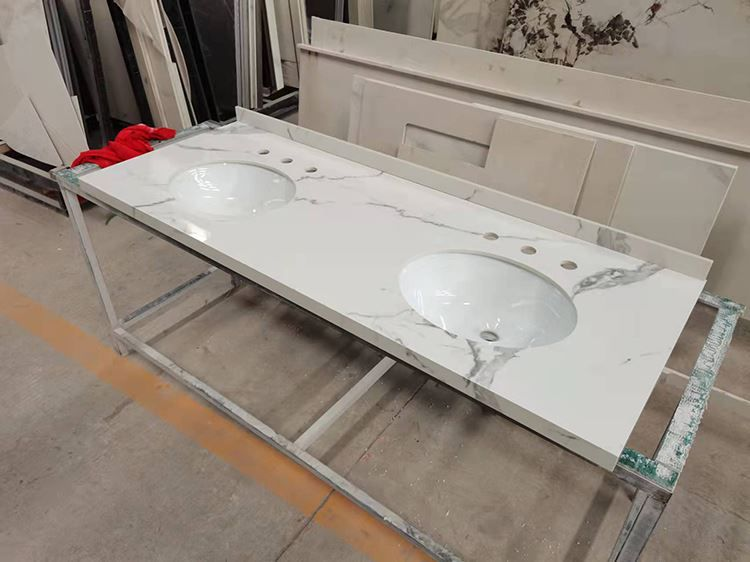
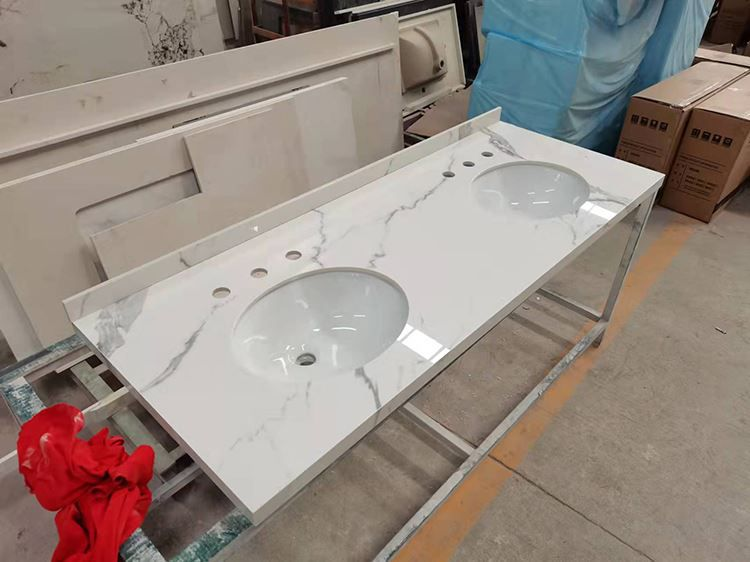
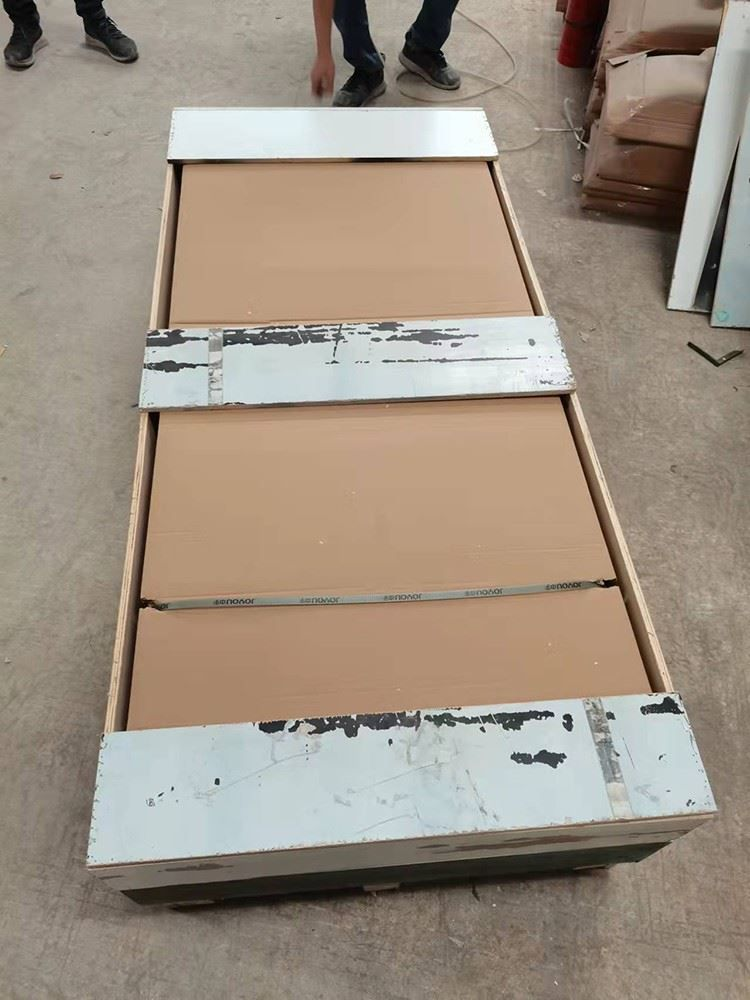
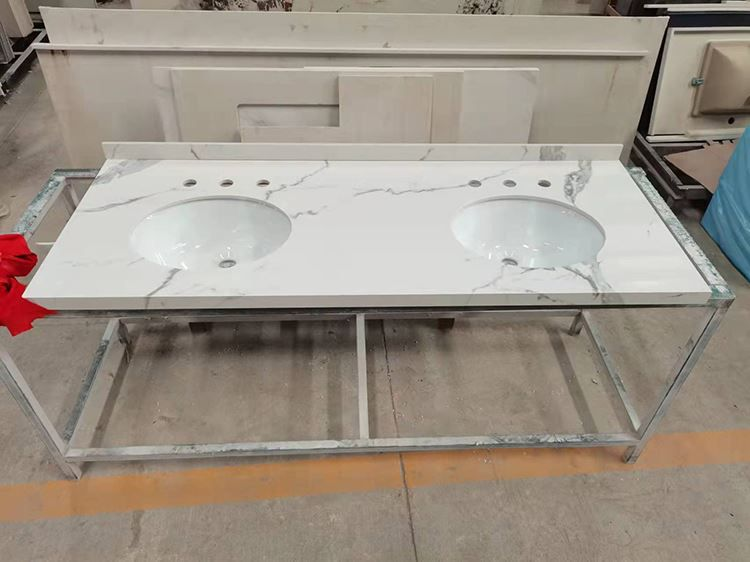
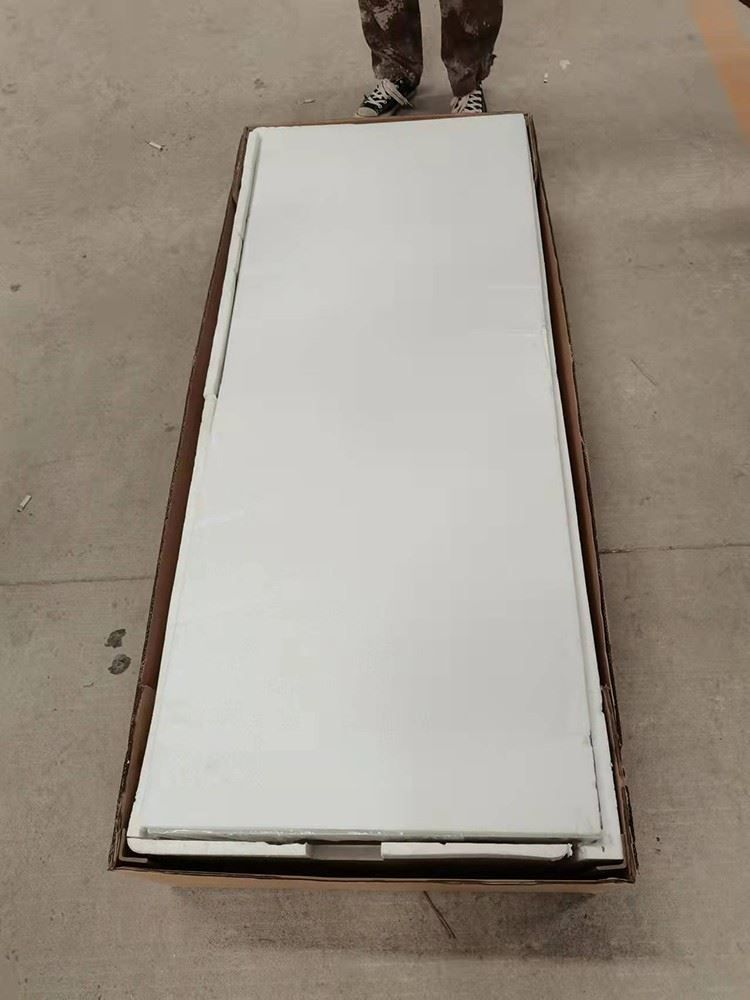
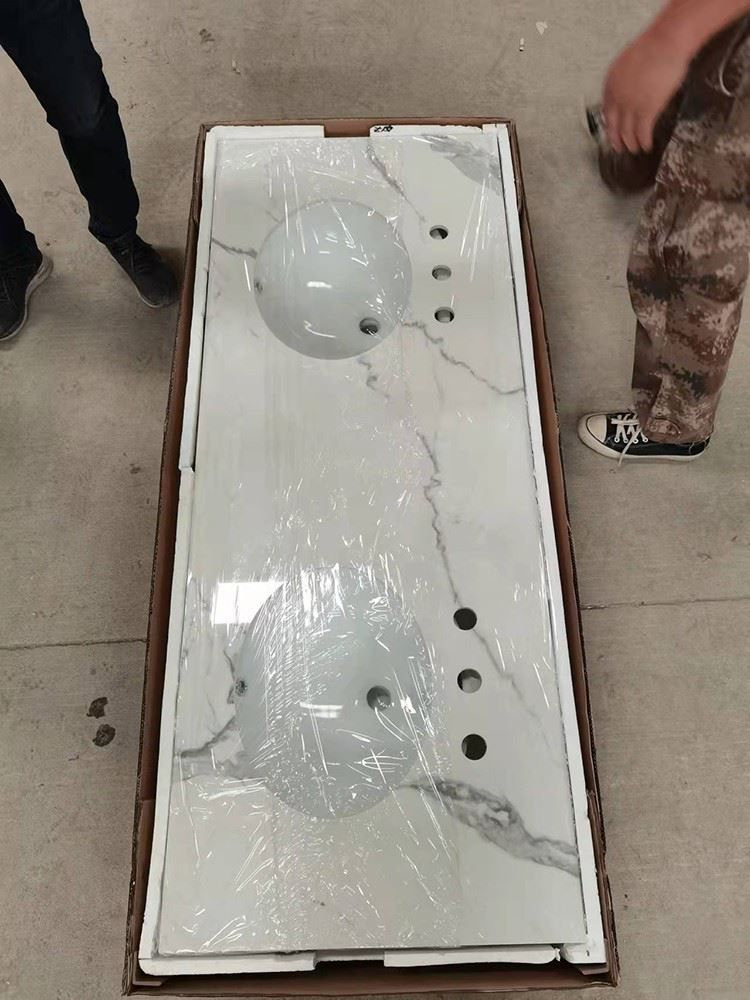
The following original images are retained to show sintered stone slab appearance, application scenes, processing results, finished surfaces, and project presentation.
Buyer-Focused Selection Guide
| If Your Project Needs... | Choose... | Why It Matters |
|---|---|---|
| Large continuous wall or countertop surface | 3200×1600mm or 3600×1600mm sintered stone slab | Larger slabs can reduce seams and create a more complete modern design effect. |
| Compact furniture or panel processing | 760×2550mm or project-specific custom cutting | More suitable for cabinet panels, doors, furniture surfaces, and narrow custom applications. |
| Kitchen countertop safety and easy cleaning | Food-contact suitable sintered stone with stain-resistant surface | Helps support daily cooking, wiping, and low-maintenance kitchen use. |
| High-temperature or fire-related interior application | A1 fire-resistant rock board material | Supports stronger heat confidence for kitchens, wall panels, and selected fireplace-related surfaces. |
| Custom furniture or bespoke home project | Pre-confirmed cutting, drilling, polishing, edge and support plan | Processing capability and drawing confirmation directly affect finished quality and installation success. |
Common Buying Mistakes and Consequences
| Mistake | Consequence | Better Decision |
|---|---|---|
| Treating ceramic slab and sintered stone as the same material | The selected slab may not meet drilling, polishing, cutting, or shaping expectations. | Confirm whether the material is true sintered stone / rock board and verify processing requirements before ordering. |
| Ignoring processing service capability | Large slabs may crack, chip, or fail to meet size tolerance during fabrication. | Use competent cutting, drilling, polishing, and handling services for large-format sintered stone. |
| Ordering without drawings | Cutouts, panel sizes, edge details, and installation positions may be incorrect. | Confirm CAD drawings, final dimensions, cutouts, edge finish, and installation method before production. |
| Choosing size only by slab dimension | The selected slab may create unnecessary waste or fail to cover the required surface. | Plan finished product size, seam position, cutting direction, and waste allowance before selecting slab size. |
| Saving cost on packing | Large-format slabs, corners, edges, and polished surfaces may be damaged during shipping. | Use reinforced export packing and request inspection and packing photos before loading. |
Project Information Needed Before Quotation
| Information | Why It Matters |
|---|---|
| Application type | Countertop, table, wall panel, cabinet door, bathroom vanity, furniture, or commercial project use affects size and processing. |
| Required slab size | 2400×1200mm, 760×2550mm, 3200×1600mm, and 3600×1600mm options fit different design and cutting plans. |
| Finished product drawings | Drawings help confirm cutting, edge finishing, drilling, cutouts, holes, seams, and installation tolerance. |
| Surface texture and color | Texture selection affects design style, project matching, and final decorative appearance. |
| Processing requirements | Cutting, polishing, drilling, edge details, hole opening, and shaping must be confirmed before production. |
| Destination and packing requirement | Helps arrange reinforced export packing, slab protection, loading plan, documents, and delivery schedule. |
Know About Us
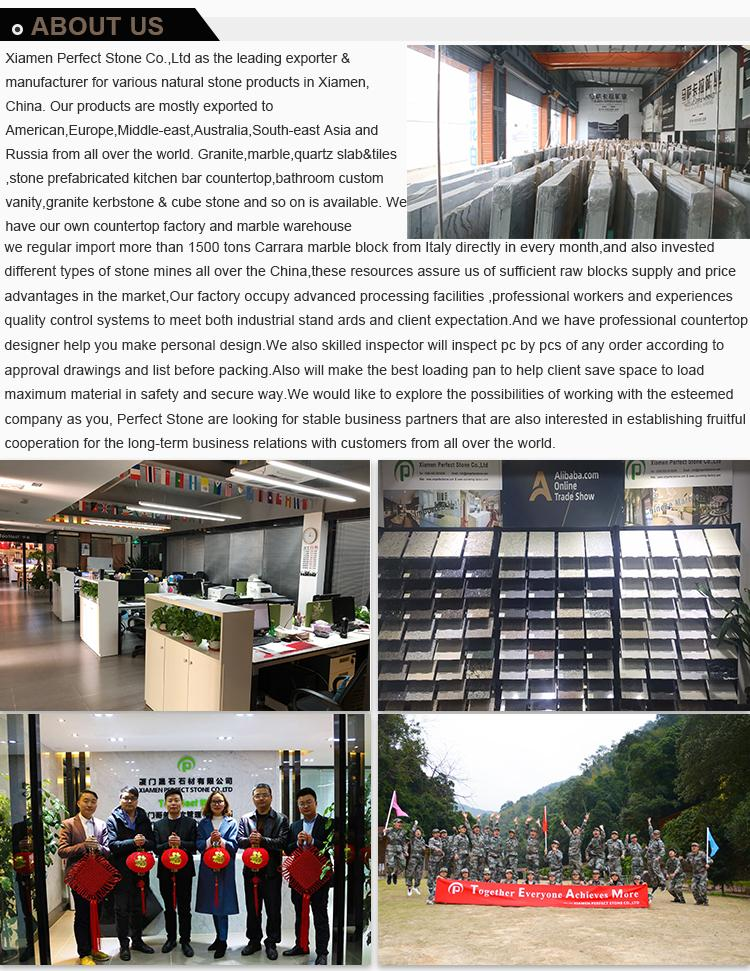
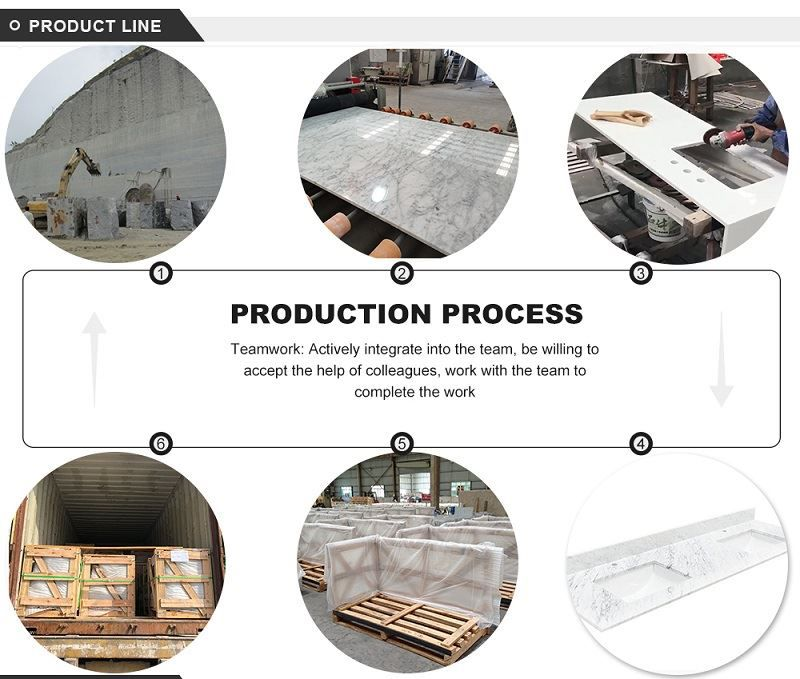
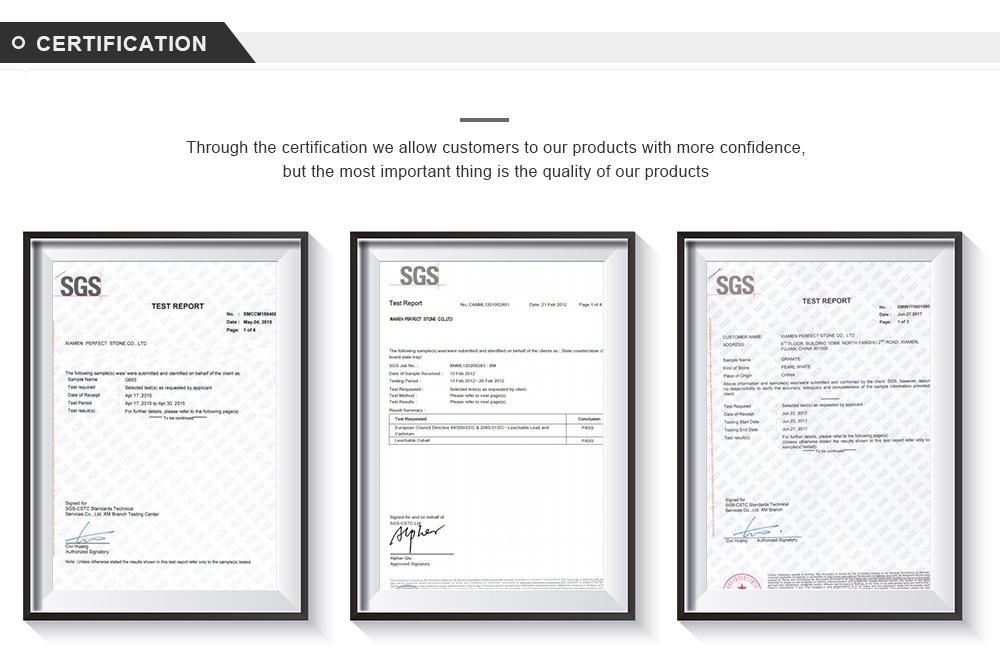
Project buyers, designers, countertop fabricators, furniture manufacturers, cabinet suppliers, bathroom contractors, hotel developers, and commercial interior buyers can review factory capability, processing experience, product presentation, and packaging support before ordering sintered stone slabs or finished ceramic slate products.


Recommendation
Choose sintered stone slab / ceramic slate if your project needs a large-format, hard, food-contact suitable, stain-resistant, scratch-resistant, corrosion-resistant, easy-clean, and customizable surface material for countertops, furniture, wall panels, bathrooms, cabinets, commercial interiors, and bespoke home applications.
If the project only needs simple wall decoration, traditional ceramic slabs may be enough. If the project needs stronger processing capability, drilling, cutting, polishing, countertop use, furniture application, and high-standard applied material performance, sintered stone is the stronger choice.
FAQ
1. What is sintered stone slab?
Sintered stone slab is a substantial porcelain surface material made from natural raw materials through high-pressure pressing and high-temperature firing. It is also called ceramic slate or rock board in many markets. It is designed for high-strength processing and broad applications such as countertops, furniture, wall panels, bathroom vanities, and commercial interiors.
2. What sizes are available for sintered stone slabs?
Common rock board specifications include 2400×1200mm, 760×2550mm, 3200×1600mm, and 3600×1600mm. Large-format sizes help reduce seams and support modern applications such as kitchen countertops, wall panels, cabinet panels, tables, and custom furniture surfaces.
3. Is ceramic slab the same as sintered stone?
No. Ceramic slab does not equal sintered stone. Some factories that can produce large ceramic slabs may not be able to produce sintered stone slabs with the same material performance, processing adaptability, drilling ability, polishing ability, cutting quality, and application range.
4. What are the main advantages of sintered stone?
Sintered stone has multiple advantages, including food-contact safety, natural raw materials, 100% recyclable material, non-toxic and non-radiative properties, fire resistance, high-temperature resistance, stain resistance, scratch resistance, corrosion resistance, easy cleaning, all-round application, and flexible customization.
5. Can sintered stone be cut, drilled, and polished?
Yes. Sintered stone can be drilled, polished, and cut, making it suitable for custom countertops, tables, cabinets, panels, bathrooms, furniture, and irregular shapes. However, high-quality processing requires competent equipment, skilled workers, accurate drawings, proper handling, and careful edge protection.
6. Is sintered stone suitable for kitchen countertops?
Yes. Sintered stone is suitable for kitchen countertops because it can be in direct contact with food, resists stains, is easy to clean, offers scratch resistance, and supports high-temperature use as described in the original material performance advantages. Buyers should confirm slab size, thickness, cutouts, edge details, and support method before production.
7. What should buyers confirm before ordering sintered stone?
Buyers should confirm application type, slab size, finished product drawings, surface color and texture, cutting requirements, drilling positions, polishing details, edge design, support method, packing requirement, destination, and installation plan before ordering.
Semantic Closure Block
Sintered stone slab / ceramic slate / rock board is a high-performance surface material for buyers who need large-format size, hard surface strength, food-contact safety, fire resistance, stain resistance, scratch resistance, corrosion resistance, easy cleaning, and flexible customization. It is suitable for countertops, furniture, bathroom vanities, wall panels, cabinet panels, commercial interiors, and bespoke home projects.
Send your required slab size, application type, finished product drawings, texture preference, color requirement, cutting details, drilling positions, polishing needs, edge design, quantity, destination, and packing requirements to receive a custom quotation. Shall you have any question, please feel free to contact us.
Sintered stone slab, also known as ceramic slate or rock board, is a high-performance surface material made from natural raw materials through high-pressure pressing, NDD technology, and high-temperature firing above 1200°C. It is suitable for countertops, dining tables, furniture panels, cabinet doors, bathroom vanities, wall panels, commercial interiors, and custom home projects. Available sizes include 2400×1200mm, 760×2550mm, 3200×1600mm, and 3600×1600mm.
| Item | Details |
|---|---|
| Product | Sintered Stone Slab / Ceramic Slate / Rock Board |
| Material | Natural raw materials, substantial porcelain surface material |
| Process | High-pressure pressing, NDD technology, firing above 1200°C |
| Sizes | 2400×1200mm, 760×2550mm, 3200×1600mm, 3600×1600mm |
| Performance | Fire resistant, stain resistant, scratch resistant, corrosion resistant |
| Safety | Food-contact suitable, recyclable, non-toxic, non-radiative |
| Hardness | Mohs hardness exceeds 6 degrees |
| Water Penetration | Described as 1 in 10,000 in original performance data |
| Processing | Cutting, drilling, polishing, shaping, custom fabrication |
| Applications | Countertops, tables, furniture, cabinets, vanities, wall panels, commercial interiors |
| Customization | Texture, color, size, cutting, drilling, edge design, finished product format |