EN
EN


Ultra Thin Travertine Stone Veneer Panels for Interior & Exterior Wall Cladding
 Tel:+86-13959219373
 Email:[email protected]
- Overview
- Recommended Products
Quick Summary
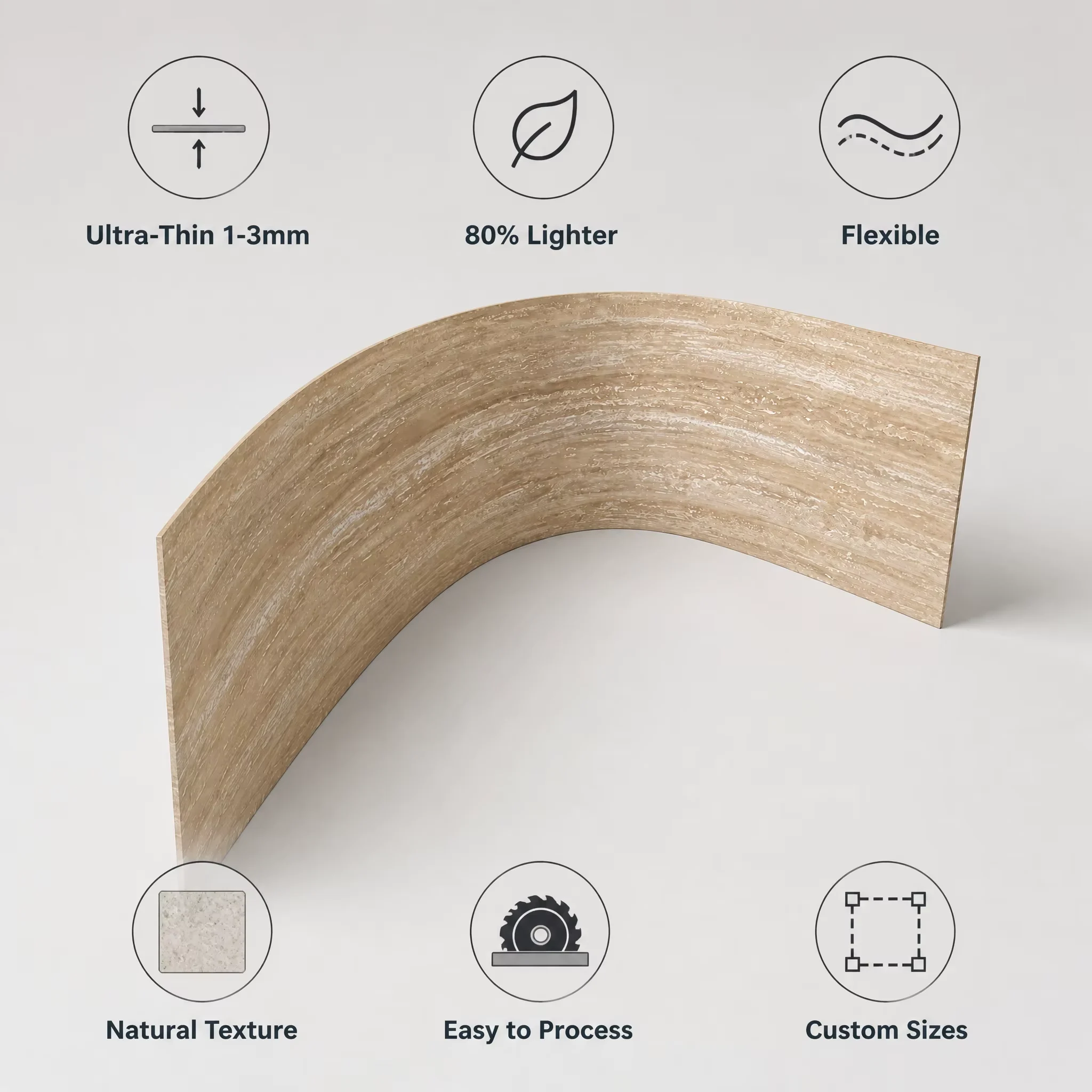
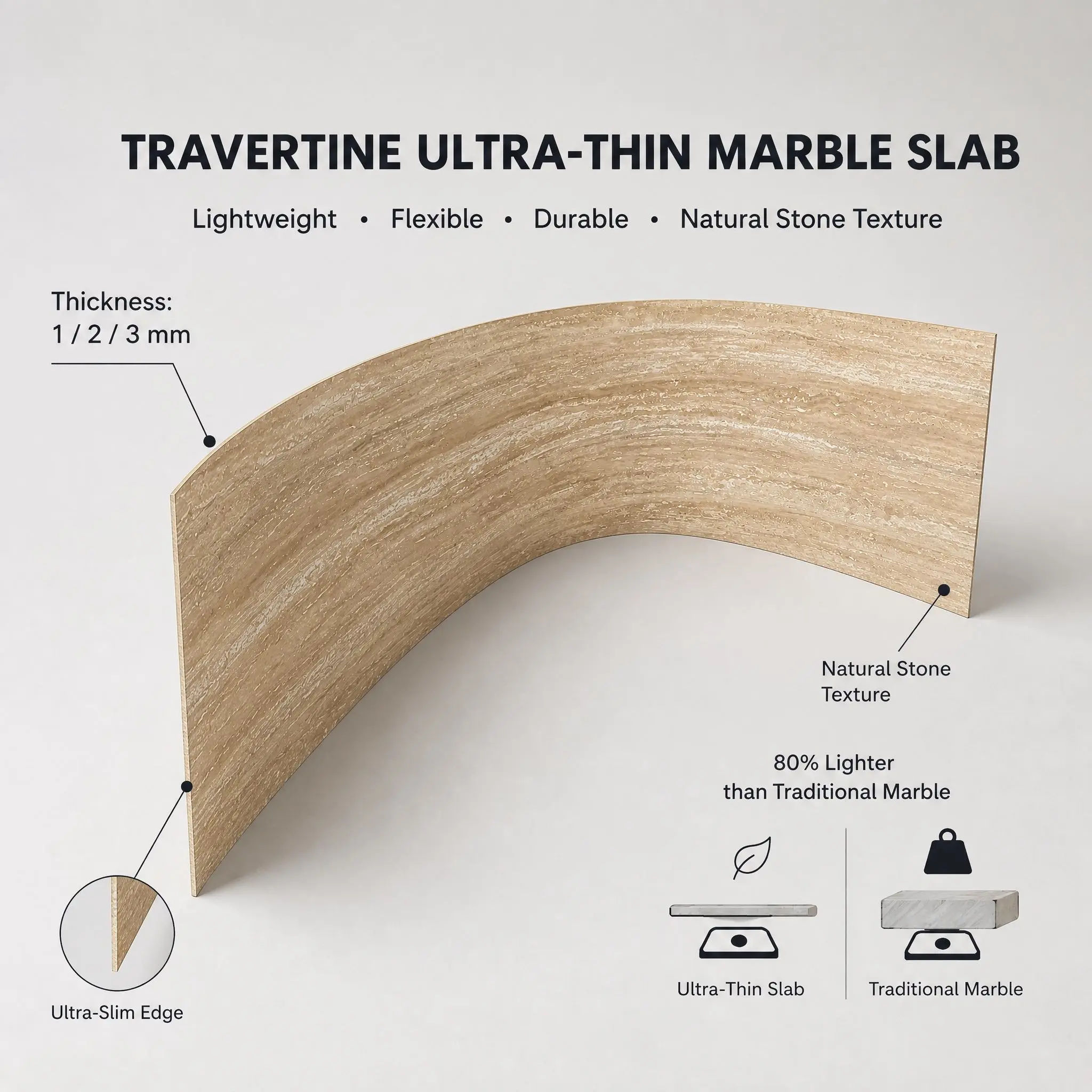
Ultra Thin Travertine is a lightweight natural stone veneer developed for projects where conventional thick stone may be difficult to use because of weight, installation depth or curved surfaces. With an approximately 1–3 mm ultra-thin profile, natural travertine texture, flexible handling and custom-size capability, it is suitable for wall cladding, columns, curved architectural features, ceilings, retail interiors, hotels, villas and renovation projects.
Ultra Thin Travertine Stone Veneer Panels
Natural travertine has always been valued for its warm colour variation, open texture and architectural character. The difficulty comes when conventional stone slabs or tiles are used on existing walls, curved structures, columns or other surfaces where thickness and weight quickly become part of the installation problem.
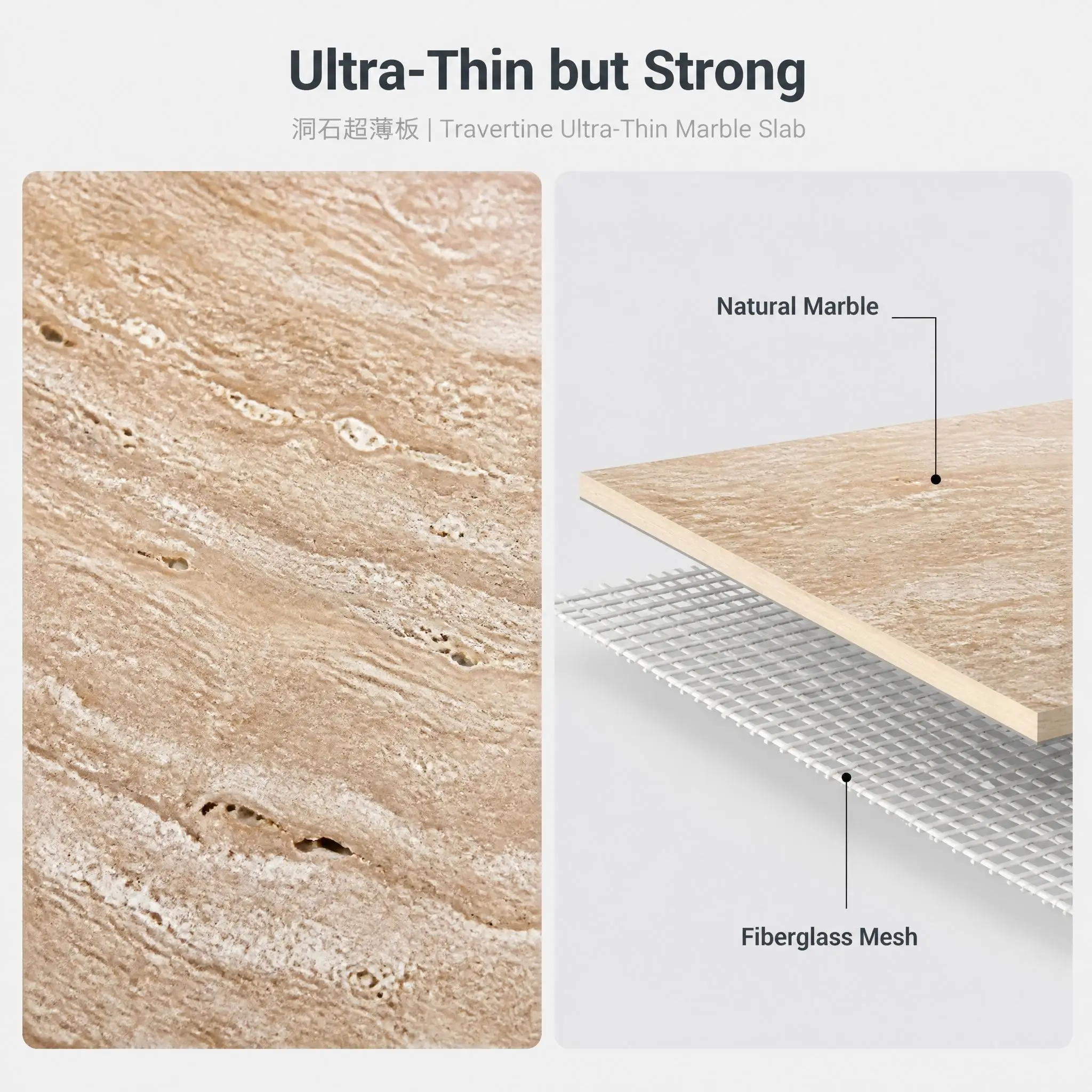
Ultra Thin Travertine takes a different approach. Instead of depending on a heavy section of stone, it retains the visual character of natural travertine in a considerably thinner format. Architects and contractors therefore have more freedom to introduce genuine stone texture into spaces where traditional rigid slabs would be inconvenient.
For architects, contractors, stone distributors and renovation companies, the value is not simply that the material is thin. The reduced profile can make feature walls, columns, selected curved structures, ceilings and refurbishment surfaces easier to plan. Panel size, bending requirements, substrate, fixing method and installation environment should still be confirmed before production.
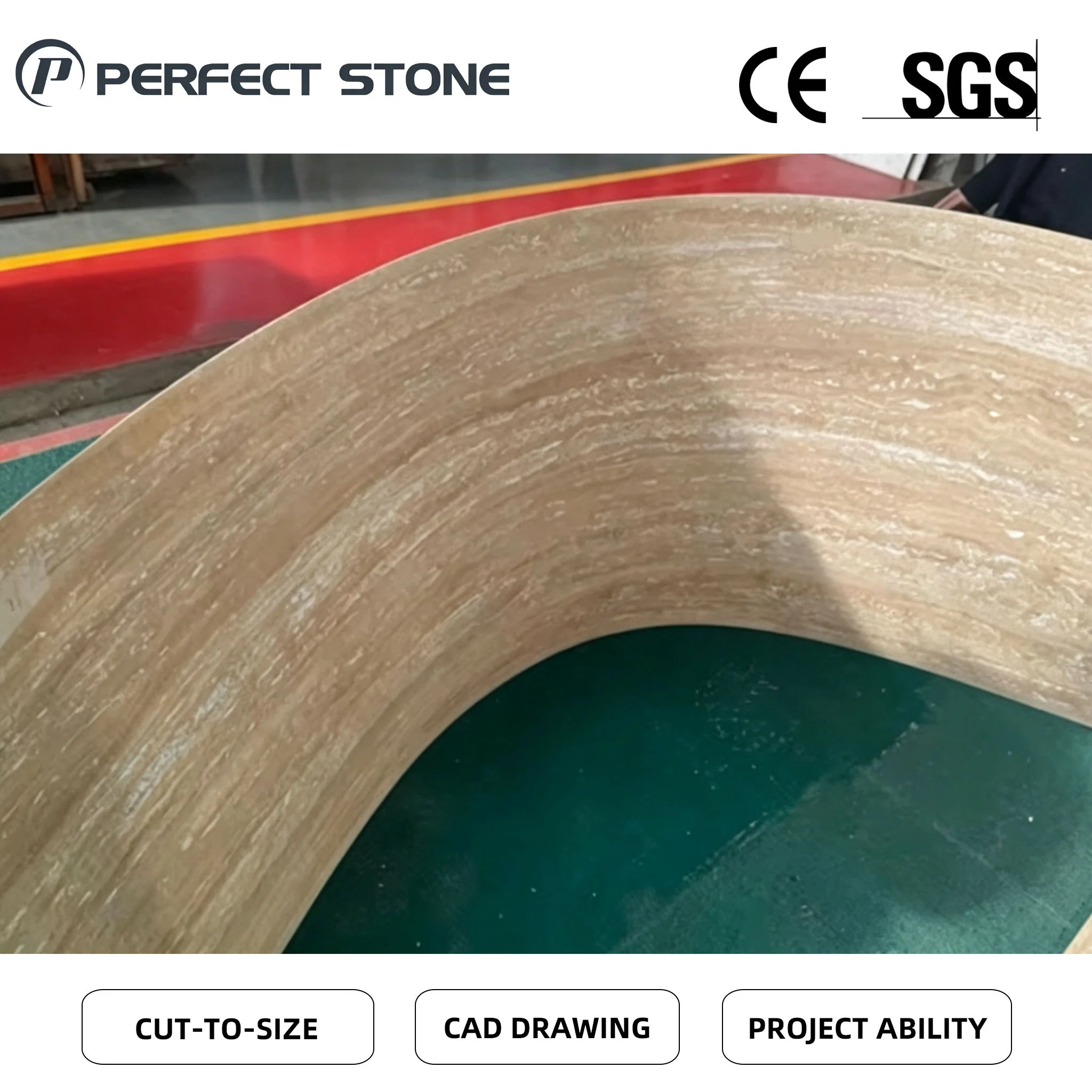
Ultra-thin natural stone construction helps combine authentic stone texture with easier handling and greater design flexibility.
| Product Name | Ultra Thin Travertine Stone Veneer Panels |
| Material | Natural travertine surface / ultra-thin natural stone veneer |
| Thickness | Approximately 1–3 mm; final thickness should be confirmed according to the selected product and project requirement |
| Appearance | Natural travertine colour variation, linear movement, pores and authentic stone texture |
| Flexibility | Suitable for selected curved and contoured surfaces; allowable bending depends on panel dimensions, structure and installation conditions |
| Size | Standard and custom sizes available according to project drawings and installation requirements |
| Processing | Cut-to-size, custom panel sizing and project-based fabrication support |
| Main Applications | Interior wall cladding, columns, selected curved walls, ceilings, feature walls, retail interiors, villas, hotels, renovation projects and selected exterior applications |
| Customization | Custom dimensions and project-based stone selection according to drawings, quantities and applications |
| Quality Control | Surface appearance, dimensions, thickness, edge condition and packing condition can be inspected before shipment |
| Recommended Confirmation | Stone colour, surface texture, panel size, thickness, bend requirement, substrate, installation location, fixing method and packing requirements |
| Project Need | Recommended Choice | Why It Matters |
| Curved wall or column | Ultra thin travertine veneer with bending requirements confirmed before production | A thin format can adapt to selected curved surfaces more easily than conventional rigid stone. |
| Renovation over existing surfaces | Thin travertine panels sized around the existing wall layout | Helps control additional build-up and may simplify refurbishment where space or weight is limited. |
| Hotel or retail feature wall | Same-batch travertine sheets with colour and texture selection | Helps maintain a coordinated finish while retaining the natural variation of real stone. |
| Ceiling or decorative surface | Ultra-thin format with substrate and fixing system reviewed by the project team | Reduced material thickness can lower installation load compared with traditional thick stone. |
| Exterior wall application | Project-specific specification after reviewing climate, substrate and fixing conditions | Outdoor use introduces moisture, temperature and fixing requirements that should be considered before ordering. |
Ultra thin travertine becomes particularly useful when a designer wants the warmth of genuine natural stone without designing the entire structure around a conventional heavy stone panel. This makes it especially relevant to renovation, hospitality, retail and architectural feature projects.
Feature walls and interior cladding: Travertine's linear texture works naturally across large wall surfaces, reception areas, corridors, boutiques and statement walls. The thinner profile helps keep the design visually refined without adding the depth associated with conventional stone slabs.
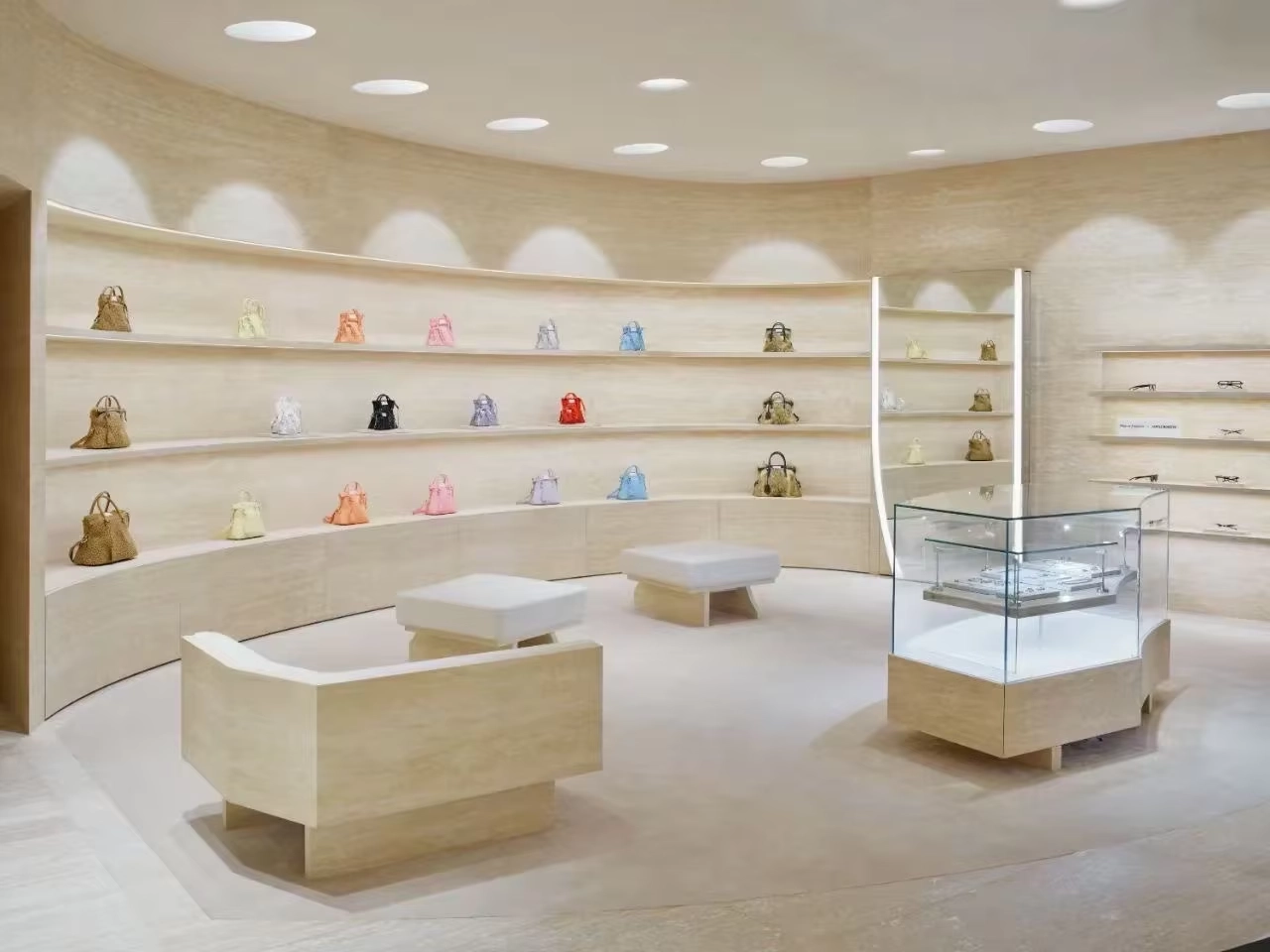
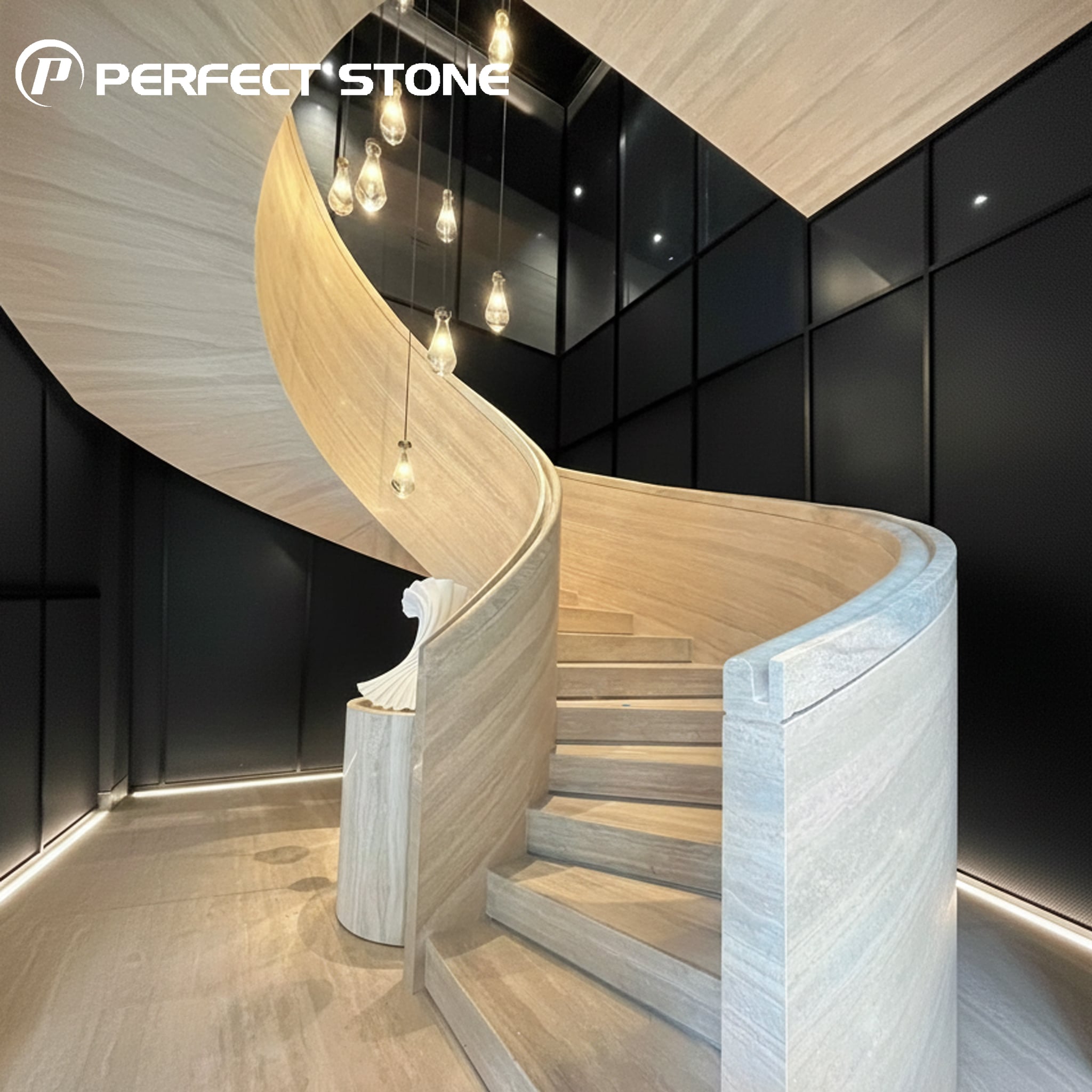
Curved walls and architectural features: This is where ultra-thin stone becomes much more useful than simply being a thinner tile. Selected panels can adapt to curved architectural forms that would be awkward or costly to execute with conventional rigid travertine.
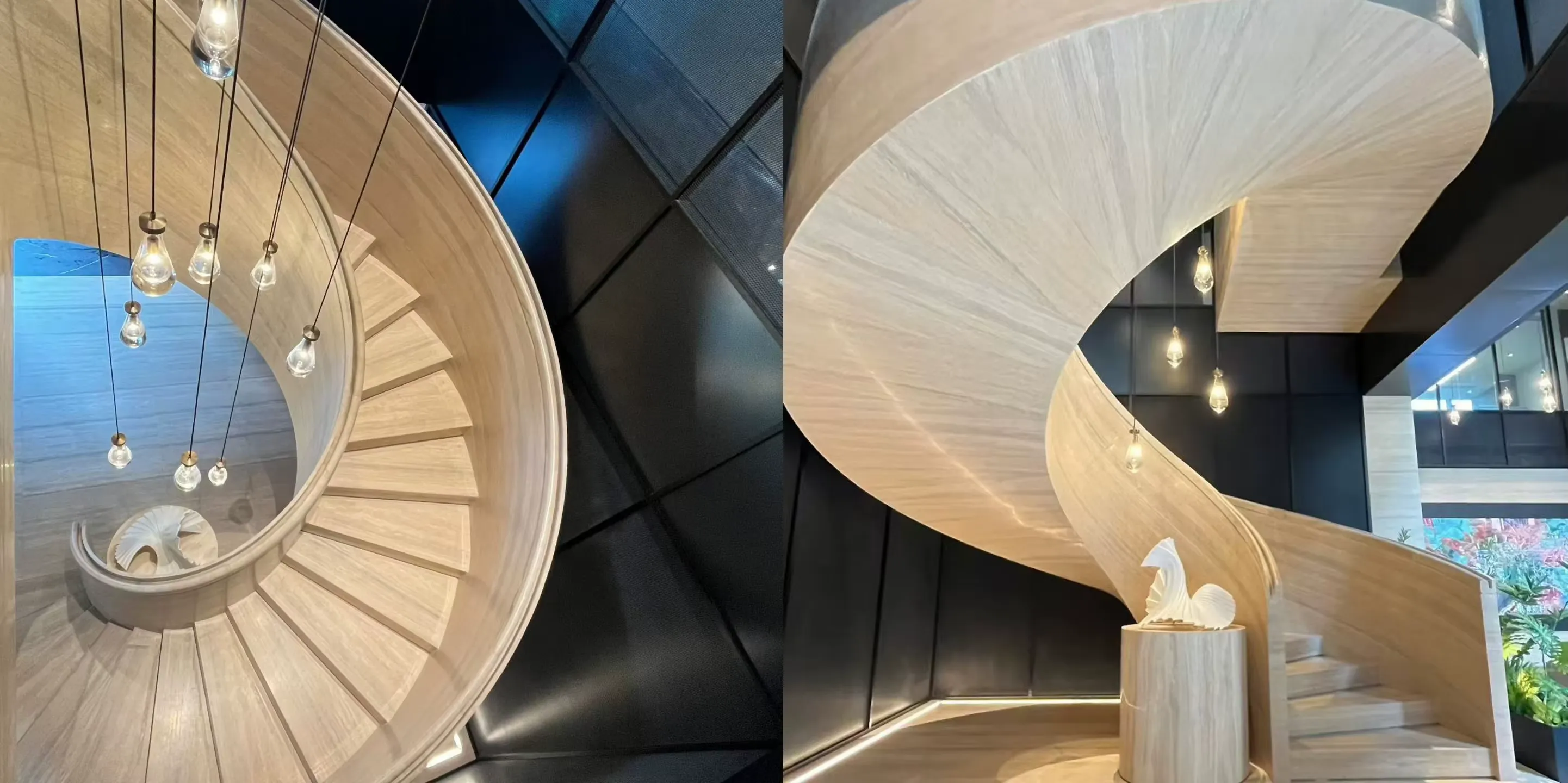
Residential and hospitality interiors: Villas, hotel spaces, restaurants and premium residential interiors can use thin travertine where a natural stone finish is required but a conventional slab would add unnecessary thickness or weight.
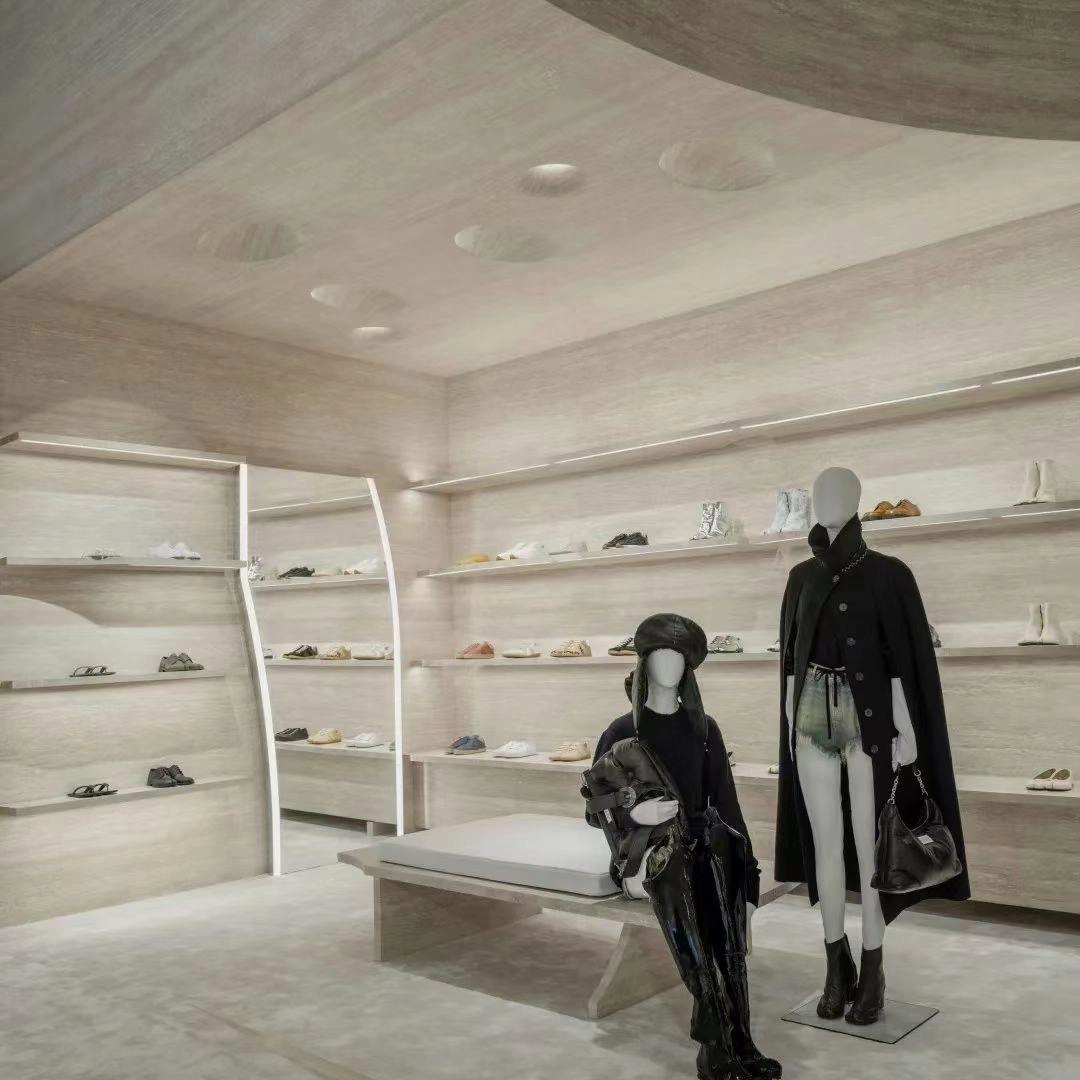
Renovation projects: In refurbishment work, reducing demolition, additional wall thickness and material load can be just as important as appearance. Ultra thin travertine provides another route to introducing natural stone into existing interiors.
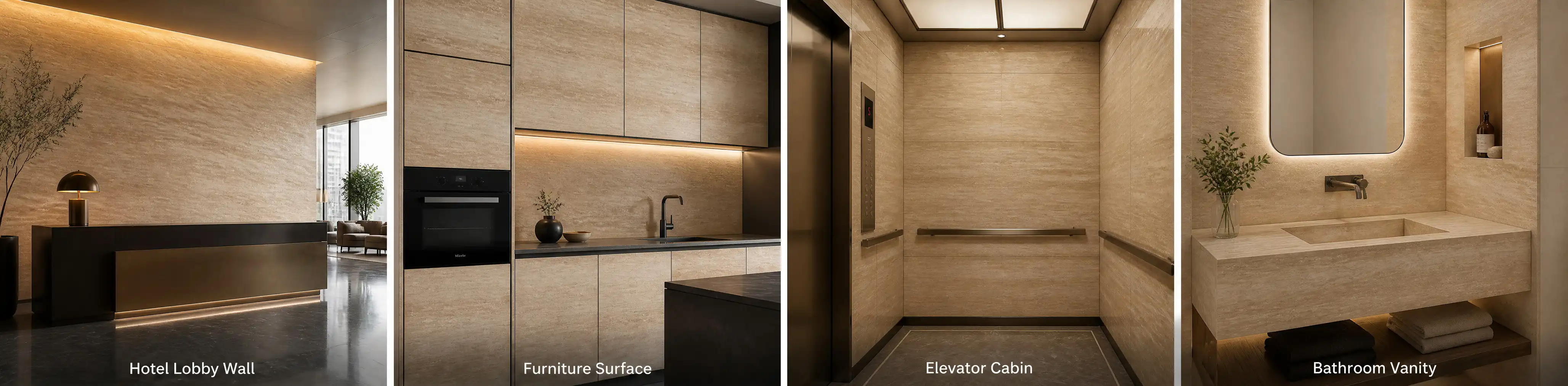
Selected exterior cladding: Ultra thin travertine may also be considered for suitable exterior applications. Exterior installation should be reviewed separately because substrate conditions, moisture, weather exposure and fixing systems become much more important.
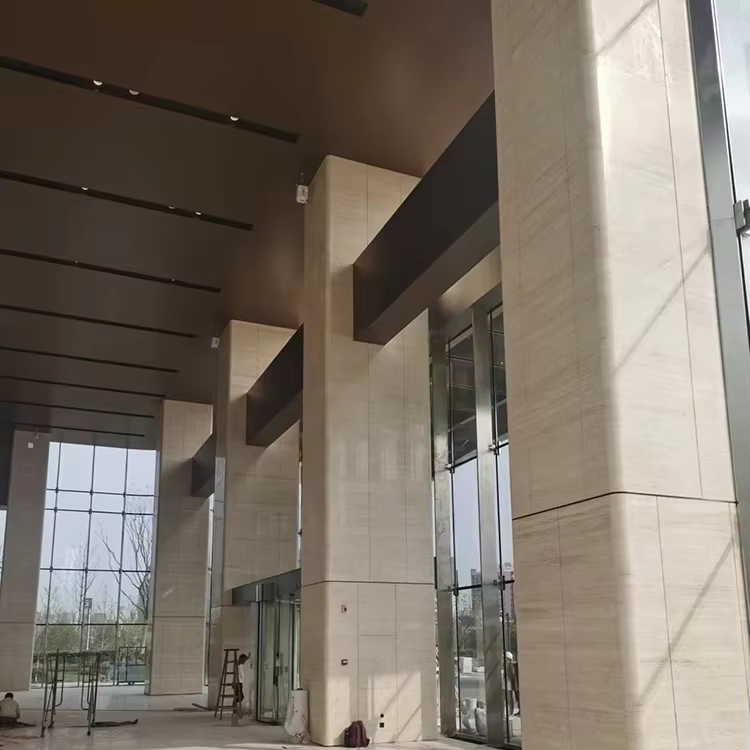
Real natural stone character: The surface keeps the colour variation, pores, linear movement and subtle irregularities that give travertine its architectural personality.
Ultra-thin construction: With available profiles of approximately 1–3 mm, the material can be considered where conventional stone thickness would create unnecessary wall build-up or installation difficulty.
More design freedom: Its flexible format opens up applications on selected curved walls, columns and architectural features that would be difficult to finish with traditional thick travertine.
Better suited to renovation: Where removing existing finishes would be disruptive or expensive, thin decorative stone gives contractors another option.
Custom project support: Panel dimensions and cutting can be coordinated with drawings and installation areas, helping reduce unnecessary onsite adjustment and material waste.
| Material | Best For | Main Advantage | Buyer Consideration |
| Ultra Thin Travertine Veneer | Walls, curved features, columns and renovation projects | Natural stone appearance with less material thickness and greater design flexibility | Substrate, bending requirements and fixing system should be confirmed |
| Traditional Travertine Tile | Floors, straight walls, stairs and conventional installations | Rigid stone construction with familiar installation methods | Greater thickness and weight may restrict renovation and curved applications |
| Traditional Travertine Slab | Large rigid architectural pieces and fabrication | Substantial natural stone construction | Requires stronger supporting structures and heavier handling |
| Stone-Look Porcelain | Projects prioritizing consistency | Predictable colour and pattern | Does not offer the same natural pores, texture and one-of-a-kind stone character |
Assuming flexible means unlimited bending: Ultra thin travertine can accommodate selected curved surfaces, but every panel still has practical bending limits. Send the required radius or project drawing before ordering.
Ignoring the substrate: A beautiful veneer installed over an unstable, damp or uneven substrate is still a failed installation. Wall conditions and fixing methods should be reviewed first.
Using the same specification indoors and outdoors: Exterior walls face moisture, temperature changes and weather exposure, so the complete installation system should be confirmed.
Expecting every panel to look identical: Travertine is natural stone. Tone, pores and vein movement will vary. For larger areas, same-batch selection is recommended.
Ordering before confirming the panel layout: Confirm wall dimensions, joint locations, direction and cutting layout before production to reduce onsite cutting and waste.
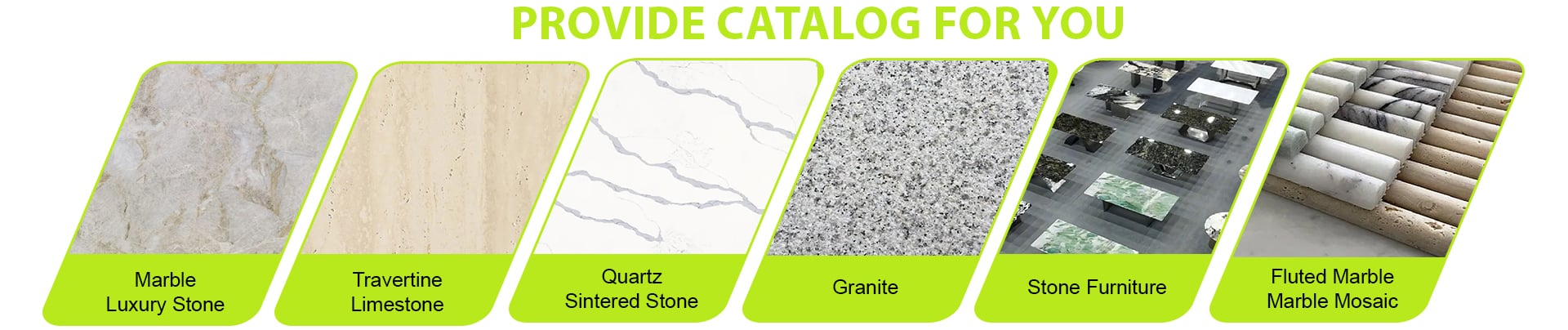
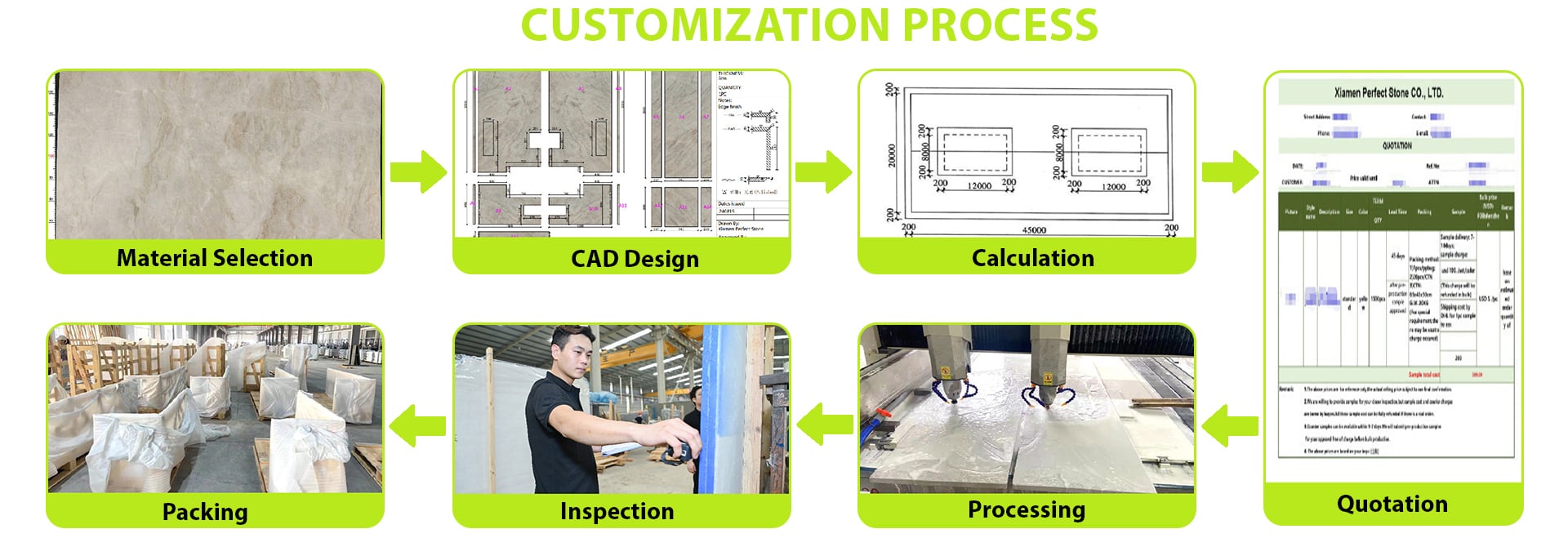
Perfect Stone supports project-based customization according to drawings, installation dimensions, stone appearance, panel thickness, curved conditions and packing requirements. Providing a wall elevation, CAD drawing or installation photo early in the process normally makes quotation and production considerably more accurate.
| Step | Process | Buyer Benefit |
| 01 | Confirm application, dimensions, colour, texture, thickness and quantity | Helps identify an appropriate specification before quotation. |
| 02 | Review drawings, panel layout, curved areas and custom dimensions | Reduces sizing errors and unnecessary onsite cutting. |
| 03 | Material selection, cutting, processing and inspection | Improves batch coordination before shipment. |
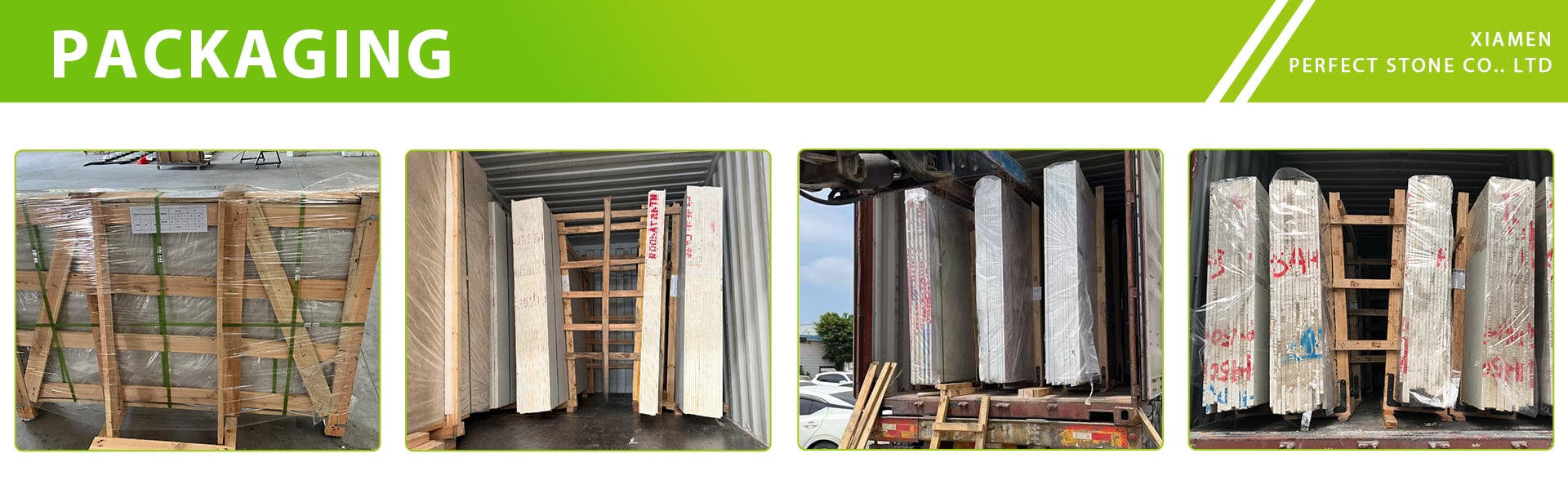
| 04 | Protective packing, labeling, loading and shipment | Helps reduce damage and simplifies jobsite identification. |

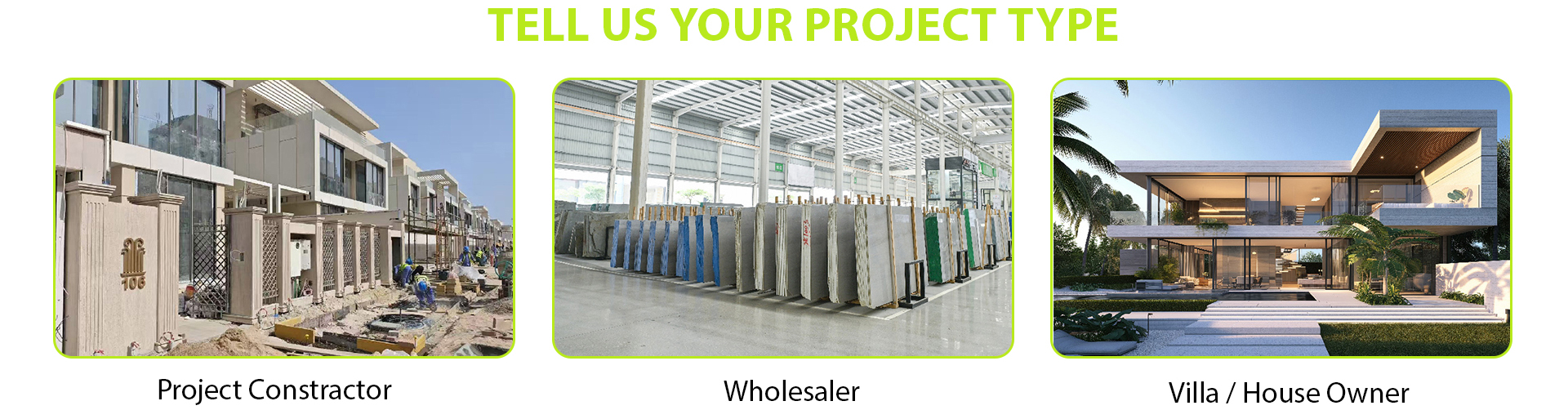
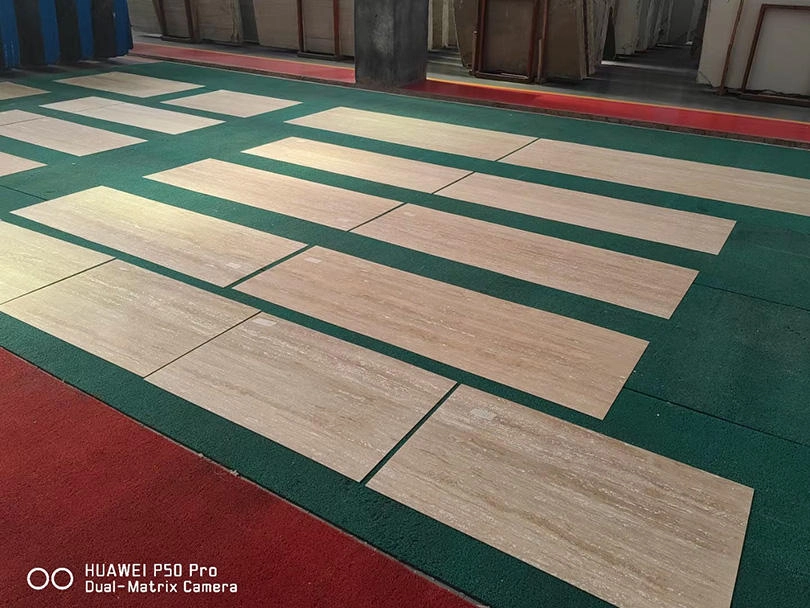
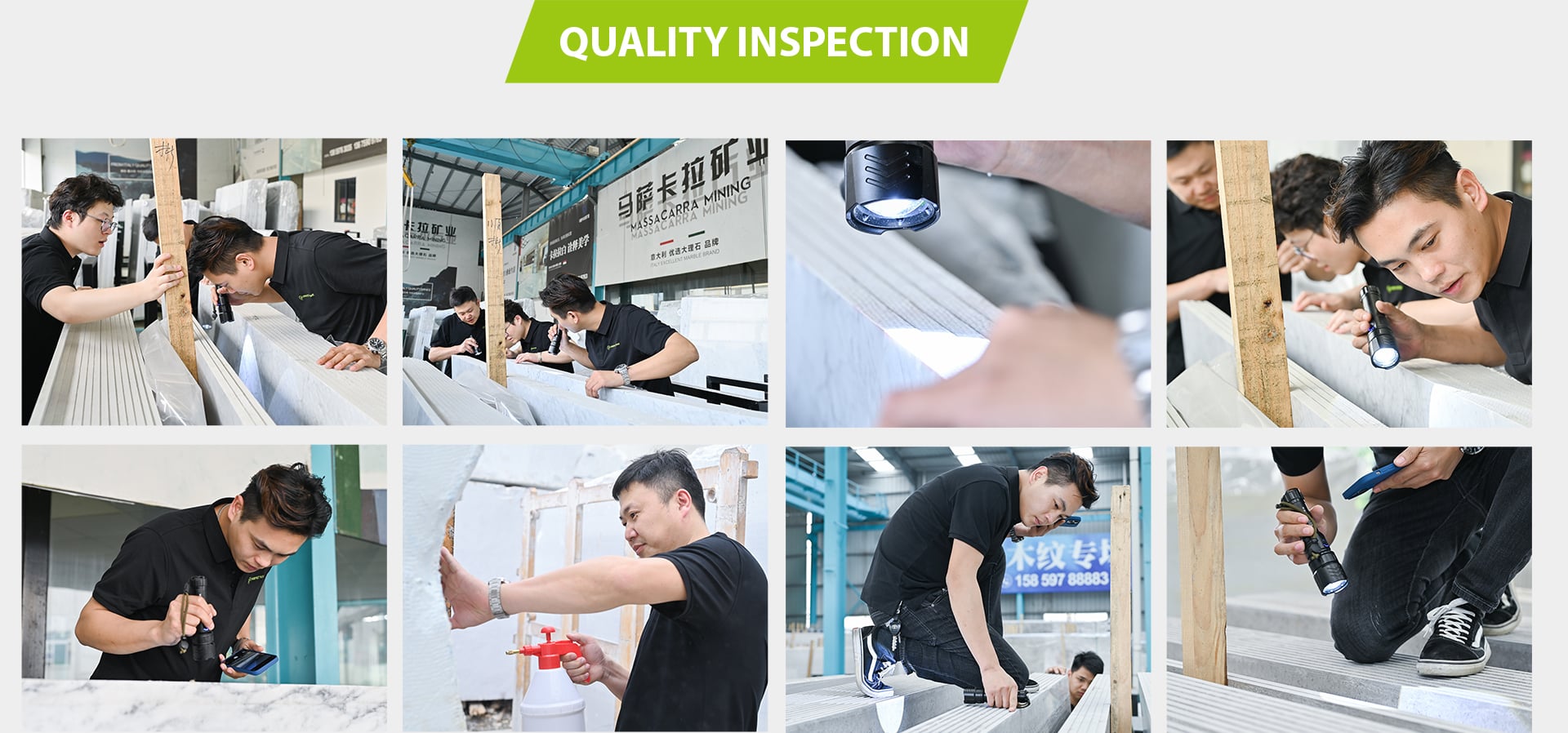
Before shipment, ultra thin travertine orders can be checked for colour range, surface texture, natural pores, panel dimensions, thickness, edge condition, visible defects and packing condition. For larger projects, reviewing current batch photos before production helps reduce unexpected differences after installation.
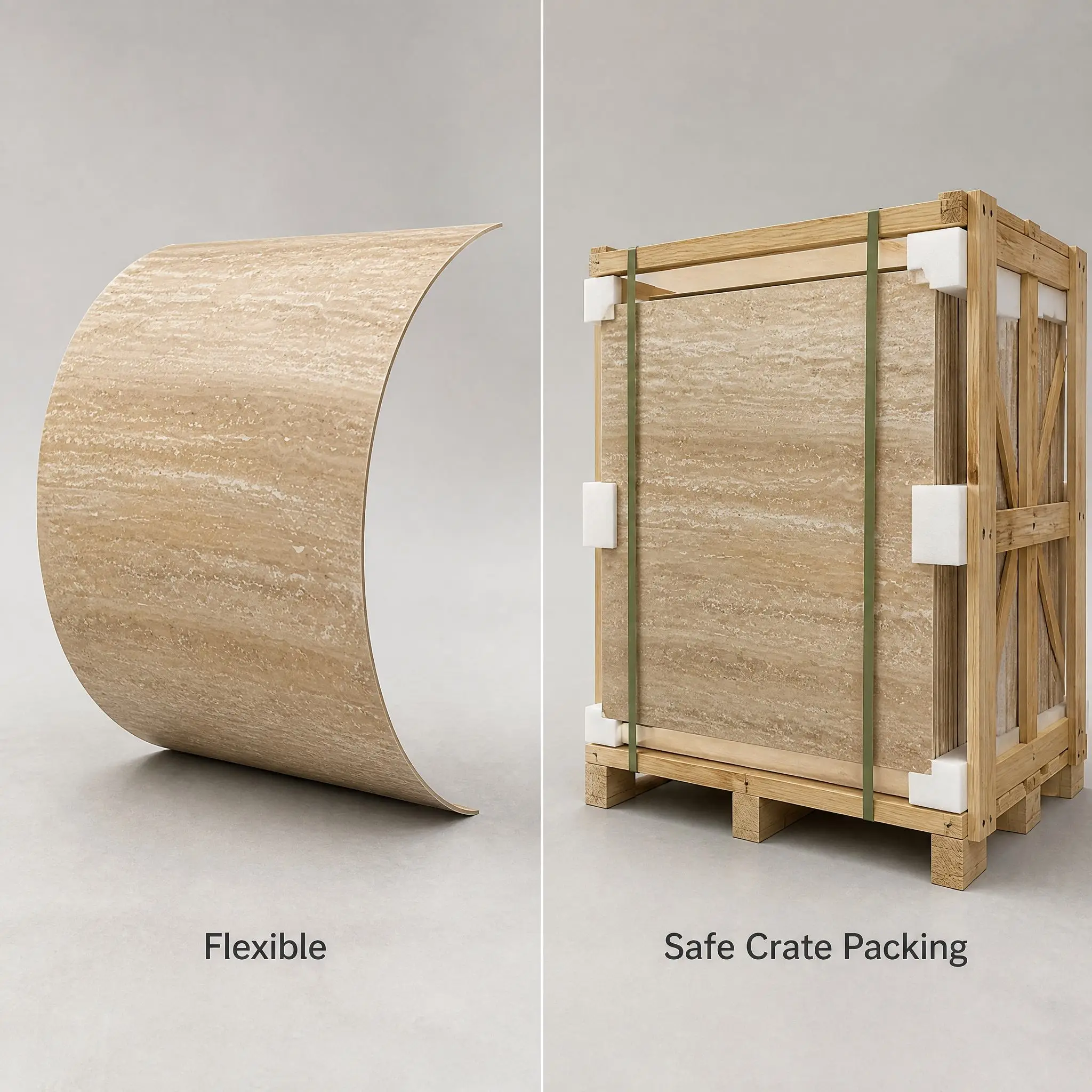
Although ultra thin travertine is easier to handle than conventional thick stone, thin edges and finished surfaces still need suitable protection during international transportation. Packing should be selected according to panel dimensions, quantity and shipping method.
| Packing Item | Purpose |
| Surface and edge protection | Helps reduce scratching and edge damage during handling. |
| Rigid external packing | Provides support during international transportation and container loading. |
| Project labels | Helps identify panel dimensions, batches and installation areas. |
| Loading confirmation | Allows buyers to review shipment status before dispatch. |
Q1: What is ultra thin travertine?
Ultra thin travertine is a natural stone veneer that retains the appearance and surface character of travertine in a much thinner format than conventional stone tiles or slabs.
Q2: How thin is the travertine veneer?
Available products can be approximately 1–3 mm thick. Exact thickness should be confirmed according to the selected product specification and project requirements.
Q3: Can ultra thin travertine be installed on curved walls?
Selected ultra thin travertine panels can be considered for curved walls and columns. Buyers should provide the required curve radius, dimensions or drawings before production.
Q4: Is it real natural travertine?
Yes. The visible surface provides the natural colour, texture and variation associated with travertine.
Q5: Can it be used for renovation projects?
Yes. Its thin profile makes it useful for refurbishment projects where additional wall thickness and material weight need to be controlled.
Q6: Can ultra thin travertine be used outdoors?
It may be considered for selected exterior applications, but suitability depends on the substrate, fixing system, moisture exposure and local installation requirements.
Q7: Can you provide custom sizes?
Yes. Custom panel sizing and cut-to-size processing can be arranged according to drawings, wall dimensions and project quantities.
Q8: What should I confirm before placing an order?
Confirm stone colour, surface texture, thickness, panel dimensions, quantity, installation location, substrate, bending requirements, fixing method and packing requirements.
Ultra Thin Travertine: Final Buyer Recommendation
Ultra Thin Travertine is best suited to buyers who want genuine natural travertine on walls, columns, selected curved features or renovation surfaces where conventional thick stone may be unnecessarily heavy or difficult to install.
If your project involves a conventional straight wall or floor and structural weight is not a concern, traditional travertine tiles may still be the simpler choice. If the project involves limited installation depth, existing finishes, curved geometry or weight-sensitive decorative surfaces, ultra thin travertine is worth serious consideration.
The safest purchasing approach is to confirm the installation surface first, then determine panel thickness, dimensions, stone appearance, bending requirements and fixing method. A little planning before production is considerably cheaper than correcting an installation after the material reaches the site.
If you already have a wall elevation, CAD drawing or installation photograph, send it together with your required quantity. Perfect Stone can review the application and recommend a suitable ultra thin travertine specification before quotation.