 EN
EN


Quick Summary: Choosing Natural Stone for Australian Hotels
Natural stone for hotels Australia should be selected according to the intended application, pedestrian traffic, moisture exposure, slip resistance, maintenance requirements, and design objectives. Marble, granite, quartzite, limestone, and travertine each offer different aesthetic and technical characteristics, so hotel developers and designers should review project-specific test data, Australian building requirements, and lifecycle costs before specifying materials.
Making the Right Natural Stone Decision for Australian Hotel Projects
A hotel entrance creates an immediate impression, but the materials beneath that impression must perform long after the opening ceremony. Lobby floors face luggage wheels and continuous foot traffic. Bathroom surfaces encounter moisture and cleaning products. Restaurant counters are exposed to food, beverages, and frequent sanitation. Outdoor terraces must respond to weather, drainage, and changing surface conditions.
This is why choosing natural stone for hotels Australia requires more than selecting an attractive color or following an interior design trend. The right specification connects visual character with technical performance, installation conditions, maintenance procedures, and long-term operational needs.
For architects, interior designers, developers, contractors, and procurement teams, a successful selection process begins by identifying the demands of each space. Marble may be appropriate for a dramatic reception wall, while a tested granite finish may be a better candidate for a heavily used service counter. Quartzite, limestone, and travertine can also work well when the specific material and installation are suitable for the application.
This guide explains how to compare stone types, assess technical properties, interpret relevant Australian requirements, avoid procurement mistakes, and build a practical specification for hotels, resorts, restaurants, and other hospitality projects.
Why Natural Stone Works in Australian Hotel Design
Creating a Memorable Lobby and Reception Area
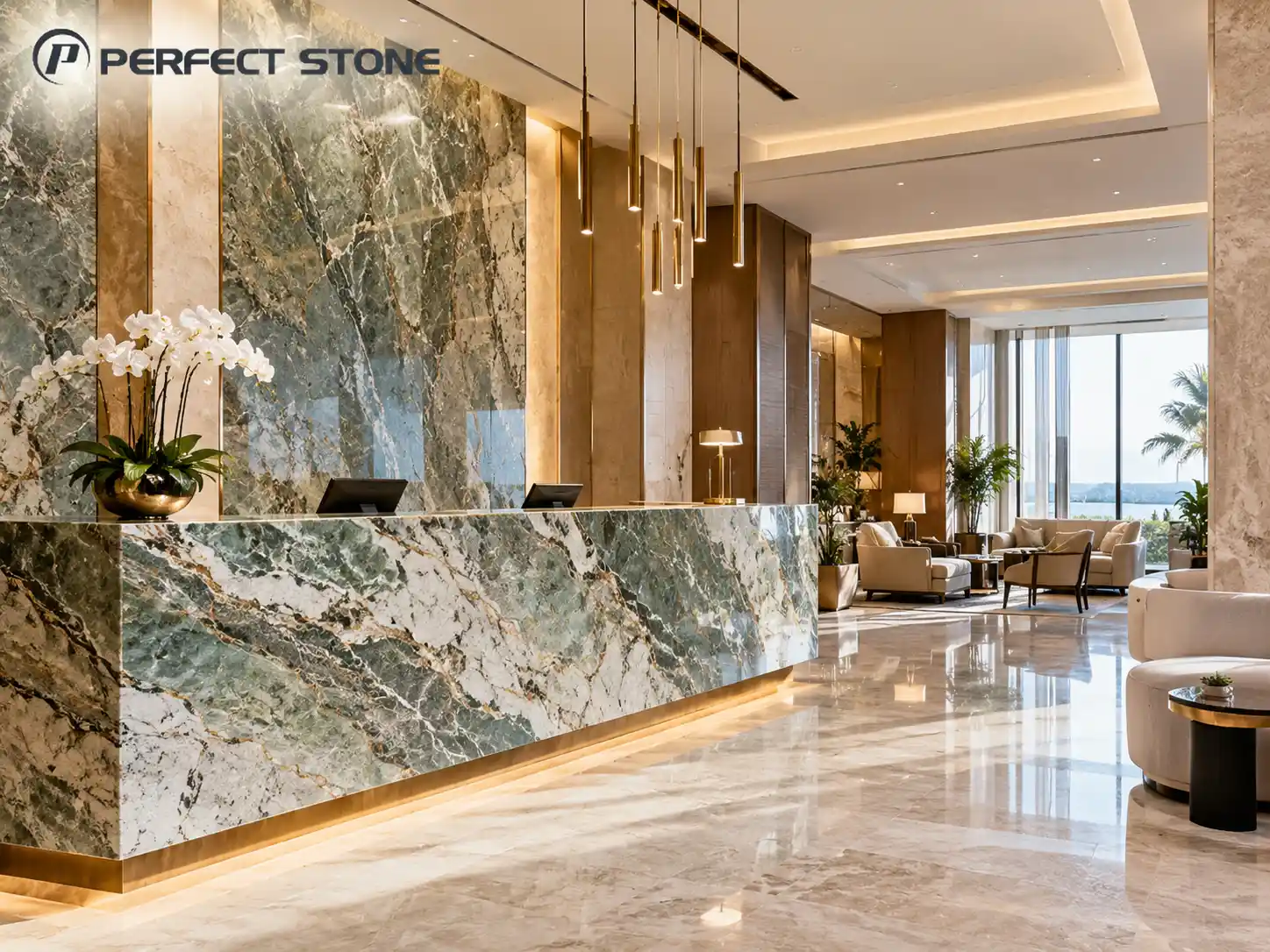
The lobby is often the most visually important public space in a hotel. Natural stone offers geological variation, distinctive veining, mineral patterns, and a tactile quality that manufactured surface graphics may not reproduce in exactly the same way. Large-format slabs can create a continuous visual composition across reception walls, lift surrounds, and feature installations.
For a luxury city hotel, marble may support a refined design language through contrasting veins and polished or honed finishes. For a resort, limestone or travertine may provide a softer, more relaxed appearance. The choice should reflect the hotel's positioning, lighting conditions, furniture palette, and cleaning requirements.
Design teams evaluating luxury natural stone materials should assess actual slabs rather than relying exclusively on small photographs. Natural variation is an advantage when it is planned, but it can become a problem if the delivered material differs significantly from the approved visual concept.
Creating Material Continuity Across Hospitality Spaces
Natural stone can help establish a consistent visual identity across reception areas, guest bathrooms, restaurants, bars, and selected circulation spaces. However, material continuity does not mean that every surface should use the same stone, finish, or thickness.
A hotel might use marble on a decorative lobby wall, a more wear-tolerant stone on a high-traffic floor, and a textured material in an outdoor area. The design remains coherent through coordinated colors and details while each surface is specified according to its actual conditions.
The Main Natural Stone Types for Hotel Projects
Marble for Luxury Hotel Interiors
Marble is widely associated with luxury hospitality because of its veining, color range, and ability to create distinctive feature surfaces. Typical applications include reception walls, lift surrounds, bathroom vanities, decorative flooring, columns, and selected restaurant interiors.
However, marble is generally calcium-carbonate-rich and can be sensitive to acidic substances. Lemon juice, vinegar, some beverages, and inappropriate cleaning chemicals may cause etching. Etching changes the surface appearance and is not necessarily the same as a stain. Polished marble can also show scratches and wear patterns in demanding locations.
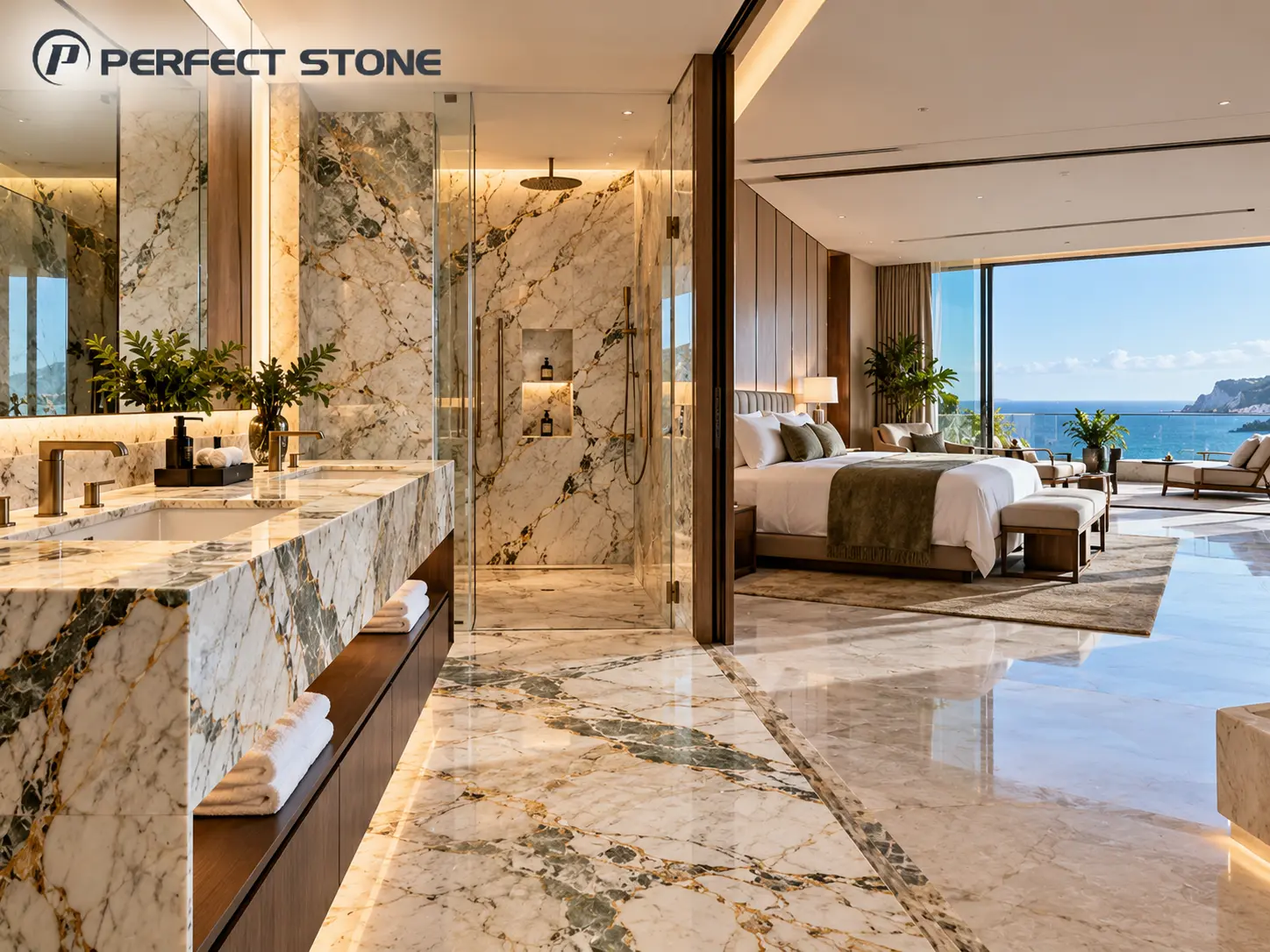
For a hotel bathroom, marble may be an excellent wall or vanity material when the detailing and maintenance plan are appropriate. For a wet pedestrian floor, the exact stone, surface finish, drainage design, and slip-resistance evidence require separate assessment.
When comparing marble stone options, buyers should request samples, technical information, finish specifications, and clear guidance on cleaning and sealing. The name “marble” alone does not establish a material's absorption, strength, or suitability for every installation.
Granite for High-Use Hospitality Areas
Granite is often considered for reception counters, bar tops, service surfaces, selected flooring applications, and other areas where resistance to wear is important. Many granites have a dense crystalline structure, but their absorption, mineral composition, surface response, and durability still vary.
Granite should not be treated as automatically stain-proof or slip-resistant. A polished granite floor may behave differently from a flamed or textured finish, and a particular stone should be assessed using evidence appropriate to its intended use.
For busy hotel operations, the practical question is not simply whether granite is hard. It is whether the selected material, thickness, finish, installation system, and maintenance plan collectively meet the project's requirements.
Quartzite for Distinctive Hospitality Interiors
Natural quartzite can provide striking patterns and a distinctive appearance for feature walls, vanity tops, counters, and other design-led applications. Many quartzites are hard, but the trade name alone is not sufficient to predict performance. Stone sold under similar commercial names may differ in mineral composition, structure, and behavior.
Buyers should distinguish natural quartzite from engineered quartz surfaces. They are different material categories, with different compositions and fabrication considerations. Where a project depends on resistance to staining, bending, heat, or abrasion, the specification should refer to the actual product and supporting technical information rather than assumptions based on a broad category name.
Limestone and Travertine for Resorts and Boutique Hotels
Limestone and travertine can create warm, understated interiors for boutique hotels, coastal resorts, spas, courtyards, and selected outdoor spaces. Their natural textures and softer color palettes may complement timber, landscaping, and restrained architectural detailing.
These stones can be more porous than some dense alternatives, depending on the variety and finish. Travertine may contain natural voids that are filled or left open according to the product and design. Open textures may affect cleaning, while filled surfaces require suitable fabrication and installation.
For wet or exposed areas, the project team should evaluate absorption, finish, drainage, environmental exposure, and cleaning procedures. A material that works well on a sheltered feature wall may not be the most suitable option for a continuously wet floor.
Matching Natural Stone to Different Hotel Areas
Hotel Lobbies and Reception Counters
Lobby selection should balance appearance, traffic, cleaning, and replacement planning. Large-format stone can create a strong visual statement, but it also requires careful handling, substrate preparation, joint planning, and installation coordination.
Reception counters introduce additional considerations. The stone may encounter luggage, equipment, cleaning products, and occasional impacts along exposed edges. Edge profiles, support, slab thickness, cut-outs, and fabrication quality should be coordinated before production.
Guest Bathrooms, Spas, and Wellness Areas
Bathroom and spa applications require particular attention to moisture management and slip resistance. Wall cladding, vanity tops, shower floors, and general bathroom floors are not interchangeable applications. Each has different exposure conditions and performance requirements.
Waterproofing is a system requirement, not a property that can be achieved simply by choosing a low-absorption stone. The substrate, membrane, drainage, joints, penetrations, and installation method must be coordinated with the relevant building requirements.
Restaurants, Bars, and Dining Areas
Restaurant stone surfaces can be exposed to coffee, wine, oils, citrus, food residues, and repeated cleaning. Calcareous stones such as many marbles and limestones can be vulnerable to acids. Suitable selection therefore depends on the expected spills, finish, maintenance capability, and willingness to accept natural wear.
For counters and serving areas, consider stain sensitivity, edge durability, cleaning chemicals, and the impact of equipment. For floors, also evaluate foot traffic, slip resistance, and the effect of food or drink residues on the surface.
Corridors, Stairs, and Outdoor Areas
Corridors and lift lobbies experience repeated pedestrian traffic, rolling luggage, grit, and frequent cleaning. The specification should account for wear, joint layout, surface texture, and access for maintenance. Stair treads and ramps require special attention because surface performance can directly affect safe movement.
Outdoor terraces, pool surrounds, and entrances introduce exposure to rain, water, temperature variation, and contaminants. Do not assume that an attractive textured finish automatically provides adequate slip resistance. Obtain suitable test evidence and assess the surface under the conditions expected in service.
Technical Properties Buyers Should Verify Before Specifying Stone
Water Absorption and Porosity
Water absorption indicates how much water a stone specimen absorbs under a defined test procedure. It can help distinguish materials and compare varieties, but it does not independently establish whether a stone is suitable for a wet area. Installation design, pore structure, finish, sealing, and exposure also matter.
ASTM C97/C97M provides test methods for absorption and bulk specific gravity of dimension stone. The standard is useful for comparing materials, but the result must be interpreted alongside the intended application and other relevant evidence.
Flexural Strength and Structural Considerations
Flexural strength is relevant when stone is subject to bending, including certain slab, panel, and cladding applications. ASTM C880/C880M describes a test method for determining the flexural strength of dimension stone. Results may need to consider the direction of loading relative to the stone's bedding or structure and, where relevant, wet conditions.
For large wall panels, suspended cladding, counters, and cantilevered details, strength values alone are not a complete design. Panel dimensions, thickness, support spacing, anchors, cut-outs, substrate conditions, and installation tolerances must be considered by the appropriate design professionals.
Abrasion, Surface Wear, and Slip Resistance
Abrasion resistance is relevant to pedestrian flooring, but the test method and results should be suitable for the material and intended use. Slip resistance is a separate consideration. It should be evaluated using the relevant classification or testing approach for the proposed location and expected conditions.
The following table lists key parameters that should be requested or verified. It deliberately does not assign universal pass values because the correct acceptance criteria depend on the project, material, and applicable requirements.
| Parameter | Why It Matters | Evidence to Request |
|---|---|---|
| Water absorption | Moisture exposure and potential staining considerations | Test report and test method, such as ASTM C97/C97M |
| Flexural strength | Panels, slabs, support design, and bending conditions | Relevant test data, including ASTM C880/C880M where applicable |
| Abrasion resistance | Wear under pedestrian traffic | Test result and method appropriate to the application |
| Slip resistance | Safe movement in dry, wet, or exposed areas | Relevant classification and test report |
| Thickness and tolerances | Fabrication, installation, alignment, and finished levels | Product specification and dimensional inspection |
| Finish and maintenance | Appearance, cleaning, and service conditions | Approved sample and written care instructions |
When a supplier provides a numerical result, buyers should check the test date, specimen identification, method, units, and whether the sample represents the proposed stone. Published figures from a different variety should not be treated as proof of performance for the selected material.
Comparing Marble, Granite, Quartzite, Limestone, and Travertine
No single stone type is best for every hotel application. The most useful comparison combines visual requirements with the specific technical characteristics of the supplied material.
| Stone Type | Typical Design Character | Main Consideration | Potential Hotel Applications |
|---|---|---|---|
| Marble | Distinctive veining and refined appearance | Acid etching, scratching, and maintenance | Feature walls, vanities, selected floors, reception details |
| Granite | Crystalline patterns and varied colors | Verify actual absorption, finish, and application suitability | Counters, service surfaces, selected high-use areas |
| Quartzite | Dramatic patterns and natural variation | Confirm material identity and product-specific test data | Feature surfaces, counters, design-led interiors |
| Limestone | Soft, warm, understated appearance | Porosity, acid sensitivity, and cleaning needs | Wall cladding, boutique interiors, selected resort spaces |
| Travertine | Textural, earthy character | Voids, filling, moisture exposure, and maintenance | Spa interiors, feature walls, selected outdoor applications |
This is a qualitative comparison, not a universal performance ranking. The actual result depends on the stone variety, quarry source, finish, fabrication, installation, and maintenance conditions. Project teams should confirm suitability through appropriate documentation and, where necessary, testing.
Slip Resistance and Australian Building Requirements
Why Surface Appearance Is Not a Substitute for Testing
Slip resistance cannot be reliably determined by looking at a photograph or by describing a finish as rough, honed, or textured. Performance may change with water, contaminants, wear, cleaning residues, and the footwear or conditions anticipated in the space.
Australian Standard AS 4586 addresses the slip-resistance classification of new pedestrian surface materials. AS 4663 addresses slip resistance measurement for existing pedestrian surfaces. These standards serve different purposes, so a project team should select the appropriate method for the question being assessed.
Checking the National Construction Code and Project Requirements
The National Construction Code (NCC), relevant state or territory variations, applicable Australian Standards, and the building's specific use should be reviewed during design. Slip-resistance provisions can apply to particular locations such as ramps, stairs, treads, and landings. The relevant classification depends on the application and conditions rather than a single value that can be applied to every hotel floor.
Wet areas also require coordinated waterproofing and drainage design. AS 3740 is a relevant Australian Standard for waterproofing domestic wet areas, but hotel projects may have additional requirements based on building classification, design, and the applicable NCC provisions. The project team should confirm the correct scope and compliance pathway with a qualified building professional.
For hotel procurement, request the relevant test report for the proposed finish and verify that the evidence corresponds to the material and application being specified. A report for a different finish or stone variety should not automatically be treated as equivalent.
Maintenance and Lifecycle Costs in Hotel Operations
Daily Cleaning and Spill Management
Hotel maintenance teams need cleaning instructions that are practical, consistent, and compatible with the selected stone. Natural Stone Institute guidance recommends suitable neutral cleaners for many stone surfaces and warns that acidic products can etch calcareous materials. Abrasive products can also scratch some finishes.
Spills should be addressed promptly using procedures approved for the particular stone and contaminant. Cleaning teams should not assume that a product safe for ceramic surfaces is also suitable for marble or limestone. A written maintenance plan reduces uncertainty and helps preserve the intended appearance.
Sealing Is Not the Same as Waterproofing
Some natural stones benefit from an appropriate impregnating sealer, but sealing does not make a stone completely stain-proof or replace a waterproofing membrane. The need for sealing and the maintenance interval depend on the stone, finish, exposure, sealer, and supplier recommendations.
Before a hotel opens, maintenance teams should receive clear instructions on approved cleaners, spill response, resealing where applicable, and procedures for dealing with etching or damage. This is especially important when multiple contractors and cleaning teams will work across different areas.
Compare Lifecycle Cost, Not Only Purchase Price
The lowest initial material price does not always produce the lowest ownership cost. A realistic comparison should consider material, fabrication, transport, installation, cleaning, periodic maintenance, repair, replacement, and the potential impact of disruption to hotel operations.
For example, a premium stone may justify its cost on a prominent feature wall, while a more straightforward material could be preferable for a large service area. The best commercial decision depends on where the stone is used, how it will be maintained, and how long the finish is expected to remain visually acceptable.
Common Mistakes When Buying Natural Stone for Hotels
1. Selecting Only by Color or Photography
Digital images can conceal natural variation, surface texture, and differences between slabs. Approve physical samples and, for important areas, review representative slabs or a project mock-up under the intended lighting.
2. Using One Finish Everywhere
A finish suitable for a decorative wall may not be suitable for a wet floor. Specify each surface according to its use, exposure, cleaning process, and relevant performance requirements.
3. Treating a Stone Name as a Performance Guarantee
Broad labels such as marble, granite, or quartzite do not establish exact absorption, strength, abrasion, or slip-resistance results. Request product-specific documentation whenever performance matters to the design or compliance process.
4. Ignoring Batch Variation and Replacement Needs
Natural stone varies. Before ordering, agree on acceptable color and veining variation, slab selection procedures, inspection criteria, and the approach to replacement material. For large projects, coordinate quantities and any reserve material before installation begins.
5. Leaving Maintenance Decisions Until Handover
Without written care guidance, cleaning teams may use unsuitable chemicals or abrasive equipment. Maintenance planning should be completed during specification, not after damage occurs.
6. Failing to Coordinate Fabrication and Installation
Large slabs, counter cut-outs, panel anchors, joints, and edge details require coordination among the designer, fabricator, installer, and relevant engineering professionals. Confirm dimensions, tolerances, supports, and installation requirements before fabrication starts.
How to Specify and Procure Natural Stone for an Australian Hotel
Step 1: Define Every Application
Prepare a schedule that separates floors, walls, counters, stairs, wet areas, and outdoor surfaces. Include location, approximate quantity, exposure, traffic, and the intended visual result.
Step 2: Set Performance Requirements
Identify which technical properties need verification. Depending on the application, this may include absorption, flexural strength, abrasion resistance, slip resistance, dimensional tolerances, and resistance to relevant environmental conditions.
Step 3: Shortlist Materials and Finishes
Compare marble, granite, quartzite, limestone, and travertine according to the application. Evaluate honed, polished, brushed, flamed, or other finishes only where they are appropriate for the stone and intended use.
Step 4: Review Samples and Documentation
Request physical samples, representative slab photographs, technical reports, finish descriptions, and care recommendations. Confirm that the material being quoted is the same material being approved and supplied.
Step 5: Confirm Supply and Installation Coordination
Discuss fabrication capability, packing, transport, lead time, delivery sequencing, breakage procedures, and replacement availability. Project coordination is particularly important when several hotel areas require visually related materials delivered in stages.
For projects with multiple stone types or custom details, reviewing completed natural stone project applications can help design and procurement teams understand how material selection, fabrication, and installation decisions work together. Request relevant examples and verify that the conditions are comparable to the proposed project.
What Hotel Buyers Should Ask a Natural Stone Supplier
Whether working with a local distributor, importer, fabricator, or international producer, hotel buyers should assess more than the quoted price. The supplier should be able to identify the proposed material clearly and provide documentation relevant to the specified application.
- What is the stone's commercial name and, where available, geological identification?
- Can the supplier provide representative samples and confirm the expected range of natural variation?
- Are relevant test reports available for the proposed stone and finish?
- What thicknesses, dimensions, finishes, and fabrication options can be supplied?
- What installation and maintenance guidance is available?
- How will slabs or finished components be inspected, packed, and protected during transport?
- What are the production lead time, delivery schedule, and process for handling damaged or non-conforming material?
- Can replacement material be sourced later if a repair or renovation is required?
When evaluating natural stone suppliers Australia or international suppliers serving Australian projects, compare the completeness of technical information, communication, quality-control procedures, and delivery planning. Terms such as natural stone manufacturer, wholesale natural stone for hotel projects, and commercial natural stone supplier can help buyers explore sourcing options, but these terms alone do not verify factory ownership, production capacity, or product quality. Confirm those details directly.
Natural Stone Selection Trends in Australian Hospitality
Natural Variation and More Tactile Finishes
Hospitality design often uses natural veining, textured surfaces, large-format slabs, and coordinated material palettes to establish a distinctive identity. These choices should be evaluated alongside cleaning needs, lighting, traffic, and the intended level of visual variation.
Performance-Led Material Selection
A practical shift in specification thinking is to move from asking only which stone looks best to asking which stone delivers the required appearance and performance in a particular location. This approach encourages designers and buyers to consider technical evidence earlier, reducing the risk of costly changes late in the project.
More Attention to Maintenance and Long-Term Value
Hotel operators need surfaces that can be maintained consistently without unnecessary downtime. A realistic specification therefore includes cleaning instructions, replacement planning, and the resources required to maintain the finish over the service life of the building.
Final Takeaway: Specify Natural Stone for the Hotel's Real Operating Conditions
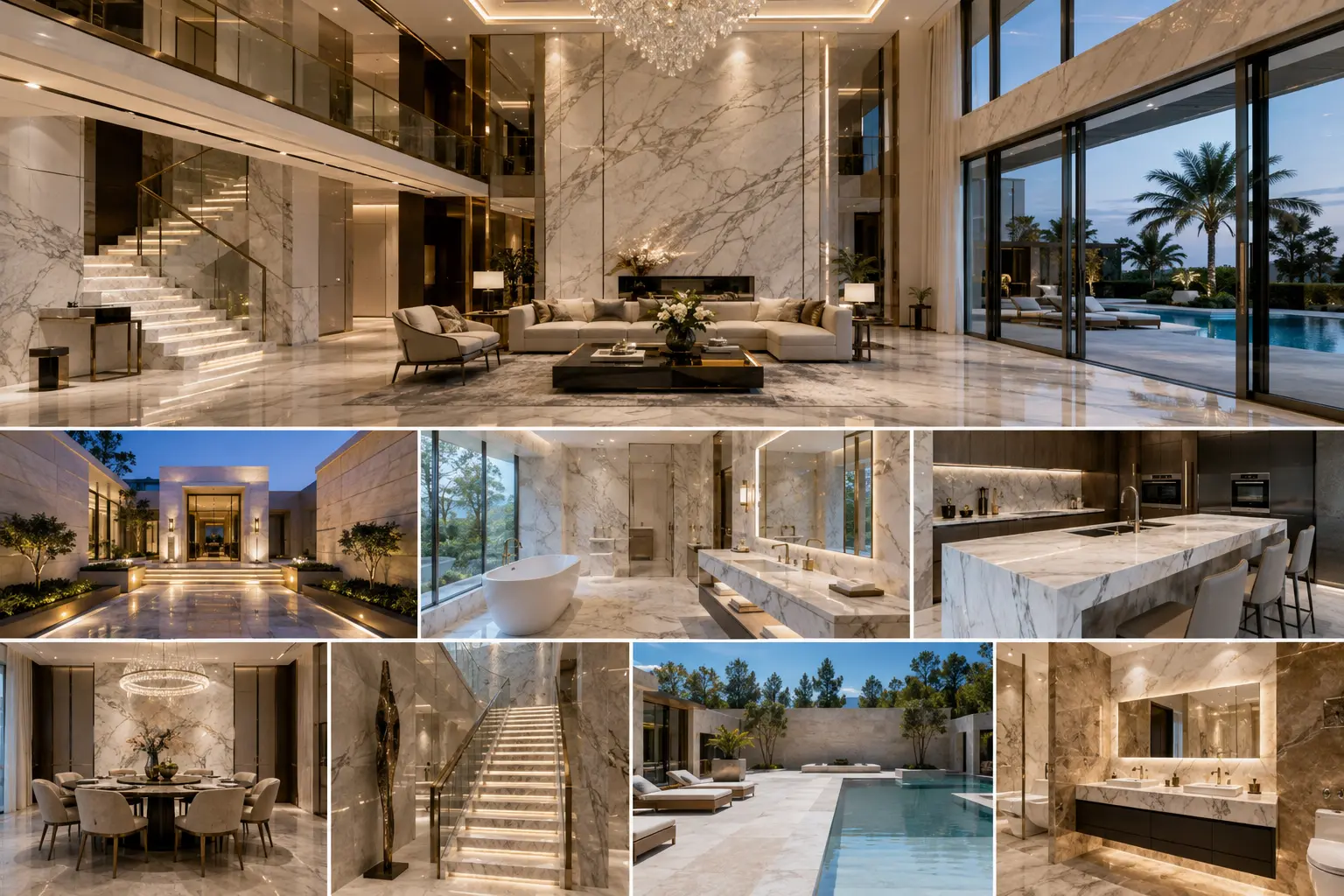
The best natural stone choice for an Australian hotel is not determined by one universal ranking. Marble may deliver the right visual character for a lobby or bathroom vanity; granite may be appropriate for a busy counter; quartzite may suit a distinctive feature; and limestone or travertine may support a warm resort concept. Each decision still depends on the exact material, finish, application, installation system, and maintenance expectations.
Hotel developers, architects, contractors, and procurement teams can reduce risk by defining applications first, checking relevant technical evidence, confirming Australian compliance requirements, approving representative samples, and planning maintenance before ordering. This process helps align design intent with day-to-day performance and long-term value.
Material Fit by Product Direction
The following matrix provides an application-fit indication for common hotel uses. It is not statistical data, does not represent measured probabilities, and is not a guarantee that every stone within a category will perform in the same way. Actual suitability depends on the specific variety, test results, surface finish, thickness, installation system, exposure, and project requirements.
Legend: ●●● = Primary; ●●○ = Strong Option; ●○○ = Depends on Workflow; — = Usually Not First Choice.
| Hotel Application | Marble | Granite | Quartzite | Limestone | Travertine |
|---|---|---|---|---|---|
| Luxury lobby feature wall | ●●● | ●●○ | ●●● | ●●○ | ●●○ |
| Reception counter | ●●○ | ●●● | ●●● | ●○○ | ●○○ |
| Guest bathroom wall | ●●● | ●●○ | ●●○ | ●●○ | ●●○ |
| High-traffic floor | ●○○ | ●●● | ●●○ | ●○○ | ●○○ |
| Spa interior | ●●○ | ●●○ | ●●○ | ●●○ | ●●○ |
| Pool surround | ●○○ | ●●○ | ●●○ | ●●○ | ●●○ |
| Outdoor terrace | ●○○ | ●●● | ●●○ | ●●○ | ●●○ |
| Restaurant counter | ●○○ | ●●● | ●●● | ●○○ | — |
Use this matrix to shortlist materials, not to approve them automatically. For example, a stone listed as a strong candidate for a pool surround must still demonstrate appropriate slip resistance and suitability for the expected moisture and maintenance conditions. If relevant technical information is unavailable, treat the selection as unresolved and request additional evidence.
How, Why, What, Options, and Considerations: A Practical Decision Framework
How Should a Hotel Team Select Natural Stone?
Start with the application and its operating conditions. Define whether the stone will be used on a floor, wall, counter, stair, or outdoor surface. Identify traffic, moisture, cleaning products, potential contaminants, and structural requirements. Then shortlist suitable stone varieties, choose an appropriate finish, verify technical documentation, and approve representative samples before production.
Why Do Finish and Installation Matter as Much as Stone Type?
The stone name does not determine the complete performance of an installed surface. Finish can influence appearance, cleaning, and slip resistance. Thickness, substrate preparation, joints, support, fixing methods, and workmanship affect the installed result. A suitable stone can still become unsuitable if the finish or installation system does not match the environment.
What Documentation Should Buyers Request?
At minimum, buyers should request material identification, relevant test results, thickness and dimensional information, finish details, representative samples, installation guidance, and maintenance instructions. Where Australian compliance is relevant, confirm the applicable NCC provisions, referenced standards, state or territory variations, and project-specific requirements with the responsible professionals.
Which Material Options Should Be Considered First?
For visually prominent feature walls, marble and quartzite may be worth evaluating. For counters and selected high-use surfaces, granite and suitable quartzite varieties may be candidates. For warm resort interiors, limestone and travertine can be considered where their properties match the intended use. These are starting points rather than universal recommendations; product-specific testing and project conditions should determine the final choice.
What Should Buyers Consider Before Placing an Order?
Confirm the material and finish, acceptable natural variation, quantities, dimensions, fabrication details, delivery sequence, packaging, inspection process, and replacement strategy. Establish who approves samples and who is responsible for verifying compliance. If any critical performance question remains unanswered, resolve it before committing to fabrication or installation.
For an upcoming hotel, resort, restaurant, or hospitality development in Australia, prepare the application schedule, approximate quantities, preferred stone types, finish requirements, and technical expectations before requesting a project-specific recommendation. This gives suppliers and project professionals a clearer basis for evaluating options, reducing avoidable procurement risk, and aligning design ambitions with long-term operational needs.
Frequently Asked Questions About Natural Stone for Hotels in Australia
1. What is the best natural stone for hotel projects in Australia?
There is no single best natural stone for every hotel project. Marble may suit feature walls and selected interior surfaces, granite may be considered for counters and some high-use areas, and quartzite, limestone, or travertine may suit specific design applications. The final selection should depend on the stone variety, surface finish, traffic, moisture exposure, maintenance requirements, installation system, and relevant technical test results. Hotel teams should assess each application separately rather than specifying one material throughout the building without further evaluation.
2. Is marble suitable for high-traffic hotel areas?
Marble can be used in selected hotel floors and public spaces, but suitability depends on the variety, finish, traffic intensity, cleaning practices, and the appearance the operator is prepared to maintain. Marble can be vulnerable to scratching and acid etching, so busy restaurant floors and service areas require careful evaluation. Buyers should review relevant performance information, assess samples under realistic conditions, and establish a maintenance plan. A different stone or finish may be more appropriate where frequent cleaning, spills, or heavy pedestrian traffic create demanding operating conditions.
3. Which natural stone is suitable for hotel bathrooms and spa areas?
Marble, granite, quartzite, limestone, and travertine may all be considered for selected bathroom or spa applications, but wall surfaces, vanity tops, general floors, and shower floors have different requirements. Buyers should assess water exposure, cleaning products, absorption, finish, slip resistance, waterproofing, drainage, and installation details. Natural stone does not replace a waterproofing system, and a finish suitable for a wall should not automatically be used on a wet floor. Confirm the proposed material and finish against the project specifications and applicable Australian requirements.
4. How can hotel buyers check slip resistance for natural stone flooring?
Slip resistance should be assessed using relevant test evidence rather than appearance alone. In Australia, AS 4586 addresses classification of new pedestrian surface materials, while AS 4663 addresses measurement of slip resistance for existing pedestrian surfaces. The appropriate method and acceptance criteria depend on the application, wet or dry conditions, and applicable building requirements. Request a report that corresponds to the proposed stone and finish, and confirm the required classification with the project designer or building professional. A result for a different finish should not automatically be assumed to apply.
5. What should buyers ask a natural stone supplier before ordering for a hotel project?
Ask for clear material identification, representative samples, available technical reports, finish and thickness details, fabrication capability, dimensional tolerances, installation recommendations, and maintenance instructions. Also confirm natural variation, slab selection, quality inspection, packing, delivery schedule, breakage procedures, and replacement availability. For projects in Australia, clarify who is responsible for verifying applicable building requirements and whether the supplied documentation is sufficient for the intended use. Comparing suppliers on technical support, communication, quality control, and delivery reliability can be more useful than comparing the initial material price alone.
References
- National Construction Code 2022, including Amendment 2 — Australian Building Codes Board (ABCB), Australian Government.
- AS 4586: Slip Resistance Classification of New Pedestrian Surface Materials — Standards Australia.
- AS 4663: Slip Resistance Measurement of Existing Pedestrian Surfaces — Standards Australia.
- AS 3740: Waterproofing of Domestic Wet Areas — Standards Australia.
- Standard Test Methods for Absorption and Bulk Specific Gravity of Dimension Stone, ASTM C97/C97M — ASTM International.
- Standard Test Method for Flexural Strength of Dimension Stone, ASTM C880/C880M — ASTM International.
- Care & Cleaning of Natural Stone — Natural Stone Institute.
- Dimension Stone Selection, Design, and Installation Standards and Technical Resources — ASTM International and Natural Stone Institute.