 EN
EN


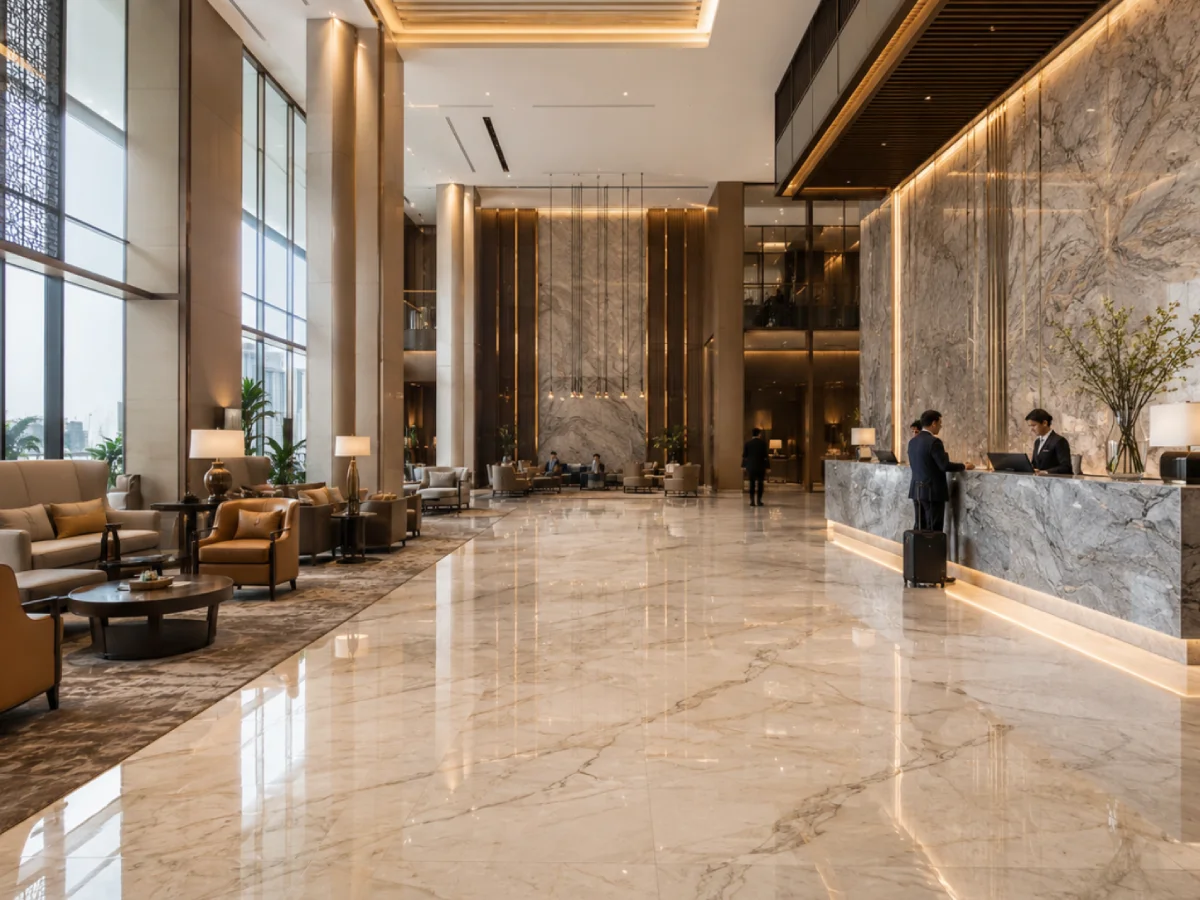
Hotel lobby marble is not selected only for beauty. For contractors and developers, the lobby is a high-visibility, high-traffic, schedule-sensitive area where material choice affects brand perception, installation efficiency, maintenance planning, guest safety, and long-term operating cost. A marble floor may look impressive in a rendering, but if the supplier cannot control slab consistency, finish suitability, cut-to-size accuracy, packing labels, and delivery timing, the lobby package can quickly become a project risk.
This buying guide is written for hotel contractors, developers, procurement teams, architects, and stone importers who need to source marble for hotel lobby floors, reception walls, elevator surrounds, columns, public corridors, and feature surfaces. The goal is not to list beautiful stones. The goal is to help buyers understand how to evaluate a hotel lobby marble supplier before confirming a bulk order or project package.
Why Hotel Lobby Marble Buying Is Different from General Marble Purchasing
Buying marble for a hotel lobby is different from buying marble for a private decorative wall or a small residential floor. A hotel lobby is a public-facing space that receives guests, luggage, cleaning equipment, service traffic, and constant visual attention. It must look premium, but it also has to perform under daily operation.
For developers, the lobby often represents the hotel’s brand value. For contractors, it can be one of the most schedule-sensitive areas because the lobby is closely tied to handover, inspection, opening preparation, and client approval. For designers, marble selection affects the overall tone of the interior. For procurement managers, the challenge is controlling costs without creating future problems.
A successful lobby marble package requires coordination between design intent, material selection, technical suitability, fabrication accuracy, and logistics. The stone must be beautiful enough for the hotel brand, durable enough for public use, and organized enough for efficient installation. This is why selecting the right supplier matters.
For this reason, choosing a hotel lobby marble supplier should be treated as part of the project delivery strategy, not only as a material purchasing step.
What Contractors and Developers Should Define Before Requesting Prices
Many marble sourcing problems begin when buyers ask for prices too early. A price per square meter is useful only when the project scope is clear. For hotel lobby marble, contractors and developers should define the application, finish, quantity, schedule, and service scope before comparing quotations.
Lobby Area Breakdown
A hotel lobby usually includes more than one marble application. The floor may need large-format marble tiles or slabs. The reception background may use bookmatched marble or vertical wall panels. Elevator surrounds may require cut-to-size pieces with clean alignment. Columns, thresholds, stairs, and public corridors may need different thicknesses or finishes. Each area should be listed separately so the supplier can quote accurately.
Project Stage
The buying process changes depending on whether the project is in design development, tender, mock-up, production, or replacement stage. A developer in early design may need material options and budget ranges. A contractor, after award, may need exact dimensions, fabrication drawings, packing sequence, and delivery control. A procurement manager replacing lobby stone in an operating hotel may need a faster lead time and carefully planned logistics.
Performance Expectation
The project team should define whether the lobby floor is mainly decorative, moderate traffic, or heavy traffic. It should also consider cleaning methods, luggage movement, guest flow, entrance moisture, and expected maintenance level. Marble can be used beautifully in hotel lobbies, but the project team should confirm whether the selected material and finish suit the operating conditions.
Core Buying Criteria for Hotel Lobby Marble
1. Visual Identity and Brand Fit
Hotel lobby marble should support the brand identity of the property. A luxury hotel may choose white marble with dramatic veins, warm beige marble for a calm hospitality feeling, grey marble for a modern business hotel, or darker marble for a more dramatic boutique effect. The selected stone should match the hotel’s lighting, furniture, metal details, wall materials, and guest positioning.
Buyers should avoid choosing a stone only because it looks impressive in isolation. A slab that looks stunning in a warehouse may feel too busy in a large lobby. A subtle marble may look elegant in a sample but weak in a double-height space. Contractors and developers should ask for real slab photos, installation references, and large-area layout thinking before confirming the material.
2. Suitability for High Traffic Areas
The phrase high traffic marble flooring should not be used casually. Hotel lobby floors receive luggage wheels, shoes, cleaning machines, movable furniture, and service operations. Buyers should discuss whether the selected marble is appropriate for the traffic level and whether another stone, such as quartzite or granite, should be considered for specific zones.
For marble flooring, buyers should evaluate stone quality, finish, thickness, expected maintenance, and installation method. ASTM C503/C503M provides a specification framework for marble dimension stone, including material characteristics, physical requirements, and sampling considerations. In practical purchasing, this means buyers should treat marble as a building material, not only as a decorative surface.
3. Surface Finish and Slip-Related Considerations
Polished marble is common in luxury hotel lobbies because it creates reflection, depth, and a premium visual effect. However, a polished finish is not automatically suitable for every lobby condition. Entrance zones, wet-adjacent areas, ramps, or spaces exposed to rainwater from shoes and luggage may require more careful finish discussion.
ANSI A326.3 describes the test method for measuring the dynamic coefficient of friction of hard surface flooring materials. For hotel projects, contractors should not treat one test value as a universal answer, but they should understand that surface finish, cleaning, moisture, and local standards matter. Designers, installers, and project consultants should review finish choices before final approval.
4. Slab Batch Consistency
Hotel lobby spaces are often large and open. If the marble batch is inconsistent, the floor may look patchy after installation. A reception wall may lose its premium effect if the panels come from visually different slabs. Buyers should request slab photos, videos, batch grouping, and visual confirmation before cutting.
For hotel floor marble, a consistent tone is often more important than selecting the most dramatic slab. Flooring needs rhythm and visual stability. Strong variation may be more suitable for a feature wall than a large floor area. Buyers should decide where drama belongs and where calm consistency is more valuable.
5. Large-Format Layout and Vein Direction
Hotel lobbies often use large-format stone to create a more seamless and expensive look. Large-format marble can reduce grout lines and strengthen the sense of space, but it also requires better layout planning, stronger packing, careful handling, and skilled installation.
Vein direction matters. In a long lobby, veins may guide movement or create visual tension. In a reception wall, bookmatched slabs may form a centerpiece. In elevator surrounds, vertical panel alignment should look intentional. Before fabrication, the supplier should help confirm layout, slab sequence, and panel numbering when required.
6. Cut-to-Size Accuracy
Hotel lobby marble packages often include cut-to-size flooring, skirting, reception counters, wall panels, column covers, elevator surrounds, thresholds, and stair details. Incorrect size, wrong edge profile, or missing labels can delay installation.
Contractors should provide drawings, size schedules, tolerances, thickness, finish, edge profiles, and installation notes before production. A capable supplier should review the information and ask questions if details are unclear. A fast quotation is nice; an accurate production review is better.
7. Packing by Installation Zone
For a hotel lobby, packing should not be random. Materials should be organized by floor area, wall zone, panel number, room, or installation sequence where possible. Clear crate labels help contractors identify materials faster after delivery.
For overseas orders, packing becomes part of project execution. Stone may travel by truck, sea freight, port handling, local unloading, and job-site movement. Strong crates, internal protection, waterproof wrapping, corner protection, and loading photos help reduce the risk of breakage and confusion.
Hotel Lobby Marble Specification Checklist
Before awarding a purchase order, contractors and developers should confirm the project specification. This prevents unclear assumptions between buyer, supplier, designer, and installer.
| Specification Item | What to Confirm | Why It Matters |
|---|---|---|
| Material type | Marble name, origin if required, visual range, and alternative options | Prevents confusion between similar stones and supports design approval. |
| Application area | Lobby floor, reception wall, elevator surround, columns, corridor, stairs, or threshold | Different areas require different finish, thickness, and packing logic. |
| Thickness | Project-required thickness for slabs, tiles, panels, counters, and custom pieces | Affects installation method, strength, weight, and cost. |
| Surface finish | Polished, honed, brushed, leathered, sandblasted, or project-specific finish | Controls appearance, maintenance, and slip-related performance. |
| Size and tolerance | Cut-to-size dimensions, allowable tolerance, and installation notes | Reduces site cutting and installation rework. |
| Layout | Floor layout, wall panel sequence, vein direction, and bookmatch requirements | Protects design intent and avoids random installation appearance. |
| Inspection | Surface check, dimension check, quantity check, labels, and packing review | Finds problems before materials leave the supplier. |
| Packing | Crate method, internal protection, waterproofing, labels, and loading photos | Reduces breakage and improves installation organization. |
Material Options for Hotel Lobby Applications
Marble is a preferred material for hotel lobbies because it creates a natural luxury effect. However, contractors and developers should compare marble with other stones when the lobby has heavy traffic, special maintenance requirements, or different design zones.
| Lobby Application | Suitable Stone Direction | Buyer Should Confirm | Risk If Ignored |
|---|---|---|---|
| Main lobby floor | Selected marble, quartzite, or granite, depending on traffic and design style | Traffic level, finish, thickness, batch consistency, maintenance plan | Visible wear, difficult cleaning, or inconsistent floor appearance |
| Reception feature wall | Bookmatched marble or dramatic large-format marble panels | Slab sequence, wall dimensions, lighting, panel numbering | Vein mismatch, weak visual impact, or wasted premium slabs |
| Elevator surrounds | Cut-to-size marble or durable stone panels | Panel dimensions, edges, corner details, installation sequence | Poor alignment, chipped corners, or slow installation |
| Lobby columns | Marble panels with carefully planned joints and orientation | Panel size, thickness, vein direction, joint position, packing labels | Uneven joint lines or visual inconsistency |
| Entrance transition area | Stone and finish selected for moisture, cleaning, and traffic conditions | Surface finish, entrance mat system, cleaning routine, local requirements | Slip-related concerns, staining, or maintenance complaints |
| Reception counter or concierge desk | Marble, quartzite, or granite with custom fabrication | Edge profile, slab layout, joints, lighting, service openings | Fabrication errors, visible joints, or weak design finish |
What Should Be Included in a Hotel Lobby Marble Supply Package?
For contractors and developers, a hotel lobby marble order should not be evaluated only by material price. A complete supply package should clarify what the supplier is actually responsible for. This is especially important during tender comparison because two quotations may look similar but include very different service scopes.
| Supply Item | What It Should Include | Why Contractors Should Confirm It |
|---|---|---|
| Material selection | Approved marble type, slab photos, batch range, alternative options, and sample confirmation | Prevents disputes caused by color difference, wrong stone selection, or unavailable slabs after approval. |
| Shop drawing review | Floor layout, wall panel dimensions, reception counter details, elevator surround drawings, and cut-to-size schedule | Reduces fabrication mistakes before production starts. |
| Mock-up support | Sample boards, finish samples, bookmatch layout, joint direction, and lighting review when required | Helps developers, designers, and contractors align expectations before bulk production. |
| Custom fabrication | Cut-to-size marble, edge processing, column panels, skirting, thresholds, wall panels, and reception desk components | Ensures the lobby package arrives ready for organized installation. |
| Quality inspection | Surface check, dimension check, thickness check, quantity check, finish check, and label confirmation | Allows buyers to identify problems before shipment instead of after delivery. |
| Export packing | Strong wooden crates, waterproof protection, corner protection, panel separation, crate labels, and loading photos | Protects high-value marble during long-distance shipping and job-site handling. |
| Project documentation | Packing list, commercial invoice, crate list, material description, inspection photos, and shipment schedule | Supports customs clearance, project tracking, and installation organization. |
Practical Selection Guidance for Contractors and Developers
Hotel lobby stone decisions should be made according to project conditions. The same marble may be excellent for a reception wall but less suitable for a busy entrance floor. A good buying decision connects design, durability, maintenance, and supplier capability.
| Project Situation | More Suitable Buying Approach | Why It Matters |
|---|---|---|
| The lobby needs a luxurious first impression | Use premium marble for the visual focus, such as the reception wall, main floor pattern, or central feature area | This creates a strong brand impression without overusing dramatic stone everywhere. |
| The entrance receives heavy guest and luggage traffic | Review the finish, stone durability, maintenance plan, and possible alternative materials for transition zones | Entrance areas face more wear and moisture risk than purely decorative areas. |
| The project has a tight hotel opening date | Work with a supplier that can manage production schedule, inspection, packing, and clear shipment communication | Schedule control protects handover and avoids last-minute lobby delays. |
| The design includes bookmatched lobby walls | Approve exact slabs, layout, vein direction, and panel numbers before cutting | Bookmatched marble depends on planning; it cannot be fixed easily after fabrication. |
| The contractor needs cut-to-size hotel floor marble | Provide drawings, size schedule, tolerances, and packing sequence before quotation | Accurate information reduces site cutting, waste, and installation disputes. |
| The developer wants long-term value | Compare supplier service scope, QC, packing, and maintenance implications, not only unit price | A cheaper order can become expensive if it causes replacement, delay, or operational issues. |
Mock-Up Approval: A Step Contractors Should Not Skip
For hotel lobby marble, mock-up approval can prevent major disputes. A mock-up may include a sample panel, small floor area, finish sample, bookmatch layout, reception wall section, or physical material board. It helps the developer, designer, contractor, and supplier align expectations before bulk production.
Mock-up review is especially important when the lobby uses high-contrast marble, large-format slabs, custom floor patterns, bookmatched panels, or a special finish. Drawings and photos help, but physical or visual mock-ups give stakeholders a clearer understanding of color, texture, reflection, joint spacing, and installation appearance.
What a Lobby Marble Mock-Up Should Confirm
- Approved marble color range and veining character
- Surface finish and reflection level
- Tile or slab size
- Joint width and joint color direction
- Bookmatch or panel layout
- Edge and corner details
- Lighting interaction with the stone
- Cleaning and maintenance expectations
If a mock-up is skipped, the project team may discover too late that the selected stone looks different under lobby lighting, the finish is not suitable, or the vein direction does not match the intended design. In hotel projects, late changes are rarely cheap. The lobby is too important to guess.
Common Mistakes and Consequences
Mistake 1: Treating hotel lobby marble as a purely decorative material
Hotel lobby marble must be decorative and functional. If buyers focus only on appearance, they may ignore traffic, cleaning, finish, and maintenance. The consequence can be visible wear, surface complaints, or a lobby that looks good on opening day but becomes difficult to maintain later. Contractors and developers should evaluate marble as both a design material and a public-area surface.
Mistake 2: Selecting high-variation slabs for a large floor without layout planning
Strong veining can be beautiful, but a large floor needs visual control. If high-variation slabs are installed without layout planning, the floor may look chaotic or uneven. The consequence is not only aesthetic; it may also create client dissatisfaction and rework pressure. Dramatic marble is often better used in controlled feature areas unless the floor layout is carefully designed.
Mistake 3: Ignoring entrance conditions
Hotel entrances bring in moisture, dust, luggage, and heavy foot traffic. If the same polished marble finish is used everywhere without considering entrance conditions, the project may face slip-related concerns, cleaning difficulty, or faster surface wear. Contractors should review entrance mat systems, finish options, cleaning routines, and local project requirements before confirming lobby flooring.
Mistake 4: Not confirming the finish before bulk production
Surface finish changes the appearance and performance of marble. A polished finish, honed finish, or brushed finish can make the same stone look very different. If finish approval is unclear, the delivered material may not match the designer’s expectation. The consequence can be delayed approval, additional finishing work, or disagreement between supplier and buyer.
Mistake 5: Poor crate labeling for cut-to-size lobby packages
Cut-to-size marble packages often include many similar pieces. If crates are not labeled by area, floor, wall section, or installation sequence, the site team may waste time sorting materials. The consequence can be slower installation, missing pieces, or incorrect placement. Proper labeling is a simple but powerful way to reduce site confusion.
Mistake 6: Comparing quotations without checking what is included
One supplier may include slab selection, layout support, inspection photos, packing labels, and export documents. Another may only quote material. If buyers compare only the unit price, the lower quote may appear more attractive but provide less project support. The consequence may be hidden costs, delays, or quality disputes later.
Mistake 7: Not planning spare pieces
Hotel lobby projects should include spare material when possible. Stone can be damaged during handling or future maintenance. If spare pieces are not reserved from the same batch, matching the original marble later may be difficult. The consequence can be visible replacement patches or delayed repair after opening.
Industry Direction, Standards, and Sustainability Considerations
Hotel developers are increasingly focused on material transparency, long-term maintenance, public-area performance, and responsible sourcing. Marble remains a valuable hospitality material because of its natural beauty and premium association, but buyers are becoming more careful about documentation, finish suitability, and supplier process control.
ASTM C503/C503M provides a recognized specification framework for marble dimension stone. For contractors and developers, this supports a practical point: marble should be selected according to material characteristics and intended use, not only visual preference.
For flooring applications, especially public areas, dynamic coefficient of friction and finish suitability deserve serious attention. ANSI A326.3 describes a method for measuring dynamic coefficient of friction of hard surface flooring materials. Project teams should review local requirements, use conditions, cleaning methods, and installation guidance before confirming lobby floor finishes.
Sustainability expectations are also becoming more visible in hotel development and high-end architecture. ANSI/NSI 373 examines and verifies numerous areas of natural stone production. Even when a project does not require formal sustainability certification, buyers may still want clearer information about stone origin, responsible sourcing, documentation, and production practices.
For international sourcing, contractors should also prepare import documents, packing lists, commercial invoices, crate labels, inspection photos, and shipment schedules. A professional supplier cannot replace local code consultants or installers, but it can help provide organized material information and reduce procurement uncertainty.
How Xiamen Perfect Stone Supports Buyers
Xiamen Perfect Stone supports hotel contractors and developers by helping connect lobby design requirements with practical stone supply execution. For lobby floors, reception walls, bathroom stone details, elevator surrounds, and custom hotel marble applications, the company can assist with marble, quartzite, granite, slab selection, cut-to-size coordination, inspection, export packing, and delivery communication.
For hotel lobby projects, this support may include reviewing material references, confirming slab availability, discussing suitable finish options, coordinating layout requirements, checking fabricated pieces before shipment, and preparing packing labels by area or installation sequence. This is especially useful for overseas buyers managing project timelines from another country.
The goal is not to sell marble as a one-size-fits-all answer. The goal is to help buyers decide where marble brings the strongest value, where another stone may be more practical, and how the full lobby package should be supplied to reduce installation and delivery risk.
Contractor and Developer Buying Checklist
- Hotel brand level and lobby design concept
- Lobby application areas: floor, wall, counter, columns, elevator, corridor, stairs, or threshold
- Material preference and alternative stone options
- Real slab photos, videos, and batch confirmation
- Expected foot traffic and cleaning routine
- Surface finish and slip-related considerations
- Thickness and cut-to-size dimensions
- Floor pattern, wall panel layout, and bookmatch requirements
- Mock-up sample or sample board approval
- Edge profiles, joints, and installation details
- Inspection requirements before shipment
- Packing method and crate protection
- Area-based or installation-sequence labels
- Destination port and delivery schedule
- Commercial invoice, packing list, and required documents
- Spare quantity planning for future repair
What Contractors and Developers Should Prioritize Before Awarding the Order
Before awarding a hotel lobby marble order, contractors and developers should prioritize three things: project suitability, supplier process, and total risk. Project suitability means the stone and finish fit the lobby’s visual and operational requirements. Supplier process means the supplier can support slab selection, layout review, fabrication, inspection, packing, and documentation. Total risk means the buyer understands what could go wrong and how the supplier will help prevent it.
For hotel lobby marble, the lowest price may not be the best value if it excludes important project support. A lobby order with poor labels, inconsistent slabs, weak packing, or late shipment can create expensive problems during installation. A slightly more complete supply package may protect the project schedule and reduce disputes.
Developers should also think beyond the opening day. A lobby floor must be cleaned, maintained, and used for years. Contractors should think beyond installation speed. The material must be accepted by the owner and perform under real use. Procurement teams should think beyond the quote sheet. The supplier should be able to communicate clearly and support the order from material selection to delivery.
Semantic Closure: Buyer Questions, Market Direction, and Practical Options
What should buyers understand before choosing hotel lobby marble?
Buyers should understand that hotel lobby marble is a public-area material, not only a decorative stone. It must support brand image, guest experience, foot traffic, cleaning, installation schedule, and long-term maintenance. A good buying decision combines material beauty with finish suitability, batch consistency, layout control, fabrication accuracy, and export packing.
Why does supplier capability matter for hotel lobby projects?
Supplier capability matters because lobby projects require coordination. The supplier should help confirm slabs, review layouts, check cut-to-size pieces, organize packing, label crates, and provide clear shipment information. Without these steps, even good marble can create delays, site confusion, breakage, or visual inconsistency after installation.
How can contractors reduce lobby installation risk?
Contractors can reduce risk by preparing drawings, size schedules, layout drawings, finish requirements, mock-up approvals, packing instructions, and installation sequence information before production. Pre-shipment inspection, crate labeling, and area-based packing help ensure the right pieces arrive in the right order and can be installed more efficiently.
What material options should developers compare?
Developers should compare marble, quartzite, granite, and other natural stones based on lobby use conditions. Marble is excellent for luxury image and elegant interiors, especially feature walls and premium floors. Quartzite or granite may be considered for higher wear zones or where stronger practical performance is needed. The best lobby package may use different stones in different areas.
What market and compliance factors should be considered?
Buyers should consider material specifications, surface finish, slip-related testing, sustainability expectations, documentation, import requirements, maintenance planning, and local installation standards. Hotel projects are increasingly documentation-driven, so organized supplier information can support smoother procurement, installation, and long-term operation.
FAQ
1. What is the best marble for a hotel lobby?
The best marble for a hotel lobby depends on the hotel brand, traffic level, design style, lighting, maintenance expectations, and application area. White marble, beige marble, grey marble, and bold-veined marble are commonly used for lobby floors, reception walls, elevator surrounds, and feature panels. For a large floor, buyers often need stable color and batch consistency. For a reception wall, dramatic bookmatched marble may be more suitable. Contractors and developers should confirm real slab photos, finish, thickness, layout, and maintenance requirements before final selection.
2. How do I choose a hotel lobby marble supplier?
A hotel lobby marble supplier should be evaluated by more than price. Buyers should check whether the supplier can provide slab selection, batch consistency, surface finish advice, cut-to-size fabrication, layout review, inspection, export packing, and delivery coordination. For contractors, drawing review and packing labels are especially important because they affect installation. For developers, material appearance, durability, and long-term maintenance matter. A supplier should understand hotel public-area requirements and help reduce project risk before shipment.
3. Is marble suitable for high traffic hotel flooring?
Marble can be suitable for high traffic hotel flooring when the material, finish, thickness, installation method, cleaning plan, and maintenance expectations are properly reviewed. Some marble types and finishes are better suited for public areas than others. In heavy traffic or entrance zones, contractors may also consider quartzite, granite, or different finish options depending on project requirements. Buyers should discuss surface finish, slip-related considerations, cleaning routines, and local standards with project professionals before confirming hotel floor marble.
4. Should hotel lobby marble be polished or honed?
Polished marble creates a reflective and luxurious appearance, which is why it is often used in hotel lobbies and reception areas. Honed marble provides a softer and less reflective look, and may be considered where glare, maintenance, or slip-related concerns need closer review. There is no single finish that fits every hotel lobby. Buyers should consider lighting, traffic, cleaning method, entrance moisture, and design intent. A finish sample or mock-up can help the project team approve the final direction before bulk production.
5. What should contractors provide before ordering hotel floor marble?
Contractors should provide drawings, floor plans, size schedules, material references, thickness requirements, surface finish, installation pattern, tolerance requirements, edge details, packing instructions, and delivery schedule before ordering hotel floor marble. If the lobby includes wall panels, reception counters, elevator surrounds, or stair details, these should be listed separately. Clear information helps the supplier quote accurately, review fabrication details, organize packing, and reduce installation risk. Incomplete information can lead to wrong sizes, unclear labels, delayed production, or site rework.
6. How can developers control cost without reducing lobby marble quality?
Developers can control cost by using premium marble in high-impact areas and more practical materials in zones where durability or budget is more important. For example, dramatic marble may be used on the reception wall, while a more consistent marble or alternative stone may be selected for large flooring areas. Buyers should also compare total supplier service, not only material price. Good layout planning, accurate fabrication, proper packing, and spare quantity planning can reduce hidden costs caused by breakage, rework, and delays.
7. Why is mock-up approval important for hotel lobby marble?
Mock-up approval helps the project team confirm marble color, finish, pattern, joint direction, lighting effect, and installation appearance before bulk production. Hotel lobbies are high-visibility areas, so mistakes can be expensive and difficult to hide. A mock-up is especially useful for large-format flooring, bookmatched walls, reception counters, and special finishes. It gives developers, designers, contractors, and suppliers a shared reference point. This reduces disputes and helps protect the final design result.
Final Recommendation
Choosing the right hotel lobby marble supplier means choosing a supplier who understands both visual impact and project execution. Contractors and developers should evaluate marble quality, high traffic suitability, surface finish, slab consistency, layout planning, fabrication accuracy, inspection, packing, labeling, and delivery support before confirming a bulk order.
For hotel lobby marble, marble flooring, reception walls, elevator surrounds, high traffic marble flooring, or custom lobby stone packages, buyers can send drawings, material references, quantity lists, finish requirements, and project schedules to Xiamen Perfect Stone for practical stone selection and supply suggestions.
References
1. Standard Specification for Marble Dimension Stone, ASTM C503/C503M, ASTM International, 2022.
2. American National Standard Test Method for Measuring Dynamic Coefficient of Friction of Hard Surface Flooring Materials, ANSI A326.3, Tile Council of North America / ANSI, latest available edition.
3. Dynamic Coefficient of Friction Resource, Tile Council of North America, 2025.
4. Natural Stone Sustainability Standard ANSI/NSI 373, Natural Stone Institute, latest available edition.
5. Dimension Stone Design Manual, Natural Stone Institute, latest available edition.
6. How to Use the Natural Stone Sustainability Standard, Natural Stone Institute, latest available documentation.
7. Introduction to Structured Data Markup in Google Search, Google Search Central, latest available documentation.
8. Natural Stone and Sustainability, Natural Stone Institute / Use Natural Stone, industry resource.