 EN
EN


Natural stone benchtops Australia homeowners choose most often for luxury kitchens include marble and natural quartzite, two materials with distinctive veining, different performance characteristics, and specific maintenance requirements. Marble benchtops are valued for their refined appearance and design versatility, while quartzite benchtops can offer greater resistance to everyday scratching when the exact stone has been correctly identified and tested. The best choice depends on the room, usage, slab characteristics, fabrication quality, care expectations, and the reliability of the supplier.
Creating a Luxury Kitchen with the Right Natural Stone Benchtop
A luxury kitchen is defined by more than expensive appliances or contemporary cabinetry. The materials that occupy the largest visual areas often determine whether the space feels cohesive, distinctive, and practical for everyday life. In Australian homes, natural stone benchtops have become an important design consideration for statement kitchen islands, sophisticated bathroom vanities, and carefully coordinated living spaces.
When comparing stone benchtops Australia homeowners can select from a wide range of natural materials, colours, finishes, and slab patterns. Marble is often selected for its elegant veining and expressive surface, while natural quartzite attracts buyers who want dramatic stone patterns alongside potentially stronger scratch resistance. Neither material is universally superior. The right decision requires an understanding of the particular stone, its intended use, and the household's tolerance for maintenance and natural variation.
This guide explains how to evaluate marble benchtops and quartzite benchtops for Australian luxury homes. It covers material characteristics, technical testing, cleaning, fabrication, purchasing risks, and relevant Australian safety requirements so homeowners, architects, builders, and trade buyers can make a more informed decision.
Why Natural Stone Benchtops Suit Luxury Australian Homes
Natural Patterns Create a Distinctive Interior
Natural stone develops through geological processes that produce variation in colour, mineral composition, veining, and texture. Even two slabs sold under the same commercial stone name can look different. This variation is valuable in premium interiors because it allows a kitchen island or vanity to become a distinctive architectural feature rather than a visually uniform surface.
However, natural variation also creates a purchasing risk. A small sample or catalogue photograph may not represent the veining, movement, or background colour of the full slab. Buyers should request photographs or videos of the actual material and, where practical, inspect the slab before approving the final layout.
Statement Islands and Open-Plan Living
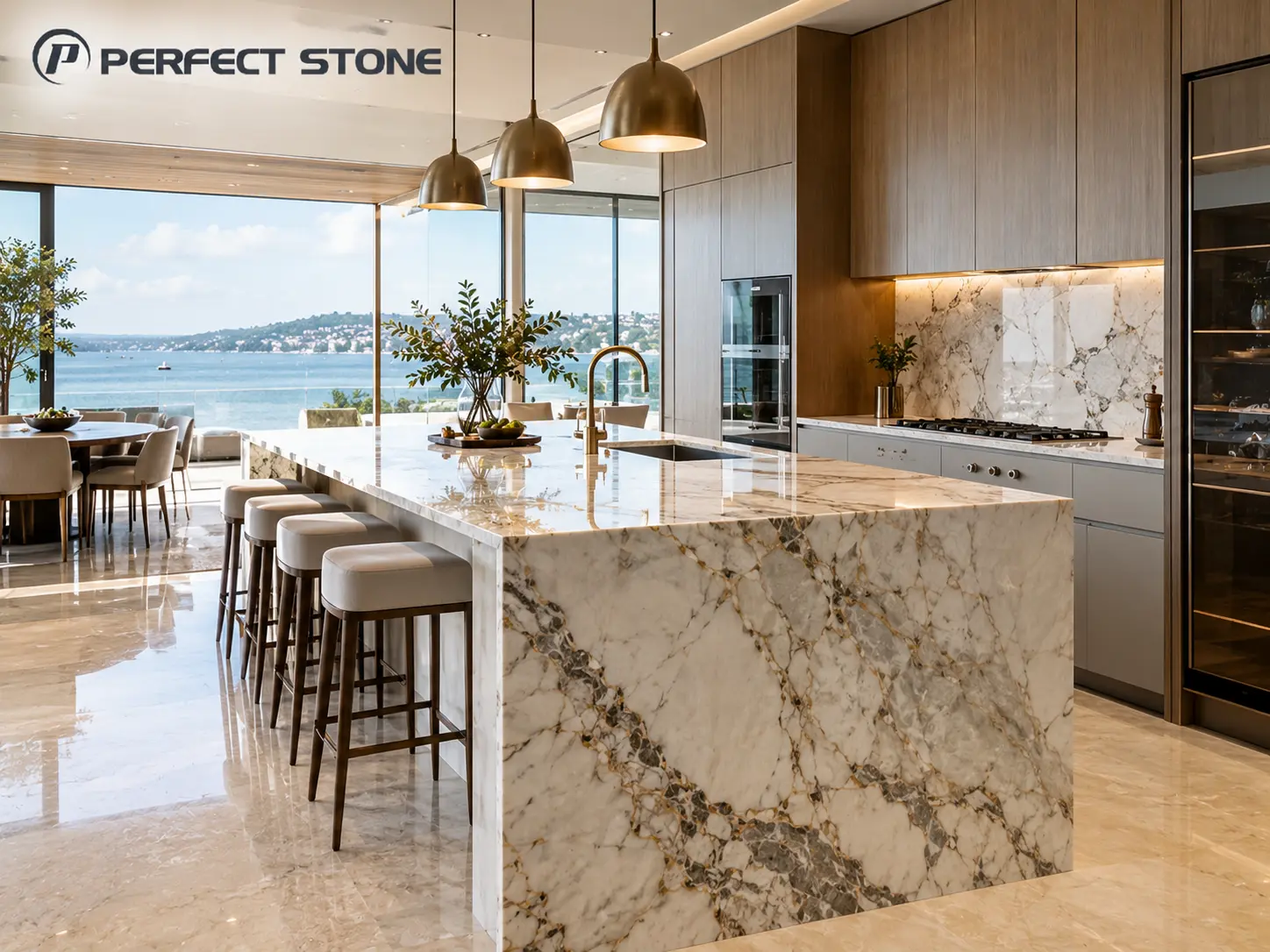
In open-plan Australian homes, a kitchen island can be visible from the dining area, living room, and entryway. A carefully selected stone surface can connect these areas through colour, texture, and visual rhythm. Waterfall edges, book-matched panels, and full-height stone splashbacks can make the island a central design feature.
Large-format applications require more than attractive stone. Slab dimensions, vein direction, seam location, cut-outs, edge details, transport access, and cabinet support all affect the finished result. A design that looks simple in a rendering may require complex fabrication and careful slab planning.
Connecting Kitchens, Bathrooms, and Living Spaces
Using related natural stone in kitchens, bathrooms, shelving, side tables, and selected furniture elements can create a coordinated interior. The same material does not have to appear everywhere. A restrained approach may use a dramatic kitchen island, quieter bathroom surfaces, and smaller decorative details that repeat the stone's colours.
For projects that extend beyond horizontal benchtops, marble furniture can help connect stone finishes across coffee tables, side tables, console tables, and other interior features. These pieces should be selected with their intended use in mind, particularly where acidic drinks, sharp objects, or frequent contact may affect the surface.
Marble Benchtops: Elegant Appearance and Practical Considerations
Why Marble Remains a Luxury Design Choice
Marble is a natural stone formed through the metamorphism of carbonate-rich rocks. Its appearance can range from quiet white and cream backgrounds to dramatic grey, green, brown, or dark surfaces with contrasting veins. This broad visual range makes marble suitable for classic, contemporary, minimalist, and transitional interiors.
Marble benchtops are often chosen for kitchen islands, bathroom vanities, decorative splashbacks, and lower-use preparation areas where visual character is a priority. The final appearance depends on the particular quarry material, mineral structure, finish, and slab selection. Polished marble can appear brighter and emphasise colour, while honed finishes generally create a softer, less reflective appearance.
Etching, Staining, and Scratching
Marble is commonly calcium-carbonate-rich, which makes it sensitive to acidic substances. Lemon juice, vinegar, wine, and some acidic cleaners can react with the surface and create dull marks known as etching. Etching is a chemical surface change, not simply a stain, and applying a penetrating sealer does not make marble acid-proof.
Staining is a different issue. Oils, coloured liquids, and other substances may penetrate a porous stone if they remain on the surface. The likelihood depends on the exact marble, finish, exposure time, and care routine. Scratches can also occur during food preparation or when abrasive materials are dragged across the benchtop.
For households that cook frequently, the practical response is to use chopping boards, clean spills promptly, avoid harsh chemicals, and follow a stone-specific maintenance plan. Buyers who expect a flawless surface with minimal care may find marble less suitable for the busiest preparation zones.
Where Marble Works Best
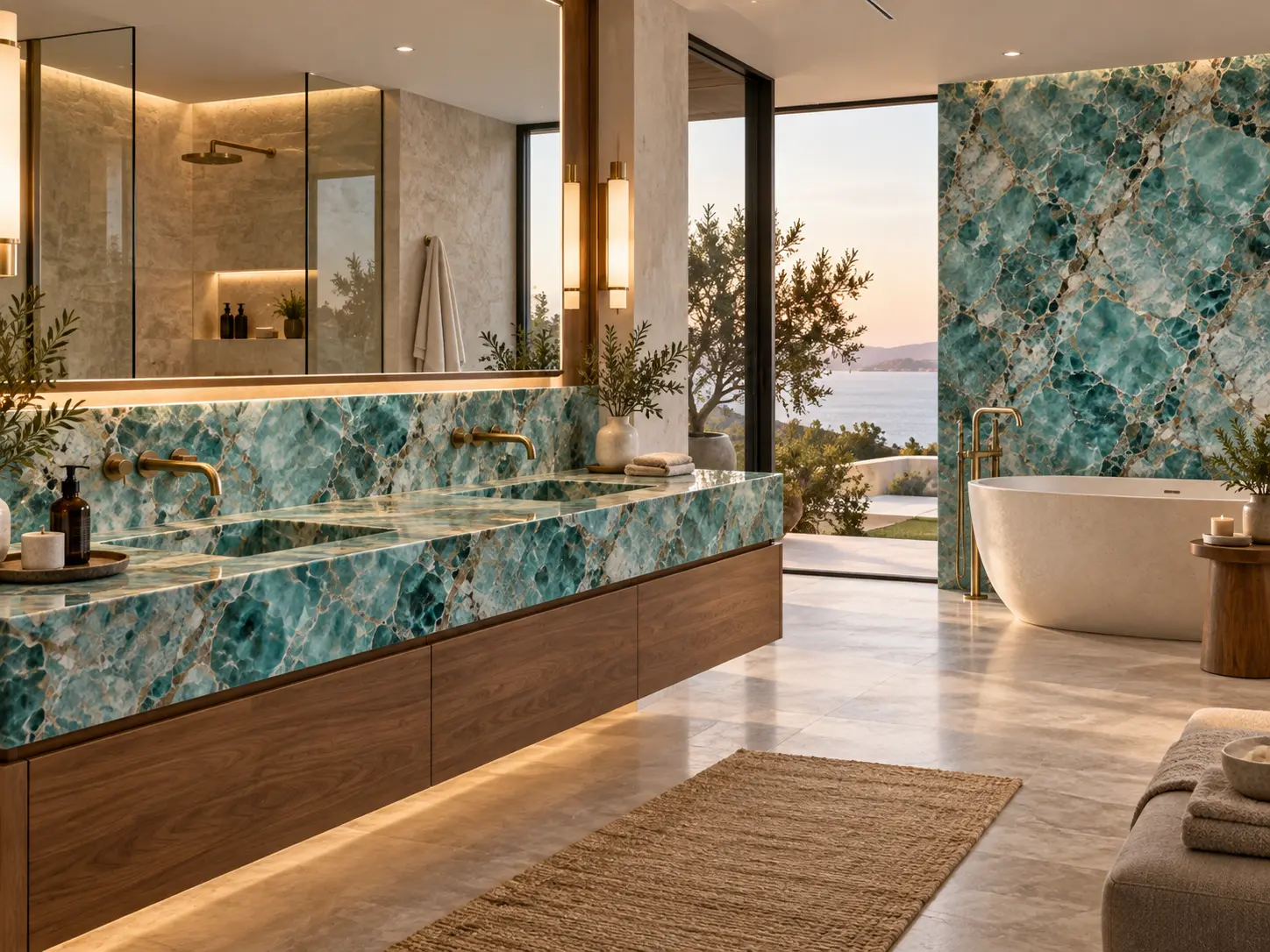
Marble can be a strong choice for statement islands, entertaining areas, bathroom vanities, decorative shelves, and other locations where its distinctive appearance justifies the maintenance requirements. In bathrooms, users should still consider exposure to cosmetics, toiletries, hair products, and cleaning chemicals.
For kitchens with heavy daily use, marble can remain an option if the homeowner accepts the possibility of etching and gradual surface changes. A honed finish may make some marks less conspicuous than a highly reflective surface, but it does not eliminate chemical sensitivity or guarantee stain resistance.
When Marble May Not Be the First Choice
Marble may not be the most practical selection for a household that regularly leaves acidic liquids on the counter, cuts directly on the surface, or expects the benchtop to remain unchanged for years. The same concern applies to commercial environments where multiple users may not follow the care instructions.
Before ordering, ask the supplier about the exact stone's absorption characteristics, finish, recommended sealer, cleaning requirements, and repair options. General descriptions such as “premium marble” or “luxury-grade marble” are not substitutes for material-specific information.
Quartzite Benchtops: Natural Pattern with Performance Potential
What Is Natural Quartzite?
Natural quartzite is a metamorphic rock formed from quartz-rich sandstone under heat and pressure. Its mineral composition and geological history differ from marble, even when the two materials have similar colours or vein patterns. Commercial names can sometimes be confusing, so buyers should confirm the actual stone identity rather than relying only on a marketing label.
Quartzite benchtops are popular for kitchens where buyers want a natural surface with strong visual movement and potentially better resistance to scratching than many marble varieties. Some quartzite slabs feature subtle backgrounds, while others display bold veins that work well on islands and feature walls.
Not every slab sold commercially as quartzite has identical properties. Mineral composition, weathering, fractures, treatments, and fabrication history can influence performance. Where the stone's identity or suitability is uncertain, ask for a petrographic description or relevant laboratory documentation.
Hardness, Heat, and Everyday Durability
Quartz is a relatively hard mineral, commonly rated around 7 on the Mohs mineral-hardness scale. That figure describes the mineral quartz, not an automatic performance rating for every slab marketed as quartzite. Natural rock contains different minerals and structures, and hardness alone does not establish resistance to impact, cracking, staining, or thermal shock.
Quartzite may provide a useful balance of natural veining and scratch resistance, but buyers should not assume it is indestructible. A hard stone can still fracture at a weak point, chip at an exposed edge, or be damaged by an impact. Hot cookware can also create risks through thermal shock, particularly where a slab contains fissures or has been exposed to abrupt temperature changes.
Use trivets, avoid striking edges, and ask the fabricator about support requirements around sinks, cooktops, overhangs, and narrow sections. For a premium installation, stone selection and fabrication quality should be assessed together.
Design Applications for Quartzite Benchtops
Quartzite can suit busy family kitchens, large islands, waterfall edges, and contemporary interiors where the owner wants natural movement with a practical everyday surface. The suitability of a particular slab still depends on testing, its mineral structure, and the manufacturer's or supplier's care guidance.
Buyers comparing natural quartzite with manufactured alternatives should clarify the material category before ordering. The word “quartz” can refer to a mineral, natural stone, or a manufactured surface product. Those products should not be treated as interchangeable because their composition, manufacturing process, performance, and regulatory status may differ.
For projects that require a comparison between natural stone and manufactured surface options, review the specifications of quartz surfaces alongside the exact natural-stone slab being considered. Confirm whether a product is natural stone, resin-bound engineered material, porcelain, or another surface category before comparing care instructions or compliance requirements.
Potential Limitations of Quartzite
Quartzite is not automatically maintenance-free. Some slabs may require sealing, and their susceptibility to staining depends on the specific stone and finish. Certain materials marketed as quartzite may contain mineral bands or areas that behave differently across the same slab.
Availability, colour consistency, fabrication complexity, and slab yield can also affect the final project. Dramatic veining may require more planning to align across seams or waterfall edges. Buyers should approve the actual slab layout before fabrication begins and ask whether the selected stone has been tested or assessed for the intended application.
Marble vs Quartzite Benchtops: Which Is Better?
Side-by-Side Material Comparison
The most useful comparison is not simply which stone is more luxurious. It is which material better matches the way a particular household uses its kitchen, the visual effect the designer wants, and the level of maintenance the owner is willing to accept.
| Decision Factor | Marble | Natural Quartzite |
|---|---|---|
| Visual character | Classic veining and varied colours | Often strong mineral movement and varied patterns |
| Scratch resistance | Often more vulnerable to scratching | Often stronger, depending on the slab |
| Acid sensitivity | Typically sensitive to acidic substances | Depends on mineral composition; verify the exact material |
| Stain resistance | Depends on porosity, finish, exposure, and care | Depends on porosity, finish, and slab characteristics |
| Sealing | May be recommended for the specific stone | May be recommended for the specific stone |
| Daily care | Prompt spill response and acid avoidance are important | Routine cleaning and sensible protection remain necessary |
| Best-fit priorities | Appearance and willingness to maintain the surface | Natural pattern with potentially stronger scratch resistance |
Note: This table is a general selection guide, not a guarantee of the performance of any particular slab. Ask for stone-specific information and test documentation when available.
Which Stone Is Better for a Busy Family Kitchen?
For households with frequent cooking, children, and continuous food preparation, quartzite may be worth evaluating first when scratch resistance is a major priority. The decision should still depend on the exact slab, its stain behaviour, and the supplier's recommendations.
Marble can also work in a busy home if the owner accepts that etching and signs of use may develop. A realistic maintenance plan is more useful than choosing a stone based on an assumption that it will never change.
Which Stone Is Better for a Luxury Statement Island?
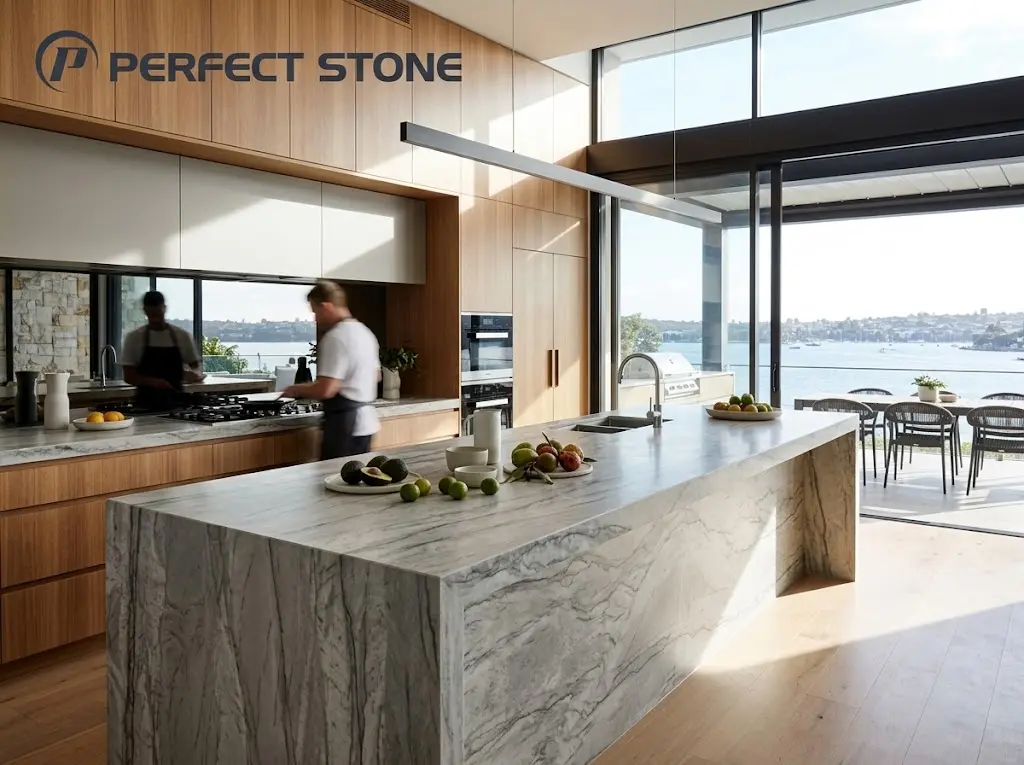
Marble may be preferred when the design calls for a particular classic vein pattern, while quartzite may be favoured when the buyer wants dramatic natural movement with a different performance profile. Neither choice should be made from a photograph alone.
Ask the fabricator to plan the island using the actual slab dimensions. Review vein direction, seam placement, cut-outs, waterfall panels, and the location of any natural fissures. For projects involving custom shapes, integrated stone details, or coordinated furniture elements, custom marble fabrication may be relevant to the design brief. Confirm the scope of work, tolerances, finish, and installation responsibilities before approval.
Technical Parameters Buyers Should Check Before Ordering
Water Absorption and Bulk Density
Visual appearance alone cannot establish how a stone will perform. Water absorption and bulk density are measurable properties that can help describe a natural stone's physical characteristics. Lower water absorption may indicate lower liquid uptake under the conditions of a specific test, but it does not independently guarantee stain resistance or eliminate the need for appropriate care.
ASTM C97/C97M provides test methods for absorption and bulk specific gravity of dimension stone. Buyers should ask whether the supplier has relevant test results for the actual material or a representative batch, and whether the test method and units are clearly identified.
Flexural Strength, Hardness, and Fabrication Quality
Flexural strength helps describe how a stone specimen responds to bending under a defined test. ASTM C880/C880M is a recognised test method for flexural strength of dimension stone. Test results should be interpreted in the context of the specimen, stone type, thickness, orientation, and test conditions.
Mohs hardness is a comparative mineral scale, not a direct measurement of benchtop impact strength or structural safety. A stone with hard minerals may still contain fractures or weak zones. Installation design, edge geometry, cabinet support, cut-outs, and transport procedures remain essential to the finished product's reliability.
Technical Data Table: What to Request from a Supplier
| Parameter | Why It Matters | Buyer Action |
|---|---|---|
| Water absorption | Helps assess liquid uptake under defined test conditions | Request a reported value, test method, and units |
| Bulk specific gravity or density | Helps describe physical characteristics and inform planning | Confirm the reported measure and relevant specimen details |
| Flexural strength | Provides information about bending performance in a defined test | Request applicable test results where relevant to the design |
| Stone identification | Reduces confusion between similar-looking commercial materials | Ask for a clear material description and supporting documentation |
| Slab dimensions and thickness | Affects layout, seams, overhangs, and fabrication yield | Confirm actual slab measurements before cutting |
| Finish and treatment | Influences appearance, cleaning, and care requirements | Record the approved finish and recommended maintenance process |
Important scientific-data note: No universal absorption, density, or flexural-strength value should be assigned to all marble or quartzite. Results vary by geological source and specimen. Use actual supplier documentation or accredited laboratory testing rather than invented average figures. A test result is meaningful only when the method, units, and tested material are clear.
Thickness, Slab Size, and Edge Profiles
Common nominal slab thicknesses in the natural-stone market include approximately 20 mm and 30 mm, but availability varies by supplier and material. These dimensions are examples of common commercial formats, not universal requirements or proof that a particular installation is structurally suitable.
Thickness selection should be coordinated with the design, support system, overhang dimensions, cut-outs, edge profile, and applicable installation guidance. A thicker edge may be created through a built-up detail rather than a single thicker slab. The fabricator should explain the construction method and how the visible joints will be finished.
Natural Stone Benchtop Maintenance for Australian Homes
Daily Cleaning and Spill Response
Use a soft cloth and a cleaner approved for the specific stone. A pH-neutral stone cleaner is a sensible starting point for many natural stone surfaces, but the supplier's instructions should take priority where they differ. Avoid assuming that a product safe for ceramic tiles or general household surfaces is also suitable for marble.
Wipe up acidic liquids, oils, coloured sauces, and other spills promptly. Do not leave wet cloths, containers, or chemical products on the surface for extended periods. Use chopping boards for food preparation and avoid abrasive pads that may dull or scratch the finish.
Sealing: What It Can and Cannot Do
Some marble and quartzite surfaces benefit from an appropriate penetrating sealer. Whether sealing is needed, which product is suitable, and how often it should be reapplied depend on the stone's absorption characteristics, finish, use, and sealer instructions.
A sealer can help reduce the likelihood of some staining, but it does not make a surface completely stain-proof. It does not prevent marble from reacting with acidic liquids, and it cannot repair cracks or compensate for poor fabrication. Ask the supplier for written care instructions specific to the chosen slab.
Heat, Impact, and Edge Protection
Do not treat natural stone as immune to sudden temperature changes. Use trivets or heat-resistant mats under hot cookware, and avoid direct impact near unsupported edges, sink cut-outs, and narrow sections. Confirm that the cabinetry and supports are appropriate for the finished stone's weight and configuration.
In bathrooms, protect the surface from unsuitable cleaners and products that may leave stains or cause chemical damage. Consistent, appropriate care helps preserve the appearance of the installation without promising that natural stone will remain unchanged throughout its service life.
Australian Regulations and Safety Considerations
Understand the Engineered Stone Restrictions
Australian buyers should distinguish natural marble and natural quartzite from manufactured surface products that may fall within the definition of engineered stone. Under the Australian framework, the domestic prohibition on manufacturing, supplying, processing, and installing engineered stone benchtops, panels, and slabs took effect on 1 July 2024. The import prohibition for relevant engineered stone benchtops, panels, and slabs took effect on 1 January 2025.
The legal definition is specific and includes criteria relating to artificial composition and crystalline silica content. Certain products, including specified porcelain and sintered stone products without resin, are excluded from the definition described by the relevant authorities. Product names alone are not sufficient to establish whether a material is prohibited or exempt.
For imported stone products, buyers and importers should verify the composition, intended use, documentation, and applicable import requirements before shipment. Consult the Australian Border Force and the relevant state or territory work health and safety regulator where a material's status is uncertain.
Natural Stone Fabrication Still Requires Silica Risk Controls
The engineered stone prohibition does not mean that processing all other stone materials is risk-free. Natural stone can contain crystalline silica, and cutting, grinding, drilling, or polishing can generate hazardous respirable dust. Safe Work Australia advises businesses to manage risks associated with crystalline silica across relevant materials and work activities.
Stone fabricators should follow applicable work health and safety requirements and use effective risk controls, such as suitable wet methods, dust extraction, exposure assessment, and appropriate protective measures. Buyers should choose professional fabricators who can explain their safety processes rather than attempting to cut or modify stone without suitable training and equipment.
Coordinate Compliance and Installation Responsibilities
For residential projects, the builder, designer, fabricator, installer, and supplier should agree on the material specification, installation details, and documentation responsibilities. Requirements can vary according to jurisdiction, project type, and the material being installed. This article is general purchasing guidance, not legal advice or a substitute for checking current official requirements.
What Affects Natural Stone Benchtop Pricing?
Stone Selection and Slab Availability
Natural stone pricing depends on the particular material, quarry source, colour, pattern, slab size, availability, and quality selection. Rare colours or highly distinctive vein patterns may have limited supply. Two slabs with the same commercial name can also differ in visual appeal and usable yield.
Buyers should compare quotations on a like-for-like basis. Confirm whether the quote includes slab material, templating, fabrication, edge treatment, sink and cooktop cut-outs, transport, installation, sealing, and waste. A low headline price may exclude important work that appears later as a variation.
Fabrication Complexity and Installation
Waterfall edges, book-matched surfaces, curved details, mitred edges, drainage grooves, and large cut-outs can increase labour and material requirements. The actual cost depends on the design and fabricator's capabilities. Site access, lifting requirements, cabinet readiness, and the distance between the workshop and property can also affect the installation process.
Before approving the quote, confirm the number and location of seams, the slab layout, the final edge profile, and how any visible natural fissures will be handled. Ask who is responsible if the site dimensions change after templating or if the approved slab cannot produce the agreed layout.
Lifecycle Value and Maintenance Expectations
The lowest initial quotation is not necessarily the best value. Buyers should consider how well the material matches daily use, the expected care routine, repair options, and the cost of correcting a poor installation. Marble may justify its selection through appearance for one household, while a different household may value the practical characteristics of a particular quartzite more highly.
Value is best assessed through transparent specifications and a realistic understanding of the material. Avoid choosing a stone based only on a claim that it is “maintenance-free,” “stain-proof,” or “indestructible.” Such broad statements do not replace stone-specific evidence.
Common Mistakes When Buying Marble and Quartzite Benchtops
Choosing from a Small Sample or Catalogue Image
A small sample cannot show all the variation across a full slab. Request current images of the actual slab and review the proposed cutting layout. This is especially important for book-matched panels, waterfall edges, and long islands where vein continuity affects the visual result.
Confusing Natural Quartzite with Other Surface Products
Natural quartzite, manufactured quartz surfaces, porcelain, and other slab products are different material categories. They should not be assumed to have the same composition, care requirements, or legal status. Ask for the material's precise description and supporting documentation before placing an order or importing it into Australia.
Assuming Sealing Makes Marble Acid-Proof
Sealing may reduce the likelihood of some stains, but it does not stop the chemical reaction between marble and acidic substances. Buyers should understand the difference between etching and staining and choose a care routine that reflects the stone's properties.
Ignoring Fabrication and Support Details
Even a premium slab can perform poorly if it is inadequately supported, handled incorrectly, or cut around vulnerable areas without proper planning. Review cabinet support, overhangs, cut-outs, edge design, seams, and installation access before fabrication starts.
How to Choose a Natural Stone Supplier in Australia
Questions to Ask Before Ordering
A reliable supplier should provide clear information about the stone, slab availability, dimensions, finish, care instructions, and relevant technical documentation. Buyers should also ask how slab selection, fabrication, transport, installation, and defects are handled.
- What is the exact stone type and commercial description?
- Can I inspect the actual slab or receive current, clearly identified photographs?
- Are technical test reports available for the selected material?
- What cleaning products and sealing process are recommended?
- How will the slab be laid out around seams, cut-outs, and waterfall edges?
- What is included in the quotation, and which costs are excluded?
- Who is responsible for templating, installation, transport, and after-sales support?
- What documentation is available to verify material composition and import compliance where relevant?
Manufacturer, Factory, and Wholesale Sourcing Considerations
For architects, builders, fabricators, developers, and wholesale buyers, sourcing directly from a stone manufacturer, processor, or factory may improve access to slab information, production planning, and coordinated supply. However, factory-direct purchasing is not automatically cheaper or more reliable. Freight, packaging, breakage risk, customs requirements, minimum order quantities, inspection arrangements, and local fabrication all affect the total project cost.
When comparing a natural stone benchtop manufacturer, a marble slab supplier, or a quartzite slab supplier, assess traceability, quality control, communication, sample approval, and the supplier's ability to meet the project's dimensions and schedule. For wholesale orders, document acceptable variation, inspection criteria, packing standards, shipment terms, and the process for handling damaged or non-conforming materials.
For a residential renovation, a local fabricator may offer more direct control over templating and installation. For a multi-property development or repeat commercial project, a coordinated supply arrangement may be more suitable. The right sourcing model depends on order volume, technical complexity, project location, and the buyer's ability to manage logistics.
Future Trends in Luxury Natural Stone Benchtops
Natural Veining and Large-Format Islands
Luxury interiors continue to use expressive natural materials as focal points. Large islands, waterfall ends, book-matched splashbacks, and coordinated bathroom surfaces can make the stone's pattern an intentional part of the architecture. These designs require careful slab selection and fabrication planning, not just a visually appealing material.
Material Transparency and Practical Performance
Buyers increasingly benefit from clear information about stone identity, care requirements, technical properties, and supply-chain responsibilities. For trade buyers, documented specifications can help reduce disputes and improve consistency across projects. For homeowners, transparent information makes it easier to compare quotations and understand the long-term implications of a material choice.
Long-Term Design Rather Than Short-Lived Styling
Natural stone can contribute to a lasting interior when its colour, pattern, and maintenance needs suit the building and the people using it. Instead of selecting a dramatic slab solely because it is fashionable, consider whether the surface will work with the cabinetry, flooring, lighting, and expected lifestyle over time.
Final Verdict: Choosing the Right Natural Stone Benchtop
Choosing between marble and quartzite is a balance between design intent, performance, care expectations, and project requirements. Marble can be an excellent option for homeowners who value classic veining and accept the possibility of etching and visible wear. A suitable quartzite may be preferable when stronger scratch resistance is a priority, provided its identity and characteristics are verified.
For stone benchtops Australia buyers, the most reliable process is to inspect the actual slab, request relevant technical information, compare complete quotations, and confirm the installation details before fabrication. No single material is best for every home, and no general stone label can replace an assessment of the exact product.
Whether you are planning a statement kitchen island, a refined bathroom vanity, or a multi-property project, start with the way the surface will be used. Then match that use to the stone's verified characteristics, the quality of the fabrication, and the maintenance routine you can realistically follow. A well-informed selection is more likely to deliver the intended balance of visual impact, everyday usability, and long-term value.
Frequently Asked Questions About Natural Stone Benchtops
1. What is the best natural stone for kitchen benchtops in Australia?
The best natural stone depends on the household's cooking habits, preferred appearance, maintenance expectations, and budget. Marble is valued for its distinctive veining and refined appearance, but it is generally sensitive to acids that can cause etching. Natural quartzite may offer stronger scratch resistance in many cases, although its performance varies by slab. Before ordering, inspect the actual material, confirm its identity, and request relevant technical information and care instructions.
2. Are marble benchtops suitable for everyday kitchen use?
Yes, marble benchtops can be used in everyday kitchens when homeowners understand their limitations and follow an appropriate care routine. Acidic foods and drinks can etch the surface, while oils and coloured liquids may stain some stones. Use chopping boards, clean spills promptly, avoid unsuitable cleaners, and follow the supplier's sealing recommendations. Households that want a surface to remain visually unchanged with very little maintenance should compare other materials before making a final decision.
3. Are quartzite benchtops better than marble?
Quartzite may be the better choice for buyers who prioritise scratch resistance while retaining the appearance of natural stone. Marble may be preferable when its particular colour, veining, or classic aesthetic is central to the design. Neither material is automatically superior in every respect. Stone composition, fissures, porosity, finish, fabrication, and installation affect real-world performance, so buyers should verify the characteristics of the actual slab instead of relying only on general material descriptions.
4. Do natural stone benchtops need sealing?
Some natural stone benchtops benefit from a suitable sealer, but the requirement depends on the specific stone, its absorption characteristics, finish, use, and the product manufacturer's guidance. Sealing can help reduce the risk of certain stains, but it does not make a surface completely stain-proof or protect marble from acid etching. Ask the supplier which sealer is suitable, how it should be applied, and what maintenance schedule is recommended for the selected slab.
5. How can I choose a reliable natural stone benchtop supplier in Australia?
Choose a supplier that can identify the stone clearly, provide access to actual slab images or inspection, explain care requirements, and share relevant technical documentation where available. Obtain a detailed quotation covering material, fabrication, cut-outs, edge treatments, transport, installation, and exclusions. Ask how the supplier manages slab variation, defects, and after-sales issues. If importing materials, verify composition and applicable Australian import and work health and safety requirements before shipment.
How to Match Natural Stone Benchtops to the Right Project
How should a buyer start?
Begin with the intended application, daily usage, design direction, and maintenance expectations. Inspect the actual slab, confirm the material identity, and compare technical documentation and complete project quotations before approving fabrication.
Why do marble and quartzite require different decisions?
Marble is often selected for its classic visual character, but its carbonate-rich composition commonly makes it sensitive to acids. Natural quartzite may offer stronger scratch resistance, although slab composition and quality still matter. Neither material should be treated as universally maintenance-free or damage-proof.
What should buyers evaluate beyond appearance?
Review absorption information, relevant strength testing, slab dimensions, finish, natural fissures, support requirements, fabrication details, care guidance, and the supplier's documentation. For Australian projects, also confirm that the material is correctly identified and that relevant import and work health and safety requirements are met.
Material fit by product direction
Legend: ●●● = Primary; ●●○ = Strong Option; ●○○ = Depends on Workflow; — = Usually Not First Choice.
This matrix is a qualitative material-fit guide, not statistical data, measured performance scores, or probability estimates. Actual suitability depends on the specific stone, finish, fabrication, installation, and usage conditions.
| Product or Application Direction | Marble | Natural Quartzite | Key Consideration |
|---|---|---|---|
| Luxury statement kitchen island | ●●● | ●●● | Slab layout, vein direction, edge details, and daily use |
| High-use family kitchen | ●○○ | ●●○ | Verify the exact stone and accept realistic care requirements |
| Classic luxury bathroom vanity | ●●● | ●●○ | Cosmetics, toiletries, cleaners, and water exposure |
| Coordinated stone furniture and interiors | ●●● | ●●○ | Weight, support, edge safety, and intended contact |
| Custom-cut or book-matched feature | ●●○ | ●●○ | Slab yield, vein continuity, fabrication tolerance, and waste |
| Low-maintenance surface expectation | — | ●○○ | No natural stone should be assumed maintenance-free |
Which options should buyers consider?
For a visually expressive luxury interior, compare marble and quartzite slabs against the cabinetry, flooring, lighting, and intended use. For a busy kitchen, place more weight on verified stone properties, practical maintenance, and fabrication planning. For multi-property or wholesale projects, also assess repeatability, slab availability, shipment protection, documentation, and quality-control procedures.
What should be confirmed before purchase?
Confirm the exact material, slab selection, dimensions, finish, edge profile, seam plan, cut-outs, support requirements, installation scope, cleaning instructions, and any relevant test reports. Where the product is imported into Australia, check its composition and applicable regulatory requirements before shipment rather than relying on a commercial product name alone.
What is the most useful next step?
Prepare a short project brief that records the intended application, approximate dimensions, preferred colours, finish, maintenance expectations, delivery location, and required timing. Share it with a qualified supplier or fabricator and request a slab-specific recommendation with a clear quotation. This approach helps buyers compare materials on practical suitability and total project requirements instead of appearance or headline price alone.
References
- Engineered Stone Ban. Safe Work Australia. Australian work health and safety guidance on the definition, prohibition, and permitted activities involving engineered stone.
- Engineered Stone. Australian Border Force. Australian import restrictions, documentation expectations, and guidance for importers and customs brokers.
- What Is Crystalline Silica? Safe Work Australia. Guidance on crystalline silica and the variation in silica content among natural and manufactured materials.
- Review of the Engineered Stone Prohibition. Safe Work Australia. Review published 4 December 2025, addressing the operation of the prohibition and risks associated with processing stone materials.
- ASTM C97/C97M, Standard Test Methods for Absorption and Bulk Specific Gravity of Dimension Stone. ASTM International.
- ASTM C880/C880M, Standard Test Method for Flexural Strength of Dimension Stone. ASTM International.
- Dimension Stone Design Manual. Natural Stone Institute. Technical reference covering dimension stone selection, detailing, and installation considerations.
- Care and Cleaning of Natural Stone. Natural Stone Institute. Professional guidance on cleaning, sealing, stain management, and routine maintenance of natural stone.