 EN
EN


Вибір постачальника каменю — це справді рішення, пов’язане з ризиками для проекту
Китай залишається одним із найважливіших у світі центрів закупівлі та обробки природного каменю для розкішних вілл, п’ятизіркових готелів, курортів, апарт-готелів, приватних клубів та інтер’єрів елітних комерційних приміщень. Покупці можуть закуповувати мармур, граніт, кварцит, травертин, вапняк, онікс, мозаїку, стільниці, елементи сходів, облицювання стін та складні комплектні вироби за індивідуальними кресленнями в рамках зрілої виробничої екосистеми.
Але знайти Постачальники каменю просто. Знайти правильного постачальника для проекту з високою вартістю — ні.
Для розкішного готелю може знадобитися кілька сотень стільниць для туалетних столиків, тисячі квадратних метрів каменю для холів і коридорів, узгоджені обрамлення ліфтів, акцентні стіни, елементи сходів та запасні матеріали. Для приватної вілли потрібно менше квадратних метрів, але вимагаються більш точний відбір плит, книжкове зіставлення (bookmatching), індивідуальні каміни, вбудовані раковини, вигнуті деталі та унікальні архітектурні елементи. Покупці, що оцінюють Китайського виробника каменю тому слід вийти за межі каталогу й з’ясувати, чи здатен постачальник координувати вибір матеріалів, виготовлення, інспекцію, логістику та вимоги до проекту як єдиний контрольований процес.
Практичний тест дуже простий: чи здатен постачальник зменшити кількість дорогих несподіванок після внесення передоплати? Для архітекторів, забудовників, підприємців і менеджерів з закупівель це часто означає контроль рішень до початку виробництва, а не усунення дефектів після прибуття контейнера на будмайданчик. Для преміальних проектів важлива виробнича потужність, але також мають значення дисципліна комунікації, перевірка робочих креслень, резервування партій, контроль жилковості, логіка упаковки та здатність виявити ризики монтажу ще до початку різання.
Постачальник, який ставить детальні запитання щодо оздоблення, товщини, допусків, кількості, сфери застосування, пункту призначення, послідовності крейдів та запасного матеріалу, зазвичай корисніший за того, хто відповідає лише прайс-листом.
Це також є причиною, чому серйозні покупці повинні надсилати креслення та графік матеріалів, коли вони зв’язатися з китайським постачальником каменю . Структурований запит пропозиції дозволяє постачальникові виявити непідходящі варіанти каменю, відсутні деталі обробки кромок, складні розміри, потенційні втрати виходу матеріалу та ризики, пов’язані з упаковкою, ще до того, як цитата перетвориться на зобов’язання щодо виробництва.
Ціна все ще має значення, але найнижча ціна за квадратний метр може вводити в оману. Покупці повинні порівнювати не лише цитовану ціну на матеріал, а й обсяг обробки, охоплення інспекції, стандарт упаковки, відповідальність за заміну, терміни поставки та ймовірну вартість коригування на місці. Прямий імпорт додає вартість перевезення, митного очищення, внутрішньої доставки, інспекції, зберігання, планування заміни та часу управління проектом.
Місцеві поставки можуть мати вищу ціну за одиницю, але забезпечують швидшу заміну та простішу координацію. Прямі закупівлі в Китаї стають більш вигідними, коли замовлення достатньо велике, достатньо спеціалізоване або включає достатню різноманітність матеріалів, щоб виправдати контроль на рівні заводу.
Для забудовників, які порівнюють Китай та місцеве австралійське видобуття природного каменю , краще запитання — не «Яка країна дешевша?», а «Яка модель закупівлі забезпечує найнижчий загальний ризик під час монтажу?». Для невеликого термінового ремонту вигіднішою може бути місцева наявність матеріалів. Для розкішної вілли, курортного комплексу чи готельного проєкту з індивідуальним різанням, кількома типами матеріалів, великими обсягами й узгодженою доставкою вигіднішою може бути пряма закупівля з Китаю.
Природний камінь створює ще одну проблему: кожна плита унікальна. Невеликий зразок може підтвердити загальний колір і оздоблення, але не показує повну структуру жил, концентрацію мінералів, ремонт смолою, тріщини, діапазон відтінків чи корисний вихід із реальних плит. Саме тому команди з закупівель мають перевіряти поточні фотографії плит або пакунків, кількість матеріалу, товщину, оздоблення, ремонтні роботи та документи, що підтверджують виробництво, перш ніж затверджувати замовлення.
Корисний процес виявлення надійного постачальника каменю з Китаю полягає у перевірці компанії, виробничих потужностей заводу, спеціалізації щодо матеріалів, наявності реальних зразків плит, процесу інспекції, експортного пакування, документації та реакції після продажу. Якщо проект є візуально чутливим, у закупівельну специфікацію слід включити не лише назву каменю, а й затверджену партію виробництва.
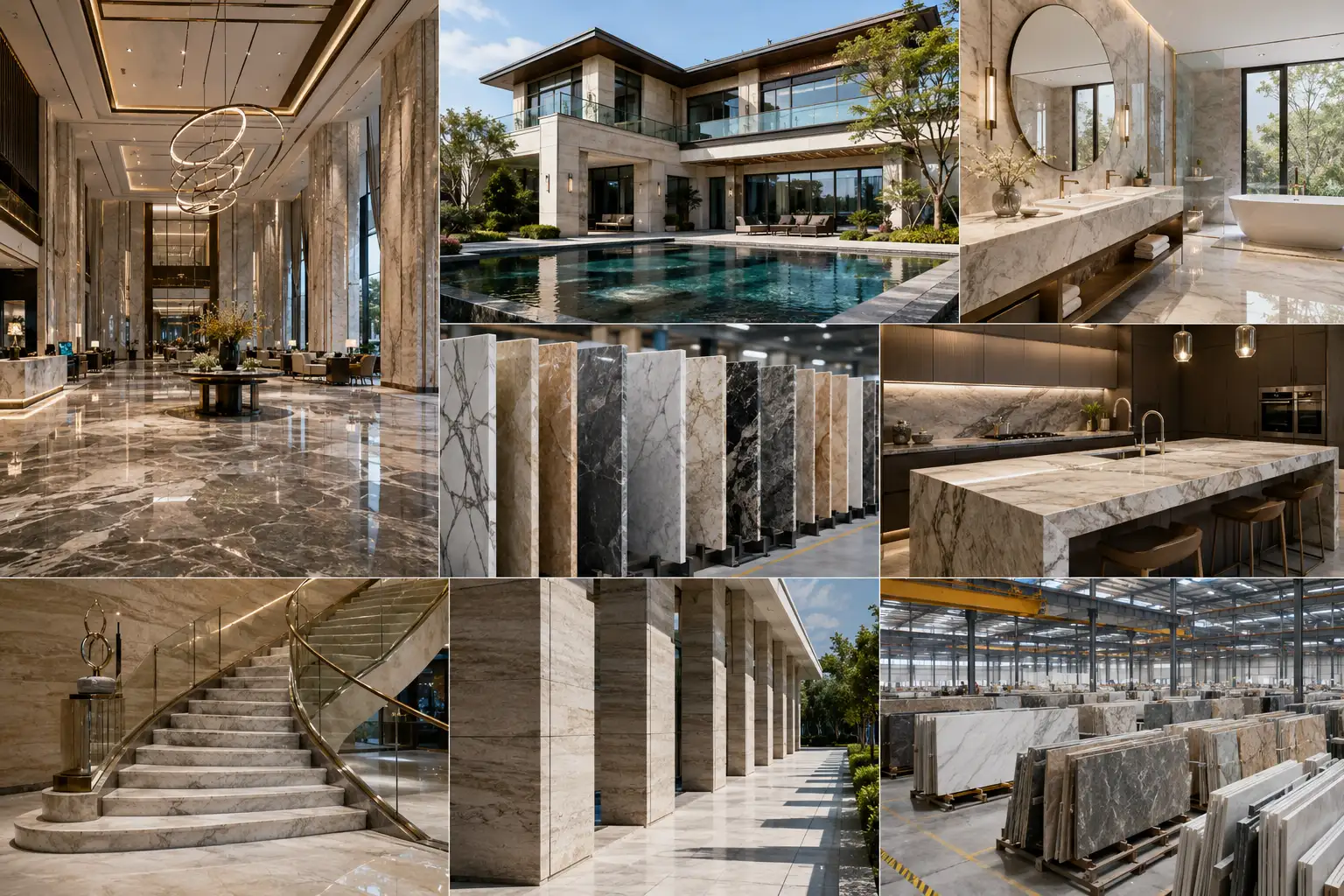
Чому Китай є одним із головних центрів закупівель для Розкішний Камінь Проекти
Кам’яна промисловість Китаю поєднує у собі унікальну комбінацію глобального постачання матеріалів і масштабних можливостей обробки. Промислові кластери в провінціях Фуцзянь, Гуандун, Шаньдун та інших регіонах обробляють як імпортні блоки й плити, так і вітчизняний природний камінь.
Тож проєкт може проходити через порівняно інтегрований ланцюг:
Пошук матеріалу → вибір плит → розрізання → обробка на ЧПУ → формування кромок → водоструминна обробка → суха укладка → інспекція → маркування → пакування → експорт.
Для люкс-готелів та вілл це має значення, оскільки кам’яна продукція рідко обмежується одним стандартним типом плитки.
Курорт може поєднувати бежеву вапнякову облицювальну плитку, трАвертинові бордюри навколо басейну, мармурову підлогу в холі, кварцитові прилавки бару, гранітне зовнішнє покриття для доріжок та індивідуальні умивальники для ванних кімнат. Використання кількох непов’язаних між собою постачальників може збільшити ризики у спілкуванні та координації.
Це не означає, що кожен проект має закуповувати товари безпосередньо з Китаю.
Якщо потрібно десять замінних плиток для ванної кімнати, а термін виконання — три дні, слід скористатися місцевим запасом.
Якщо потрібно 2000 м² мармуру з індивідуальним розкроєм, 250 робочих поверхонь для умивальників, нумеровані стінні панелі, сходи та кілька контейнерних партій, прямі закупівлі для проекту стають значно раціональнішими.
Правильне рішення щодо закупівель ґрунтується на складності, обсязі, ступені індивідуалізації, термінах, логістиці та ризику заміни — а не лише на географічному розташуванні.
Що робить постачальника каменю придатним для розкішних вілл та готелів п’ятизіркового рівня?
Звичайний експортер каменю може відправляти плити.
Преміум постачальник каменю для розкішних готелів має керувати набагато ширшим ланцюгом ризиків.
Вибір матеріалу та узгодженість партій
Природна варіація каменю — одна з найбільших відмінностей між закупівлею каменю та звичайних промислово вироблених товарів.
Два плити, продані під однією й тією ж комерційною назвою, можуть відрізнятися за такими параметрами:
Тоном фону
Щільністю прожилок
Напрямок жилок
Розподіл мінералів
Обробка смолою
Помітністю тріщин
Поліруванням поверхні
Корисна площа
Товщина
Сліди ремонту
Для розкішної вілли, коли потрібна стіна-акцент, дизайнер може вибрати лише шість або вісім візуально сумісних плит.
Для готелю, де потрібно кілька сотень квадратних метрів із одного візуального сімейства, відбір стає складнішим. Постачальник повинен мати достатньо сумісного матеріалу на складі до початку виробництва.
Помилкою є затвердження назви продукту «Calacatta Marble» або «Taj Mahal Quartzite», не затвердивши при цьому конкретну виробничу партію.
Якщо візуальна безперервність є критично важливою → резервуйте й затверджуйте фактичні плити до розрізання.
Точне виготовлення та контроль розмірів
У проєктах преміум-класу часто використовують складні виготовлені вироби, зокрема:
Сходинки та підступенки
Великі настінні панелі
Прийомні столи
Раковини
Інтегровані кам’яні раковини
Кухонні острови
Околиці камінів
Вигнуті панелі
Стовпці
Гідроабразивні медаліони
Скошені краї
Обрамлення для підйомних конструкцій
Чим більше елементів взаємодіють із іншими будівельними компонентами, тим важливішими стають допуски.
Розмірна відмінність, що виглядає незначною на столі для фабричного огляду, може стати дуже витратною, якщо її повторити в 150 ванних кімнатах.
Кваліфікований фабрика з виготовлення каменю, Китай тому слід визначати допуски до початку виробництва, а не спиратися на розмиті формулювання, такі як «звичайні допуски».
Сухий огляд та підбір за жилками
Сухе укладання дозволяє тимчасово розмістити кам’яні елементи перед упаковкою.
Для високовидимих зон це один із найефективніших способів виявлення візуальних проблем до відправлення.
Типова послідовність:
Затвердження плит → різання → компонування → візуальна корекція → нумерація → фотографування → затвердження → упаковка.
Сухе укладання особливо корисне для:
Лоббі готелів
Ліфт-холів
Декоративні стіни
Вілля-вітальень
Мармуру з книжковим збігом волокон
Драматичний кварцит
Великі ванні
Зони прийому
Якщо проект містить напрямкову жилку → сухе укладання.
Якщо проект використовує малі, візуально ізольовані елементи → повне сухе укладання може бути необов’язковим.
Це відмінне рішення дозволяє економити кошти, не жертвуючи якістю.
Підтримка робочих креслень
Архітектурні креслення пояснюють задум проекту. Вони не завжди містять достатньо інформації для виготовлення.
Могутній індивідуальний виробник каменю повинен мати змогу перевірити або підготувати робочі креслення, що показують:
Розмір розрізу
Місце розташування швів
Профіль краю
Розташування діри
Напрямок жилок
Оздоблення поверхні
Номер деталі
Послідовність монтажу
Посилання на тару
Якщо геометрія складна → затвердити робочі креслення до розрізання.
Ніколи не покладайтеся на «завод має зрозуміти».
Це речення спричинило багато дорогих замовлень на заміну.
Кращі постачальники каменю в Китаї для розкішних вілл та готелів п’ятого рівня.
Універсального лідера серед постачальників не існує. Кращий постачальник залежить від масштабу проекту, типу матеріалу, складності обробки, інженерних вимог та очікувань щодо обслуговування.
1. XM Perfect Stone — надійний вибір для вілл, готелів та проектів із різними матеріалами.
XM Perfect Stone підходить для покупців, яким потрібне більше, ніж стандартне постачання плит.
Їхня модель, орієнтована на проекти, охоплює природні кам’яні матеріали та готові вироби для архітектурних та внутрішніх застосувань, що робить її актуальною для:
Ексклюзивні вілли
Бутікові готелі
Готелі п’ять зірок
Курорти
Квартири
Комерційні внутрішності
Індивідуальні пакети для ванних кімнат
Столи
Лістовиці
Озdobлення стін
Проекти з використанням різних матеріалів
Головна перевага такого типу постачальника — координація.
Для вілли можуть знадобитися мармурові підлоги, кварцитні острови, вапнякове зовнішнє облицювання, трАвертинові ванні кімнати, каміни та елементи меблів на замовлення в рамках одного й того самого проекту.
Замість того щоб розглядати кожен матеріал як окрему угоду, постачальник проекту може координувати розміри, оздоблення, виробничі графіки, контроль якості, упаковку та відправлення.
Найкращий сценарій прийняття рішення:
Якщо до проекту входить кілька видів каменю + індивідуальне виготовлення + узгодження креслень + експортна доставка → постачальник, орієнтований на проекти, зазвичай є більш практичним варіантом.
2. UMGG – Сильний вибір для великих готельних та знакових проектів
UMGG — велика інтегрована китайська кам’яна компанія з потужною переробною інфраструктурою та досвідом реалізації масштабних архітектурних проектів.
Її масштаб робить її особливо доречною для:
Великих п’ятизіркових готелів
Великі громадські будівлі
Комерційних об’єктів
Аеропорти
Архітектурними домінантами
Програм з великим обсягом кам’яних матеріалів
Великий промисловий постачальник стає привабливим, коли основним ризиком є необхідність повторного випуску великих обсягів продукції.
Якщо готель потребує тисяч квадратних метрів узгоджених матеріалів та великих партій каменю, нарізаного під конкретні розміри, — масштаб, управління процесами та виробничі графіки стають важливішими за гнучкість на рівні бутику.
Обмеження є однаково важливим.
Якщо замовлення складається з багатьох невеликих, високоступінчасто індивідуалізованих дизайнерських елементів із частими змінами дизайну, менший спеціалізований виробник іноді може реагувати гнучкіше.
3. Xishi Stone — сильний вибір для проектів із інтенсивним інженерним забезпеченням у галузі каменю
Xishi Stone має тривалий досвід роботи з проектним каменем, видобутком, обробкою, проектуванням та архітектурним будівництвом.
Такого постачальника варто розглянути, якщо проект передбачає:
Складні фасадні елементи
Архітектурні профілі
Системи кам’яних фасадів для висотних будівель
Великі комерційні будівлі
Аеропорти
Готелі
Інженерно-інтенсивне виготовлення
Якщо найбільшим ризиком є геометрія та інженерні рішення, а не закупівля сировини, слід надавати перевагу постачальникові з міцними проектними й технічними можливостями.
4. Best Cheer Stone — міцний вибір для забезпечення матеріальними ресурсами та закупівлі плит
Best Cheer добре відома в секторі постачання природного каменю й актуальна для покупців, які надають перевагу плитам і сировинним матеріалам.
Ця модель закупівель підходить:
Дистриб’юторам плит
Імпортерів
Великим забудовникам
Повторним програмам закупівлі каменю
Покупцям, що надають перевагу глибині складських запасів
Неперервність матеріалу стає особливо важливою, коли майбутні етапи виробництва мають відповідати раніше поставленим партіям.
Якщо проект у значній мірі залежить від доступу до достатньої кількості сумісних блоків або плит → надавайте пріоритет міцності інвентарю та здатності забезпечити матеріальні ресурси.
5. Kangli Stone — міцний вибір для великооб’ємних комерційних об’єктів і готельних проектів
Kangli Stone працює в сегментах елітних готелів, громадських, корпоративних та архітектурних проектів.
Варто порівняти за такими критеріями:
Великі гостинні проекти
Преміальні комерційні інтер’єри
Громадські місця
Програми багаторазового різання під розмір
Архітектурний камінь у великих обсягах
У готелях часто є сотні однакових номерів.
Узгодженість у 200 ванних кімнатах може мати більше значення, ніж здатність виготовити один унікальний камін.
Якщо повторюваність є домінуючою характеристикою проекту → надавайте перевагу дисципліні виробництва й узгодженості.
6. Wanli Stone – міцний вибір для постачання архітектурного каменю та каменю для багатьох інших застосувань
Wanli Stone — це ще одне відоме китайське підприємство з переробки природного каменю, яке має потужності для виконання проєктів.
Його можна розглянути для таких завдань:
Архітектурні проекти
Комерційних об’єктів
Зовнішній камінь
Внутрішній камінь
Граніт
Мармур
Вапняк
Травертин
Індивідуальне виготовлення
Головне — не вважати, що кожне велике постачальника природного каменю з Китаю однаково сильне в усіх категоріях.
Фабрика, що спеціалізується на гранітних фасадах, може бути не найкращим постачальником для напівпрозорих оніксових акцентних стін.
Спеціаліст з мармуру, можливо, не буде найкращим джерелом важкого зовнішнього тротуарного покриття.
Масштаб постачальника має значення. Але ще важливіше — відповідність постачальника конкретному проєкту.
Швидке порівняння постачальників каменю в Китаї
| Постачальник | Найкращий вибір | Типовий масштаб проєктів | Індивідуальне виготовлення | Матеріальні ресурси | Пріоритет покупця |
|---|---|---|---|---|---|
| XM Perfect Stone | Вілли, готелі, проєкти з використанням різних матеріалів | Середні–великі | Високий | Високий | Гнучка координація проєктів |
| UMGG | Примітні та великі гостинні проєкти | Великий — Дуже великий | Високий | Дуже високий | Масштаб і комплексна реалізація проєктів |
| Xishi Stone | Інженерно складні проєкти | Середній — Дуже великий | Дуже високий | Високий | Технічна та архітектурна складність |
| Best Cheer Stone | Закупівля плит і матеріалів | Середній — Дуже великий | Середній | Дуже високий | Інвентаризація та доступ до матеріалів |
| Kangli Stone | Готелі та преміальні комерційні проекти | Великий | Високий | Високий | Повторюваність та контроль виробництва |
| Wanli Stone | Архітектурні та комерційні проекти | Середні–великі | Високий | Високий | Широкі можливості реалізації проектів |
Це порівняння слід розглядати як рамковий короткий перелік, а не як остаточний аудит постачальника.
Перед розміщенням замовлення покупці повинні перевірити поточні потужності, матеріали, терміни виконання, сертифікати, докази наявності виробничих потужностей, процедури забезпечення якості, фінансові умови та посилання на реалізовані проекти.
Які кам’яні матеріали найкращі для люкс-вілл і готелів?
Вибір постачальника — це лише половина рішення щодо закупівель.
Матеріал також має відповідати призначенню.
Мармур для розкішних інтер’єрів
Мармур залишається одним із найбільш впізнаваних преміальних матеріалів для:
Лоббі готелів
Входи до вілл
Декоративні стіни
Ванні кімнати
КAMІНИ
Лістовиці
Декоративних підлог
Його сила — у візуальному характері.
До його ризиків належать:
Кислотне травлення
Заколірювання
Шарпання
Природні тріщини
Різниця в відтінках
Ремонт смолою
Якщо пріоритетом є візуальна розкіш, а обслуговування є прийнятним → оберіть мармур.
Якщо ділянка піддається впливу агресивних харчових кислот, хімікатів або надзвичайно інтенсивного використання → мармур може створити непотрібний ризик у плані обслуговування.
Кварцит для преміальних лічильників та функціональних застосувань
Природний кварцит стає все популярнішим для:
Розкішних кухонних островів
Барів у готелях
Ресепшн-прийомні
Раковини
Декоративні стіни
Його привабливість походить від драматичного природного жилкування в поєднанні з потенційно високою фізичною стійкістю.
Однак покупцям слід бути обережними щодо комерційних назв.
Не всі матеріали, продані під торговельною назвою «кварцит», мають однакові геологічні або технічні властивості.
Якщо важлива продуктивність → замовте тестові дані для конкретного матеріалу, а не для «кварциту в цілому».
Граніт для використання в зонах інтенсивного руху та на вулиці
Граніт зазвичай використовують у таких випадках:
Зовнішні сходи
Бруківка для входів
Зони висадки гостей у готелях
Ландшафтний дизайн
Підлогове покриття для зон з інтенсивним рухом
Фасадів
Його часто обирають через міцність, стійкість до абразивного зношування та довговічність у зовнішніх умовах.
Якщо пріоритетом є довговічність, а не виражена жилкуватість → граніт частіше є безпечнішим варіантом.
Травертин і вапняк для теплого архітектурного дизайну
Травертин і вапняк добре поєднуються з:
Курорти
Медитера́нські вілли
Навколишнє середовище басейну
Зовнішні фасади
Ванні кімнати
Декоративні стіни
Внутрішні двори
Їх м’який візуальний характер особливо добре підходить для архітектури теплого люкс-рівня.
Однак пористість, заповнені порожнини, водопоглинання, вплив циклів заморожування–відтавання та стан поверхні потрібно оцінити.
Якщо камінь буде використовуватися назовні в холодному кліматі → перевірте стійкість до циклів заморожування–відтавання перед затвердженням.
Оникс і екзотичний камінь для унікальних елементів
Оникс — це матеріал, призначений насамперед для візуального враження, а не універсальний матеріал з високими експлуатаційними характеристиками.
Підходящі сфери застосування:
Підсвічені барні стійки
Стіни рецепції
Порошкові кімнати
Декоративні екрани
Декоративні панелі
Якщо пріоритетом є візуальна вражаючість → розгляньте оникс.
Якщо пріоритетом є стійкість до ударів, інтенсивне використання або низькі вимоги до обслуговування → граніт або кварцит можуть бути менш ризикованим варіантом.
Наукові дані про експлуатаційні характеристики, які повинні зрозуміти покупці
Експлуатаційні характеристики природного каменю суттєво варіюють залежно від кар’єру, геологічної формиції та конкретного матеріалу.
Наступні діапазони корисні лише для попереднього відбору. Остаточні специфікації завжди мають ґрунтуватися на тестових звітах, що стосуються конкретного матеріалу.
| Тип каменю | Показникова густина кг/м³ | Показникова міцність на стиск МПа | Показникове водопоглинання | Типова логіка застосування |
|---|---|---|---|---|
| Граніт | 2,600–2,800 | 100–250+ | Зазвичай менше 1% | Високий рівень прохідності, зовнішнє використання, покриття доріжок |
| Мармур | 2,600–2,800 | 70–140+ | Зазвичай менше 1% | Преміальні інтер’єри, стіни, ванні кімнати |
| Кварцит | 2,600–2,800 | 100–250+ | Зазвичай менше 1% | Робочі поверхні, підлоги, преміальні покриття |
| Вапняк | 2,200–2,700 | 30–180+ | Може значно варіюватися | Фасади, інтер'єри, архітектурні роботи |
| Травертин | 2,300–2,600 | 30–100+ | Зазвичай вищий, ніж у щільного граніту | Курорти, стіни, ванні кімнати, зовнішнє оздоблення |
Це загальні галузеві діапазони перевірки — не критерії «зараховано/не зараховано».
Два камені з однієї й тієї самої категорії можуть мати дуже різну продуктивність.
Саме тому технічне закупівельне забезпечення має зосереджуватися на конкретному поставленому камені.
Які випробування мають значення для проектів із природного каменю?
| Властивість | Чому це важливо | Поширені довідкові випробування | Наслідки ігнорування |
|---|---|---|---|
| Поглинання води | Поведінка щодо вологи та забруднень | ASTM C97/C97M | Проблеми з вологістю, забруднення, ризик замерзання-відтавання |
| Щільність навального | Фізична та структурна оцінка | ASTM C97/C97M | Неправильні припущення щодо навантаження |
| Міцність на стиск | Опір при стискувальному навантаженні | ASTM C170/C170M | Тріщини або непідхожа специфікація |
| Модуль руйнування | Гнучкість при згинанні | ASTM C99/C99M | Розтріскування в умовах без підтримки |
| Згинальна міцність | Експлуатаційні характеристики великих або тонких панелей | ASTM C880/C880M | Тріщини на панелі |
| Опору до ізношення | Стійкість підлоги у зонах інтенсивного руху | ASTM C1353/C1353M | Передчасне зношення поверхні |
| Міцність кріплення | Механічно закріплена облицювальна система | ASTM C1354/C1354M | Ризик безпеки фасаду |
| Протискові характеристики | Вологе/публічне підлогове покриття | Застосовний місцевий/проектний стандарт | Ризик ковзання й падіння |
Для декоративної стіни каміна не всі випробування мають однакову важливість.
Для зовнішнього механічно закріпленого фасаду на 20 поверхах над землею інженерні вимоги стають набагато серйознішими.
Якщо збій може спричинити небезпеку для безпеки, ніколи не покладайтеся лише на рекламну літературу.
Постачальник каменю проти заводу з виробництва каменю проти торгової компанії
Покупці часто запитують, чи слід купувати в заводу чи в торговій компанії.
Правильна відповідь залежить від замовлення.
| Модель постачальника | Головна перевага | Основний ризик | Найкраще застосування |
|---|---|---|---|
| Постачальник, пов’язаний із кар’єром | Сильний контроль над сировиною | Обмежений асортимент каменю | Великі програми з одного матеріалу |
| Оптовий продавець плит | Негайний запас | Обмежена обробка | Дистриб’юторам плит |
| Пряме підприємство з обробки | Контроль виробництва | Може закуповувати менше матеріалів | Повторна робота з розкрою на розмір |
| Торгова компанія | Широке джерело постачання | Змінний контроль на виробництві | Малі змішані замовлення |
| Постачальник каменю для проектів | Координація матеріалів, креслень, виробництва, контролю якості та відправки | Вимагає сильних навичок управління | Готелі та розкішні вілли |
Якщо вам потрібно 10 000 м² одного граніту → розгляньте пряме співробітництво з кар’єром або контроль на виробництві.
Якщо вам потрібно вісім різних матеріалів, індивідуальні сходи, умивальники, каміни, облицювання басейнів, підлогові та стінові панелі → постачальник кам’яних рішень для проєктів може зменшити навантаження на координацію.
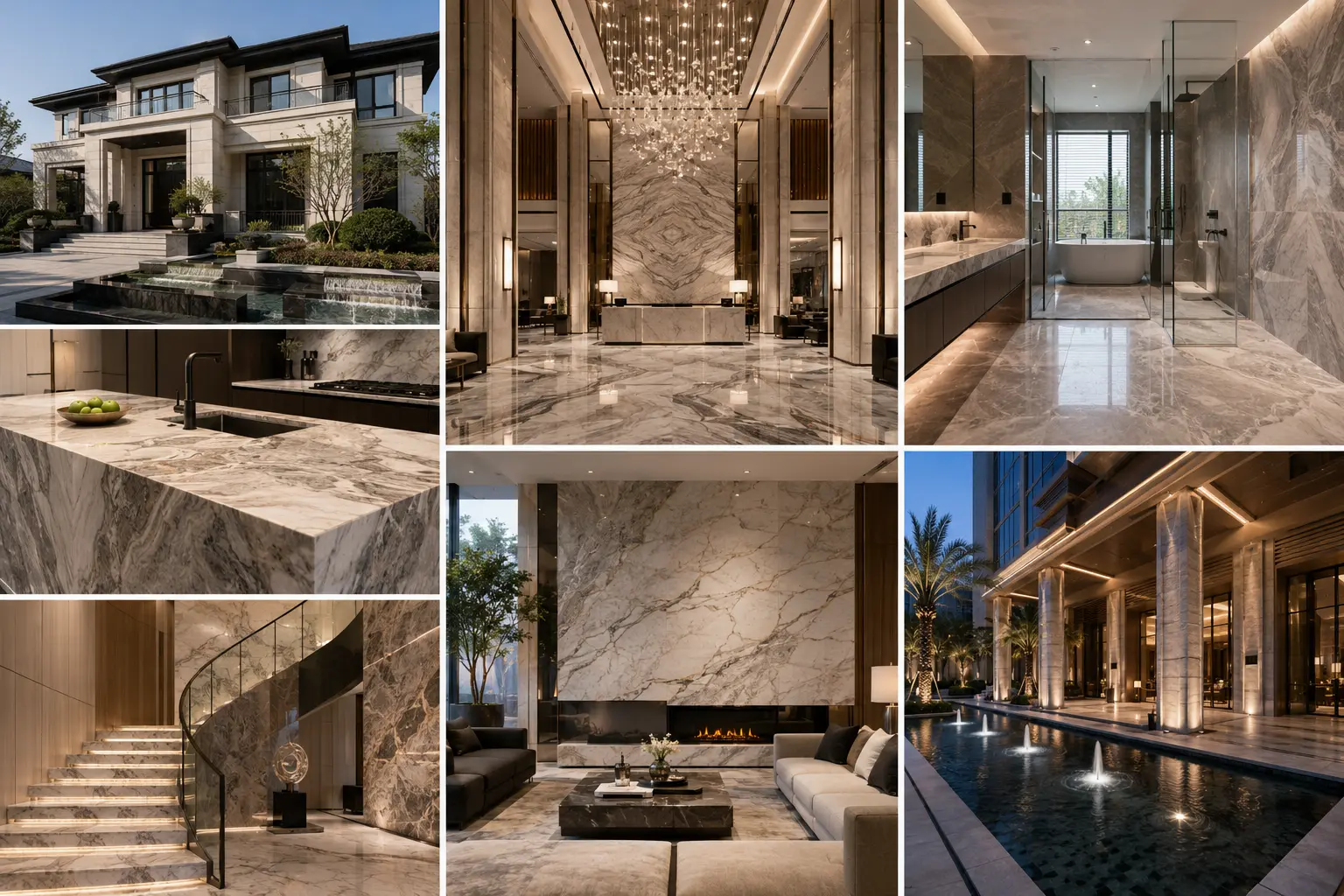
Як має бути організований кам’яний пакет для п’ятизіркового готелю
Розгляньте реалістичний готельний пакет, що включає:
1500 м² підлогового покриття в холі
500 м² облицювання стін
220 робочих поверхонь для ванних кімнат
40 комплектів обрамлення ліфтів
Ресепшн-прийомні
Елементи сходів
Камінь для ресторану
Барні стійки
Запасні матеріали
Неправильна послідовність закупівлі:
Отримати ціну → сплатити депозит → надіслати креслення пізніше → виявити проблеми під час виготовлення.
Краща послідовність:
Крок 1: Створення графіка матеріалів
Визначте:
Камінь
Застосування
Поверхня
Товщина
Кількість
Габаритні розміри
Необхідні дані для тестування
Крок 2: Підтвердження наявності матеріалу
Перегляньте фактичні плити або пакунки.
Не остаточно узгоджуйте креслення навколо каменю, якого, можливо, не буде в достатній кількості.
Крок 3: Затвердження зразків та зовнішнього вигляду повної плити
Зразок розміром 100 × 100 мм і повна плита мають різні цілі.
Зразок допомагає оцінити текстуру, обробку та загальний відтінок.
Зображення плити допомагає оцінити загальну структуру та варіації.
Вам потрібні обидва.
Крок 4: Схвалення робочих креслень
Робочі креслення мають уточнювати деталі виготовлення до розрізання матеріалів.
Крок 5: Виготовлення макетів
Макети є цінними для:
Раковини
Кутів стін
Носків сходинок
Скошені краї
Столи
Типових наборів для ванних кімнат
Якщо один елемент буде повторюватися 200 разів → протестуйте його один раз, перш ніж виготовити 200 помилок.
Крок 6: Інспекція виробництва
Інспекція має охоплювати:
Габаритні розміри
Товщина
Поверхня
Колір
Ремонти
ЧИПИ
Діри
Якість краю
Мітки
Кількість
Крок 7: Суха укладка важливих зон
Підлоги в холі та акцентні стіни заслуговують візуального схвалення.
Крок 8: Упаковка за послідовністю монтажу
Упаковка — це не лише захист.
Ефективний план упаковки допомагає бригадам з монтажу зрозуміти, де має бути кожна деталь.
Корисна ідентифікація може включати:
Підлога → Зона → Приміщення → Висота → Номер деталі → Номер ящика.
Як відрізняється закупівля каменю для люкс-вілли
Люкс-вілла зазвичай містить менше повторюваних деталей, але більше індивідуальних рішень.
| Фактор прийняття рішення | Люксова вілла | Готель п’ятірки зірок |
|---|---|---|
| Об'єм | Середній–низький | Середній–дуже високий |
| Індивідуальні деталі | Надзвичайно високу | Високий |
| Повторювані компоненти | Обмежений | Дуже високий |
| Вибір жилки | Надзвичайно важливий | Дуже важливо |
| Зміни у конструкції | Частіше | Більш контрольований |
| Документація | Середній–високий | Високий |
| Стабільність виробництва | Важливий | Критичні |
| Гнучкість постачальника | Критичні | Важливий |
| Запасні деталі | Важливий | Критичні |
Приватна вілла може включати:
Один драматичний острів із кварциту
Чотири стіни ванної кімнати з книжковим підбором
Вигнута сходова конструкція з мармуру
Індивідуальні оточення камінів
Інтегровані кам’яні раковини
Зовнішній вапняк
Травертинове обрамлення басейну
Жоден окремий елемент не може бути надто великим, але кожен із них може мати візуальну значущість.
Якщо ризик індивідуалізації вищий за ризик обсягів, то слід надавати перевагу гнучкості та майстерності.
Для готелів часто справедливе зворотне.
Якщо ризик повторного виробництва вищий за ризик індивідуалізації, то слід надавати перевагу узгодженості та контролю процесів.
Скільки насправді коштує камінь із Китаю?
Найбільш корисне запитання — це не:
«Скільки коштує мармур за квадратний метр?»
Справжнє питання таке:
«Що формує остаточну вартість з урахуванням доставки та монтажу?»
Основні чинники вартості
Матеріальне походження
Доступність каменоломні
Марка
Розміри плит
Товщина
Поверхня
Межа плинності
Вибір жилки
Книжкове зіставлення
Роботи на CNC
Водоструминне виготовлення
Виконання краю
Посилення
Упаковка
Інспекція
Вантажем
Компенсація за заміну
| Фактор вартості | Типовий вплив | Розгляд покупцем |
|---|---|---|
| Стандартна повторювана плитка | Низькими, | Ефективне заводське виробництво |
| Стандартний граніт | Середній–низький | Підходить для великих обсягів |
| Мармур великого формату | Середній–високий | Вищий ризик пошкодження та вибору |
| Книжкове зіставлення | Високий | Вимагає послідовності плит і планування розташування |
| Екзотичний кварцит | Високий | Складність сировини та виготовлення |
| Водяно-струминні малюнки | Високий | Точність і трудомісткість |
| CNC-профілі | Середній–високий | Програмування та обробка |
| Підтвердження «сухого» розкладання | Середній | Збільшує трудомісткість, але зменшує візуальні ризики |
| Надійна експортна упаковка | Середній | Зменшує ризик пошкодження |
Економія 5 дол. США/м² може виявитися незначною, якщо один контейнер прибуває з пошкодженими елементами або монтажник змушений повторно різати панелі на місці.
Саме тому професійні покупці розраховують загальний ризик закупівель — а не лише ціну закупівлі.
Стандарти та нормативні вимоги для міжнародних кам’яних проектів
Проекти в США
Специфікації для проектів у США можуть посилатися на такі стандарти:
ASTM C503/C503M — для мармурового облицювального каменю
ASTM C568/C568M — для вапнякового облицювального каменю
ASTM C615/C615M — для гранітного облицювального каменю
ASTM C616/C616M — для кварцового облицювального каменю
ASTM C1527/C1527M — для травертинового облицювального каменю
Вимоги до випробувань можуть включати водопоглинання, щільність, межу міцності на стиск, межу міцності на згин, стійкість до абразивного зношування та характеристики, пов’язані з кріпленням.
Точні вимоги залежать від застосування та специфікацій проекту.
Заява постачальника «наш мармур відповідає стандартам ASTM» недостатня.
Питання:
Який камінь?
Який стандарт ASTM?
Який тест?
Яка лабораторія?
Яка партія?
Яка дата?
Європейські проекти
У європейських архітектурних проектах можуть бути вказані вимоги EN до природних кам’яних плит, плитки, облицювання, покриття для доріг та сходів.
Залежно від продукту та юрисдикції, вимоги можуть стосуватися:
Тolerances на розміри
Згинальна міцність
Поглинання води
Опору до снігу
Поведінка при ковзанні
Декларації, пов’язані з реакцією
Документація про експлуатаційні характеристики продукту
Механічне кріплення
Ніколи не вважайте, що один звіт про випробування охоплює всі застосування.
Стійке закупівельне забезпечення
Стійкість стає все більш важливою для готельних брендів, архітекторів, інституційних забудовників та програм «зеленого» будівництва.
ANSI/NSI 373 регулює стійке виробництво натурального обробленого каменю й враховує екологічні та відповідальні виробничі практики.
Цей тренд має значення, оскільки майбутнє Постачальники каменю буде все більше конкурувати не лише за ціною та зовнішнім виглядом, а й за відстежуваністю, документацією, ефективністю обробки та відповідальним походженням.
Сім поширених помилок під час купівлі каменю з Китаю
Помилка 1: Вибір найнижчої цінової пропозиції
Два постачальники можуть запропонувати одну й ту саму назву каменю, але різні сорти, обсяги обробки, допуски, інспекцію, ремонт та упаковку.
Наслідок:
Недорога закупівля може призвести до дорогого монтажу.
Помилка 2: Затвердження лише невеликого зразка
Невеликий зразок не може показати повну варіацію плит.
Наслідок:
Проект отримує камінь, який технічно відповідає зразку, але візуально розчаровує дизайнера.
Помилка 3: Ігнорування напрямку жилок
Елемент може бути розмірно правильним, але візуально неправильним.
Наслідок:
Підлоги та стіни в холі виглядають випадково, а не продумано.
Помилка 4: Пропуск сухого розкладання
Фраза «ми можемо скоригувати це на місці» має насторожити покупців.
Наслідок:
Монтажник виявляє невідповідність після того, як уже сплачено міжнародну перевезення.
Помилка 5: Замовлення без запасного матеріалу
Партії природного каменю змінюються.
Наслідок:
Замовлений через два роки замінний камінь, можливо, не збігатиметься з уже встановленим.
Помилка 6: Ігнорування дизайну упаковки
Камінь важкий, жорсткий і крихкий.
Наслідок:
Ідеально виготовлений матеріал надходить на об’єкт із пошкодженими кутами.
Помилка 7: Порівняння лише ціни FOB
Справжня вартість включає логістику, інспекцію, заміну, робочу силу на місці та ризики щодо графіку.
Наслідок:
Найдешевший постачальник стає найдорожчим рішенням для проекту.
Як обрати правильного постачальника каменю в Китаї
Скористайтеся наведеним нижче процесом прийняття рішень перед внесенням депозиту.
Спочатку визначте застосування
Представляють:
Тип проекту
Матеріал
Застосування
Габаритні розміри
Товщина
Поверхня
Кількість
Чернетки
Призначення
Необхідні стандарти
Перевірте постачальника
Перевірте:
Ідентичність компанії
Докази з фабрики
Виробниче обладнання
Спеціалізація на матеріалах
Досвід експорту
Аналогічні проекти
Здатність до контролю якості
Перевірити справжній камінь
Запитайте:
Поточні фотографії плит
Відео повних плит
Інформація про пакунок
Доступна кількість
Товщина
Поверхня
Стан зворотного боку
Інформація щодо ремонту
Визначити критерії прийняття
Домовитися щодо:
Допуск
Тінь
Напрямок жилок
Оздоблення поверхні
Межі ремонту
Вимога до сухого укладання
Запасний матеріал
Упаковка стандартна
Затвердити креслення
Якщо замовлення виконується за розмірами → креслення мають стати частиною специфікації закупівлі.
Перевірити перед відправленням
Правильний час для виявлення проблеми — до того, як ящик буде закрито.
План заміни
З’ясуйте, як буде здійснюватися заміна деталей у таких випадках:
Камінь пошкоджено під час транспортування
Виникла помилка під час обробки
Деталь пошкоджено під час монтажу
Пізніше знадобиться додаткова кількість
Це відрізняє справжнього постачальника проектів від автоматизованої системи надання цитат.
Тенденції в кам’яних індустріях, на які повинні звертати увагу покупці
Більші формати
Дизайнери продовжують прагнути до меншої кількості стиків і більших візуальних поверхонь.
Це збільшує:
Ризик обробки
Складність виготовлення
Вимоги до упаковки
Складність установки
Цифрова розмітка плит
Цифрова фотографія та цифрова розмітка плит дозволяють дизайнерам переглядати природні візерунки ще до виробництва.
Це особливо цінно для постачальник мармуру з книжковим підбором програм і ефектних кварцитів.
Ще більш екзотичні кварцити
Дизайнери преміум-класу й надалі використовують виразні кварцити для акцентних островів, барів, стін і лічильників.
Цей тренд збільшує попит на постачальників, які здатні одночасно вибирати плити й виконувати складну обробку.
Краща відстежуваність
Номери приміщень, номери плит, номери окремих елементів та номери контейнерів набувають все більшого значення.
Слідкуваність зменшує плутанину під час монтажу й спрощує подання претензій.
Документація щодо сталого розвитку
Замовники все частіше запитують, звідки походить камінь, як його обробляють і яка існує екологічна документація.
Це особливо актуально для міжнародних готельних мереж та інституційних проєктів.
Постачальники стають партнерах у проєктах
Стара модель закупівель була такою:
Вибрати камінь → запитати ціну → відправити камінь.
Нова модель виглядає так:
Оцінка матеріалу → технічний огляд → креслення → візуальне планування → виготовлення → контроль якості → документація → логістика → підтримка монтажу.
Це набагато більш цінна роль.
Якого постачальника каменю вам варто обрати?
Універсальної відповіді немає, але логіку прийняття рішення можна зробити чіткою.
Якщо ваш проект потребує величезних потужностей для масового повторного виробництва → оберіть велику інтегровану кам’яну групу.
Якщо для вас пріоритетним є широкий запас плит → оберіть постачальника, орієнтованого на матеріальні ресурси.
Якщо ваш проект включає складні фасадні системи або архітектурну геометрію → оберіть підрядника з інженерним фокусом.
Якщо вам потрібні стандартизовані вироби «під розмір» з одного матеріалу → спеціалізований завод може бути достатнім.
Якщо вам потрібен комплексний розв’язок для люкс-вілли або готелю, що включає кілька матеріалів, індивідуальне виготовлення, креслення, інспекцію, маркування та координований експорт → оберіть орієнтованого на проекти індивідуальний виробник каменю .
Якщо замовлення дуже мале й термінове → купуйте локально.
Найважливіше правило таке:
Не вибирайте постачальника, який виглядає найкраще на папері.
Вибирайте постачальника, чиї сильні сторони відповідають тій частині вашого проекту, помилка в якій обійшлася б найдорожче.
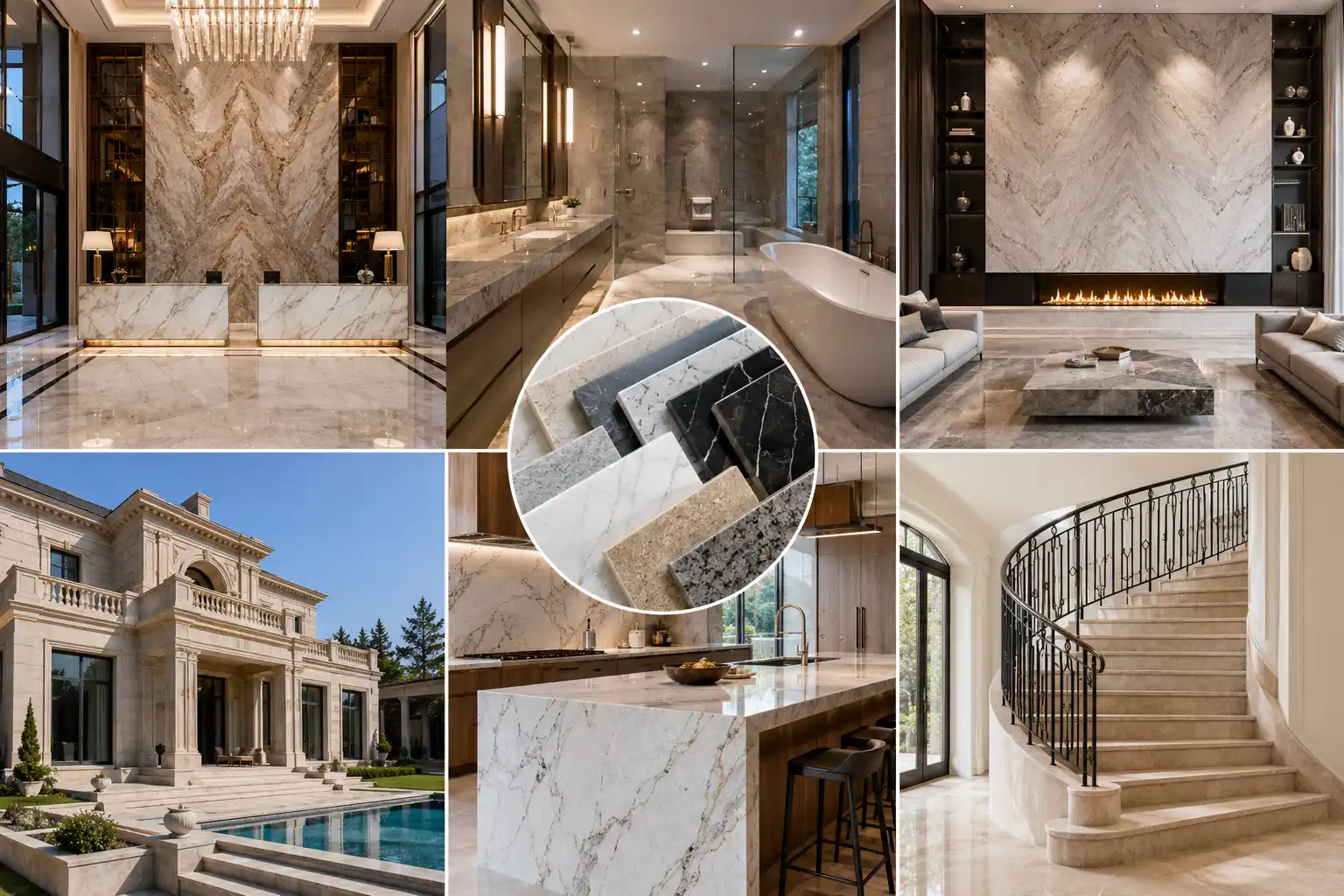
Поширені запитання щодо постачальників каменю в Китаї
1. Хто є найкращими постачальниками каменю в Китаї для люкс-готелів та вілл?
Найкращі постачальники каменю в Китаї залежать від масштабу та складності проекту. Великі інтегровані компанії, такі як UMGG, Xishi Stone, Best Cheer, Kangli Stone та Wanli Stone, підходять для масштабних архітектурних та комерційних програм, тоді як орієнтовані на проекти постачальники, наприклад XM Perfect Stone, можуть бути привабливими для люкс-вілл, готелів, інтер’єрів із різноманітних матеріалів та спеціального виготовлення. Покупцям слід порівнювати реальну наявність плит, досвід реалізації проектів, виробничі потужності, підтримку у створенні робочих креслень, перевірку сухого укладання, документацію щодо якості, упаковку для експорту, терміни виконання замовлення та комунікацію замість вибору постачальника виключно за розміром компанії чи ціною, запропонованою в пропозиції.
2. Як знайти надійного постачальника каменю в Китаї?
Почніть із перевірки юридичної особи постачальника, його фізичного заводу або виробничих потужностей, спеціалізації у матеріалах, обладнання для виробництва, історії експорту та доказів попередніх проектів. Для природного каменю вимагайте реальні фотографії та відео плит, окрім невеликих зразків, оскільки зразок не може показати загальний рисунок жил, діапазон кольорів, тріщини, ремонтні ділянки чи корисний вихід матеріалу. Перед виробництвом письмово підтвердьте креслення, розміри, допуски, тип поверхні, напрямок жил, критерії огляду, упаковку, запасні кількості та процедури заміни. Надійний постачальник має задавати детальні технічні запитання до прийняття замовлення, а не просто надсилати прайс-лист.
3. Чи дешевше імпортувати мармур та природний камінь безпосередньо з Китаю?
Прямі закупівлі з Китаю можуть знизити вартість одиниці та вартість виготовлення для великих, індивідуальних або багатоматеріальних проектів, але покупці повинні розраховувати загальну вартість доставки та монтажу, а не лише ціну FOB. Вартість перевезення, митного очищення, внутрішньої доставки, інспекції, зберігання, управління проектом, запасних матеріалів, ризику пошкодження та вартості заміни всі впливають на кінцевий результат. Для невеликого термінового ремонту загальна вартість може виявитися нижчою при локальних закупівлях, оскільки заміна та доставка є простішими. Готель, курорт, житловий комплекс або великий пакет для вілли скоріше принесуть вигоду від прямих закупівель, коли виготовлення на заводі та координована контейнерна доставка забезпечують суттєву економію завдяки масштабу виробництва.
4. Який природний камінь найкращий для п’ятизіркового готелю?
Найкращий матеріал залежить від місця його встановлення. Мармур широко використовується в розкішних холах, ванних кімнатах, сходах та декоративних стінах завдяки його преміальному вигляду. Граніт частіше підходить для зовнішніх зон та підлог із високим рівнем прохідності, оскільки в цих випадках пріоритетом є міцність. Кварцит добре підходить для барів, лічильників, островів та акцентних поверхонь, де потрібен високий візуальний вплив і покращена експлуатаційна стійкість. Травертин і вапняк можуть створити тепліший курортний естетичний враження, але вимагають ретельної оцінки пористості, типу обробки, впливу вологи та умов замерзання-відтавання. Для критичних застосувань завжди слід переглядати спеціалізовані дані випробувань матеріалу.
5. Що слід перевірити перед замовленням каменю для розкішної вілли?
Покупці розкішних вілл повинні перевірити фактичну партію плит, наявну кількість, варіації кольору, напрямок жилок, товщину, обробку поверхні, ремонтні роботи, креслення для обробки, профілі кромок, вирізи, книжкове зіставлення (bookmatching), вимоги до сухого укладання, підсилення, упаковку, запасні елементи та послідовність поставки. У віллах часто встановлюють індивідуальні каміни, вбудовані раковини, великі кухонні острови, вигнуті сходи, декоративні стіни з книжковим зіставленням та кілька різновидів каменю, тому майстерність і гнучкість можуть мати більше значення, ніж розмір заводу. Якщо камінь має високу візуальну цінність, затвердіть повні зображення плит і плани розташування ще до розрізання. Якщо заміна буде ускладненою у майбутньому, залиште запасний матеріал із тієї самої виробничої партії.
Джерела
Стандартні методи випробувань на водопоглинання та об’ємну питому вагу обробленого каменю — Комітет ASTM C18 — ASTM International — ASTM C97/C97M.
Стандартний метод випробування на стискову міцність обробленого каменю — Комітет ASTM C18 — ASTM International — ASTM C170/C170M.
Стандартний метод випробування на згин для природного каменю — Комітет ASTM C18 — ASTM International — ASTM C880/C880M.
Стандартний метод випробування на стійкість до абразивного зношування природного каменю, що підлягає пішоходному навантаженню, за допомогою обертального платформенного абразивного пристрою — Комітет ASTM C18 — ASTM International — ASTM C1353/C1353M.
Стандартне керівництво щодо вибору, проектування та монтажу систем кріплення природного каменю — Комітет ASTM C18 — ASTM International — ASTM C1242.
Руководство з проектування природного каменю — Технічний комітет Institute of Natural Stone — Natural Stone Institute — Технічні видання з проектування.
Стандарт стійкості природного каменю ANSI/NSI 373 — Natural Stone Institute та зацікавлені сторони галузі — Американський національний інститут стандартів (ANSI) / Natural Stone Institute.
Продукти з природного каменю — плити для облицювання — вимоги — Європейський комітет зі стандартизації — CEN — EN 1469.
Найкращий постачальник — той, хто запобігає дорогоцінним помилкам
Вибір між Постачальники каменю в кінцевому підсумку є рішенням щодо ризиків проекту.
Прекрасні плити важливі, але успішні проекти преміум-класу залежать від набагато більшого: узгодженості матеріалів, правильного застосування, креслень, допусків, сухої укладки, інспекції якості, документації, маркування, міцної упаковки, планування заміни та надійного зв’язку.
Люкс-вілли, як правило, роблять більший акцент на індивідуальній налаштуваності, виборі жилок та майстерності виконання.
Готелі п’ятизіркового рівня роблять більший акцент на узгодженості, повторюваності, документації, виробничих потужностях та послідовності монтажу.
Ця різниця має безпосередньо впливати на вибір постачальника.
Перш ніж запитувати остаточну цінову пропозицію, підготуйте графік матеріалів, креслення, приблизні обсяги, бажані види оздоблення, пункт призначення, технічні вимоги та часовий графік проекту. Надішліть ту саму інформацію до короткого списку постачальників і порівняйте їхні відповіді.
Постачальник, який виявляє ризики, ставить корисні технічні запитання, пропонує реалістичні альтернативи та пояснює план виробництва, може мати більшу цінність, ніж постачальник, що пропонує найнижчу ціну в комерційній пропозиції.
У закупівлі люксової кам’яної продукції запобігання одній серйозній помилці може коштувати набагато більше, ніж економія кількох доларів за квадратний метр.
Зміст
- Вибір постачальника каменю — це справді рішення, пов’язане з ризиками для проекту
- Чому Китай є одним із головних центрів закупівель для Розкішний Камінь Проекти
- Що робить постачальника каменю придатним для розкішних вілл та готелів п’ятизіркового рівня?
-
Кращі постачальники каменю в Китаї для розкішних вілл та готелів п’ятого рівня.
- 1. XM Perfect Stone — надійний вибір для вілл, готелів та проектів із різними матеріалами.
- 2. UMGG – Сильний вибір для великих готельних та знакових проектів
- 3. Xishi Stone — сильний вибір для проектів із інтенсивним інженерним забезпеченням у галузі каменю
- 4. Best Cheer Stone — міцний вибір для забезпечення матеріальними ресурсами та закупівлі плит
- 5. Kangli Stone — міцний вибір для великооб’ємних комерційних об’єктів і готельних проектів
- 6. Wanli Stone – міцний вибір для постачання архітектурного каменю та каменю для багатьох інших застосувань
- Швидке порівняння постачальників каменю в Китаї
- Які кам’яні матеріали найкращі для люкс-вілл і готелів?
- Наукові дані про експлуатаційні характеристики, які повинні зрозуміти покупці
- Які випробування мають значення для проектів із природного каменю?
- Постачальник каменю проти заводу з виробництва каменю проти торгової компанії
-
Як має бути організований кам’яний пакет для п’ятизіркового готелю
- Крок 1: Створення графіка матеріалів
- Крок 2: Підтвердження наявності матеріалу
- Крок 3: Затвердження зразків та зовнішнього вигляду повної плити
- Крок 4: Схвалення робочих креслень
- Крок 5: Виготовлення макетів
- Крок 6: Інспекція виробництва
- Крок 7: Суха укладка важливих зон
- Крок 8: Упаковка за послідовністю монтажу
- Як відрізняється закупівля каменю для люкс-вілли
- Скільки насправді коштує камінь із Китаю?
- Стандарти та нормативні вимоги для міжнародних кам’яних проектів
- Сім поширених помилок під час купівлі каменю з Китаю
- Як обрати правильного постачальника каменю в Китаї
- Тенденції в кам’яних індустріях, на які повинні звертати увагу покупці
- Якого постачальника каменю вам варто обрати?
- Поширені запитання щодо постачальників каменю в Китаї
- Найкращий постачальник — той, хто запобігає дорогоцінним помилкам